Explanation of the Devi Deepavali Tradition: Why Deities Descend from Heaven to Earth
Read more
Aaj Tak
www.aajtak.in

Explanation of the Devi Deepavali Tradition: Why Deities Descend from Heaven to Earth

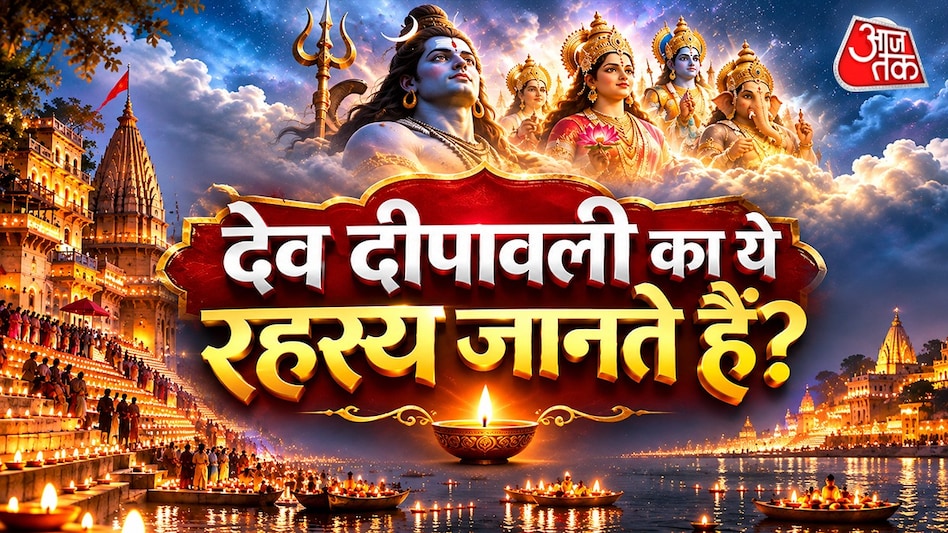
In Hinduism, the festival of Devi Deepavali holds special significance and is celebrated every year on Kartik Purnima with great enthusiasm. On this day, the banks of Kashi shine with millions of lights. According to religious beliefs, during Devi Deepavali, deities descend from heaven to earth and celebrate by lighting lamps on the banks of the Ganges. However, there is a question about why this tradition of deities appearing on earth originated.

Devi Deepavali in 2026

The reason for this tradition is connected to an interesting mythological story involving Lord Shiva and Tripurasura. According to the legend, in ancient times, there existed a powerful Asura named Tripurasura, who conquered three cities known as Tripur. Due to Tripurasura's tyranny, the deities and the people of the earth were in a state of distress, and his wicked deeds constantly intensified.

After failing, all the deities appealed to Lord Shiva for protection. Hearing the call of the deities, Shiva decided to destroy Tripurasura. Then, using his divine weapon, Shiva destroyed the three cities of Tripurasura. After this victory, Lord Shiva came to be called Tripurari.

Deities Celebrated Diwali After Shiva's Victory

According to religious beliefs, Lord Shiva killed Tripurasura on the full moon day of the month of Kartik. All the deities were extremely happy about this victory. In respect for Lord Shiva, they lit lamps and held a celebration. It was at this moment that the celestial deities came to earth and performed Deepdan. Since then, Devi Deepavali has been celebrated on Kartik Purnima. It is believed that this is why the deities come to earth on this day, lighting lamps, and thus it is called the Festival of Deities.

Why is Devi Deepavali Special in Kashi?

The most magnificent spectacle of Devi Deepavali can be seen in Varanasi, Uttar Pradesh. Kashi is considered the city of Lord Shiva. On this day, thousands and millions of lights are lit on the banks of the Ganges. The entire bank shines with the light of lamps. During this event, Ganga Aarti, Deepdan, and special worship rituals are also conducted.

There is a belief that bathing in the Ganges and performing Deepdan on Devi Deepavali brings merit. On this day, devotees worship Lord Shiva and Lord Vishnu. Many people also light lamps in their homes, wishing well-being and prosperity for their families.
Similar stories

The Significance of Kartik Purnima as Deva Diwali: The Meaning of the 84 Ghats of Kashi and the Mythological Story
Read more
www.aajtak.in

The Significance of Kartik Purnima as Deva Diwali: The Meaning of the 84 Ghats of Kashi and the Mythological Story

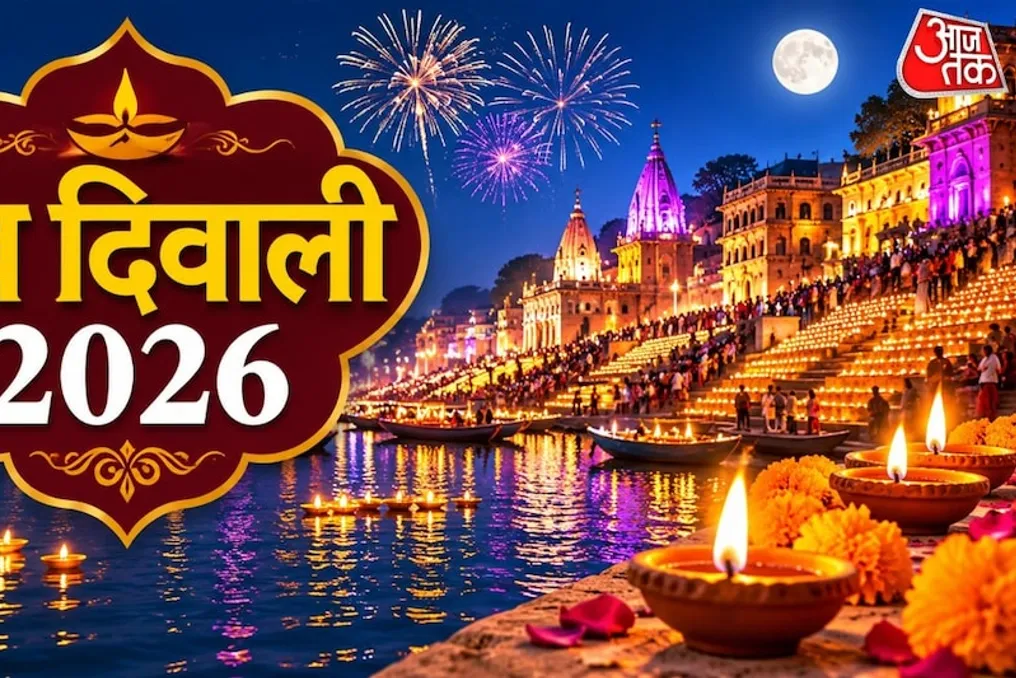
This year, the festival of Deva Diwali will be celebrated on November 24th. The Deva Diwali festival in Kashi is not just a celebration of lighting lamps and illuminating ghats; it is closely connected to Lord Shiva, Mother Ganga, the deities, and Vedic traditions. According to beliefs, the 84 ghats of Kashi symbolize the 84 lakh yonis.

These ghats, located along the Ganges River within a radius of about 7 kilometers, are an integral part of the religious and cultural identity of Kashi. Kartik Purnima is called Deva Diwali. It is believed that on this day, the deities descend from the heavens to Kashi and witness the act of offering light on the banks of the Ganges. This is why Deva Diwali is celebrated in Kashi with great reverence and enthusiasm.

The Diya (lamp) is considered a symbol of knowledge, light, and prosperity, and Deva Diwali is rightly called the Diwali of the deities. There is a belief that on this day, the deities come down from the heavens to Kashi to observe the ceremony of offering light on the banks of the Ganges. During this period, special reverence is paid to Lord Vishnu and Mother Ganga. On this day, people take a holy dip in the sacred rivers and then perform ritual worship of Lord Vishnu and Shiva, after which they offer lamps.

The ghats of Kashi have a special connection with Deva Diwali. It is believed that the 84 ghats of Kashi represent the symbol of 84 lakh yonis. These ghats, stretching along the Ganges within approximately 7 kilometers, form the religious and cultural identity of Kashi. Previously, Kashi was known as Anandvan, later its name became Kashi, and then Varanasi. Varanasi is located in the region between the rivers Varuna and Asi, where the Ganges flows in a northward direction (Uttaravahini).

In Kashi, situated on the bank of the Ganges flowing north, the Deva Diwali festival symbolizes the arrival and welcoming of the deities. Therefore, the tradition of offering light at the ghats is observed here with the utmost devotion.

There is an ancient legend explaining the origin of Deva Diwali, related to the destruction of Tripurasura by Lord Shiva. According to this story, Tarakasura had three sons: Tarakaksha, Kamakha, and Vidyunamali. All three underwent a severe ascetic trial and received blessings from Brahma. After this, they built three huge palaces of gold, silver, and iron, which came to be known as the three puras or Tripuras. Influenced by their power and the blessings they received, these three asuras began to inflict suffering on the deities and sages.

The deities, who suffered under the tyranny, appealed to Lord Vishnu, and then all the deities asked Lord Shiva to destroy these asuras. Accepting the deities' request, Lord Shiva destroyed the three cities with a single arrow, killing Tarakaksha, Kamakha, and Vidyunamali. Because of this, Lord Shiva earned the name Tripurantaka. After defeating Tripurasura, the deities performed special worship of Lord Shiva. This event is associated with the festival of Deva Diwali, which symbolizes the victory of Lord Shiva, the joy of the deities, and the establishment of Dharma.

Date and Time of Deity Awakening on Devuthani Ekadashi 2026, According to the Pandit's Opinion
Read more
www.aajtak.in

Date and Time of Deity Awakening on Devuthani Ekadashi 2026, According to the Pandit's Opinion

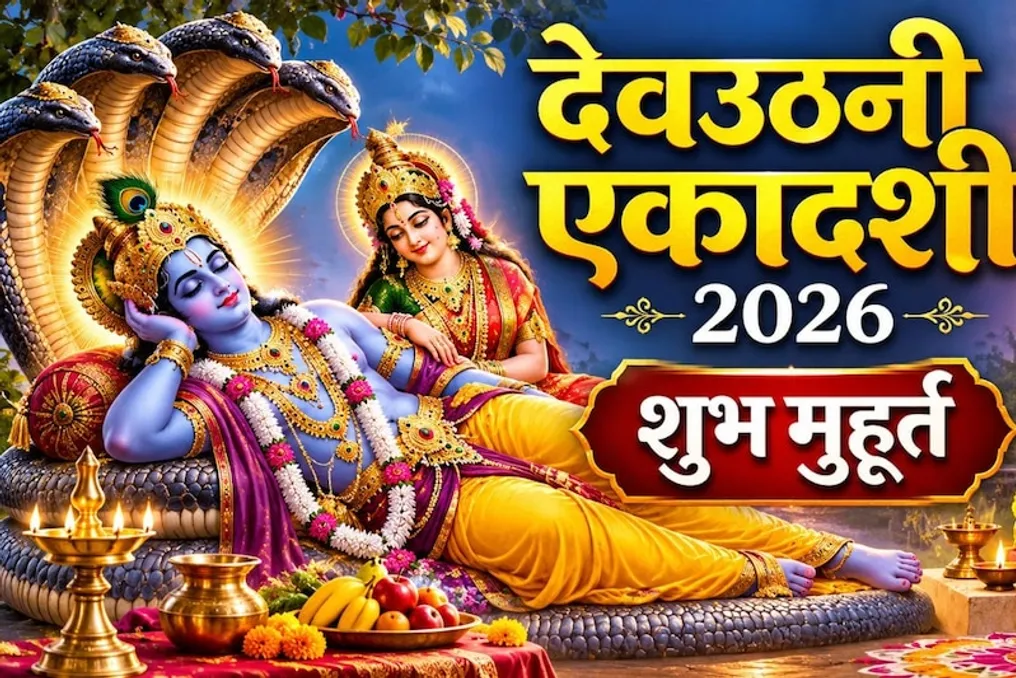
Devuthani Ekadashi is observed in the Kartik month of the lunar calendar as the day of Lord Vishnu's awakening. According to beliefs, in the Ashad month of the lunar calendar, Ekadashi occurs during the bright half of the month when Lord Vishnu enters yoga-nidra, and this period is called Devashyani Ekadashi. After this, in the Ekadashi of the Kartik month, Lord Vishnu awakens, which gives the name Devuthani Ekadashi.

This year, Devuthani Ekadashi will be celebrated on November 20. This festival is also known as Devottan Ekadashi and Prabodhini Ekadashi. There is a belief that on this day, Lord Vishnu emerges from a four-month yoga-nidra, after which Chaturmas concludes, and other auspicious events, including weddings, may begin. Worship of Lord Vishnu and the performance of the Tilasi-Shaligrama Vivah ritual are of particular significance.

The term Devottan means the awakening of the deity. According to traditions, when Lord Vishnu enters yoga-nidra during the Ekadashi of the Ashad month, all auspicious activities are suspended. Only after his awakening do marriages and other happy events commence.

On this day, worship of Lord Vishnu is performed after morning ablutions. There is a tradition of waking him up by playing on a gong, drum, and using a conch shell. During this process, prayers are offered for the beginning of auspicious deeds in the world. Upon Lord Vishnu's awakening, the following mantra can be recited:

Uttishthotiṣṭha Govinda Uttisht Garuddhwaj. Uttisht Kamalkaanta Trailokyam Mangalam Kuru॥

After this, Lord Vishnu is bathed with Panchamrit (a five-ingredient mixture) and worshipped according to the ritual. He is also offered products characteristic of the new season, such as singarada, root vegetables, new potatoes, maple syrup, and sugarcane. It is believed that offering these products pleases the Lord and brings blessings to the devotees.

The auspicious time for the Lord's awakening on Devuthani Ekadashi is in the evening. On November 20, there is a Godhuli Muhurtam from 17:26 to 17:52, during which the Lord can be awakened.

During the Ekadashi fast, rice consumption is prohibited. On this day, it is extremely important to maintain purity of thought and dietary habits, avoiding meat, alcohol, or tamasic foods. One must remember Lord Vishnu and control one's speech. According to religious beliefs, speaking kind words to others and maintaining kindness and humility in the heart, while avoiding envy or hostility, holds great importance.

On the day of Devuthani Ekadashi, reading the twelve-syllable mantra of Lord Vishnu, 'Om Namo Bhagavate Vasudevaya,' is considered auspicious. Additionally, devotees can recite Vishnu Sarasanam and Purusha Sukta. Those who cannot recite the entire mantra can repeat 'Om Vishnave Namah' or 'Om Mahavishnave Namah.'

Massive influx of pilgrims observing sacred bathing in the Yamuna River during Bhai Dooj festival in Prayagraj
Read more
www.aajtak.in

Massive influx of pilgrims observing sacred bathing in the Yamuna River during Bhai Dooj festival in Prayagraj

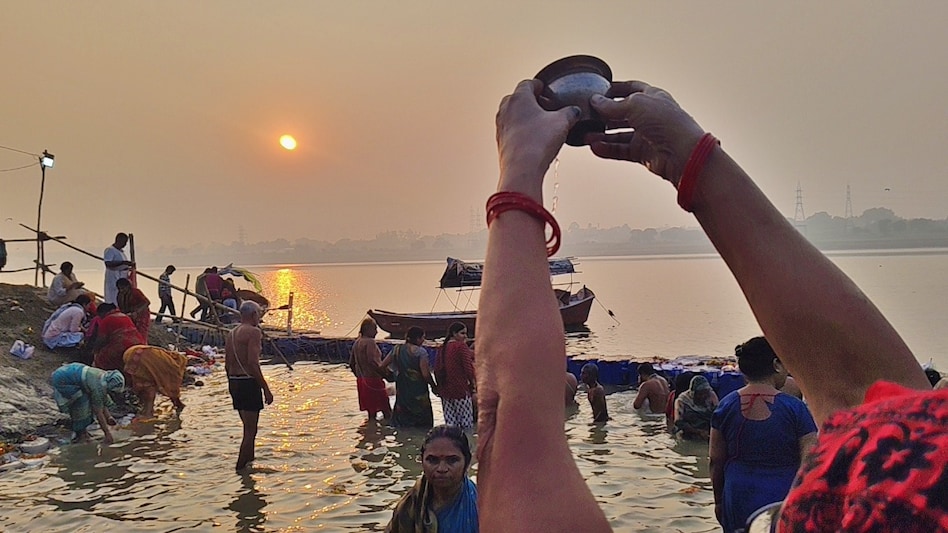
On the day of Kartik Shukla Dwitiya, known as Bhai Dooj, a huge gathering of devotees is observed on the banks of the Yamuna River in Tirathaj, Prayagraj. Brothers and sisters hold hands and perform a sacred dip in the Yamuna River.

According to ancient beliefs, bathing and worshipping Yamuna on this day brings the blessings of Yamaraj, which eliminates the fear of premature death and promotes longevity. Pilgrims gather at the embankments from early morning to worship Yamuna Mai and Yamaraj.

According to myths, Yamaraj and Yamuna were brother and sister born from the Sun god. On the day of Kartik Shukla Dwitiya, Yamaraj arrived at his sister Yamuna's home. Yamuna welcomed him and applied a tilak. The joyful Yamaraj bestowed a blessing: any brother who applies a tilak to his sister and bathes in the Yamuna on this day will be protected from the fear of Yama's death.

From early morning, pilgrims gather on the banks of Sangam and Yamuna in Prayagraj. After bathing together, brothers and sisters wish each other well-being, prosperity, and health. Many pilgrims also perform acts of charity and memorial rituals in memory of their ancestors.

This festival, Yam Dwitiya, is a beautiful symbol of Indian culture, family, and eternal faith.

Considering the million people gathered on the embankments, the police and administration are on full alert. Sturdy barriers have been installed on the main embankments to ensure safety. To guarantee the safety of the pilgrims, the water police, constant monitoring of boats, and qualified divers have been deployed so that this sacred festival proceeds safely and in an organized manner.

Popular