Signal warns that artificial intelligence agents threaten the privacy of mobile device users
Read more
TechCentral
techcentral.co.za

Signal warns that artificial intelligence agents threaten the privacy of mobile device users

The encrypted messaging service Signal announced on Friday that it is introducing screenshot restrictions to prevent private conversations from being read by users through artificial intelligence agents. The company warned that the tech industry's drive to integrate AI into consumer devices undermines Signal's ability to guarantee privacy.

Signal, recognized as a leader in secure messaging among privacy advocates, called its new protective measures 'incomplete.' Furthermore, the service urged developers of Apple, Google (Alphabet), and Microsoft operating systems to provide application developers with clearer mechanisms to block agent access to sensitive data.

Additionally, Signal asked these companies to provide more information about how their agents function so that developers can assess what data the bots collect and adjust their systems accordingly.

This move reflects growing tension between privacy-focused applications and major tech corporations rushing to implement AI agents capable of seeing user screen content and acting upon it.

Signal specifically highlighted AI functions built directly into operating systems, such as Apple's Siri AI and Google's Gemini Intelligence, as particularly concerning due to their deep integration into people's devices. The company noted in a blog post by its president, Meredith Whittaker, that operating systems shape the environment in which Signal and other applications must exist.

In its post, the company stated: 'Currently, these AI agent integrations are changing this environment in a way that makes it increasingly hostile to privacy. This is an existential threat to Signal and our ability to responsibly fulfill our mission.'

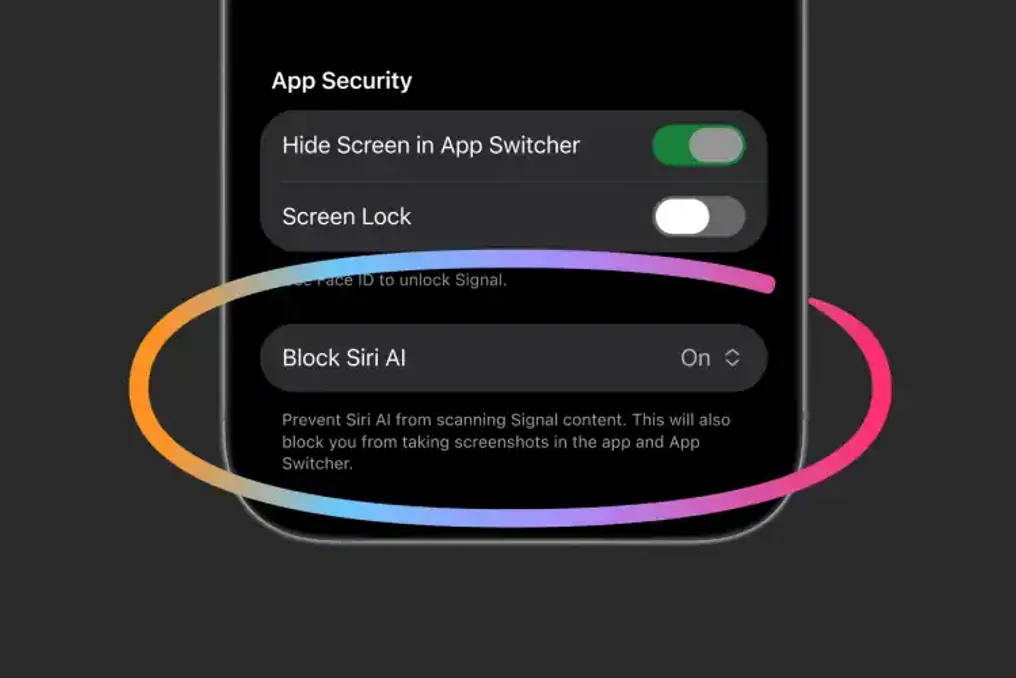
To prevent agents from scanning Signal messages, the service is implementing and setting by default settings that block screenshots on users' phones. Depending on the device, users will see a pop-up window with the option to disable the block when Signal detects a screenshot attempt or when an AI assistant attempts to access the screen.

Previously, Signal blocked Microsoft's Recall AI feature from taking screenshots on Windows last year, but reported that it could not reliably ensure similar protections on Apple's macOS.

Agents capable of performing actions on behalf of users are seen as the next major wave of AI technology. They can find relevant information across different applications and perform time-saving tasks, such as replying to emails, booking meetings, and making online purchases without direct instruction.

However, such broad access can bypass the protection created by apps like Signal. Reuters previously reported that Meta's Muse agent was able to circumvent its own official 'Connector' tool to access Signal messages on both Apple computers and Google Android phones. In both cases, Muse used broad operating system-level permissions granted during the initial app setup, utilizing these authorizations in a manner unpredictable to the user.
Similar stories

Signal restricts screenshots on Android and iOS to protect messages from artificial intelligence
Read more
olhardigital.com.br

Signal restricts screenshots on Android and iOS to protect messages from artificial intelligence

Signal has implemented a screenshot restriction on Android and iOS systems with the goal of preventing artificial intelligence (AI) agents, such as Gemini and Siri, from reading messages and other data viewed within the application.

Meredith Whittaker, president of the service, pointed out that the inclusion of these agents in operating systems harms Signal's ability to autonomously ensure user privacy. When integrated into operating systems, such agents are capable of analyzing the content displayed on application screens to identify and use information, allowing them to interpret messages and other data presented to the user, even in services that use encryption.

Although this technology ensures message protection during transmission, it does not necessarily prevent external entities from accessing the content as soon as it is displayed on the device itself. This possibility is precisely what raises concerns at Signal.

According to Whittaker, the core of the problem lies in the fact that developers do not have appropriate methods to control which data these agents can access. Companies like Google, Apple, and Microsoft do not provide simple tools to limit this type of access without compromising essential application functionalities.

The concern also extends to third-party tools, such as Muse, developed by Meta. Such agents can leverage advanced application accessibility features, acting as a kind of master key to gain access to information.

In a post on the Signal blog, Whittaker classified this situation as a threat to privacy at the application level. She added that the absence of protection mechanisms also prevents the service from applying equivalent measures on macOS.

To mitigate the problem, Signal blocked screenshots within the app on Android and iOS 27 devices. This limitation aims to prevent Gemini, Siri, and other AI assistants from reading conversation content through this mechanism. Users have the option to reactivate this feature in the app's security settings, but Whittaker warns that this choice could expose both their own messages and those of their contacts to AI agents, compromising the service's privacy guarantees.

The president acknowledges that the implemented block is a partial solution, as it does not prevent other access routes, such as recovering data directly from the device's file system. The lack of details on how agents obtain this data also hinders the development of more efficient defenses.

Previously, Signal had adopted a similar tactic last year to prevent Microsoft's Recall feature from capturing protected conversations. Currently, the company requires Apple, Google, and Microsoft to provide uncomplicated technical tools and clear documentation so that developers can manage AI agent access to applications. The original article was published in Olhar Digital.

Startup Founder Predicts AI Will Be Used for Employee Termination Decisions
Read more
www.aajtak.in

Startup Founder Predicts AI Will Be Used for Employee Termination Decisions

Artificial intelligence (AI) is moving beyond routine office tasks and beginning to penetrate the upper management of companies. In the future, AI agents may assist CEOs in developing personnel strategies, providing recommendations for downsizing, and making major business decisions.

Michael Ayof, co-founder and CEO of the American AI startup Arist, believes that such agents will advise executives on all aspects, from reducing headcount to launching new products and implementing corporate changes. He emphasizes that the final decision always remains with company leadership, and AI serves only as a decision support tool.

At the Fortune 500 Innovation Forum held in Detroit, Ayof stated that over the next few years, AI agents will recommend most major transformations within companies. These decisions include the introduction of new products, staff reductions, and other structural changes.

Ayof clarified that while AI agents can offer advice on critical issues, ultimate responsibility for these decisions lies with company management. According to Fortune, Arist has partnered with over 15 percent of companies listed in the Fortune 500.

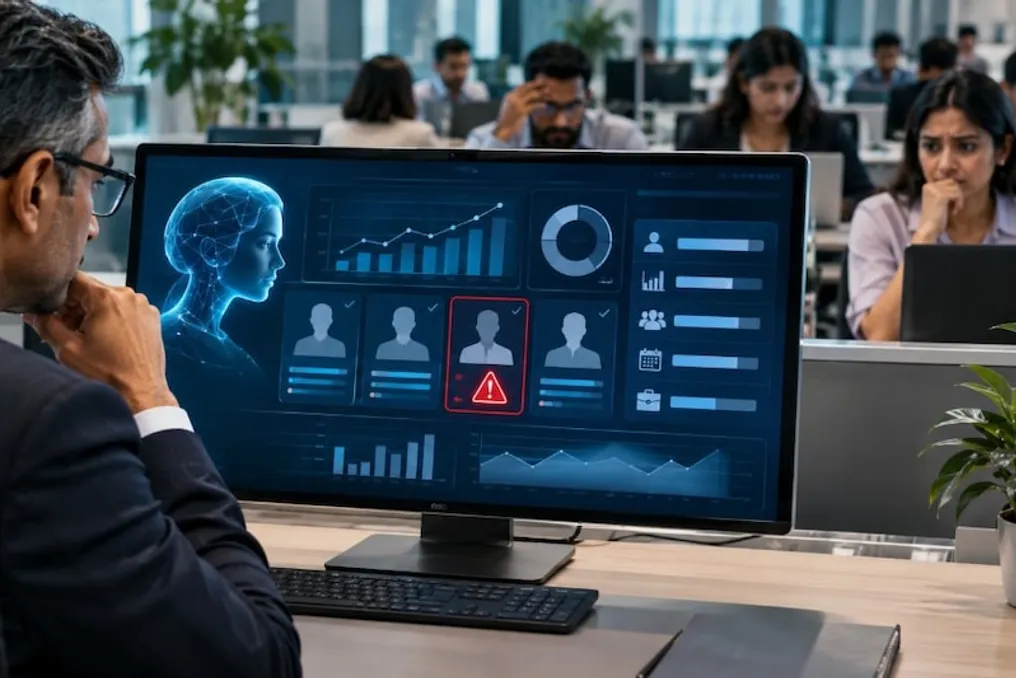
Arist's AI agents identify organizational problems by gathering employee feedback, analyzing internal company information, and determining trends affecting business efficiency. This technology is not limited to standard surveys or management reviews; the AI system independently selects employees for communication and determines what questions to ask, as well as what follow-up questions to ask based on the answers received.

Employee opinions are then compared with other metrics, such as their work experience, performance records, and engagement levels. By correlating personnel perspectives with internal company data, this platform aims to provide leadership with a clear picture of organizational issues and help identify necessary adjustments.

Arist claims that its system can conduct such a comprehensive investigation in just 72 hours, whereas traditional consulting firms may require months to complete the same task.

The company believes that with AI assistance, enterprises can discover internal problems and make decisions faster without lengthy consulting processes. Ayof is convinced that artificial intelligence can change how companies approach identifying and solving internal problems. He notes that traditional human-led checks have limitations, especially regarding carefully listening to employees and objectively understanding their concerns.

Ayof also questioned the effectiveness of traditional consulting. According to him, companies spend significant time and resources checking organizational problems, but this does not guarantee the right outcome. In an interview with Fortune, Ayof suggested that consultants are wrong in diagnosing the problem about 90 percent of the time, although this is his personal assessment and not independently verified industry statistics.

Ayof's main goal is to help large corporations operate as quickly as small businesses. His argument is that timely access to reliable information allows companies with tens of thousands of employees to respond to challenges more rapidly.

The growing use of AI agents in business opens a new discussion about the role of artificial intelligence in corporate decision-making. Beyond performing daily tasks and data analysis, these systems are now being tested to assist in studying complex business situations and strategic planning.

This shift could significantly impact human resources management. If companies use AI-derived information to assess employee contributions, identify unnecessary tasks, or determine the need for departmental changes, AI could play a key role in employment-related decisions.

However, concerns also arise regarding accountability, transparency, and potential algorithmic bias. It is important to remember that an employee's contribution cannot be measured solely by numbers, and AI assessments may overlook an employee's personal circumstances or the scale of the consequences of personnel decisions. Despite this, Ayof insists that ultimate authority remains with company leadership, yet the growing potential of AI agents could transform management methods and strategic planning in corporations. The challenge for companies will be to avoid a trade-off between the speed and thoroughness of data-driven decisions and human understanding, fairness, and accountability.

Popular