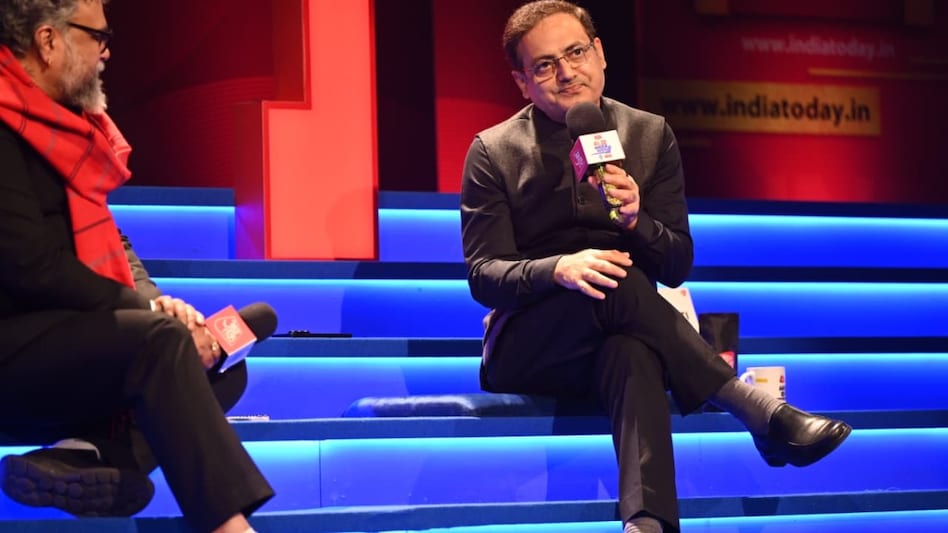
During a masterclass, Dr. Vikas Divyakirti, founder of Drishti IAS, openly discussed several pressing issues facing youth, including the gap between school education and real-life needs, feelings of inadequacy among students studying in Russian, difficulties in asserting one's position to parents, and student anxieties regarding the mathematics section of the UPSC CSAT exam.
Expressing disappointment with the current education system, Dr. Divyakirti noted that over 12–15 years of study in schools and colleges, students are not taught skills that are truly useful in life. He emphasized that university graduates are often unaware of the principles of financial management, saving, investing, and compound interest.
Citing examples from his personal experience related to nutrition and health, he pointed out that basic knowledge about the balance of carbohydrates and proteins should be taught at the school level. Furthermore, he stressed the necessity of including topics such as sex education, understanding democratic processes and civil rights, and socio-emotional learning in the curriculum after the 9th grade, following the US model.
He also suggested that the value of traditional higher education might decrease in the future, as middle-class youth primarily study to secure employment.
Regarding the dilemma of youth caught between Russian and English languages, Dr. Divyakirti presented a balanced view. He observed that the feeling of inferiority towards the Russian language exists on two levels: internal and conditioned by societal perception. Nevertheless, he warned that relying solely on Russian for global success today is impractical, as most terminology and research in science, neuroscience, medicine, and technology are available in English.
He advised students to maintain an affinity for their native language and Russian, but not to be hostile towards English. Instead, they should learn as many languages as possible. Citing scientific data, he added that knowing multiple languages activates the brain and reduces the risk of neurodegenerative diseases such as Parkinson's disease.
In response to a student's question about how to express disagreement with parents or elders without being impolite, Dr. Divyakirti referred to the psychological concepts of 'persuasion' and the increasing stability of opinions. He explained that after a certain age, the views of older people stabilize, so one should not try to change them on every issue if it is not of great importance, and unnecessary arguments should be avoided.
However, when dealing with serious decisions concerning life or career, a polite tone and 'language of suggestion' should be used instead of aggression. He also proposed that if face-to-face communication is difficult, one can articulate their thoughts in writing or via a message, which gives the recipient time to consider the response.
Concerning the fear of mathematics among students preparing for the UPSC exam, he offered two practical options. Firstly, if mathematics is the sole obstacle, one can pause the study of other subjects for a couple of months and focus only on mathematics. Secondly, given that passing the test requires correctly answering only 27 out of 80 questions, one can successfully pass the exam by focusing on thorough preparation for the remaining 40 questions (reading comprehension and logic), ignoring the 40 mathematics questions.
To conclude the session, while answering rapid-fire questions, Dr. Divyakirti chose 'one's own effort' for the 'work or career' question, 'discipline' for the 'talent or discipline' question, 'logic' for the 'rationality or tradition' question, and 'understanding' for the 'merit or understanding' question.