
Uzbek users warned about potential fraud when buying New Year's trees online
Read more
Podrobno.uz [uz]
podrobno.uz

Uzbek users warned about potential fraud when buying New Year's trees online

Before the start of the New Year holidays, messages regarding potential fraud related to the sale of artificial Christmas trees have begun appearing in the Uzbek social media segment. Complaints concern sellers who insist on receiving full prepayment for the goods.

The discussion unfolded in the 'Consumer.Uz' group after one participant requested experience in purchasing a New Year's tree from a specific seller. Most commentators expressed distrust towards such offers.

Users note that the seller demands one hundred percent prepayment, while the actual delivery of the goods is planned for a later date. Furthermore, some commentators pointed out that this company lacks a physical store in Tashkent, and the storage location is listed as a warehouse in Namangan.

Additional suspicious signs included the absence of a working contact phone number and maintaining communication with buyers exclusively through social media correspondence. Several participants shared examples of similar schemes, including a case where a relative lost money for an expensive tree without receiving the product or a refund.

As an alternative, participants were advised to purchase New Year's trees in places where personal inspection of the goods is possible before payment, such as the 'Urikzor' market, which, according to users, offers a diverse assortment of artificial trees. Although the publication itself lacks direct evidence of fraudulent actions by the mentioned seller, numerous reviews indicate serious concerns among buyers due to the requirement of full prepayment and the seller's secrecy.

Previously, a warning was issued that internet scammers often become active in Uzbekistan before the New Year. These perpetrators frequently offer holiday goods, such as trees and caviar, at reduced prices, demanding prepayment, after which they disappear.
Similar stories

Uzbekistan Customs Denies Rumors of Ban on Costume Jewelry Parcels
Read more
podrobno.uz

Uzbekistan Customs Denies Rumors of Ban on Costume Jewelry Parcels

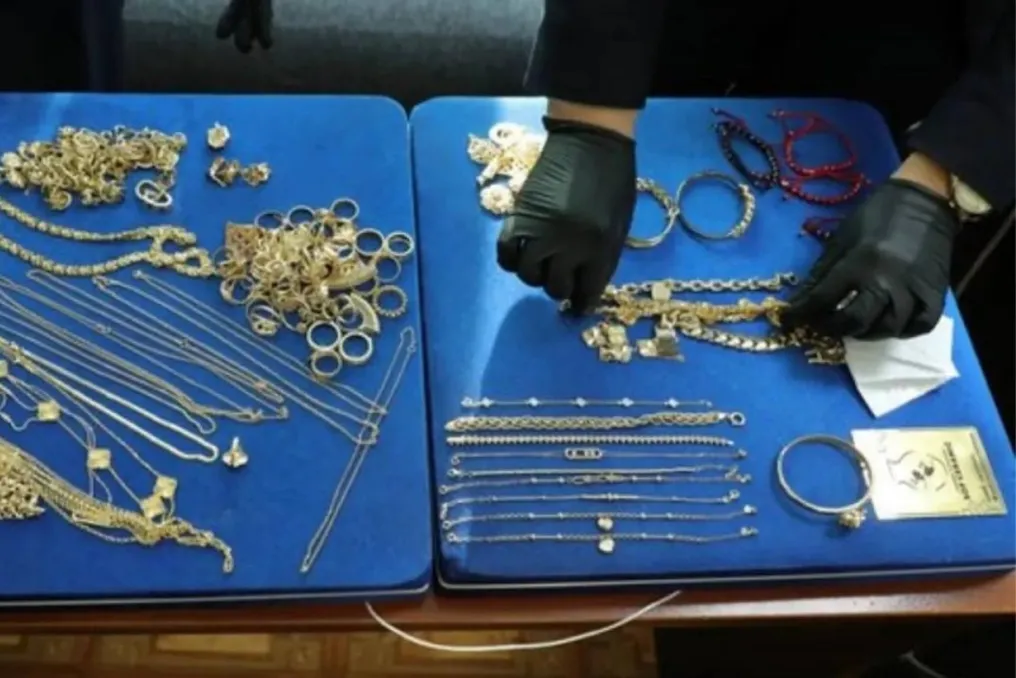
Information circulated actively on social networks that Uzbekistan customs had begun refusing to allow parcels containing costume jewelry to pass. However, the Customs Committee issued an official denial of these reports and clarified the current rules for sending such ornaments.

According to data provided by the Customs Committee to Podrobno.uz correspondent, no restrictions have been introduced on the international shipment of costume jewelry—that is, jewelry not made of precious metals and stones.

Nevertheless, there are special requirements for sending jewelry made from precious materials. For such items, it is mandatory to have a document confirming their value, such as a cash or sales receipt. Furthermore, the receipt itself is not a sufficient basis to guarantee the possibility of shipment; such shipments are subject to the norms of the Universal Postal Convention, as well as the legislation of both the country of dispatch and the country of destination.

Additionally, it was noted that on November 11, the customs clearance process for mobile phones resumed at Tashkent International Airport. Previously, this procedure was temporarily suspended due to an increase in cases of attempts to illegally import devices with fake IMEI codes.

Uzbekistan introduces requirement for financial risk warnings in loan advertising
Read more
podrobno.uz

Uzbekistan introduces requirement for financial risk warnings in loan advertising

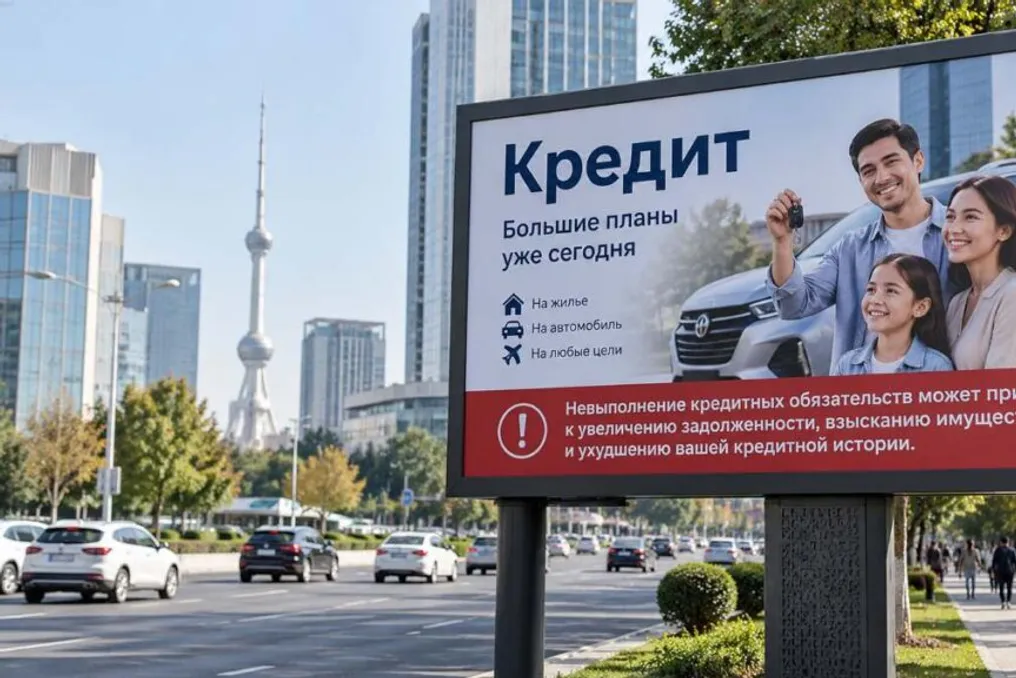
A new requirement is being introduced in Uzbekistan: advertisements for credit products and microloans must now include a warning about potential financial risks that may arise if the borrower is unable to meet their obligations.

These changes have been incorporated into the 'On Advertising' law and will come into force on November 10, 2026. According to the updated rules, the advertisement must clearly state that the inability to repay a loan or microloan may lead to adverse financial consequences.

The requirement applies to both visual media and audio and video formats of the advertisement. Specifically, the warning must constitute at least ten percent of the total duration or area of the advertising material.

It was also noted that Uzbekistan plans to implement a program for issuing loans to purchase local household appliances at an annual interest rate of up to 18%.

Uzbekistan will consider the full cost of ownership in public procurement, not just the price
Read more
podrobno.uz

Uzbekistan will consider the full cost of ownership in public procurement, not just the price

Changes are being introduced to the rules for public procurement in Uzbekistan. Now, when selecting goods, not only their initial cost but also related expenses for operation, repair, and maintenance will be taken into account.

Furthermore, starting from 2027, buyers will be obliged to publish three-year procurement plans in advance. This will give manufacturers the opportunity to prepare for upcoming orders in advance.

Changes were announced at the meeting

President Shavkat Mirziyoyev informed about these measures during a meeting with representatives of the electrical engineering industry. Every year, Uzbekistan spends 10 trillion soms on the purchase of electrical engineering products under state contracts.

Previously, entrepreneurs had to monitor tenders of state enterprises on several electronic platforms. A unified system has now been launched that aggregates all state orders on one platform.

Preliminary Procurement Planning

The next stage will be the preliminary disclosure of three-year procurement plans. Starting January 1, 2027, enterprises will be able to find out in advance exactly what types and quantities of equipment will be needed by state buyers. This will provide manufacturers with the opportunity to plan the expansion of production capacities, purchase necessary equipment, and attract investments.

The authorities plan to change the previous principle of supplier selection, which was based solely on the lowest price. A control purchase of two 40-kilowatt transformers demonstrated the problem: the imported option cost 400 thousand soms less than the local one, but its electricity consumption was 10% higher, and repair costs were four times higher than those of the domestic analogue.

As a result, the 'life cost' method will be integrated into the state procurement system, which involves assessing the total cost of owning the product over its entire service life. In addition to the initial price, factors such as energy consumption, need for repair, technical maintenance, and other operating costs will be considered.

It is expected that this approach will help state buyers make decisions based on long-term financial indicators, and local producers will compete not only on price but also on criteria of energy efficiency, reliability, and maintenance cost. Previously, representatives of the Agency for Industrial Cooperation and State Procurement also advocated for increasing the share of domestic producers in state tenders.

Popular