L&T secures major order worth 500 billion rupees for AI cluster deployment in Chennai
Read more
Business Standard
business-standard.com

L&T secures major order worth 500 billion rupees for AI cluster deployment in Chennai

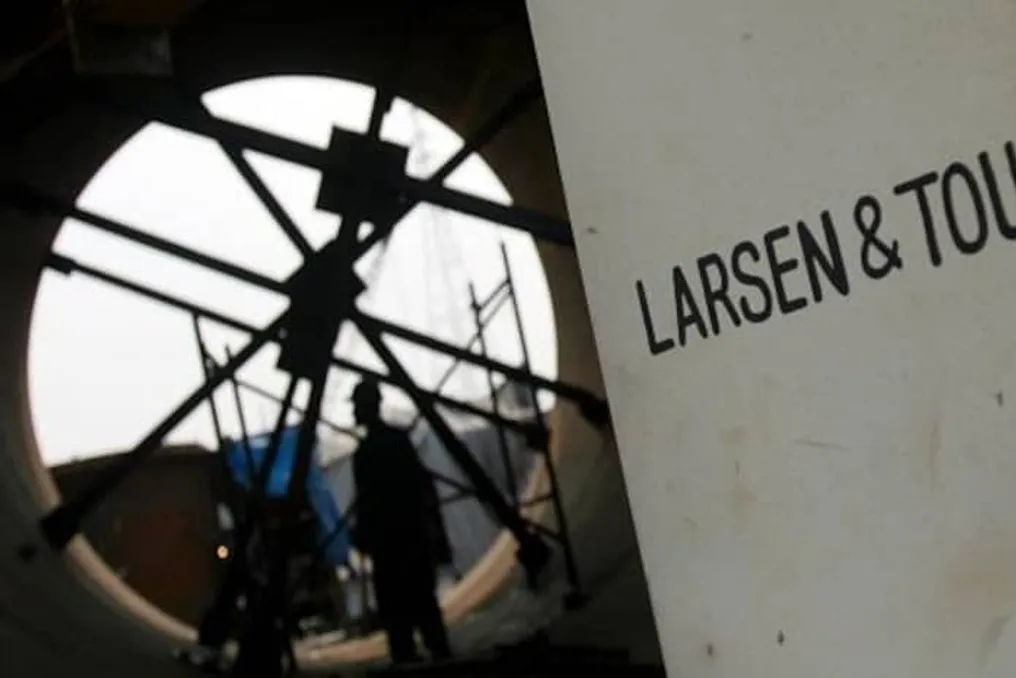
Larsen & Toubro (L&T) announced on Monday that its subsidiary, Vyoma.AI, through its AI infrastructure sub-company LTN Compute, has signed a multi-year contract to install additional NVIDIA B300 Graphics Processing Units (GPUs) at its data center in Chennai. This order, which L&T classified as 'large,' is valued at up to 500 billion rupees.

According to the report, the additional GPUs will be used to support an AI-focused platform provided by an inference infrastructure provider within a cluster consisting of 10,000 GPUs. L&T noted that this infrastructure will enable the provider to train, fine-tune, and deploy specialized AI models for high-performance inference at a commercial scale.

The development of this integrated AI factory will combine hyper-scale data center infrastructure, accelerated computing, high-performance networks, ultra-low latency interconnects, high-throughput parallel storage, and comprehensive AI infrastructure management operations, ensuring the efficient deployment of demanding AI workloads.

The factory, which will be built on the Vyoma.AI campus in Chennai, is envisioned as a gigawatt-scale AI infrastructure hub. Its first phase is planned for 250 MW, with power supply infrastructure readiness of 150 MVA, serving as a foundation for future capacity expansion.

L&T Chairman and Managing Director, S.N. Subrahmanyan, stated that this additional GPU deployment is another significant milestone in realizing L&T's vision to create world-class AI infrastructure in India. He emphasized that their AI factory in Chennai will provide the necessary scale, performance, and resilience to accelerate global AI innovations and strengthen India's position as a leading center for next-generation computing.

Similar stories

Agnikul plans to create an object for orbital data centers in Andhra Pradesh
Read more
business-standard.com

Agnikul plans to create an object for orbital data centers in Andhra Pradesh

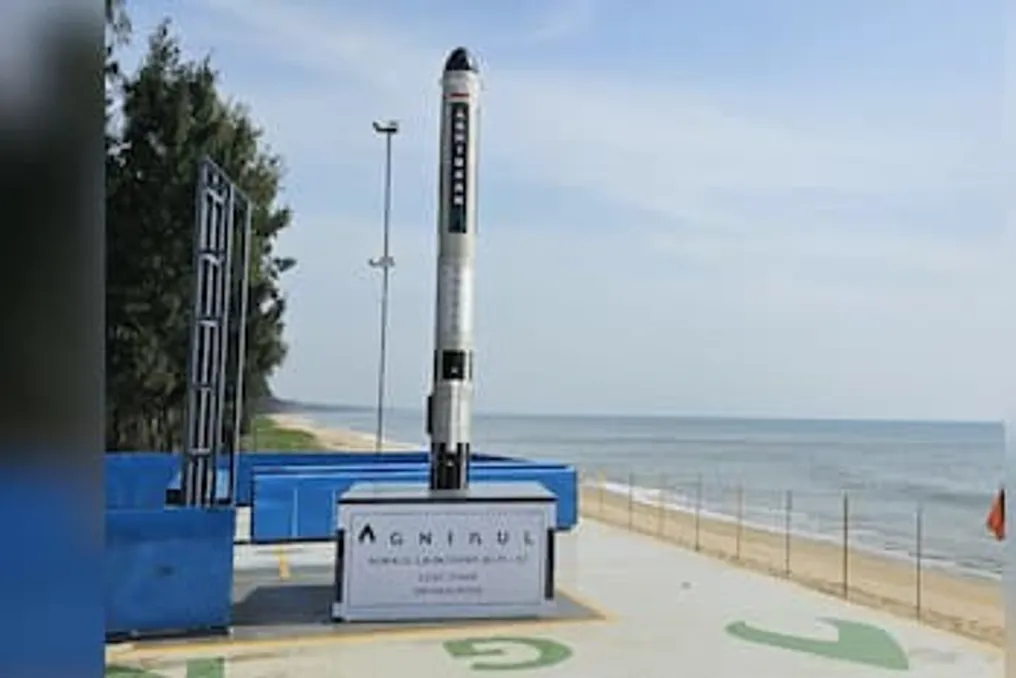
Agnikul Cosmos intends to invest 510 crore Indian rupees in establishing a facility in the state of Andhra Pradesh for manufacturing modules for orbital data centers. The project aims to integrate artificial intelligence-based computing equipment with the company's rocket upper stages.

Global challenges associated with data centers include their significant consumption of energy and water, which has even influenced recent US midterm elections. To address the crisis in global artificial intelligence (AI) and cloud computing, major players such as SpaceX, Google, Axiom Space, and Blue Origin are working on an innovative concept of placing data centers in space.

The Indian space technology startup Agnikul Cosmos has officially entered this global race by announcing plans to build one of the first specialized facilities for manufacturing orbital data centers. On Friday, the company signed an agreement with the government of Andhra Pradesh to establish such a facility in the Tirupati district with initial investments amounting to 510 crore rupees.

This move followed almost a month after Google's Suncatcher data center prototype successfully launched aboard a SpaceX Falcon 9 rocket. For Agnikul, this is a natural progression, as the company is the first to offer a patented technology allowing the expandable upper stage of its launch vehicle to function as a satellite bus for hosting a data center.

With the current investment, Agnikul aims to provide a platform for major semiconductor manufacturers so they can create GPU stacks that can be directly integrated with the company's rocket upper stage. Srinath Ravichandran, co-founder and CEO of Agnikul, stated that they want a facility for building orbital data centers so that their rocket upper stage can transform into its own data center platform, and that this will be a dedicated center for this purpose. He emphasized that this will be the first such center in Asia and one of the first globally.

Ravichandran added that there is no clear leader regarding space GPUs, and various semiconductor manufacturers are working on this. The company urges them to create GPU stacks and provide them to Agnikul for easy integration with their rocket upper stage.

The company has already secured NeevCloud from Bengaluru as its first client. Under the terms of the deal, Agnikul will launch an AI data center module developed on NeevCloud's AI SuperCloud platform into space. Advantages of an orbital data center include the use of solar energy, natural cooling, and the ability to process high-density AI workloads, as well as cloud storage and data processing.

This announcement came one day after Elon Musk's SpaceX announced plans to invest over $74 billion in two AI supercomputing campuses in Texas and Arizona, marking a major expansion of the company's business beyond rockets and satellite internet.

In May 2024, Agnikul achieved a historic breakthrough when its Agnibaan SOrTeD mission launched from India's first private launchpad in Sriharikota. This mission demonstrated several technologies, including a semi-cryogenic engine manufactured using 3D printing. In September of this year, the company opened two new facilities at its assembly and testing complex in Chennai, expanding capabilities for testing reusable rocket stages under flight-like conditions and for independently manufacturing critical rocket components.

Ravichandran noted that the next launch is expected in the first half of next year and will demonstrate their reusable rocket and unique upper stage technologies.

Artificial Intelligence Projects in China Remain Dependent on Nvidia Processors
Read more
olhardigital.com.br

Artificial Intelligence Projects in China Remain Dependent on Nvidia Processors

Chinese computing initiatives, totaling over $3 billion, remain dependent on restricted processors manufactured by Nvidia. Due to the tightening controls imposed by the United States and the departure of CEO Jensen Huang, these projects risk delays and supply issues.

A Reuters investigation revealed investments and contracts exceeding 23 billion yuan, equivalent to about $3.2 billion, distributed across various regions of China. The investigation analyzed over 150 tender notices, investment plans, construction contracts, and corporate announcements.

The examined documents show that the American company's technology is present in universities, regional computing centers, and locally supported ventures, in addition to large technology corporations. This amount includes both planned investments and already signed contracts and completed installations, including buildings, power systems, and other infrastructure, not just the acquisition of processors.

Among the mapped projects, regional computing centers and commercial facilities configured to receive specific Nvidia processors, such as the H100, H200, and H800 models, stand out. One such location is in Gansu province, in northwest China, and had plans to install thousands of chips before the end of the year, although it is unclear whether the equipment reached its destination.

Those responsible for these projects face potential supply interruptions, delays, and high readjustment costs if Washington intensifies restrictions. Huang's resignation could worsen the situation, as it weakens Nvidia's influence with American legislators who advocate for stricter regulations.

Nvidia's co-founder resigned as CEO on Thursday amid a scandal linked to his relationship with Alice Huang, a former executive associated with Megaspeed, the cloud service partner of the Singapore-based manufacturer. US authorities suspect this businesswoman may have intelligence ties to Beijing.

Megaspeed denied any illegal diversion of Nvidia processors to China. Nvidia's board launched an independent investigation and stated it had no reason to believe that corporate secrets or US national security were compromised.

US restrictions on Nvidia's advanced AI processors began in 2022 and were later expanded to cover modified versions aimed at the Chinese market, such as the H800. In January, the Trump administration began evaluating export licenses for the H200 to eligible Chinese customers under specific conditions.

In August, Nvidia claimed to be almost entirely excluded from the Chinese data center computing market. Jensen Huang had also stated the previous year that the company's share in the country dropped from 95% to zero, leading the manufacturer to exclude revenue from this market from its forecasts due to regulatory uncertainties.

However, distribution data suggests a different picture. An IDC report cited by Reuters in October estimated that Nvidia was responsible for 34% of AI accelerator shipments to China during the first half of 2026. The indicators used measure distinct aspects and do not clarify how restricted processors reached Chinese consumers.

For Sunny Cheung, an analyst at the Jamestown Foundation in Washington, it is crucial that US surveillance considers the end destination of the equipment. He stated that 'Washington must stop focusing only on who buys the chips on the surface and start examining who ultimately uses the computational power—and for what purpose.'

To date, there is no public confirmation that Huang violated export control laws. The Chinese projects identified by Reuters were also not linked to Megaspeed or the accusations involving the executive.
Karnataka considers subsidizing startup access to GPUs through AI center
Read more
yourstory.com

Karnataka considers subsidizing startup access to GPUs through AI center

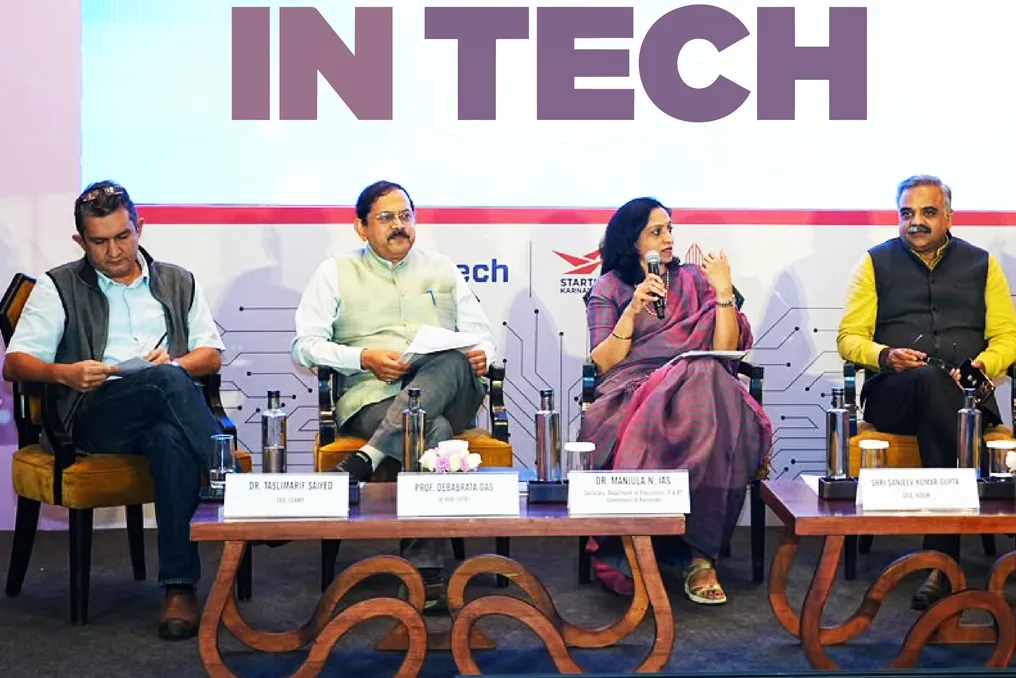
Karnataka is exploring the possibility of providing subsidies for access to Graphics Processing Units (GPUs) for startups through its upcoming Artificial Intelligence center, which will be located at IIIT Bangalore. This potential support was mentioned by the state's Secretary for IT and BT, N. Mandjula, during a panel discussion focused on supporting women in technology and entrepreneurship, after a founder creating industrial intelligent cameras requested information about cheaper computing power.

GPUs play a crucial role in accelerating the training and testing of AI models, but rental costs can limit the frequency of experiments and model refinements in the early stages of startup development. When asked about Karnataka's ability to offer support beyond the IndiaAI program from the Central Government, Mandjula told YourStory: 'We are open to considering this issue.'

The central program provides eligible startups with access to subsidized cloud computing. However, Mandjula did not provide any details regarding the budget, selection criteria, or timeline for the government support.

Debabrata Das, Director of IIIT Bangalore, noted that hardware costs, especially memory, have increased fourfold in the last year, and GPU prices have shown one of the most significant rises. He clarified that the AI center plans to provide startups with access to computational resources for idea validation and concept development. The Karnataka Council approved this AI center in September with an estimated cost of 35 crore rupees. The center will offer support and AI training to startups, and the planned AI Life Lab will provide computational infrastructure and space for application testing. Das stated that more detailed information is expected at the Bengaluru Technology Summit, which will take place from November 17 to 19.

Mandjula also mentioned that women-led startups constitute 30–35% of the winners of Karnataka's ELEVATE program annually. She added that the state has identified about 11 technology business incubators in academic institutions outside Bengaluru as part of efforts to support founders outside the capital.

The question of the cost to reach the concept stage arose during the discussion. A biotechnology company founder shared that she is using her savings to obtain early data necessary to meet funding program requirements.

Taslimarif Sayed, CEO of C-CAMP, pointed to grants and incubators that could assist founders at this stage and suggested discussing what support C-CAMP could offer.

Furthermore, Karnataka is considering a plot of land about an hour's drive from Bengaluru airport, where small companies could begin manufacturing before they can afford their own property, Mandjula stated at the panel. She noted that discussions are in the early stages and raised the issue of potentially leasing spaces and creating common amenities that companies in fields such as robotics and electronics could utilize.

Mandjula also informed YourStory that the committee studying how Karnataka should utilize its ₹300 crore deep tech fund has prepared recommendations and expects to present them to the government soon. She did not specify the start date for investment.

The ₹300 crore amount corresponds to allocations for the fund of funds under Karnataka's LEAP report. Under this model, the state can channel public funds through venture funds that invest in startups. This helps attract private capital, leaving investment decisions to the discretion of the fund managers.

Popular