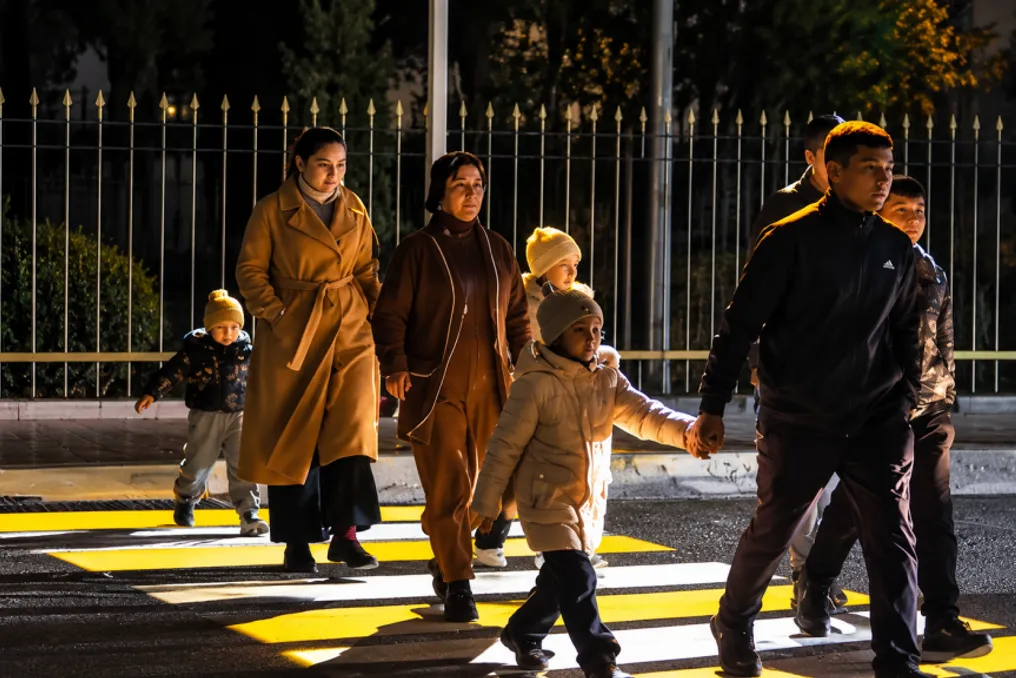
Testing has begun in Tashkent for a new type of pedestrian crossing, which is a projected light 'zebra'. This marking does not require painting and maintains its visibility even in poor weather conditions such as rain, fog, or after snowfall.
The technology creates a light image directly on the roadway, distinguishing it from traditional road markings. Officials from the Center for Urban Development and Design (TSODD) emphasize that this crossing remains clearly visible at night, during precipitation, and in fog, when paint-based markings often become less obvious to drivers.
One of the significant advantages of this system is its durability: the light crossing is not subject to wear from vehicle traffic and does not require periodic renewal. Furthermore, it remains visible even after heavy snowfalls.
According to the developers' vision, the bright projection helps drivers detect the pedestrian crossing in advance and reduce their speed in time, which should contribute to increased road safety. Currently, the project is operating in test mode, and if the new technology proves effective in various meteorological conditions and yields positive results, similar light 'zebras' may be installed in other parts of the capital.
Previously, an online service was launched in Tashkent allowing city residents to report issues related to pedestrian infrastructure. Using a map, users can indicate locations with broken sidewalks, missing pedestrian paths or ramps, as well as other obstacles hindering movement.