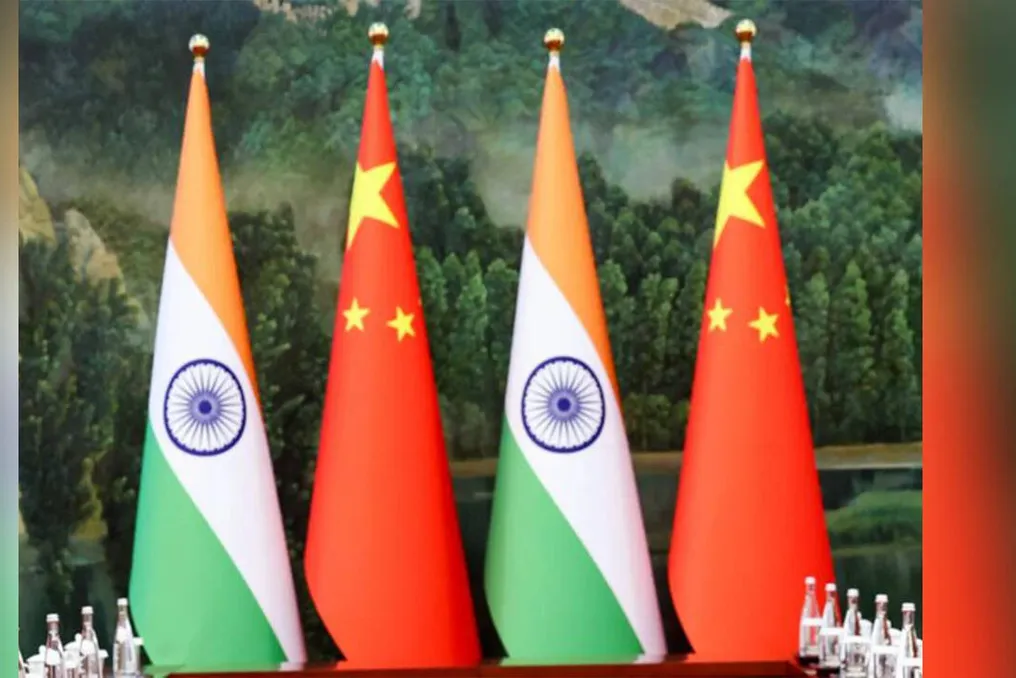
According to a new report, India is projected to be the most resilient economy among the world's top ten from 2026 to 2030, surpassing China, Japan, Germany, and the United States. India's economic resilience index stood at 71 out of 100, as determined by the Associated Chambers of Commerce and Industry of India (ASSOCHAM) on November 12th.
China ranked second with a score of 66, while Japan and Russia both scored 60. The United States placed last in the ranking.
ASSOCHAM ranked ten economies across each of the ten indicators using data from the International Monetary Fund's World Economic Outlook database. These rankings were converted into scores and summed up to yield the final result. The ranking covers the retrospective period of 2021–2025 and the forecast period of 2026–2030, and also assesses the individual years of 2025 and 2026.
Forecasted Assessment of the Indian Economy
Based on the results across these ten indicators for the 2026–2030 period, India achieved a score of 71 out of 100. It is followed by China (66), Japan and Russia (both 60), Germany (59), Italy and Brazil (both 53), the United Kingdom (52), France (40), and the United States (36).
India secured first place with a score of 71. This is attributed to its leading position in real GDP growth and real GDP per capita growth, second place in gross savings and gross capital formation, third place in export growth and debt-to-GDP ratio, fifth place in primary balance, seventh place in current account and structural balance, and eighth place in overall fiscal balance.
India's indicator improved from 66 points in the 2021–2025 period, when it ranked third after Russia and China, to 71 points for the forecast period of 2026–2030.
India's Strengths: Growth and Investment
The main advantage of India noted in the report is its growth forecast. It is projected that the average real GDP growth rate during 2026–2030 will be 6.9%, which is the highest among the ten assessed economies. India's average growth during 2021–2025 was 7.9%. Furthermore, the report ranks India first in real GDP per capita growth, which reflects the increase in economic output per person after adjusting for population growth.
Sustainable economic expansion can create opportunities for households through increased employment, business activity, wage growth, and demand for goods and services. Sectors such as manufacturing, infrastructure, digital services, and renewable energy may benefit from increased investment and expanded economic activity. However, GDP growth alone does not guarantee that every household's income will grow at the same rate; the distribution of growth, job creation, wage increases, and productivity gains will determine how much of this expansion reaches individual families.
Strengthening the Internal Engine of Growth Through Savings and Investment
In the forecasts for 2026–2030, India ranks second among the ten economies in gross national savings and gross capital formation. Gross national savings are projected to average 35.3% of GDP, and gross capital formation at 36.7% of GDP. China leads in both these indicators.
High savings provide internal resources that can finance investments, and capital formation creates the productive potential for future growth. This supports businesses, infrastructure development, and employment. For private investors, a growing domestic investment base can open opportunities in sectors such as banking, manufacturing, infrastructure, engineering, energy, and logistics.
It is important to distinguish between national savings and household financial savings. The gross national savings figure in the report includes savings from households, companies, and the government and should not be interpreted as the amount Indian families deposit in bank accounts, mutual funds, or other financial products. A higher investment-to-GDP ratio does not guarantee superior returns on stocks or other asset classes; valuations, corporate earnings, interest rates, and investor purchase prices will remain important.
Improving India's Debt Position
India's public debt trajectory is another factor supporting its ranking. The report forecasts that total public debt will average around 79.9% of GDP during 2026–2030, compared to 84.8% in 2021–2025. Projections show the debt-to-GDP ratio decreasing from 83.1% in 2026 to 77% by 2030.
A reduction in the debt-to-GDP ratio can strengthen fiscal sustainability and potentially give the government greater flexibility in responding to economic shocks.
Fiscal Deficit Remains a Concern
Despite ranking first, India's public finances remain a weak point. The report estimates the average fiscal deficit of the Indian central government at 8.5% of GDP in the 2021–2025 period and forecasts its narrowing to 7.1% in 2026–2030. In the forecast period, India ranks eighth among the ten economies in overall fiscal balance.
A persistent budget deficit means the government continues to spend more than it earns, requiring borrowing to cover the gap. Higher borrowing needs can affect interest rates, the cost of capital, and the availability of funds for private investment. ASSOCHAM Secretary General Saurabh Sanyal points out that budget consolidation is a key area for monitoring.
He stated: 'The report identifies budget consolidation as a key area for monitoring. The deficit of the Indian central government was the largest of the ten in 2021–2025, but it is projected to narrow from an average of 8.5% of GDP to 7.1% in 2026–2030.'
Risks Related to Oil Dependence
India's external position is another vulnerability highlighted by the report. The current account deficit is projected to average 1.4% of GDP during 2026–2030, compared to 1.1% in 2021–2025, and could reach 1.7% by 2030. A current account deficit means the country spends more on its external transactions than it earns.
India's reliance on crude oil imports makes this position vulnerable to international energy prices. Rising crude oil prices increase import costs, putting pressure on the rupee and potentially fueling inflation. Higher fuel and transportation costs can ultimately affect the prices of daily goods and services. For households, this may mean higher transport expenses, more expensive groceries, and pressure on disposable income. For investors, this could affect sectors differently: oil importers may face rising raw material costs, while some domestic energy producers may benefit from higher prices.
The report emphasizes that energy diversification and investment in renewable energy are crucial ways to reduce this vulnerability. India's renewable energy capacity stood at 274.68 GW as of March 2026, against a target of 500 GW of non-fossil fuels by 2030.
Opportunities in Manufacturing, Exports, and Digital Services
India's growth forecast is supported by opportunities in manufacturing, high-tech services, and digital industries. The report notes that the digital economy accounts for about 13% of India's GDP and could approach 20% by 2030. The expansion of manufacturing and India's growing network of free trade agreements are also noted as potential drivers of exports and investment.
India's export volume is projected to grow by 4.5% during 2026–2030, placing it third among the ten economies. However, the report warns that preferential market access through trade agreements does not guarantee export growth. Companies will require competitive pricing, reliable logistics, technology, and a skilled workforce to benefit from global trade expansion.
ASSOCHAM Chief Economist Dr. S. P. Sharma stated that the next phase of growth will require reducing the cost of doing business. He noted: 'Policy must now focus on simplifying local business operations, with greater visibility for SMEs. Reducing the cost of capital, electricity, compliance, logistics, and labor will level the playing field domestically and keep India the most resilient among leading economies.'
Is the High Ranking the Best Direction for Investment?
The ranking provides a positive assessment of India's medium-term macroeconomic fundamentals, but investors should exercise caution and not view it as an investment recommendation. This score represents a relative comparison of ten economies, not an assessment of the expected returns of their stock markets, bonds, real estate markets, or currencies.
ASSOCHAM ranked countries across each of the ten indicators, converted these rankings into scores, and summed them up to obtain the final score out of 100. Each indicator contributes equally to the composite score. India's score of 71 is only five points higher than China's (66). The report also acknowledges that India's move to first place reflects not only its own progress but also changes in the metrics of other economies.
There are also limitations to what this ranking can tell investors. It does not assess stock market valuation, corporate earnings, household debt burden, income inequality, or the distribution of economic growth.