
IIT BHU offers students a package worth 2.20 crore rupees during placement season
Read more
Aaj Tak
www.aajtak.in

IIT BHU offers students a package worth 2.20 crore rupees during placement season

The Indian Institute of Technology Banaras Hindu University (IIT BHU) demonstrated outstanding results in the BTech placement season. During the 2024-2025 period, students received the highest package of 2.20 crore rupees. Thanks to this, students were offered jobs at companies such as Google and Microsoft, as well as other major corporations.

According to the official annual report of IIT BHU for 2024-25, the highest annual package for the BTech program in the 2024-25 academic year was 2.20 crore rupees. During this period, approximately 398 companies participated, providing students with a total of 1405 job offers, including 4 international offers.

If we look at the previous academic semester, 2023-24, 1305 offers were received. Thus, the total number of offers increased by 100 compared to the previous year.

Among the prestigious engineering institutions in the country, IIT BHU provided excellent employment opportunities for its students. In the 2024-25 placement season, the highest annual package reached 2.20 crore rupees, and the average annual compensation (CTC) for students also rose to 24.56 lakh rupees. This represents an increase in the average CTC by 2 lakh rupees compared to the previous season.

According to the institute's placement statistics, the average CTC in 2023-24 was 22.56 lakh rupees, while in 2024-25 it rose to 24.56 lakh rupees, which means an increase in the average CTC of approximately 8.87 percent.

IIT BHU students received job offers from domestic and foreign companies. According to the institute's statistics, 952 job offers were made during this season, and the placement percentage was 92.33%. Meanwhile, the highest annual package reached 2.20 crore rupees, and students also received four international offers.

Furthermore, students had the opportunity to gain industry experience during their studies, not only after graduation. The institute's placement cell provided a total of 502 paid internships, including one international internship offer. Internships allow students to work with companies and improve their technical skills, helping them prepare for job searching after completing their studies.

Similar stories

NIT Student Receives Job Offer of 10 Million Rupees Despite Not Majoring in Computer Science
Read more
www.aajtak.in

NIT Student Receives Job Offer of 10 Million Rupees Despite Not Majoring in Computer Science

Most students entering engineering disciplines show particular interest in computer science, mainly due to the high salary it offers. However, there are examples that contradict this trend. A student from NIT Warangal has demonstrated that the path to multi-million rupee job offers does not lie solely through computer science.

Mohammad Nahil Nashwan, a student studying Electrical and Electronics Engineering (EEE) at NIT Warangal, was offered a local job with a salary of 10 million rupees. At the same time, during this same placement season, Narayan Tyagi, who is studying Computer Science and Engineering (CSE), received an offer of 1.27 million rupees. This offer became the largest package achieved in the history of the institution.

According to placement statistics, many students managed to secure large packages at the beginning of the 2025 season. According to a press release from NIT Warangal dated November 2025, more than 200 students received packages exceeding 2 million rupees within the first two months of the placement season. Furthermore, 163 students received offers above 2.5 million rupees, and 125 students received offers above 3 million rupees. Additionally, 34 students received packages exceeding 50 million rupees.

At NIT Warangal, good career prospects open up not only for computer science students but also for those studying electrical and electronics engineering. Students majoring in EEE can build a career in fields such as electronics, power systems, semiconductors, embedded systems, and other technical areas.

DU Executive Council Members Object to Growing Reliance on HEFA Loans amounting to 161.36 Crore Rupees
Read more
www.aajtak.in

DU Executive Council Members Object to Growing Reliance on HEFA Loans amounting to 161.36 Crore Rupees

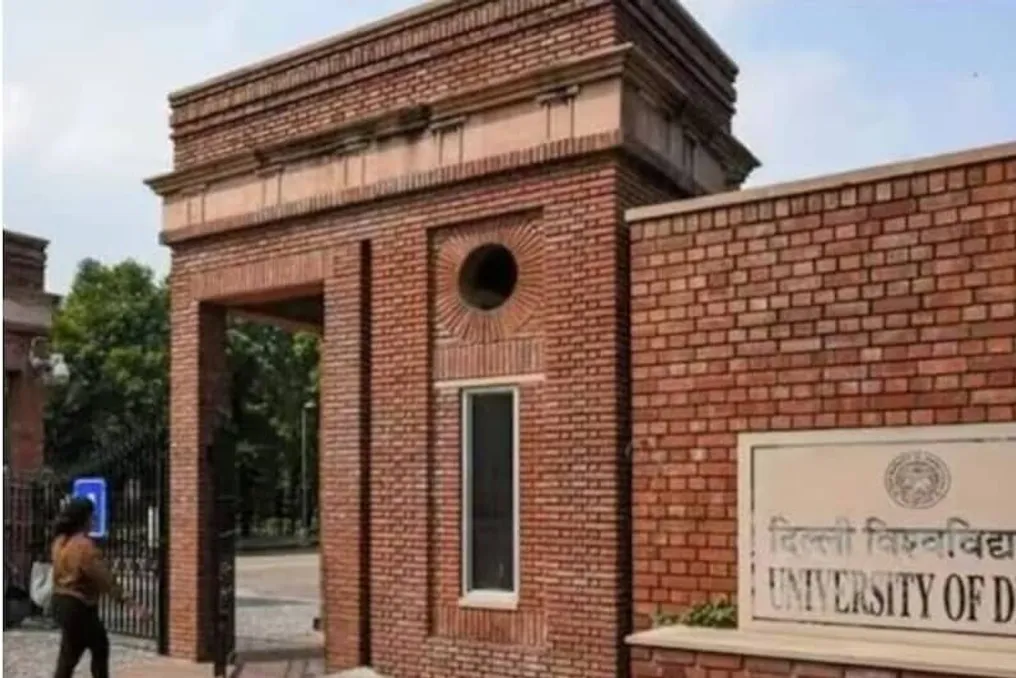
Despite serious opposition regarding the growing dependence of Delhi University (DU) on loans, the Executive Council approved the annual report for the academic year 2025-26. According to the news agency, one of the elected council members warned that the trend of borrowing could lead to the commercialization of the university and weaken its original status as a public institution.

The discussion of the annual report took place at the Executive Council meeting on Thursday, which was adopted despite disagreements.

Elected Executive Council member Mitraj Dusia expressed serious concern about the university's increasing financial obligations in his Dissent Note. He questioned the use of loans obtained from the Higher Education Financing Agency (HEFA) to cover infrastructure needs and other capital requirements.

The note indicates that as of March 31, 2026, the university had an outstanding debt to HEFA of approximately 161.36 crore rupees. This amount includes an initial balance of 46.93 crore rupees, a new loan of 109.63 crore rupees disbursed during the financial year, and accumulated interest of 4.80 crore rupees.

Dusia also objected to the requirement that the university repay 10 percent of the principal debt, which is 3.15 crore rupees, from its own funds. The remaining 90 percent, or 28.35 crore rupees, is covered by the Ministry of Education.

The note expresses concern that the responsibility for debt repayment may force the university to increase student tuition fees, commercially utilize university resources, and increase self-financing courses. Furthermore, the note raises the issue of an unused grant of 221.50 crore rupees received from the Ministry of Minority Affairs. It questions why the university relies on commercial loans when government grants remain unspent?

The note clearly states: 'DU must demand that all its expenses be covered by grants received from the government.' Council members believe that the growing reliance on commercial credit may divert the university's attention from teaching and research towards debt servicing, which will ultimately harm its public character. Nevertheless, the annual report was approved after all protests and concerns.

Popular