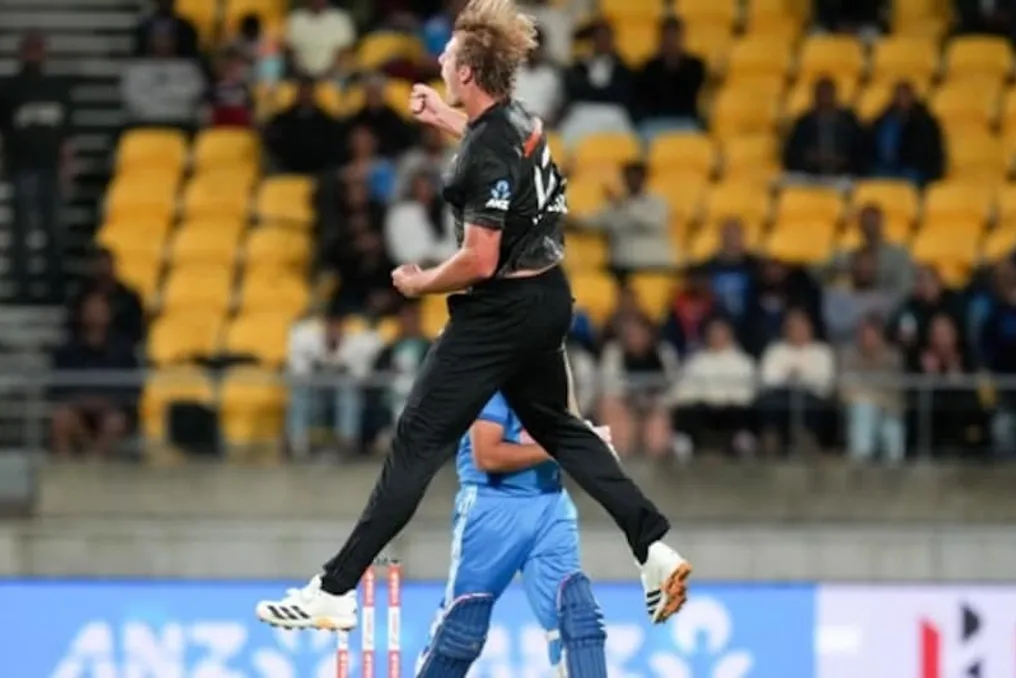
Fielding error in the match between India and New Zealand leads to player saving, causing captain's dissatisfaction
Read more
Aaj Tak
www.aajtak.in

Fielding error in the match between India and New Zealand leads to player saving, causing captain's dissatisfaction

During the first Test match of the series between India and New Zealand, held at Basin Reserve in Wellington, an incident related to a fielding error occurred, which negatively affected the Indian team. This incident took place on the fifth day, November 23rd, and involved an error made by Akash Dip during the game.

New Zealand basketball player Daryl Mitchell avoided being out despite being on the half-field. This episode happened in the 74th over of New Zealand's second innings. During this over, Daryl Mitchell hit the ball thrown by Washington Sundar towards mid-on and started running for a run. However, Tom Blandl did not move from the opposite end. Akash Dip had a full opportunity to get Mitchell out, but he could not hold the ball properly, and Mitchell returned to the crease.

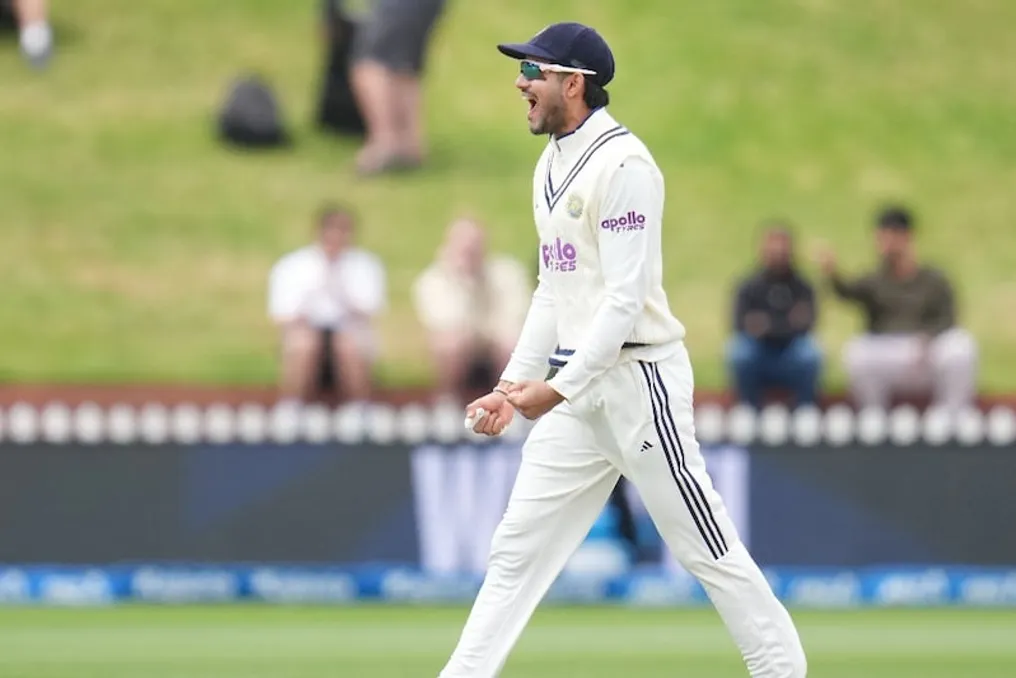
Former New Zealand cricketer Ian Smith commented on this situation, saying: 'Remember this.' Indian captain Shubman Gill looked quite upset after this chance slipped away, and wicketkeeper Rishabh Pant also expressed his displeasure.

Nevertheless, in the first session of the fifth day, the Indian team managed to take two important wickets. Washington Sundar allowed Rishabh Pant to catch Devon Conway, and Prasad Krishna took Rachin Ravindra with Kel Rahul. These two batsmen added 72 runs to the third wicket.

Devon Conway demonstrated patient batting. On the other hand, Ravindra faced initial spells from Indian fast bowlers. At the beginning of the fifth day, New Zealand was trailing India by 233 runs and was trying to buy time by preserving wickets. Anshul Kamboj ended the fifth wicket partnership with Tom Blandl, catching him behind. After this, Daryl Mitchell and Glenn Phillips formed a brilliant sixth partnership, increasing the pressure on the Indian team.

Similar stories

Dispute with umpires during India vs New Zealand match after DRS decision, while Rishabh Pant supported the captain
Read more
www.aajtak.in

Dispute with umpires during India vs New Zealand match after DRS decision, while Rishabh Pant supported the captain

On the third day of the match between India and New Zealand, Indian batsmen dominated. However, shortly before the end of the day, captain Shubman Gill came out with a score of 98 runs, failing to reach his century.

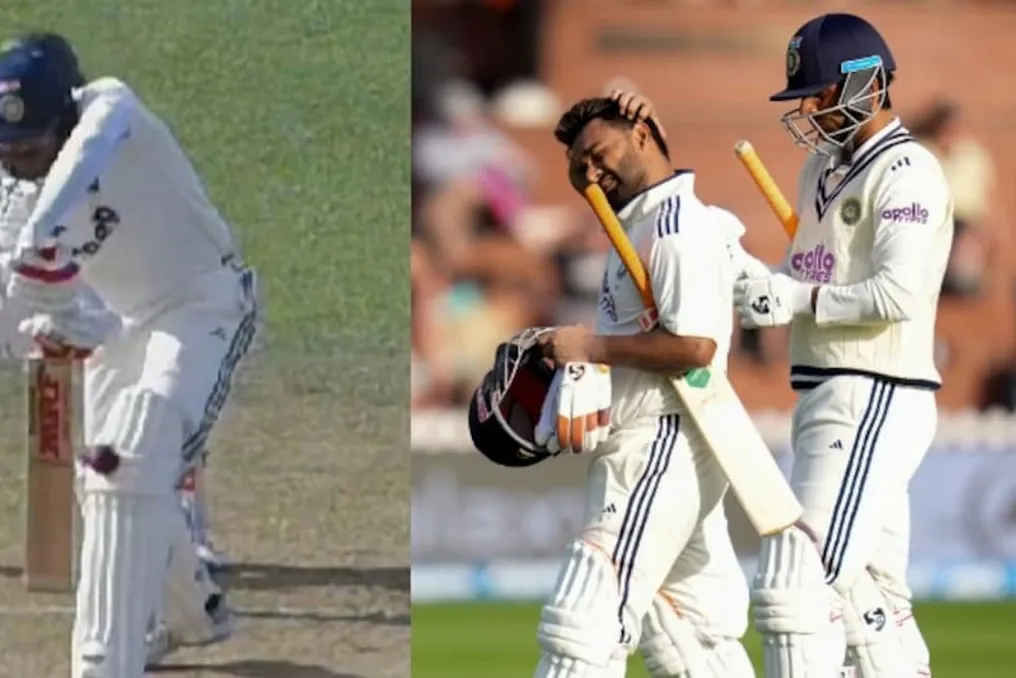
Nevertheless, the decision on one of Shubman Gill's DRS reviews was changed, causing excitement among the New Zealand players. During this incident, Rishabh Pant's relaxed style once again drew attention: he stood near the New Zealand players and listened attentively to the entire discussion with the umpire.

This episode occurred in the 108th over. The ball approaching Nathan Smith hit directly into Shubman Gill's pad. The field umpire raised his finger and declared Gill out, but Gill did not initially request a review. He asked for advice from Rishabh Pant, who was standing at the far end of the field.

When there were only three seconds left on the timer, Pant advised the captain to request DRS. This decision saved Gill from being dismissed, and after that, the Indian team began scoring at a fast pace.

The third umpire checked the replay from different angles. A slight deflection was noticed on the ultraedge, indicating that the ball struck the inner edge of the bat before hitting the pad. The third umpire informed the field umpire Richard Allinworth that the ball touched the bat, after which the field decision was changed, and Gill remained on the field.

The change in decision caused clear dissatisfaction among the New Zealand players. They believed there was a gap between the bat and the pad, and the ball hit the pad without touching the bat. During the replay viewing, the voice of one of the New Zealand players was heard stating: 'Yes, it's out. There is a small gap visible.'

At this time, another New Zealand player asked: 'Kumar, do you see the gap?', to which Rishabh Pant replied with a smile: 'Yes, Kumar is not blind. Don't worry.' Pant's response made the atmosphere even more interesting.

Despite the umpire's decision, the New Zealand team's dissatisfaction did not subside. Nathan Smith approached the field umpire Richard Allinworth to seek clarification regarding the decision. Rachin Ravindra and Daryl Mitchell also joined the conversation, trying to understand how the decision could have changed despite the gap between the bat and the pad.

In the first match of the India versus New Zealand series: New Zealand team will field with three fast bowlers
Read more
www.aajtak.in

In the first match of the India versus New Zealand series: New Zealand team will field with three fast bowlers

The New Zealand team is preparing for the first Test match against India, where they plan to take the field with three fast bowlers and one all-rounder. This was confirmed by team captain Tom Latham.

Latham revealed the team's tactical strategy during a press conference the day before the first Test. He emphasized that the team will rely on fast bowlers to challenge the Indian batsmen.

It is anticipated that experienced fast bowlers Matt Henry and Kyle Jamieson will be part of New Zealand's pace attack. A decision regarding the third fast bowler has not yet been made, but the all-rounder will provide the team with an additional option.

Matt Henry's return is good news for New Zealand, as he has recovered from a concussion and is ready to return to Test cricket. Henry sustained the injury during the ODI series preceding this match, in which New Zealand lost 1-3.

Latham expressed happiness about Henry's return, stating: 'Matt Henry is fit, and I hope he will be happy to show himself in the game of cricket.' Furthermore, Kyle Jamieson has been actively working on his game in recent weeks, and the captain is impressed by his efforts. Latham noted: 'Jamieson played well in the white-ball matches. He worked hard and put in great effort in recent weeks.'

Despite the New Zealand team being in first place in the WTC table, Latham does not want his team to focus on the mathematics of the table. He believes that New Zealand should trust its strategy and playing style. Latham stated: 'The WTC table is not my focus. We will concentrate on what we can control. We will play cricket in our own style and give ourselves the best chance to win.'

New Zealand's strategy is clear: they will apply pressure with fast bowlers against the Indian team while relying on their natural style of play. Now it remains to see how effective this plan with three fast bowlers will be against the Indian batsmen.

Matt Henry took 6 wickets for 27 runs, leading India to a 244-run victory
Read more
www.aajtak.in

Matt Henry took 6 wickets for 27 runs, leading India to a 244-run victory

Despite the status of big names in Indian cricket, players are responsible for scoring runs on the field. India's defeat against New Zealand in the third day-one match, with a score of 244 runs, once again exposed the weaknesses of the Indian batting lineup. The way Indian batsmen were under pressure from the swing, seam, and bounce bowling of Matt Henry is not just a failure of one match, but a serious question regarding the technique and preparation of the Indian batting unit.

In the five-match series, India leads 2-1 in day games, but New Zealand opened the door to a comeback after this victory. There is one more match remaining, scheduled for November 15th at Mount Maunganui, which will determine the course of the series. New Zealand has a chance to level the score at 2-2. For the Indian team, this is a battle not only for winning the series but also for maintaining the authority of their batting.

The figure of three completed innings in this series reflects the true picture of the Indian batting. Only Virat Kohli managed to score a half-century, posting 74 runs. No other Indian batsman reached the 50-run mark. This statistic raises particular concern, as the Indian squad is not lacking in experience. There are big names, extensive international cricket experience, and batsmen who play domestic cricket. Nevertheless, the Indian batting consistently crumbles when faced with New Zealand's bowling.

The question arises: does our batting depend solely on flat pitches and favorable conditions? As soon as the ball starts to spin in the air, gains movement off the seam, or gets extra lift, why do the feet of the Indian batsmen stop working? In this match, Matt Henry highlighted the biggest weakness of the Indian batting. His deliveries possessed spin, seam movement, and bounce. However, the Indian batsmen lacked the footwork most necessary in such conditions.

Many batsmen failed to correctly judge the line and length of the ball. Some fell into a trap on the front foot, while others hesitated with the movement to the back foot. The feet were not used properly before the ball was played. This is precisely why Henry constantly troubled the Indian batsmen. This is not just praise for Henry; good fast bowling globally exploits advantages in such conditions. The real question is why the Indian batsmen had no answer to such bowling? If the entire batting collapses due to slight spin and seam movement, it is a cause for concern.

What Matt Henry did in this match will be remembered for a long time. He took 6 wickets, conceding only 27 runs in 9.4 overs. Two of his overs were without a single run conceded. His statistics are the biggest proof of the Indian batsmen's failure. Henry forced the batsmen into errors by constantly pitching the ball around the off-stump, relying on line and length and seam movement rather than pace. The Indian batsmen had neither a plan to counter him nor confidence in rotating the strike.

The dominance of a single bowler indicates how deep the technical flaws in the Indian batting are. It is necessary to move beyond big names and establish accountability. Although criticizing the performance of big players in Indian cricket is often considered awkward, reputation does not earn runs in international cricket. Rohit Sharma, Virat Kohli, and other experienced batsmen are expected because they have proven themselves on the big stage. However, current results cannot be justified solely by past records and achievements. Every batsman in the squad must fulfill their duty. Discussing the possibility of giving chances to young players will only be meaningful if the problems of the current batting are honestly addressed.

India still has a chance to win the series, but New Zealand made the match interesting. The final day game will take place on November 15th at Mount Maunganui. By winning, New Zealand can level the score at 2-2. Before this match, the Indian team needs to seriously work on its batting. The problem will not be solved merely by longer net practice. Batsmen need to learn to read the line of the ball, improve footwork, and find ways to play against spin and seam movement. It is easy to dismiss the 244-run loss as a bad day, but the fact that there was only one half-century in three innings and Matt Henry's performance of 6 wickets for 27 runs shows that the matter is much more serious. The Indian batting needs to look in the mirror. The question is not about losing to New Zealand, but why our batsmen stop as soon as there is slight spin, slight seam movement, and bounce?
Popular