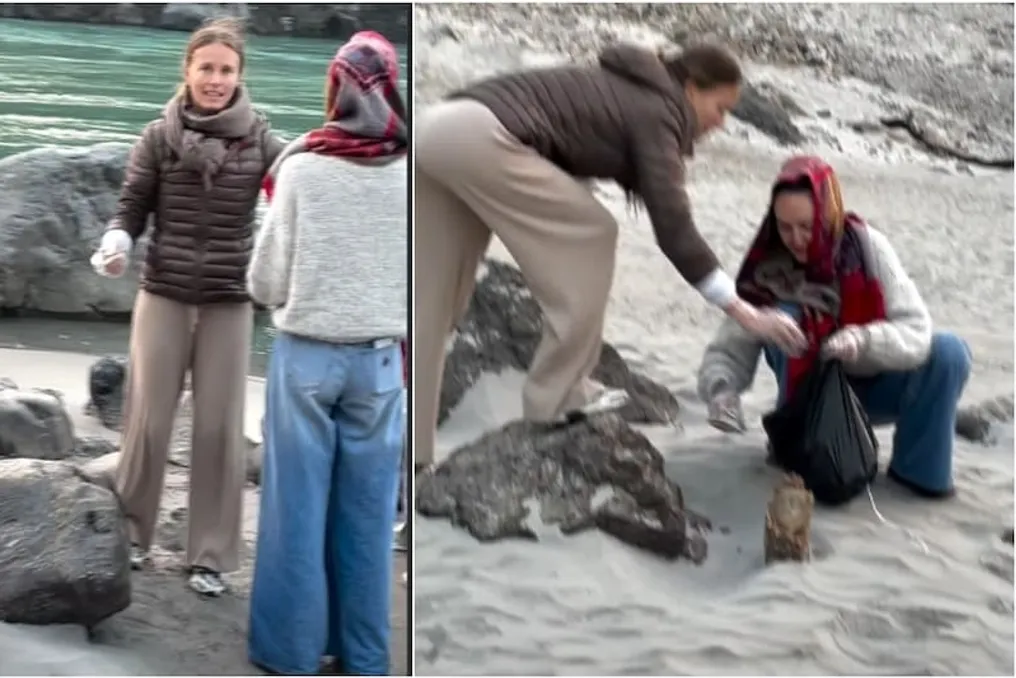
A video has gone viral in Rishikesh, filmed on the banks of the Ganges, showing several foreign women collecting plastic waste and debris scattered along the river. These women, using gloves and black garbage bags, were cleaning the area near the ghats.
The video was published by Instagram user Prasan Kumar. The recording shows the banks of the Ganges in Rishikesh, as well as other tourists and small stalls nearby. However, the attention of viewers was drawn to the foreign visitors who participated in cleaning the ghat without any pretense.
The person who filmed the video expressed surprise, stating that while visiting the ghat in Rishikesh, he saw these foreign tourists engaged in cleanup. He noted that local residents often throw away plastic bags and other items, while some foreign women clean up this trash.
Following this, he raised a serious question: why are tourists from other countries forced to try and save our heritage and natural places? This small episode sparked a wide discussion on social media. Many users highly praised the initiative of the foreign women, arguing that if tourists can take responsibility for the cleanliness of the place, then local residents and other travelers should do so too.
Nevertheless, some commentators used this video as an opportunity to raise the issue of the growing amount of garbage in popular tourist and religious sites across the country. In Rishikesh and Haridwar, a large number of people come to the banks of the Ganges for religious rituals, pilgrimages, and recreation. As a result, the accumulation of plastic, packaging, clothing, and other waste on the ghats presents a constant cleaning problem.
Despite the fact that the Ganges is not just a river but is connected to the faith of millions, there are often shots where people throw trash into the river and onto its banks. Although local groups and volunteers regularly conduct cleanup campaigns, the video from Rishikesh once again highlights this problem. The actions of the foreign tourists in collecting trash are undoubtedly commendable, but the deeper question is why the responsibility for maintaining the cleanliness of a place we consider part of our faith and heritage should fall on someone else?