Malawi strengthens border controls to prevent Ebola virus importation
Read more
CGTN
cgtn.com

Malawi strengthens border controls to prevent Ebola virus importation

The Government of Malawi, acting through the Ministry of Health and Sanitation, has issued a warning to travelers and implemented enhanced surveillance and public health measures. These steps are aimed at preventing the importation of the Ebola virus disease from the Democratic Republic of Congo (DRC).

The Ministry of Health and Sanitation announced these measures on Friday in a notice signed by the Secretary for Health and Sanitation, Dan Namarika.

According to this directive, all arriving travelers are required to complete an online health declaration form before arrival or immediately upon entry, providing contact information for subsequent monitoring by medical personnel.

Travelers arriving from the DRC or transiting through it must undergo 21 days of self-isolation under daily observation by health specialists.

Meanwhile, individuals arriving from Uganda, Kenya, or Nigeria, or transiting through these countries, will also be under daily monitoring by medical staff for 21 days.

Furthermore, the warning mandates that all incoming passengers undergo a medical examination, including temperature checks, at airports, land border crossings, and internal ports.

The Ministry strongly urged travelers, transport operators, and border officials to adhere to infection prevention measures and follow the instructions of health port authorities.

Malawi has not registered any cases of Ebola since the start of the latest outbreak in the DRC in May 2026. According to the Africa Centres for Disease Control and Prevention, this outbreak has resulted in 11,613 confirmed cases and 5,678 deaths.

Similar stories

Africa CDC warns of serious difficulties in combating the Ebola outbreak in DRC
Read more
cgtn.com

Africa CDC warns of serious difficulties in combating the Ebola outbreak in DRC

Six months after the ongoing Ebola outbreak in Bundibugyo, the Africa Centres for Disease Control and Prevention (Africa CDC) warned of 'huge challenges' contributing to the further spread of the deadly disease, particularly in the Democratic Republic of Congo (DRC). To date, the total number of confirmed cases has exceeded 11,100, with deaths surpassing 5,400.

In a statement released on Sunday, marking the six-month anniversary of the outbreak declaration in the DRC on May 15, Africa CDC indicated that instability 'remains one of the greatest obstacles to response,' as over 80 attacks on health facilities have been recorded in the last six months. The agency warned that ongoing conflicts, population displacement, and movement restrictions complicate containment efforts.

Despite 'significant progress' in bringing essential services closer to affected communities, the agency reported that between 400 and 500 new cases continue to be registered weekly in the DRC. As the outbreak spreads, the virus has expanded from three health zones in one province to approximately 67 health zones across eight provinces in the DRC.

The specialized continental public health agency of the African Union expressed particular concern about the significant impact of the disease on children. Africa CDC data showed that children account for over a quarter of all confirmed cases and a third of all deaths; seven out of ten children under five with confirmed Ebola have died.

The agency warned that low follow-up rates for contacts and the high number of community deaths indicate that infections are being detected too late. Recent cases imported into Kenya and Nigeria underscore the persistent risk of the virus spreading beyond national borders.

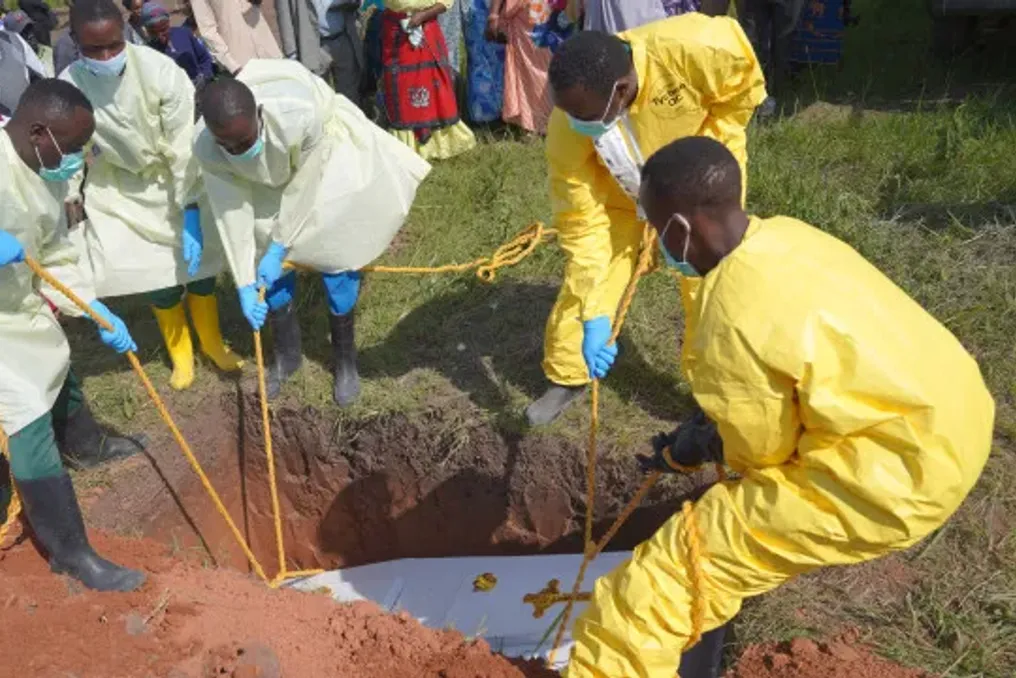
On a positive note, Africa CDC noted that most early outbreaks have been brought under control, and rapid spread has been halted, with about 3,000 patients recovering from Ebola. It was noted that nearly 90% of registered deaths are now conducted through safe and dignified burials, diagnostic capacity has increased from two laboratories to more than two dozen, and nearly 2,000 beds for treatment are available in 104 treatment and transit centers.

Furthermore, the agency emphasized that improved cross-border cooperation has strengthened surveillance, information sharing, and coordination. Noting the absence of licensed vaccines or targeted medical countermeasures against the Bundibugyo strain of Ebola, it reported that scientific research is currently underway, including the evaluation of candidate treatments and vaccines.

The agency concluded that 'these achievements remain fragile and must be protected and scaled up in affected and at-risk areas,' adding that sustained rapid and flexible funding until 2027, alongside political commitment, safe access, protection of healthcare workers, and significant community involvement, is necessary.

Ebola outbreaks in the Democratic Republic of Congo exceed 11 thousand cases and cause thousands of deaths
Read more
noticiasaominuto.com

Ebola outbreaks in the Democratic Republic of Congo exceed 11 thousand cases and cause thousands of deaths

The Ebola outbreak in the Democratic Republic of Congo (DRCongo) has surpassed the mark of 11 thousand cases, according to government notification, while the disease continues to spread across the national territory.

The latest data released by the Ministry of Health indicates that 11,042 individuals have been infected with the deadly virus, resulting in 5,387 deaths, which represents almost half of those infected. This event constitutes the deadliest outbreak ever recorded in DRCongo. Additionally, 2,990 patients have recovered so far, and another 651 remain under hospital care or in isolation.

Health authorities reported that the contact tracing rate reached 79.7%. The eastern provinces of Ituri and North Kivu are the most affected areas, concentrating 57.7% and 32.7% of the new cases registered on November 9, respectively.

The outbreak began in mid-May in the province of Ituri. Since then, Congolese authorities have faced great difficulties in containing it due to multiple factors, including armed conflicts, weaknesses in the health system, precarious access infrastructure, and acts of violence perpetrated by residents motivated by misinformation and distrust.

The Bundibugyo strain, responsible for this epidemic, has no known vaccine or treatment and has already spread to eight of the country's 26 provinces. The World Health Organization (WHO) is developing two vaccines, whose human trials have already demonstrated safety, although the development process may take several months.

In parallel, DRCongo implemented an Ebola immunization campaign at the end of August using the Ervebo vaccine, which is the only one available on a large scale. Although initially designed for the Zaire variant (the most common), it showed positive efficacy against the Bundibugyo strain in animal trials.

The increase in violence in the two main hotspots of the disease, Ituri and North Kivu, has caused apprehension among healthcare professionals, who have requested a cessation of confrontations to guarantee unrestricted access for medical teams. Health units and medical professionals have also suffered attacks from community members who show skepticism towards the virus.

Experts recommend reinforcing efforts to slow down and control the disease in DRCongo, given that it has already spread to other African nations. The epidemic reached neighboring Uganda, where the WHO declared the end of the outbreak on August 26 after recording 20 confirmed cases, 15 of which were imported from DRCongo and resulted in two deaths.

Cases linked to the Congolese outbreak have been identified in two other African countries: Kenya (with nine cases and two deaths) and Nigeria (with one case). Furthermore, one case related to the epidemic was detected in France. Four people who contracted the virus in DRCongo were transferred to the Netherlands (one), Germany (two), and the United Kingdom (one).

This outbreak marks the 17th Ebola epidemic to affect DRCongo and is established as the second deadliest of the disease in world history, although it still falls short of the most severe epidemic recorded, which caused about 11 thousand deaths and 28 thousand infections in West Africa between 2014 and 2016. The Ebola virus is transmitted through direct contact with the body fluids of infected people or animals and causes severe hemorrhagic fever, vomiting, diarrhea, and internal bleeding.
Popular