Women from Karnataka receive 10 lakh award for preserving local seeds
Read more
The Better India
thebetterindia.com

Women from Karnataka receive 10 lakh award for preserving local seeds

A small quantity of seeds can hold agricultural knowledge for many generations. In the Dharwad district of Karnataka state, a group of women is engaged in collecting, preserving, and exchanging these seeds, helping farmers continue to grow local crops adapted to the region's rain-fed farming conditions.

On November 12, 2026, the Bibi Fatima Women's Self-Help Group (SHG) from Tirtha village, Kundgol taluk, received the Plant Genome Saviour Community Award, along with a cash prize of 10 lakhs, a certificate, and a commemorative plaque.

This recognition was given for the collective's efforts in preserving over 250 varieties of local seeds and reviving traditional mixed cropping systems based on millet in 30 villages in the rain-fed farming areas of Dharwad.

The initiative started in 2018 when farmer Bibidjan Maulasab Halemani united 14 other women to form this collective. According to Bibidjan, her interest in seed preservation stemmed from her father, who also practiced this work.

In a report published in The New Indian Express on November 5, 2026, she stated: 'My father conserved seeds, and I became interested and passionate about seed preservation.' She founded the SHG and its seed bank in 2018 with the aim of providing farmers with quality local seeds and promoting traditional crop cultivation.

Seed Bank with Over 250 Varieties

The community seed bank of the group stores a wide range of local crops, including:

  • Jowar (sorghum)
  • 70 varieties of finger millet
  • 25 varieties of small millet
  • Two varieties of top brown millet
  • 10 varieties of tail millet
  • 25 varieties of horse gram
  • 10 varieties of chickpeas
  • 25 varieties of rice
  • Three varieties of green peas
  • About a dozen oilseed varieties
  • Several vegetable varieties

These varieties are part of the region's traditional agricultural diversity. Especially the local millet varieties are adapted to the local agro-climatic conditions and are capable of withstanding weather fluctuations.

The collective has also worked on reviving millet-based mixed farming, where farmers grow several crops simultaneously instead of relying on a single harvest. According to the UN Development Programme's Equator Initiative, the group now supports more than 5000 farmers in 30 villages. Its activities include promoting multi-cropping, maintaining community seed banks, and encouraging sustainable agricultural practices.

In addition to seed preservation, the collective has expanded its activities into agricultural processing and livelihoods. It operates a solar threshing complex for processing millet, which helps women produce value-added products from millet. The initiative is also involved in animal husbandry, gardening, and improving household food and nutritional security.

Community-Led Seed Preservation Recognition

The national award is not the first recognition of the group's work. In August 2025, the United Nations Development Programme named Bibi Fatima Sw Sahaaya Sangha one of the 10 winners of the Equator Award 2025. This award was given to community initiatives working on nature-based solutions under the theme 'Nature for Climate Action,' with an emphasis on the leadership of women and youth.

According to the UNDP announcement on August 20, 2025, the collective was recognized for combining traditional agricultural knowledge, seed conservation, renewable energy, and climate-resilient agriculture. Each winning initiative received $10,000 USD.

For the women of Dharwad, their work continues to focus on collecting local seeds, maintaining traditional crop varieties in cultivation, and assisting farming communities in obtaining planting material suitable for their local conditions.


Similar stories

Bengaluru resident shares method for growing beets in pots, cultivating over 200 plants
Read more
thebetterindia.com

Bengaluru resident shares method for growing beets in pots, cultivating over 200 plants

Swati Dwivedi, a resident of Bengaluru who has been passionate about gardening since childhood, found time to grow plants in her backyard despite working in human resources management.

As many people sought her advice after she grew over 200 plants at home, she launched a YouTube channel in 2017 to create educational videos.

In her videos, she demonstrates the process using store-bought beets, showing how vegetables can be grown at home from seed saving to fresh harvest in a pot. The process begins with the leafy part of the root vegetable.

Swati emphasizes that this method of growing beets requires patience. She notes that although it is a long process, it allows for growing organic vegetables at home and eating healthily.

To start, take one beet purchased from the store and remove the dry leaves. Then, cut off the top half, leaving the stems and leaves untouched. This small piece will be the starting point of your growing process.

Place the cut piece in a bowl or a shallow dish with a small amount of water, but do not submerge it completely to prevent rot. Keep it on the kitchen counter or a windowsill protected from direct sunlight.

Fresh leaves should appear within three to four days. The water needs to be changed every other day. By the fifteenth day, the leaves will be larger and ready for the next stage.

After that, transfer the top part of the beet into a pot filled with organic potting soil and place it in partial shade. Water it well, and then let it grow for another three to four months until flowers appear.

Swati advises collecting these flowers and stems and drying them in the shade for several days. From them, seeds can be obtained, which can be stored until the planting season in winter.

To grow beets, sow the seeds in moist soil, leaving about one inch between them. Cover the seeds with soil and water again. You can use saved seeds or purchase them from a store.

The seeds should germinate within 24 days. Carefully lift the seedlings and transplant them into a larger container or a garden plot, ensuring each young plant has enough space to grow.

Keep the plants in a shaded area, water once a week, and add a light homemade fertilizer after a few weeks. In about 90 days, your home-grown beets will be ready for harvest.

Women Farmers Create Own Business in Jhalna with Organizational Support
Read more
thebetterindia.com

Women Farmers Create Own Business in Jhalna with Organizational Support

Initially, the group consisted of twenty women farmers; however, today they lead an enterprise comprising 803 members from 18 villages.

Thanks to the support of the Unnati program from L&T and the Watershed Organisation Trust, the Shiv Swarajya Farmer Production Company in Jhalna, managed by a board of directors composed exclusively of women, has been able to start collective marketing of its products and find new sources of income. Furthermore, the cooperative benefits from improved water availability for agricultural needs.

As a result of these efforts, a farmer-owned business has been created that generates an annual income of 68 lakh rupees, with the leadership held by women farmers.

Rahibai Soma Popere, titled 'Mother of Seeds,' preserves traditional seeds in Maharashtra
Read more
www.aajtak.in

Rahibai Soma Popere, titled 'Mother of Seeds,' preserves traditional seeds in Maharashtra

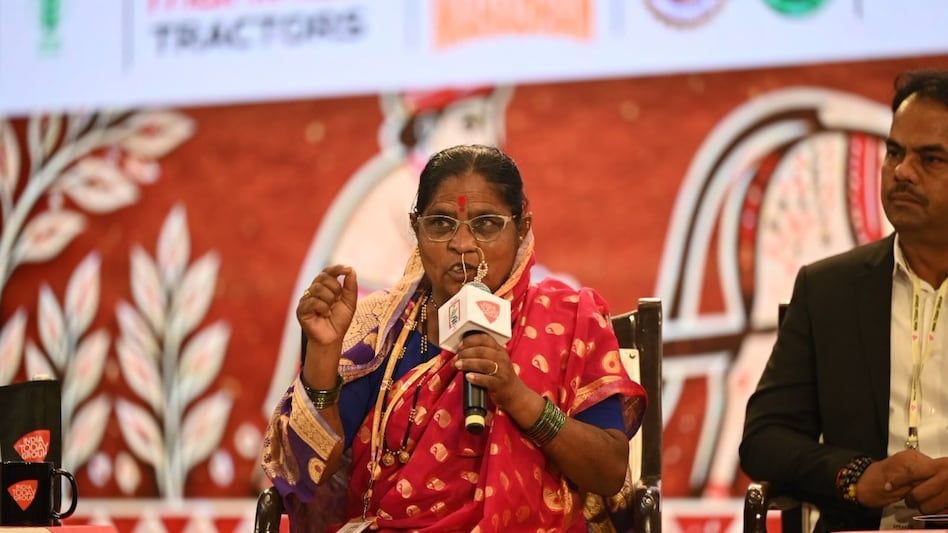
At an agricultural conference in India, as part of the 'Agricultural Heroes' session, Rahibai Soma Popere from Maharashtra shared the story of her work in preserving traditional seeds and protecting traditional farming. She recounted how, relying on the knowledge of her family and ancestors, she began collecting and preserving traditional seeds, which gradually attracted thousands of women to her initiative.

Rahibai, who once stored seeds in clay pots under limited resources, has now become a significant figure in the field of local seed conservation in Maharashtra.

She explained that her family previously practiced agriculture using traditional seeds, but the use of hybrid and chemical seeds available on the market gradually increased. This negatively affected her family's agriculture, leading her to realize the potential of traditional seeds for improving life and farming. Consequently, she started re-collecting and preserving old local seeds.

According to Rahibai, her work began based on life experience and lessons learned within her family. Gradually, other people joined this effort. She is convinced that traditional seeds are not only a heritage of agriculture but also something that must be preserved for future generations.

Rahibai stated that she learned seed preservation techniques from her father, grandfather, and grandmother. In childhood, she observed older family members carefully storing seeds in clay pots along with wood ash. She continued this traditional practice.

According to Rahibai, seeds stored in clay pots with ash can remain viable for about three years, and they can be kept for consumption for approximately ten years. Rahibai believes that preserving seeds traditionally is highly important for both health and agriculture.

She emphasized that she gained most of her knowledge about agriculture and seed preservation from family experience and personal life journey, rather than formal education, but it was family knowledge that guided her in this direction.

Rahibai shared her difficult childhood: she was married at the age of just 12 and spent about 40 years in extremely constrained circumstances. Despite this, she continued her efforts to save traditional seeds. When she started farming with old local seeds on her fields, local residents began asking her about these seeds. People showed interest in where she got them, which prompted her to understand that awareness about the value of traditional seeds could be raised.

Initially, she initiated the creation of a women's organization with minimal investment of 10 rupees. This group gradually grew, and today about 3,500 women from Maharashtra are members of this organization. Rahibai faced numerous difficulties in her work to conserve local seeds; some sellers and companies tried to stop her, but she did not cease her efforts. Her main goal was to ensure the preservation of the traditional seed heritage for coming generations.

Rahibai started her seed conservation work in her small home and hut. In addition to storing seeds in clay pots, she gradually created her own seed bank. Later, when her work became known, she received support in developing this endeavor.

During a meeting with the then Maharashtra Agriculture Minister Chandrakant Dada Patil, Rahibai presented her problem, stating that she maintained a seed bank in a small hut. When offered more suitable accommodation, Rahibai insisted on establishing a seed bank rather than housing. Following this, infrastructure was organized for her, which helped advance her work.

Today, students from various agricultural colleges in Maharashtra visit her seed bank. There, Rahibai shares with them information about the importance of traditional seeds, their preservation methods, and their usefulness in agriculture.

Rahibai Soma Popere's work has received national recognition: in 2018, she was awarded the Nari Shakti award, and in 2020, the Padma Shri award. Her efforts to promote traditional farming and preserve local seeds earned her the title 'Mother of Seeds.'

Popular