Loongson Formalizes LoongArch OpenAtom Community with 22 Founding Members
Read more
Pandaily
pandaily.com

Loongson Formalizes LoongArch OpenAtom Community with 22 Founding Members

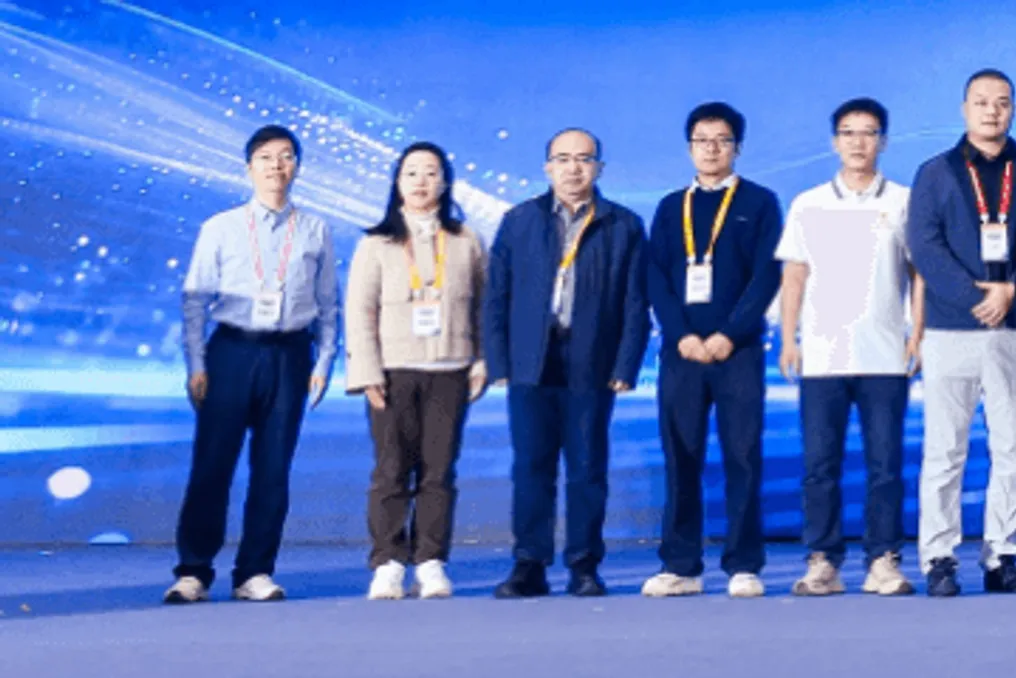
Loongson and the OpenAtom Foundation officially established their open LoongArch community during the OpenAtom Developer Conference held in Zhengzhou on November 20. According to the latest report from Loongson, the community includes 22 member organizations covering chip, operating system, ready device, and research institute domains.

This November phase is an evolution of a previously launched initiative, not the first announcement of the community's name. Both organizations published June reports detailing the launch on June 25 and planned technical directions. The new report documents the number of founding participants, the availability of the named projects, and the existence of a dedicated community website.

The program covers three levels: processor intellectual property cores, binary translation, and basic operating systems. Together, these components address various stages of the process—from designing a LoongArch-based chip to running software on a ready device. These projects are not interchangeable or a single newly released processor.

Loongson states that among the publicly available projects are open processor cores based on OpenLA132, the LATU and LATS binary translators for LoongArch, and the LoongHong basic operating system. The community website serves as a platform for collecting results, exchanging technical information, and coordinating joint development.

Processor core design can support hardware development, while translation software ensures compatibility with other architectures' software. Work on operating systems forms another layer of software foundation. These roles define the scope of the initiative without implying that translation allows any application to run unchanged or at native speed.

The OpenAtom Foundation is responsible for incubating and operating this community. Its stated function involves managing and coordinating between different participants, rather than transferring all Loongson technologies under a single unrestricted public license. The announcement does not establish identical licensing terms for every associated asset.

The figure 22 refers to the founding member organizations, not the number of people present at the ceremony. Loongson's report provides the participant count without a fully detailed list and does not guarantee that every participant has already released a compatible product. Furthermore, this is a separate initiative from the open-source software development committee for humanoid robots announced at the same conference. The specific focus of this project is LoongArch computing infrastructure; future implementation will depend on maintaining the documented projects and integrating hardware and software.


Similar stories

OpenAtom Forms Working Committee Created for Open Community of Humanoid Robots
Read more
pandaily.com

OpenAtom Forms Working Committee Created for Open Community of Humanoid Robots

The working committee for the OpenAtom open community of humanoid robots was established at the OpenAtom Developers Conference in Zhengzhou on November 20, 2026, according to Science and Technology Daily.

According to the report, the committee includes nine founding organizations representing robot developers, technology companies, an innovation center, and a research institute.

Among the founders are AgiBot, Leju, EBKernel, PrimeBot, and the Institute of Software of the Chinese Academy of Sciences. Although the Chinese report presents a full list of nine members, the ones listed above are only examples of participants and not an exhaustive list of all founders.

Goals and Objectives of the Committee

The main task of the committee is to organize work on common technical foundations. These areas include operating systems for robots, middleware, embodied intelligence models, algorithms, and data. Its functions are focused on coordination and community building, rather than launching a specific humanoid robot or a ready software platform with a new performance metric.

The report describes common industry challenges: teams having to recreate similar capabilities from scratch, poorly integrated interfaces, and technical resources scattered across different organizations. The proposed community aims to gather common requirements and support the long-term maintenance of reusable components, allowing participants to develop their own applications on top of them.

Joint adaptation and testing are central to this plan. Open source code and common tools can simplify the transfer of technical work between hardware and software platforms, and practical projects will serve as the basis for standard formation. While these goals are stated, they do not prove that the existing robots of each member are already compatible with all others.

The working committee will use the OpenAtom Foundation platform to develop a management system, organize contributions, and coordinate common tasks. Science and Technology Daily notes that transparent discussion rules and cooperation mechanisms are intended to ensure equal participation and give organizations confidence in long-term contribution.

No consolidated manifesto release, unified license covering each participant's technology, or independently measured integration cost reductions were provided upon the announcement of the committee's creation. An organization joining an open-source committee does not automatically make all its proprietary models, datasets, or hardware designs freely available.

The significance of this event lies in creating an institutional structure for common robotic infrastructure. Whether this leads to reusable components will depend on subsequent projects, licensing, maintenance practices, and cross-platform verification, rather than the mere establishment of the committee being considered a completed technical product.

Tencent's Hy team presents plans for larger models and a 24GB deployment roadmap
Read more
pandaily.com

Tencent's Hy team presents plans for larger models and a 24GB deployment roadmap

The Hy team from Tencent presented its intentions regarding the development of larger models and smaller local deployment options during a Q&A session on the public Reddit forum. This discussion took place early on November 21st in Shanghai, following the release of the flagship Hy4 weights the previous day.

According to a Chinese summary of responses prepared by Zhidx, the team stated that the next Hy model will be significantly larger, and they will continue to invest in large-scale reinforcement learning training. It is important to note that these are development intentions, not an announcement of a new checkpoint, confirmed parameter count, or a set release date.

Regarding smaller models, the team described Flash-Lite as planned work and discussed models intended for devices with 24GB of GPU memory. The roadmap also featured Hy4-mini, and a dense model with parameters ranging from 24 to 31 billion was under consideration. The responses do not guarantee that all these products form a single entity or that any proposed configuration is currently available.

Hardware requirements demand similar attention. The mention of 24GB of video memory itself does not define the total system RAM, quantization, context length, or achievable speed. These details are necessary before developers can consider a roadmap item as a specification for consumer hardware ready for implementation.

The architectural discussion covered trade-offs between Grouped Query Attention (GQA) and Multi-Head Latent Attention (MLA). As summarized by Zhidx, the team noted that MLA provides better model quality at a comparable key-value cache size, but its computational intensity complicated decoding. The implementation of the Sparse Attention DSA mechanism reduced this load and changed the team's preferred balance.

The team also cautioned against assuming that greater sparsity in the Mixture-of-Experts architecture always improves deployment. An overly sparse model might consume significant GPU memory without fully utilizing available computational power; reducing active parameters while maintaining overall size can also negatively affect quality. These statements are design explanations, not universal benchmarking results for every implementation.

The initial open AMA post confirms the session and participation of individuals, but the details of the answers are based on a Chinese compilation, not independently obtained transcripts of comments. The practical value lies in a clearer presentation of research and engineering priorities, rather than another announcement that Hy4 weights are available for download.

DAMO Academy introduces XuanTie XL-300 interconnect IP supporting up to eight RISC-V cores with 32MB L3
Read more
pandaily.com

DAMO Academy introduces XuanTie XL-300 interconnect IP supporting up to eight RISC-V cores with 32MB L3

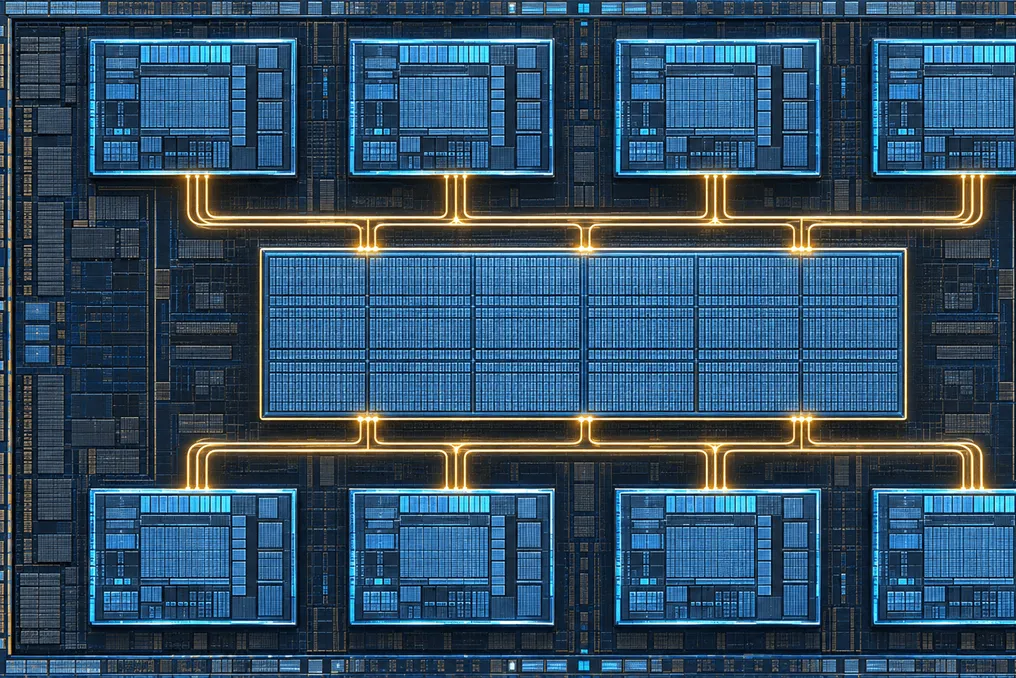
XuanTie, the RISC-V processor brand from DAMO Academy Alibaba, has released XL-300—a high-performance, cache-coherent interconnect IP for multi-core chips. Chip designers can use this IP to connect processor cores, enabling shared memory access without the risk of stale data.

XuanTie notes that XL-300 is the third generation of their XT-Link on-chip technology, which is a Network-on-Chip technology designed to maintain cache coherence across multiple processors.

XL-300 Features and Performance

According to XuanTie, XL-300 supports asynchronous connections for up to eight cores and features a 256-bit data width. It offers a configurable L3 cache up to 32MB, along with a snooping filter and multiple device coherence interfaces. The company claims that the linear scaling of parallelism for eight cores exceeds 90%, meaning that eight concurrently operating cores provide over 90% of the throughput, which is eight times the throughput of a single core—a metric they call industry-leading.

The peak throughput is approximately twice that of the previous XL-200 model, thanks to a four-slice parallel access structure.

Solving Multi-Core System Challenges

This development aims to solve a common problem in multi-core systems. When numerous cores access shared memory simultaneously, coherence overhead, bus contention, and large L3 cache latency reduce actual performance below theoretical computational capacity. XuanTie points out that under mixed workloads, a single bandwidth-intensive application can flush the cache lines of other cores, causing unpredictable latency spikes for critical tasks.

Key Improvements in XL-300

In response to these challenges, XL-300 incorporates three key features: the ability to configure L3 capacity at various levels to meet each application's needs; Quality of Service control based on the RISC-V CBQRI resource distribution standard, which guarantees predictable latency for critical tasks even under heavy load; and a Direct Memory Transfer (DMT) function that bypasses the traditional data path, alleviating the bandwidth bottleneck caused by large L3 and high bus latency.

XuanTie positions the XT-Link series as a versatile base platform for customers. Users can combine different cores into 'big-little' configurations to improve efficiency or group identical cores for high-performance computing in cloud, edge, and device products. Previously, XL-100 added multi-cluster coherence, and XL-200 introduced multi-level cascading for larger systems; XL-300 extends these capabilities for high-throughput workloads.

XuanTie did not disclose the names of licensees, process details, or frequency, nor did it publish third-party measurements of the claimed linearity. More detailed information is available on the website xrvm.cn.

Popular