Shanghai AI Laboratory Reports Use of Vitamin C as Battery Additive
Read more
Pandaily
pandaily.com

Shanghai AI Laboratory Reports Use of Vitamin C as Battery Additive

According to a report published by the newspaper 'Jiefang Daily' on November 23, the Shanghai Artificial Intelligence Laboratory has implemented an electrolyte formulation using vitamin C, developed with the help of AI, at energy storage facilities in Henan and Guangdong provinces.

This process is a current stage of development, as the agent that proposed this additive was created late last year. The team developed the agent to search for materials on the scientific discovery platform Intern InkStone, utilizing scientific data provided by university researchers and an industrial storage partner.

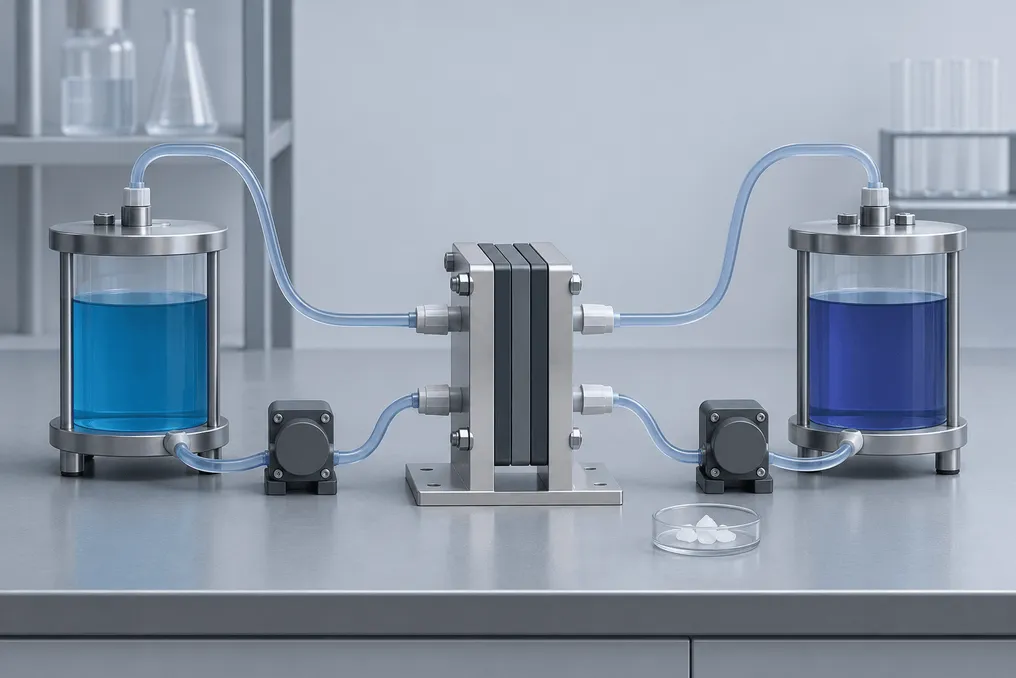
The main objective was to find and optimize critical components for a iron-chromium flow battery—a stationary storage technology designed to absorb renewable electricity and subsequently release it over a long period. Researchers aimed to find additives that could expand the high-performance operating range, increase energy density, and reduce storage costs, rather than merely proposing a plausible chemical hypothesis.

As reported, the agent cross-referenced molecular properties, proposed mechanisms, and experimental evidence from scientific literature, sifting through hundreds of thousands of substances. As a result, it yielded several candidates, among which vitamin C ranked first. Subsequently, human researchers tested the suggested option, rather than accepting the model's ranking as experimental proof.

It is reported that the mechanism of action involves antioxidant effects that help stabilize the valence states of active electrolyte species, as well as oxygen-containing groups that influence processes at the electrode interface. These results pertain to the project's findings and are not a statement that adding a common dietary supplement improves the entire battery chemistry.

The team consistently conducted iterations between AI analysis and laboratory verification to optimize the concentration of vitamin C, the ratio of iron and chromium, and other constituents. The industrial partner then handled engineering adaptation, stack pilot testing, and industrial-scale validation. Thus, the work concerns an optimized recipe and process, not vitamin C in isolation.

Based on the overall assessment, there was a noted 5% increase in stationary storage capacity, a 3.5% improvement in stack energy efficiency, and a 20% reduction in costs. However, the report lacks a full independent testing protocol or a detailed cost breakdown, so these figures cannot be generalized to all facilities or interpreted as percentage changes.

Furthermore, the project received the first prize at the Chinese Chemical Industry and Engineering Society Science and Technology Award for 2026. This recognition and stated implementation are separate from proof of universal performance or a fully autonomous scientific discovery process.


Similar stories

AI City Planned for Lucknow to Develop Technologies and Create Jobs
Read more
www.aajtak.in

AI City Planned for Lucknow to Develop Technologies and Create Jobs

The state of Uttar Pradesh aims to expand Lucknow's image beyond the IT services sector. A plan is currently being developed to create an AI city, which is positioned as the first project of its kind in the country. This city will integrate all segments of the artificial intelligence industry: hardware, computing infrastructure, basic development, and AI-based solutions.

According to data from the Invest UP portal, the implementation of this project will proceed in two stages under a public-private partnership (PPP) model. Approximately 60 percent of the territory will be allocated for the core of innovation and AI research, while the remaining 40 percent will be designated for residential, commercial, and social infrastructure.

The state's goal is to include Lucknow among the top 20 global AI centers. On October 6, 2026, Chief Minister Yogi Adityanath announced the government's readiness to provide full support for establishing at least 50 global AI startups in Lucknow over the next five years. He also emphasized that Lucknow should become a major hub for AI, semiconductors, cybersecurity, and deep technologies. Furthermore, Uttar Pradesh has launched an AI mission worth 225 crore rupees.

This city was chosen due to the presence of educational institutions such as IIM Lucknow and IIIT Lucknow, as well as an existing IT cluster, such as the HCL campus. The state hopes that the emergence of the AI city will lead to the creation of thousands of direct and indirect jobs, reducing the need for youth to migrate to other cities.

Currently, the AI city remains only a proposed project; information regarding construction timelines and initial tenants has not yet been announced.

Apple implements charge for exceeding artificial intelligence resource usage in professional applications
Read more
tecnoblog.net

Apple implements charge for exceeding artificial intelligence resource usage in professional applications

Apple has started charging for the additional use of artificial intelligence features within its software aimed at professionals. This new feature was first introduced in the audio application Logic Pro, which now offers an à la carte package priced at US$ 50 (approximately R$ 300) for users who exceed the monthly quota included in the program.

This package, named by Apple itself as AI Usage Packages, is only activated after the monthly limit is exhausted. Meanwhile, Creator Studio has a monthly cost of R$ 39.90 in Brazil.

As reported by 9to5Mac, the charge is initially limited to Logic Pro, but Apple has indicated that this model will be extended to other Creator Studio programs, such as Final Cut Pro and iWork tools. Besides Brazil, this usage supplement is available in several locations, including Germany, Canada, the United States, France, India, Mexico, and the United Kingdom.

Although AI tools are generating high costs for technology companies, leading many services to add usage extension plans, Apple chose an à la carte purchase format instead of implementing a monthly subscription.

In Logic Pro, the package costs about R$ 300, and the purchased balance is credited to the Apple Account associated with iCloud. It is important to note that this extra limit cannot be shared through Family Sharing and does not replace the free limit; Apple clarifies that the package remains unchanged as long as the user has access to the original allowance.

If there is purchased balance that is not used in the same month, it remains available. According to Apple's terms, these credits are cumulative and remain valid for 12 months from the date of purchase.

The charge is intrinsically linked to resources that cannot perform all processing directly on the device. In past instances, the company explained that more demanding functionalities of Apple Intelligence may utilize Apple's cloud infrastructure, thus being subject to usage limits.

According to The Verge, in Logic Pro, the limit affects, for example, the app's new AI assistant, which has the ability to understand the project and assist with tasks during music production. When the quota runs out, these functionalities become inaccessible until the start of the next monthly cycle. With the new package, the user gains the option to continue using these resources without waiting for the next month.

The terms also stipulate that there will be a reduction in speed or imposition of restrictions in situations of automated, excessive, or abusive use. There is an expectation that this same package structure will be expanded in the future to the general public in native tools of Apple operating systems, which could lead to the application of these limits in other daily services.

9to5Mac lists some resources and applications cataloged by Apple that depend on servers and may be subject to such restrictions.

Popular