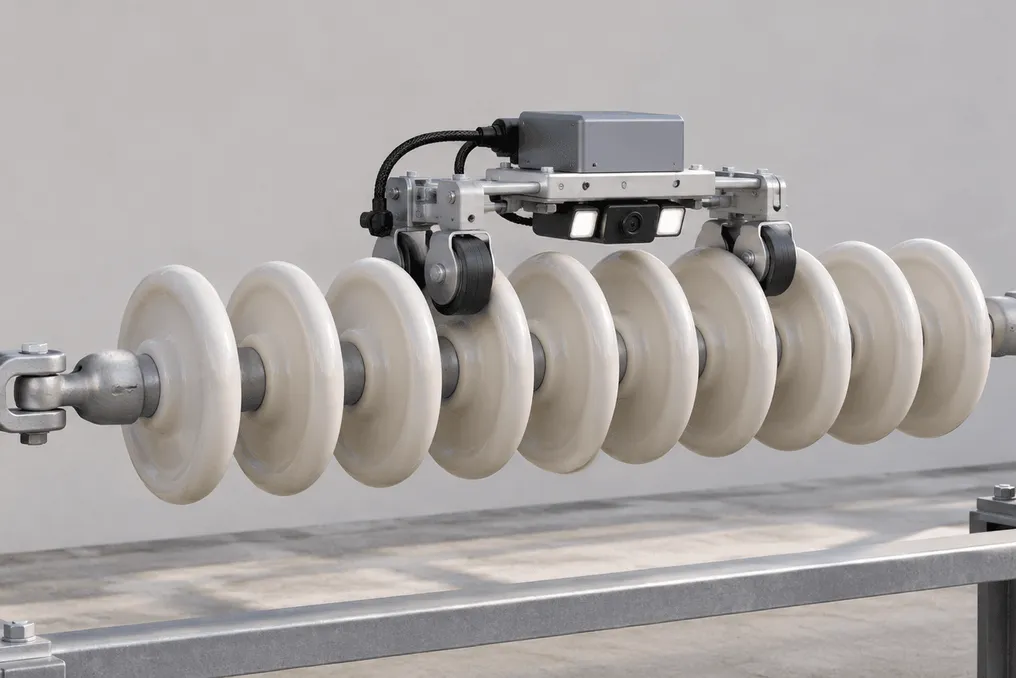
CEPRI Institute Developed Robot to Inspect 35 Insulators in Six Minutes
Read more
Pandaily
pandaily.com

CEPRI Institute Developed Robot to Inspect 35 Insulators in Six Minutes

The Chinese Institute of Electric Power Research (CEPRI) has created a robotic system designed to diagnose defective insulators on high-voltage power transmission lines. This system allows inspections to be conducted without taking the line out of service or requiring personnel to climb onto the towers.

The system is aimed at detecting low resistance or zero values in porcelain insulators. These components typically provide electrical insulation while simultaneously withstanding mechanical loads. Prolonged exposure to weather conditions, as well as electrical and mechanical stress, can lead to deterioration of the insulator material, potentially causing insulation failure or damage to the entire insulator string.

The institute's research group specializing in transmission reported that they combined photoelectric probing with the analysis of electric field distortions caused by these defects. Over a development period exceeding five years, the team miniaturized crystalline sensors, expanded their measurement range, and integrated the detection method into a complete robotic setup.

According to the report, the full development cycle and comprehensive testing of the system were completed in October. The mention of November 23rd refers to the date of the report's publication, not the moment the robot began operating nationwide or was deployed in a large commercial park.

In a scenario inspecting a 500 kilovolt power line, project staff stated that the robot is capable of checking a string of 35 insulator discs in approximately six minutes. They also cite identification accuracy rates above 95% and operational efficiency that is about 80% higher than traditional manual inspection.

It is important to note that these results are data provided by the project for the described configuration. The article does not present a full evaluation sample, a detailed definition of the baseline efficiency, or independent replication of the data. Therefore, these figures should not be considered a universal guarantee of inspection for all voltage levels, weather conditions, or insulator designs.

Avoiding climbing onto towers during inspection can reduce the risk of height exposure and danger from live lines for workers. However, this does not mean that the installation, maintenance, and any associated tasks are completely safe, nor that human supervision is not required throughout the equipment's lifecycle.

The cited report does not include the name of a commercial model, the number of deployed units, or an implementation schedule. Its contribution is limited to the claimed achievement of integrating sensors and robots with specific test assertions, distinguishing it from inspection systems that use drones or lifts employed by other utilities.
Similar stories

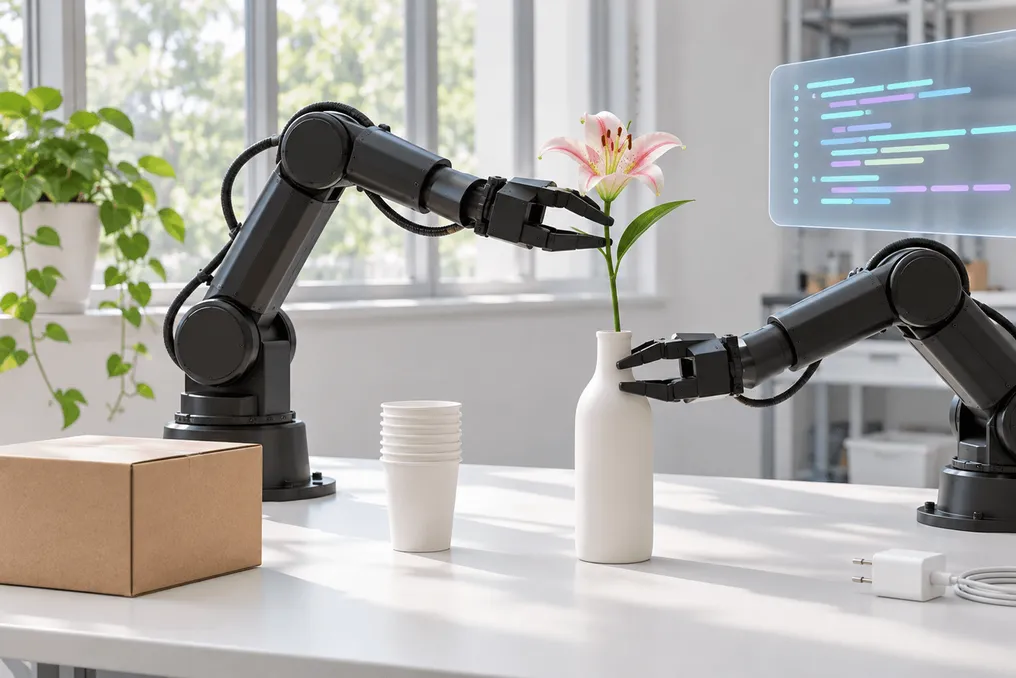
ACE Robotics introduces ACE-CaP-0: AI agents write reusable code for robots with 92.1% success rate
Read more
pandaily.com

ACE Robotics introduces ACE-CaP-0: AI agents write reusable code for robots with 92.1% success rate

ACE Robotics, a company focused on embodied artificial intelligence and led by co-founder SenseTime's Yang Xiaogang, has released the ACE-CaP-0 model. As part of this research approach, a general AI agent is responsible for writing, testing, and refining robot control software, which is then fixed as reusable skills that can operate autonomously without agent intervention.

The paper was posted on arXiv on November 12, and the company announced the work on November 13. This method is based on the 'Code as Policies' concept, which describes robot behavior through executable code instead of calling a large model at every step. The authors argue that multiple model calls slow down the robot, whereas the finished program utilizes the logic already embedded during its creation.

The main challenge lies in developing reliable code without requiring numerous expensive physical tests. In ACE-CaP-0, the agent independently decides when to request assistance.

Methodology and Results

In the comparison conducted by the team, the best results were achieved using on-demand demonstrations combined with selective simulation usage. The success metrics were obtained through the authors' own tests. Across eight real-world tasks, including charging station installation, bread packaging, bottle cap removal, cup insertion, flower placement, and shoe packaging, the recorded programs successfully completed 221 out of 240 attempts, achieving 92.1% success.

Seven of these tasks reached a success rate of at least 90%, and the charging station installation task demonstrated 100% success. The average task completion time ranged from 0.97 to 2.27 minutes. The programs function based on the robot's own perception and control, without human or coding agent intervention.

It should be noted that the results obtained are based on one setup with two manipulators selected by the team and have not yet been independently reproduced. ACE Robotics states that this work aligns with their plan to integrate general models with their global Kairos model.

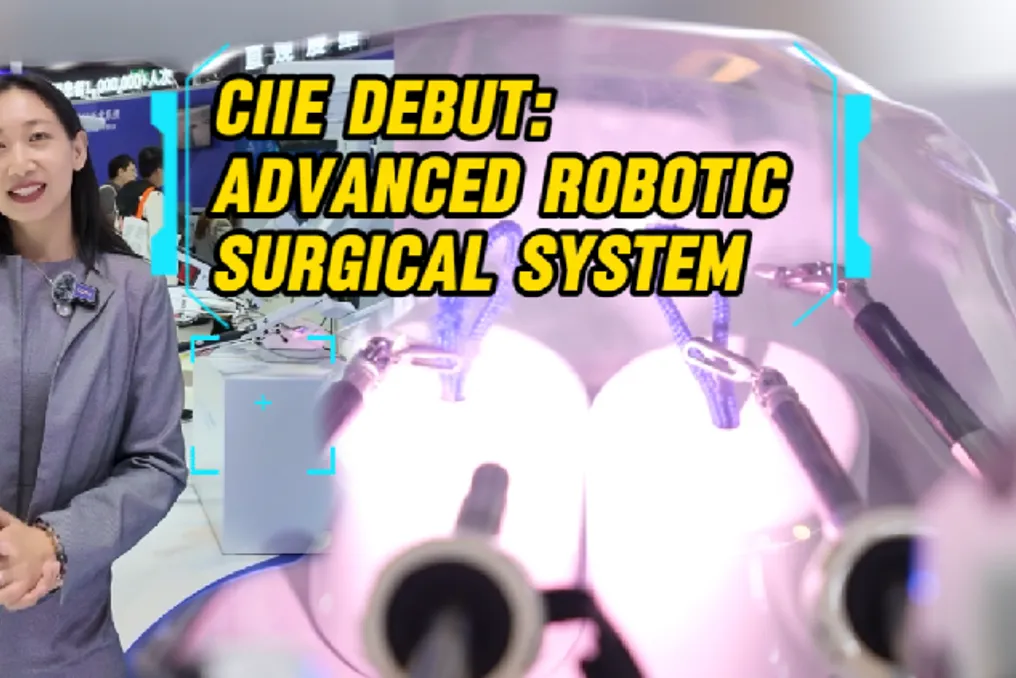
da Vinci 5 Surgical Robotics System Presented at CIIE Exhibition
Read more
cgtn.com

da Vinci 5 Surgical Robotics System Presented at CIIE Exhibition

The da Vinci 5 surgical robotics system was presented for the first time at the CIIE exhibition. This system is equipped with advanced robotic technology designed to assist surgeons in performing complex operations with increased precision and control.

CGTN conducted a detailed review of this modern medical equipment.

PrimeBOT reports 98% monthly activity and achievement of 10,000 units of personal robot production
Read more
pandaily.com

PrimeBOT reports 98% monthly activity and achievement of 10,000 units of personal robot production

PrimeBOT announced that its personal robots demonstrate over 98% monthly activity and have reached a cumulative production milestone of 10,000 units. These usage figures were presented by Sina Technology on November 8, adding an element of claimed user engagement to the company's production announcement; however, the report does not disclose the methodology for calculating these metrics.

Liu Dongfan, listed in the Chinese report as co-chairman of the robotics department and president of its business unit Q, stated that the average daily online time was three hours, and each user averaged over 100 interactions per day. He also mentioned a peak online activity percentage exceeding 40%. It is important to note that these figures are provided by the company itself, not results from independent audits of household usage or task completion.

This disclosure leaves several important measurement questions unanswered: the observation period, the number of participating users or devices, the definition of 'interaction,' or the basis for the activity percentages are not specified. Time spent online should not be equated with time spent on physical work, and a high monthly activity rate alone does not guarantee long-term customer retention.

Production Achievements

Regarding production, the parent company Swancor Advanced Materials reported that the 10,000th personal robot left the assembly line on November 8. Previously, PrimeBOT had reached the 5,000-unit mark on October 25, adding another 5,000 in 14 days. Liu also noted that mass production of the robot at the factory began in October.

This figure is a cumulative production achievement, not evidence that 10,000 robots have been sold, delivered to customers, or put into daily use. The announcement does not detail inventory levels, customer shipments, product assortment, or yield rates. Claims regarding supply chain coordination and quality control also originate from the company and are not supported by comparative operational data.

PrimeBOT's Q1 and T1 series personal robots began their first phase of shipments in October. The latest update shifts the focus from initial delivery to the volume of factory output and claimed engagement. The distinction between these two datasets remains critically important: production measures what leaves the line, whereas demonstrating actual adoption of these robots requires consistently defined data on usage and delivery.

Popular