Pakistani players dispute umpires after Tilak Verma's incorrect fielding position decision
Read more
Aaj Tak
www.aajtak.in

Pakistani players dispute umpires after Tilak Verma's incorrect fielding position decision

A significant incident occurred during the group stage match of the ACC Men's Asia Cup Rising Stars 2026 between India-A and Pakistan-A, which took place on Sunday, November 22, at the West End Park International Cricket Stadium in Doha.

In this match, Pakistan-A defeated India-A by 48 runs. A tense situation unfolded during the final overs of the game. The Pakistani team expressed dissatisfaction with the umpire's decision regarding the fielding position of Tilak Verma, captain of the India-A team.

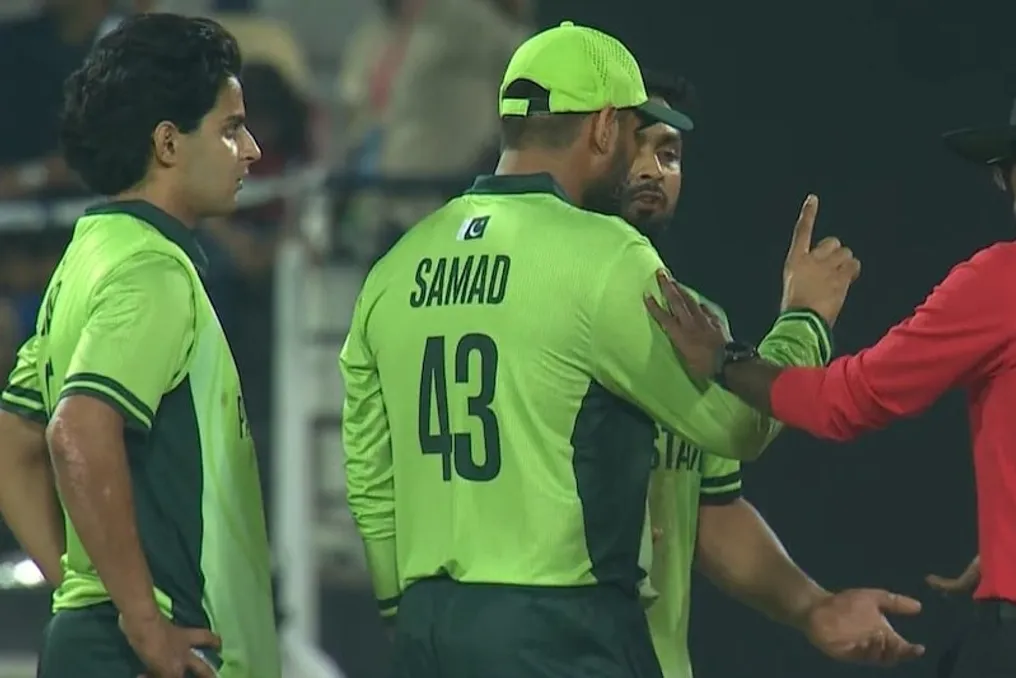
The situation escalated to the point where Pakistan-A captain Abdul Samad and other players engaged in lengthy arguments with the umpires directly on the field.

This episode happened early in the 44th over during India's innings. Fast bowler Ali Raja was bowling from the over to the wicket, and Shahbaz Ahmed was batting. Tilak Verma was positioned on the side opposite the bowler, which required umpire clearance.

When Ali Raja bowled the first ball in that over, which Shahbaz Ahmed hit towards mid-off, the ball did not reach the ground (dot). However, the umpire noticed Tilak's incorrect positioning and declared the ball dead. This meant that Ali Raja had to bowl the same ball again.

The dissatisfaction of the Pakistani team's players with this decision was evident. Captain Abdul Samad argued extensively with the umpires, challenging the ruling. At that moment, Tilak Verma was also speaking with his colleague from the Pakistan team.

Nevertheless, the umpires refused to change their decision, and the ball was re-bowled. Upon the second contact, Shahbaz Ahmed managed to score one run. Thus, the ball that was initially called a dot ball resulted in one run for the Indian team after the re-delivery.

Despite this incident, the drama of the 44th over did not end. Shahbaz Ahmed was dismissed in the same over. The Indian team, which was chasing a target of 314 runs, lost its seventh player, tipping the balance in favor of Pakistan-A.
Similar stories

Scandal surrounding the celebration of Pakistani umpire with players causes discontent in India
Read more
www.aajtak.in

Scandal surrounding the celebration of Pakistani umpire with players causes discontent in India

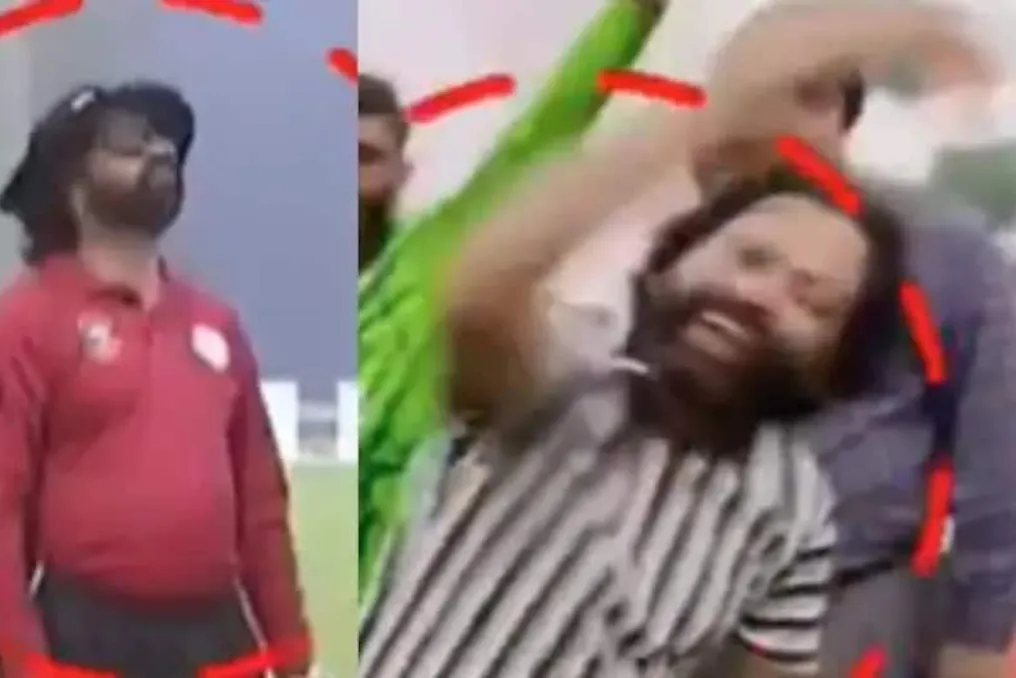
The conflict between India and Pakistan in cricket has spread even to blind cricket. Following the Asia Cup final for blind cricket, the Indian team raised questions regarding the behavior of the Pakistani umpire. The Cricket Association of Blind India (CABI) stated that video footage shows the Pakistani umpire celebrating with the players, using gestures resembling a crashed jet aircraft.

CABI questioned the impartiality of the umpire, noting that match officials should not participate in celebrations with any team. Tension already existed between the teams due to the final, which was affected by rain, and Pakistan's declaration as the winner.

In its statement, CABI indicated that the Pakistani umpire officiated all matches of the 2026 Asia Cup for blind cricket, yet he was observed celebrating with the Pakistan team. The association emphasized that the umpire's duty is to remain neutral, and he should not appear to support or stand alongside any team. CABI expects neutral conduct from match officials.

Previously, the Asia Cup final for blind cricket between India and Pakistan in Dhaka did not take place due to rain. Nevertheless, Pakistan was declared champion based on the best average score. The Indian team expressed disagreement with this decision, arguing that since the final was not played and there was no reserve day, both teams should have been recognized as joint winners.

The dispute escalated when the Chairman of the World Blind Cricket Council (WBCC) and the head of the Pakistan Blind Cricket Board, Sultan Shah, did not accept the technical committee's recommendation for a joint victory. Subsequently, the match referee was instructed to declare Pakistan the winner. CABI Secretary, Shailendra, criticized this decision, accusing Pakistan of winning the title without playing the final match. In his view, the average score from league matches should only be used to determine team qualification, not for the final.

India participated in this tournament as the reigning champion, having won the title in 2016. In the group stage, Pakistan defeated India by one run and topped the table. India advanced to the final by defeating Bangladesh. After Pakistan was declared the winner, Indian players refused to participate in the trophy presentation ceremony. CABI also warned that it might refuse to play against Pakistan in the future until the dispute is resolved.

This new controversy once again drew attention to a past incident involving Pakistani fast bowler Haris Ruf. In September 2025, during the Super-4 match against India in the Asia Cup, Ruf made gestures interpreted as imitating a falling jet aircraft. He also showed six fingers. At that time, this was linked to Pakistan's statements about military clashes between India and Pakistan, and his gestures were also criticized. Now, with the appearance of video featuring the Pakistani blind cricket umpire, questions are once again arising about similar gestures in games between India and Pakistan.

Suspense surrounds India's team selection: Imran Masood criticizes the decision to exclude Mohammed Siraj
Read more
www.aajtak.in

Suspense surrounds India's team selection: Imran Masood criticizes the decision to exclude Mohammed Siraj

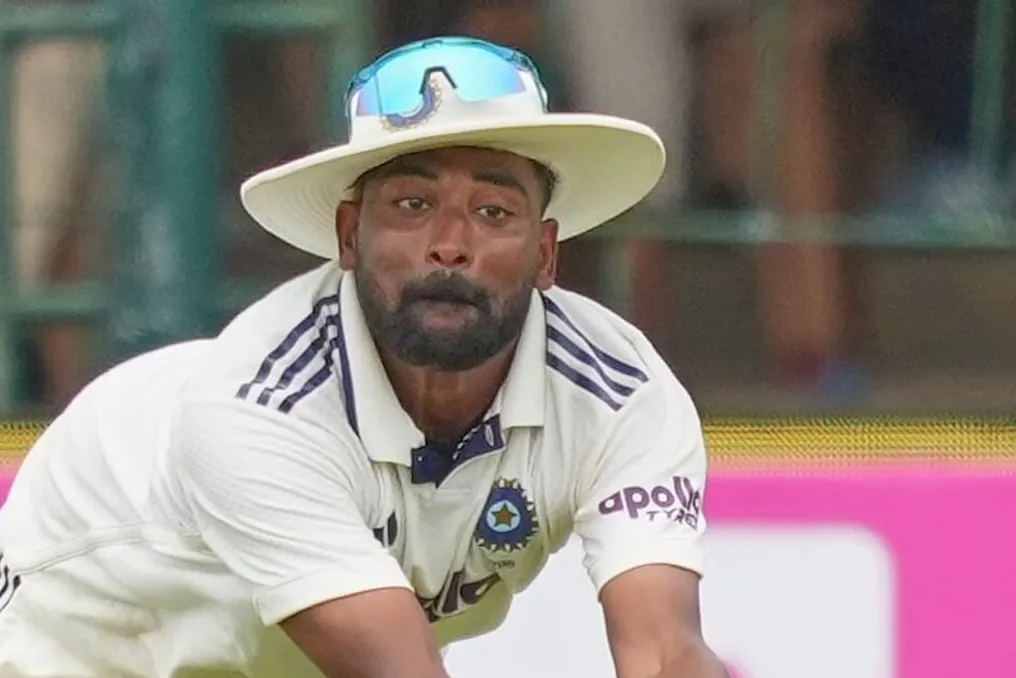
Discussions about the starting XI selection for the Indian team in the Test match against New Zealand in Wellington continue. Questions are arising regarding why fast bowler Mohammed Siraj was not included in the squad. Congress member Imran Masood commented on this issue, casting doubt on the decision by joking: 'The name is Siraj, what's the big deal?'

Responding to questions about Siraj's selection, Imran Masood suggested that if a player performs well but still doesn't make the team, the reason lies elsewhere, and in his opinion, this is the only possible reason.

The decision to exclude Siraj from the starting lineup surprised many former players. Sunil Gavaskar called it not shocking, but astonishing. He emphasized that Siraj never let India down, and there was nothing in his game that could serve as a basis for his exclusion.

According to Gavaskar, when Siraj was included in the ODI team and played his last match, he expected to be prepared for the first Test. Therefore, his absence from the starting ten in Wellington seems surprising to him.

Former coach Ravi Shastri also supported Siraj on social media. He stated that given his experience and dedication to the game, Siraj should have been in the team. Shastri questioned the selection criteria, asking why Siraj, who bowls at a speed of 140 kilometers per hour, was excluded if the basis of selection was pace, skill, and ability to swing the ball.

Wasim Jaffer noted in his message that despite the possibility of justifying Washington Sundar's selection over Jadeja due to New Zealand's left-handers, Siraj's exclusion is absolutely shocking. He reminded that Siraj single-handedly elevated the series against England and is the leading wicket-taker in this WTC cycle, and his absence is felt from day one.

Team management strategy was also discussed in social media posts, as Siraj and Ravindra Jadeja were performing excellently during the tour in England. Both players are now outside the starting lineup in Wellington. In the 2025 season, Siraj was one of India's most successful bowlers in the Anderson-Tendulkar Trophy, taking 23 wickets in nine innings across five Test matches in the series between India and England, which ended 2-2.

Ravindra Jadeja also showed himself as a batsman, scoring 516 runs in ten innings of five Tests with an average of 86, including one century and five half-centuries. He ranked fourth in the list of players who scored the most runs in this series, and also took 7 wickets in five matches.

Furthermore, the performance of Prasidh Krishna and Washington Sundar in the first half of the match in Wellington was discussed, as they failed to deliver the expected results. New Zealand scored 368 runs in the first innings, with Henry Nicholls remaining on the field with 175 runs unbeaten, and Glenn Phillips scoring 118 runs.

By the end of the second day of the match, the Indian team had scored 159 runs in the first innings, losing one wicket. Yashasvi Jaiswal scored 85 runs off 89 balls, KL Rahul scored 52, and Devdutt Padikkal remained on the field with 16 runs. India trailed New Zealand by 209 runs. The third day of the match is scheduled for Saturday (November 21).

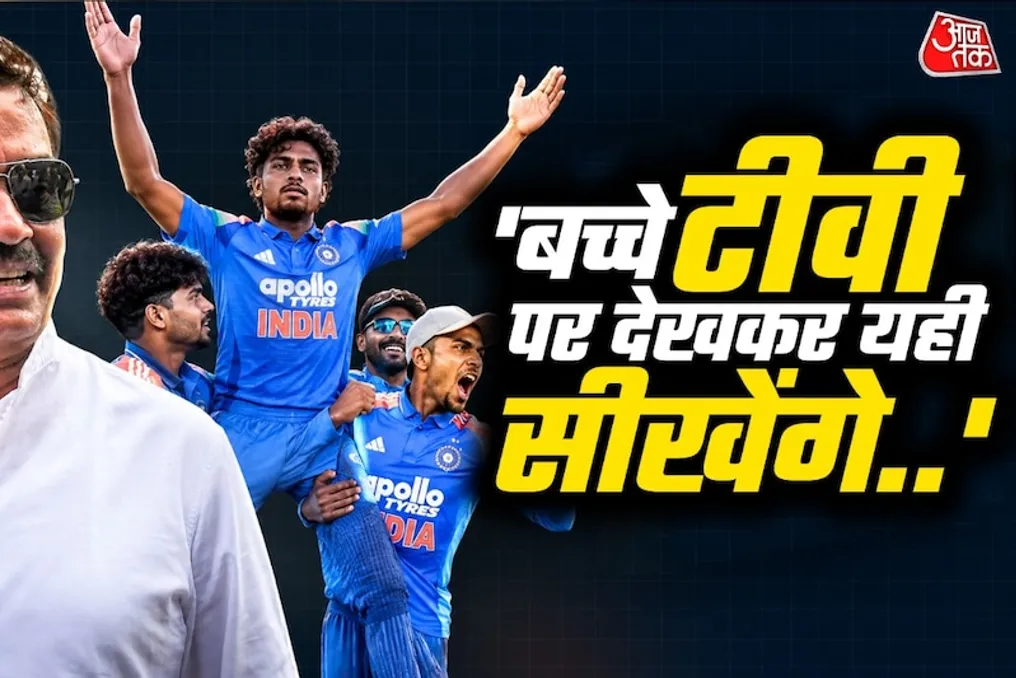
Dilip Vengsarkar criticized the behavior of the Indian team players after the U-19 final against Pakistan and called on the ICC to take action
Read more
www.aajtak.in

Dilip Vengsarkar criticized the behavior of the Indian team players after the U-19 final against Pakistan and called on the ICC to take action

Following the Indian team's victory over Pakistan in the U-19 Asia Cup final, criticism from the sports community was sparked by the behavior of some players. Dilip Vengsarkar, former captain and chief selector of India, sharply criticized the players' actions, deeming such conduct contrary to the spirit of sport and negatively affecting young athletes.

During the final match against Pakistan, held on Saturday (November 14), the Indian players celebrated exuberantly after winning the title. During the celebration, one player approached the Pakistani goalkeeper very closely, shouted at him, and used insults. Furthermore, some other players made indecent gestures towards the dressing room and the Pakistani players themselves. This situation sparked discussions among fans of the Indian team.

In an interview with the Times of India (TOI), Vengsarkar stated that such behavior is unacceptable in the game. He noted that young athletes watch such scenes on television and then imitate them during matches at the U-14, U-16, or U-19 level. He questioned where this development would lead and emphasized the need to teach players proper conduct both on and off the field, utilizing the National Cricket Academy (NCA/COE) or other channels.

Despite the former great batsman acknowledging that strong emotions and passion often dominate matches between India and Pakistan, he did not excuse the improper behavior. He explained: 'I understand that India-Pakistan matches are very emotional and passion reaches its peak. But that does not mean that one can behave inappropriately. It sets a wrong example for young players.'

Vengsarkar, who is actively involved in grassroots cricket development in Mumbai, reported observing similar behavior in his academies. He said: 'I see the same thing in my academies. When any team wins, players run around the field, pull out stumps, and start dancing. This didn't happen before. They see such scenes on TV and then copy them.'

Calls for strict action from ICC and ACC

Vengsarkar demanded that the International Cricket Council (ICC), the Asian Cricket Council (ACC), and umpires send a clear message regarding player conduct. He insisted that a strict Code of Conduct must exist to maintain discipline in the game. In his view, communication with players from officials should take place before every tournament. Regardless of whether the players are at the U-19, U-17, or U-23 level, they must be clearly informed about what behavior is acceptable on the field and what is not.

The 70-year-old Vengsarkar added that while controlling player celebrations after tense matches ending in a last-ball victory can be difficult for match officials, coaches must also fulfill their duties. He cited a past example, noting that he witnessed similar behavior in Bangladesh several years ago (the 2020 U-19 World Cup final). He pointed out that Pakistan acted that way, and now India has done the same, which cannot be justified. He concluded that the most important thing is to set the right example, as young cricketers constantly observe and learn from top-level players.

Popular