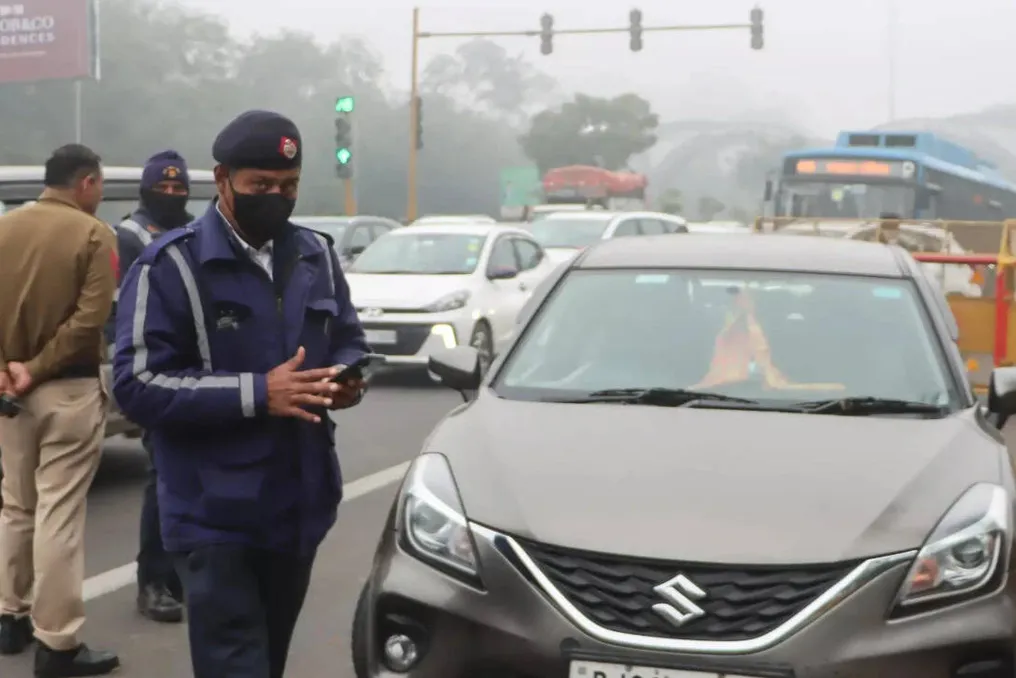
How to check the validity of a PUC certificate for a car using a mobile phone and avoid fines
Read more
Aaj Tak
www.aajtak.in

How to check the validity of a PUC certificate for a car using a mobile phone and avoid fines

When driving a car or motorcycle, it is extremely important to check the validity of the PUC certificate. If this document expires, operating the vehicle can lead to significant financial losses. The good news is that owners can check the PUC expiration date directly from their mobile phone.

If you have a car or motorcycle, having only a driver's license and insurance is not enough; having a valid PUC certificate is also mandatory. PUC, which stands for Pollution Under Control Certificate, confirms that your vehicle's exhaust gases comply with established standards.

However, many people forget to check the PUC expiration date after receiving it. If the certificate has expired and you are on the road, you may be issued a fine.

Now there is no need to go anywhere to get this information; you can check the PUC validity while at home using your mobile phone.

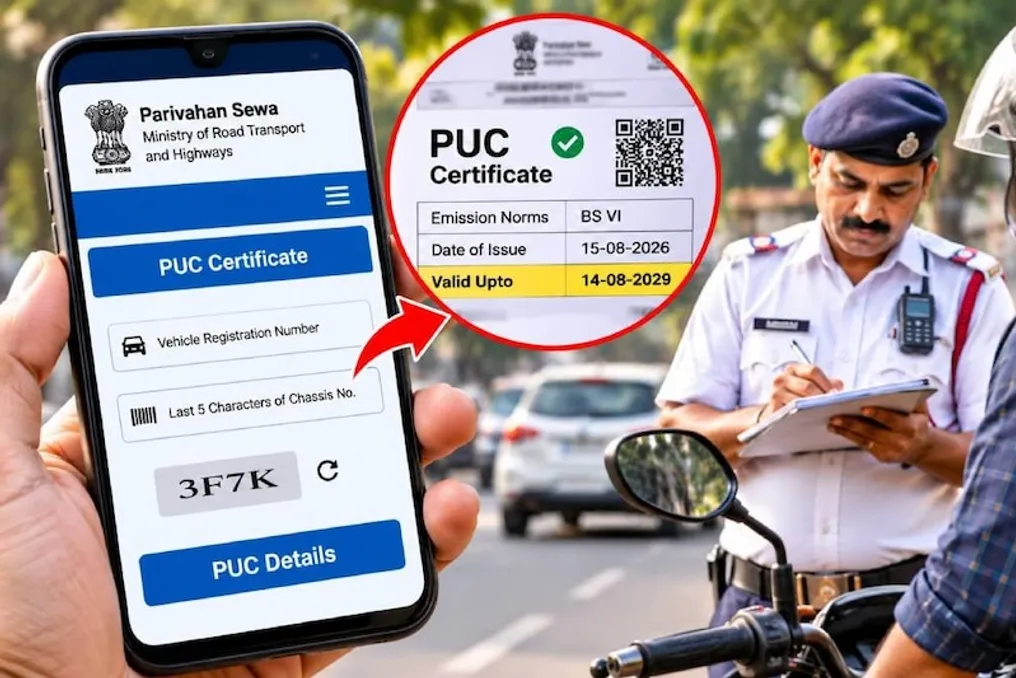
To find out the PUC certificate validity period, you need to visit the official Parivahan website. There, you can follow simple steps to view your vehicle's complete history.

First, open the official PUC Parivahan website on a mobile phone or laptop. Then, click on the option related to the PUC Certificate. Next, enter your vehicle's registration number, i.e., the license plate. After that, you need to enter the last five characters of your vehicle's chassis. Then, fill in the CAPTCHA code displayed on the screen. After filling in all the required information, click on the PUC Details option. Subsequently, the information about your vehicle's PUC certificate will appear on the screen, where you can check its validity and expiration date.

The PUC certificate validity period differs for each vehicle. It depends on the emission standard and the age of the vehicle. Therefore, it is very important to look at the last date specified in your certificate. If your PUC is nearing expiration, obtain a new certificate in a timely manner. This will prevent problems while driving on the road and eliminate the risk of unjustified fines.

Important point: never use unknown websites to check the PUC certificate expiration date. Always check your vehicle's information only on the official Parivahan portal.

Similar stories

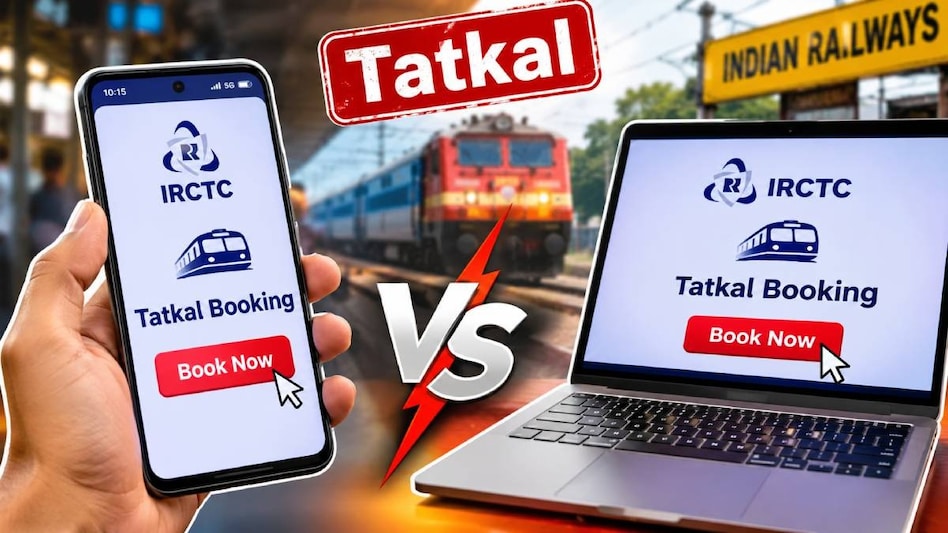
Comparison of Mobile Devices and Laptops for Booking Urgent Tickets on the IRCTC Website
Read more
www.aajtak.in

Comparison of Mobile Devices and Laptops for Booking Urgent Tickets on the IRCTC Website

During holidays such as Diwali and Chhath Puja, many students and working people travel home. However, if return tickets cannot be booked, they have the option of purchasing an urgent ticket, which allows them to travel with a confirmed ticket.

Nevertheless, the process of booking urgent tickets is not always simple. While placing an order, the IRCTC website may slow down, the session may expire, or payment issues may arise, preventing some people from booking tickets.

Because of this, some believe it is better to book tickets from a laptop, while others think that a smartphone can ensure faster booking. Next, we will examine the advantages and features of both devices.

When it comes to ultra-fast speed depending on the device, there is no single gadget that is always faster when booking urgent tickets on IRCTC. Both types of devices have their merits.

When booking urgent tickets, the correct time, a good internet connection, and a fast payment method are more important than the device itself. Let's look at the advantages of using a smartphone versus a laptop.

If you use the IRCTC Rail Connect application on a smartphone, booking tickets becomes significantly easier. The main advantage is the easy ability to log in. If your session does expire, re-logging in is effortless.

Furthermore, making payments via UPI is more convenient on a phone, as most people already have payment applications installed on their phones. Another plus of the smartphone is the ability to use the 5G network. If a good 5G network is available in your area, it can provide higher internet speeds, although internet speed also depends on your location and network.

On the other hand, if you want to book an urgent ticket from a home computer, a laptop can also be a good choice. Its biggest advantage is the large screen, on which it is easy to view train, seat, and passenger details. A laptop can also open multiple tabs simultaneously to view necessary information, eliminating the need for constant page switching.

Another advantage of a laptop is that when using the internet via Wi-Fi or broadband access, you can get a stable connection, although this again depends on the quality of your internet connection.

Ministry of Transport Changes Emission Certification Rules (PUC) for BS-I to BS-VI Vehicles
Read more
timesofindia.indiatimes.com

Ministry of Transport Changes Emission Certification Rules (PUC) for BS-I to BS-VI Vehicles

The Ministry of Road Transport and Highways (MoRTH) has introduced changes to the validity periods of Pollution Under Control (PUC) certificates, implementing an age-based system that determines the frequency of emission testing.

These new rules, approved on November 13, provide a longer certificate validity period for new BS-VI category vehicles, while shortening testing intervals for older cars. Furthermore, the updated system standardizes the PUC certificate validity for older emission categories nationwide, eliminating discrepancies in testing requirements between states.

The changes were made through the Central Motor Vehicles Rules (Sixtieth Amendment), 2026, which amends Rule 115(7) of the Central Motor Vehicles Rules of 1989. This amendment came into force from the date of its publication in the Official Gazette.

How the New Rules Change PUC Certificate Validity

Previously, the PUC certificate validity was determined primarily by the vehicle's Bharat Stage (BS) emission category. Consequently, a new private car and an older commercial vehicle, despite both belonging to the BS-VI category, could receive a certificate valid for one year.

The updated structure introduces a more differentiated approach for BS-VI vehicles. The certificate validity will now depend on two factors: the vehicle's age and whether it is registered for private or commercial use. The vehicle's age is calculated from its date of first registration.

New Validity Periods for Private BS-VI Vehicles

Under the previous system, all BS-VI private cars received PUC certificates valid for 12 months, regardless of age. The new rules establish three time intervals:

  • Up to six years: the PUC certificate is valid for three years, compared to the previous 12 months.
  • More than six years and up to 10 years: the validity remains unchanged at 12 months.
  • More than 10 years: the validity is reduced to six months instead of the previous 12 months.

This means that owners of newer BS-VI private cars will undergo emission testing less frequently, while owners of vehicles over 10 years old will face more frequent checks.

Changes for Commercial BS-VI Vehicles

Commercial BS-VI vehicles will also be subject to an age-dependent validity schedule, although the extension for new vehicles will be shorter than for private ones. Before the amendments, all BS-VI commercial vehicles had PUC certificates valid for one year. According to the revised rules:

  • Up to six years: the validity increases to two years compared to the previous 12 months.
  • More than six years and up to 10 years: the validity remains 12 months.
  • More than 10 years: the validity is reduced to six months.

Thus, the updated schedule provides a longer validity period for new commercial vehicles but maintains more frequent testing requirements for older models.

Testing for BS-I, BS-II, and BS-III: 3-Month Check Across India

The amendment also introduces a uniform testing requirement for vehicles meeting older emission standards. Previously, BS-I, BS-II, and BS-III vehicles typically had a PUC certificate validity of six months according to central rules, but some states mandated shorter intervals. For instance, Delhi already required these vehicles to be tested every three months.

Under the revised structure, the validity period for all BS-I, BS-II, and BS-III vehicles will be three months, regardless of their age or category. This ensures the uniform application of the three-month testing requirement across all states and union territories.

BS-IV Vehicles: Validity Reduced from One Year to Six Months

For BS-IV vehicles, the central provision previously allowed a PUC certificate validity of 12 months. However, some states and districts within the National Capital Region (NCR) had already implemented a shorter six-month validity. The amended rules now mandate six months as the standard validity period for all BS-IV vehicles nationwide, regardless of whether they are private or commercial. This change effectively aligns the national requirement with the strict timelines already observed in some regions.

When Does the New PUC Certificate Period Start?

The amendment also clarifies how the extended PUC certificate validity will be calculated, depending on when the vehicle owner undergoes the emission test. If testing is conducted within 10 days before the existing certificate expires, the renewed certificate will start from the date the previous one expired. This ensures that owners do not lose any remaining validity by renewing in advance. If the test is conducted on the expiry date or after, the renewed certificate will be valid from the date of the test.

Validity of Existing PUC Certificates

PUC certificates issued before the implementation of the revised rules remain valid until their respective expiry dates. Vehicle owners are not required to immediately obtain new certificates to comply with the revised schedule. The new validity provisions will apply upon the first renewal of existing certificates according to the amended rules. For example, a four-year-old BS-VI private car currently holding an annual PUC certificate can obtain a three-year certificate upon its next renewal. The changed validity period will not automatically extend an already held certificate.

Required Documents

All vehicles must possess a valid PUC certificate issued by a testing center authorized by the respective government. According to Rule 116 of the Central Motor Vehicles Rules, vehicle owners are obligated to present the certificate upon demand by an authorized official. Its validity can also be checked digitally via the Parivahan PUCC Portal.

Under previous provisions, new vehicles of all emission categories were exempted from obtaining a separate PUC certificate for the first year after initial registration. However, the available details of this latest change do not specify whether this exemption has been altered or maintained.
Passenger with a lower class ticket can sit in a higher comfort carriage if there are available seats
Read more
www.aajtak.in

Passenger with a lower class ticket can sit in a higher comfort carriage if there are available seats

Sometimes passengers may purchase a berth ticket but require travel in an air-conditioned carriage. This might happen due to overcrowding in the lower class or the passenger's desire for greater comfort during a long journey. Instead of canceling the lower class ticket and buying a new ticket for an air-conditioned carriage, there is an option to make such a trip using the existing ticket.

According to a railway service employee (TTE), if there is an empty seat in the air-conditioned carriage, the passenger can approach the TTE to request an upgrade. For this, the passenger must pay the difference in fares between the lower class and the air-conditioned carriage. For example, if the lower class ticket costs 500 rupees and the AC 3 Tier costs 1200 rupees on the same route, the passenger will need to pay an additional 700 rupees. After payment, the TTE can allocate a seat in the air-conditioned carriage depending on availability.

However, this service is only available if there are vacant seats in the air-conditioned carriage. If the air-conditioned carriage is fully occupied, the passenger will not be granted a seat there. It is important to remember that one cannot simply board the air-conditioned carriage upon seeing an empty seat; prior permission and seat allocation from the TTE are mandatory.

The railway system provides for the use of vacant seats on trains. The Ministry of Railways announced on August 2, 2024, that ticket controllers can allow passengers to travel in reserved carriages based on available vacant seats. For this, the passenger must have a minimally required ticket of the corresponding class, and a fare difference may be charged. Furthermore, the railway's commercial guidelines stipulate the right of the ticket holder to travel in a higher class after paying the fare difference according to the established procedure.

The railway also has an automatic class upgrade feature. When booking a ticket, the passenger can select an upgrade option. If there are vacant seats in the next class of the train, the railway booking system may automatically upgrade the passenger's ticket class when creating the schedule. No additional payments are required for this. According to the Railway Council circular of May 13, 2025, a passenger's lower class ticket can be automatically upgraded to the next available class, such as 3E or 3AC.

Popular