The COP31 climate conference, held in Antalya, Turkey, ended unsuccessfully on Sunday as nations failed to reach a common agreement after more than two weeks of intense discussions. The turning point was the fossil fuels themselves, which are the cause of climate change.
According to information from click2houston.com, Russia and Saudi Arabia insisted on excluding fossil fuels from the final document. The annual UN climate talks, which lasted deep into the weekend, became the longest COP in history and the first major failure since COP15 in Copenhagen in 2009.
Experts criticized the conference as a defeat for leadership at a time when the climate crisis and its increasingly deadly consequences are accelerating. Mohamed Adou, director of the Power Shift Africa energy analysis center, stated that 'this was the worst COP of all, and its collapse must serve as an awakening for the whole world.'
At the final session, aimed at approving the so-called Antalya Pact on Sunday, it became clear that there was no necessary consensus among the more than 190 participating countries to adopt the deal. Among these countries were not the USA, which had withdrawn from the international climate agenda under President Donald Trump.
Deep disagreements proved insurmountable on key issues, primarily regarding the wording about the world's need to abandon fossil fuels—a phrase that did not make it into the agreement—as well as on increasing financial support for countries already suffering from climate disasters.
Among the countries that rejected the pact were the European Union, Panama, the Marshall Islands, and Norway. Dirrag O'Brien, Ireland's climate minister who assists in negotiating for the EU, noted that the bloc would not support a deal that 'does not even mention fossil fuels.'
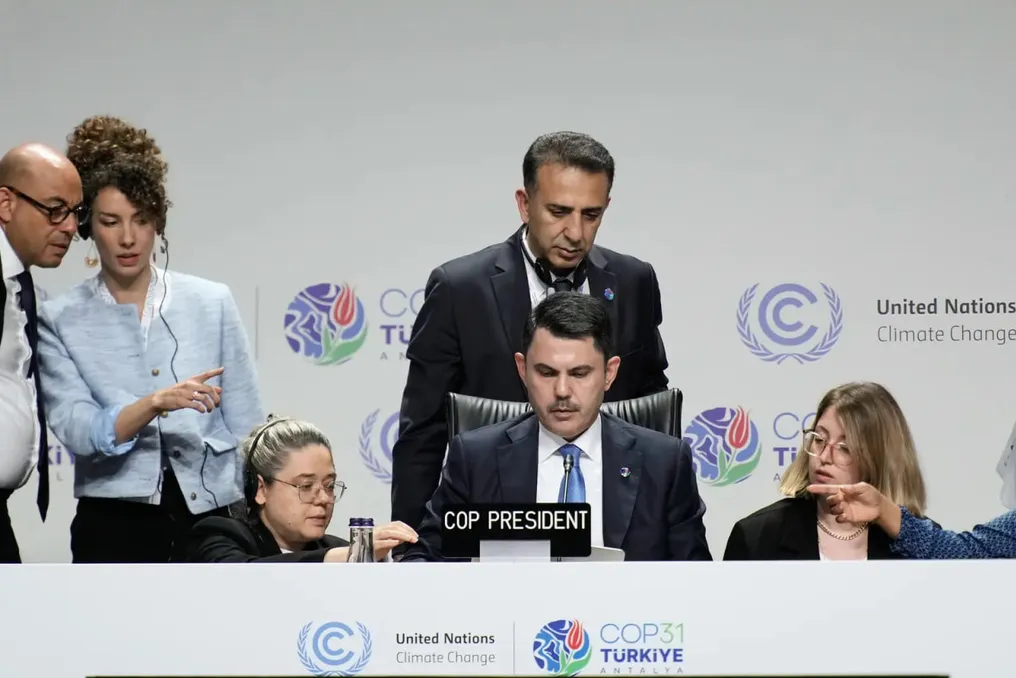
COP31 President Murat Kurum acknowledged the lack of support for the pact's approval. He stated, 'We did everything possible,' but added that 'it is obvious that there are parties in this hall opposing this text. We recognize that there is no consensus on this document.'
These negotiations are taking place at a critical moment for the planet. While attention is diverted to geopolitical turbulence, including the war in Iran, which caused the world's largest energy supply shock, the climate crisis continues to worsen. A recent UN report confirmed that the world will exceed the target for limiting global warming to 1.5 degrees Celsius above pre-industrial levels. If current policies remain in place, temperatures are expected to rise to a potentially catastrophic 2.8 degrees.
Currently, the planet has warmed by approximately 1.4 degrees, and the consequences of this have already become evident: from devastating floods in Nepal to deadly heatwaves in Europe. Nevertheless, COP31 exposed a huge gap between those striving for ambitious action (often the countries most vulnerable to climate change) and oil-producing powers that resist these steps.
As with previous COPs, the main stumbling block was two words: fossil fuels. At COP28 in Dubai in 2023, countries agreed on an unprecedented call for a 'transition away from fossil fuels.' However, since then, this call has neither been repeated nor developed, as oil-producing countries resist any mention of the driver of the climate crisis.
COP31 negotiation chairman Chris Bowen noted that the result was very disappointing, but during the talks, there was 'much good,' including the signing of commitments by over 90 countries to increase the electrification of their economies.