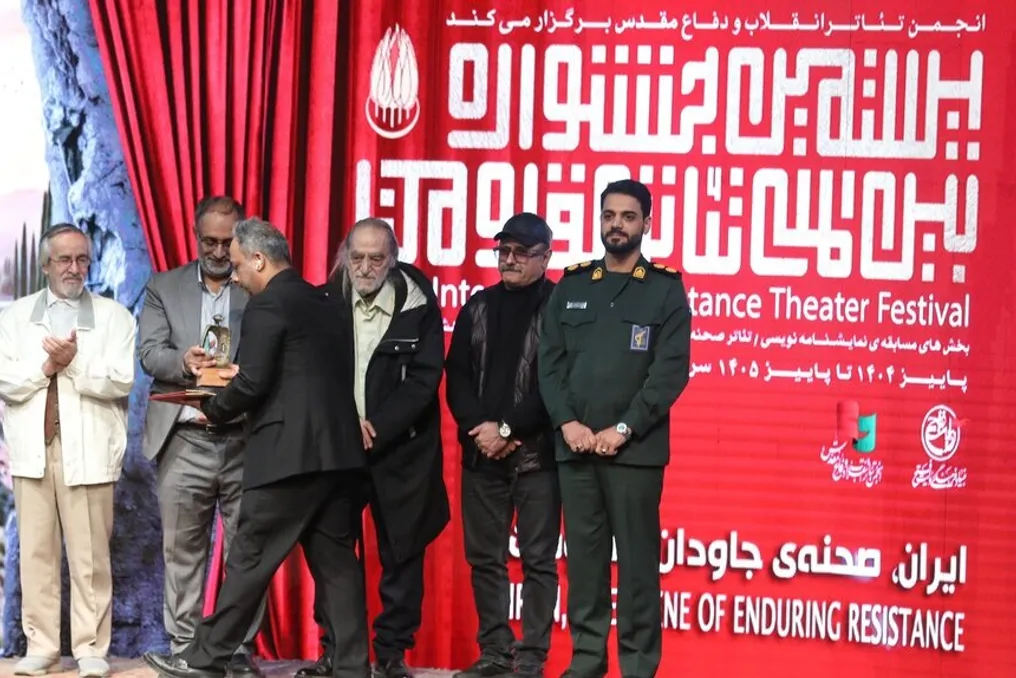
The closing ceremony of the twentieth International Festival of Resistance Theatre took place in Tehran on Saturday, November 21, at Arteburo.
The first speaker at the ceremony was Mohammad Kazemtabar, the festival secretary. He noted that one of the events that deeply touched the hearts of the participants was the martyrdom of their Leader, but the festival was still managed to take place.
Kazemtabar stated that this is a celebration of the theatre of the Islamic Revolution and thanked everyone for participating in this journey. He also addressed those whose names would be announced during the ceremony, offering them preliminary congratulations, and assured those whose names would not be mentioned that this is not the end of the journey.
Hojjat-ol-Islam Hossein Taeb, commander of the Iranian Basij forces, also spoke at the event. He linked the conclusion of the festival to the National Hero Day of Iran. Taeb emphasized that to preserve the legacy of those who sacrificed themselves in defending the country, storytelling must be pursued. He added that if this is achieved through art, the culture of resistance will achieve immortality, and he called on artists to increase both the quantity and quality of such works.
November 21 marks National Hero Day in Iran because this date commemorates the anniversary of the letter from Martyr Qassem Soleimani, which announced the defeat of the terrorist group ISIS, symbolizing Iran's unwavering commitment to resisting imperialism and demonstrating the nation's resilience in the face of difficulties.
The ceremony then proceeded to the awards presentation, where winners in various categories received their prizes on stage.
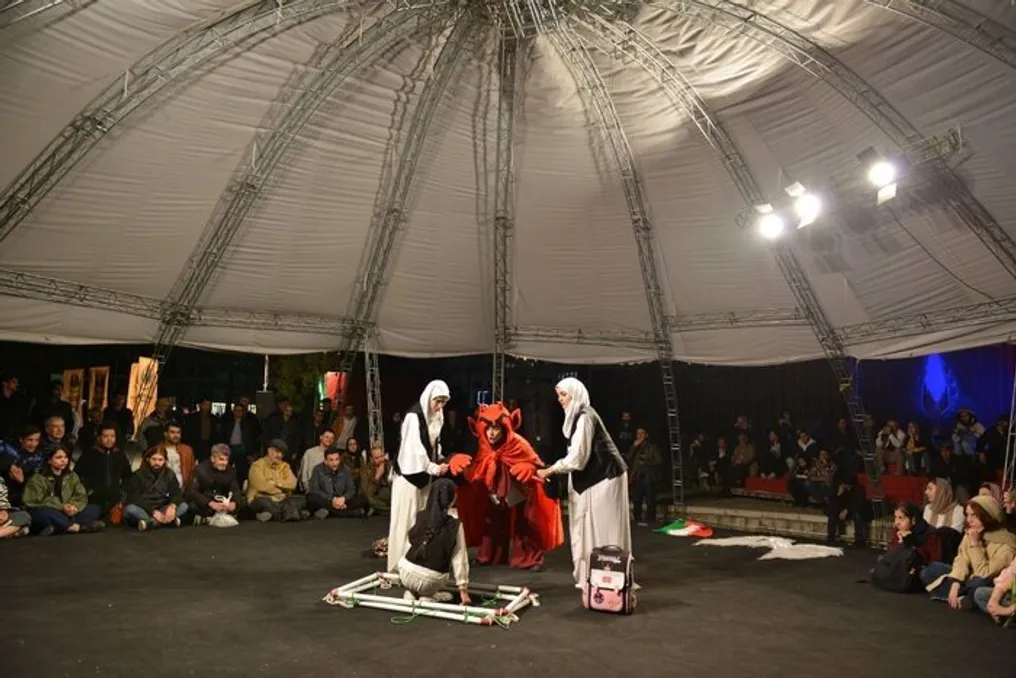
The festival was held under the slogan 'Iran, the Eternal Stage of Resistance.' It included several areas, including dramaturgy, stage theatre, street theatre, scientific and research events, master classes, and an international section.
Over the past two decades, the Festival of Resistance Theatre has developed as an event focused on themes such as the Sacred Defense, the Islamic Revolution, and broader concepts of resistance. Organizers have also sought to expand the scope of the festival beyond traditional theatrical performances by integrating seminars, research projects, and street performances into the program.
The call for submissions in the current edition covered a wide range of topics, including the experience of the Sacred Defense, the lives of martyrs and fighters in Palestine and Gaza, the role of women in resistance, and contemporary events.