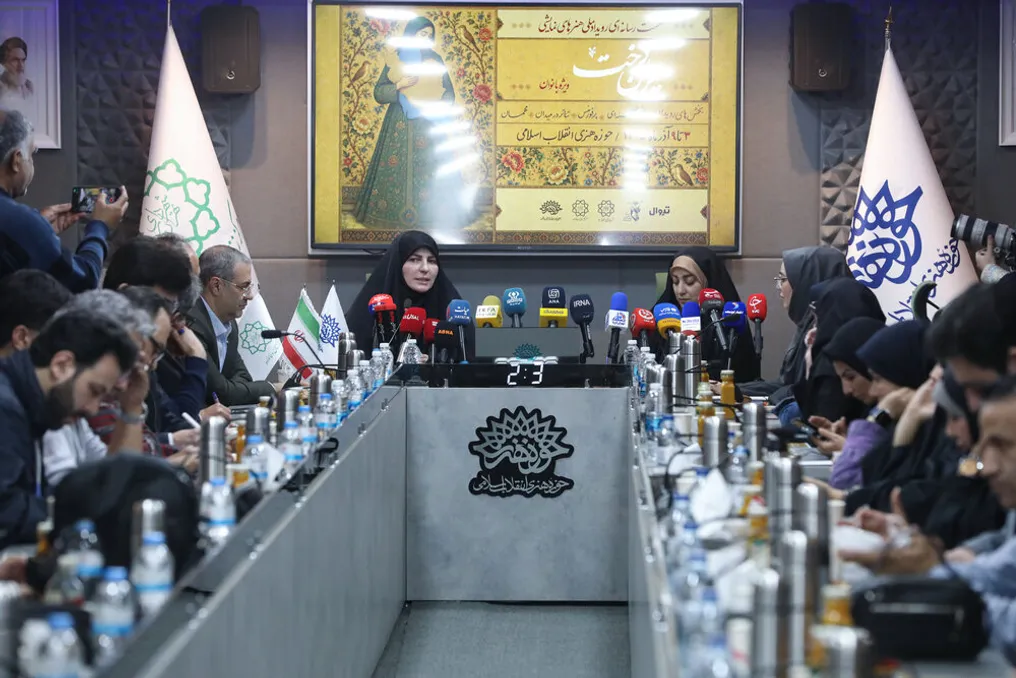
A press conference was held in Tehran dedicated to the first edition of Irandokht—a national event in the field of performing arts dedicated to women. The event took place at the Artistic Bureau on Saturday. Organizers emphasized the significance of women's role in promoting national identity and expanding the country's theatrical landscape.
Maryam Ardabili, General Director for Women's Affairs in the Tehran Municipality and president of the event, noted that women's social activity and collective efforts to address women's issues have significantly increased over the past decades. She added that women's talents and abilities are attracting increasing attention, but various traditional and modern views on the role of women sometimes created contradictions that require a more harmonious approach.
Ardabili stated that today women's opportunities go beyond mere words or slogans, as talented and capable women are manifesting themselves in diverse fields. She described theater as an important tool for artistic expression of social processes and changes, asserting that women's creative contribution can help shape a dynamic artistic environment based on shared values, including love for the homeland.
She insisted that Irandokht should develop as a permanent initiative, not remain a one-off event, given the presence of women-oriented cultural institutions in Tehran that can host plays created specifically by women. Furthermore, Ardabili touched upon the representation of women during crises, noting that they are often depicted predominantly as victims or vulnerable members of society. Irandokht aims to change this perspective by presenting women as resilient and influential participants in overcoming difficult circumstances.
According to Ardabili, the event provides an opportunity to stimulate dialogue around the idea of Iran and contribute to reducing social polarization by creating a space for discussion outside ideological disagreements.
Maryam Shabani, Head of the Women's Theater Office at the Artistic Bureau and event secretary, reported that the organizing committee received 93 submissions that passed a two-stage evaluation. She explained that the event was conceived in response to the need for a national platform to support women's theatrical activities in Tehran and other provinces.
One of the main goals, according to her, is to strengthen national identity and showcase the cultural heritage of Iran's ethnic communities through the creativity of theater groups. The program is divided into three main blocks: stage performances, recitals, and open-air theater. Organizers also hope to present outstanding productions at the Fajr International Theatre Festival.
Shabani stressed that all plays selected for the event are original works by Iranian playwrights, without the inclusion of translated scripts. The artistic policy was based on the theme 'Iran, Always Proud.' The first Irandokht event is scheduled from November 24 to 30 in Tehran and will gather women's theater groups from different regions of the country.
The program will take place in the Mah and Mehr theaters, as well as in the Sorekh and Andisheh halls at the Artistic Bureau. The stage part of the events will be held in public assemblies and squares of the capital. Organizers expressed hope that this initiative will become a long-term platform for women's participation in art, while simultaneously bringing to the stage the diverse cultural traditions, rituals, literature, and mythology of Iran.