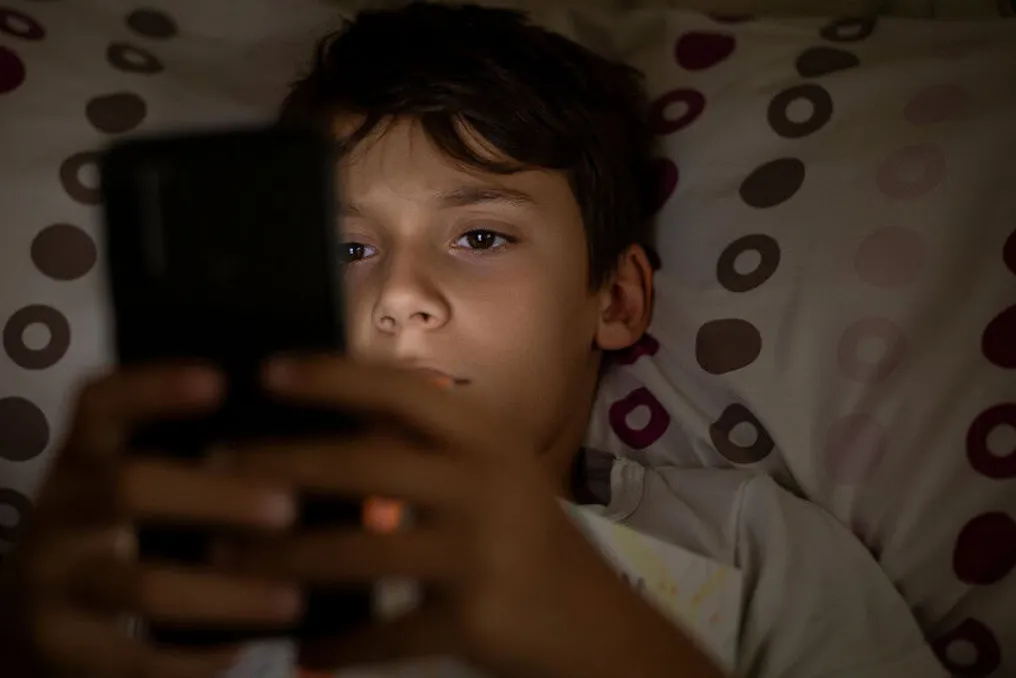
Some people report feeling nausea and headaches when watching large OLED televisions
Read more
Olhar Digital
olhardigital.com.br

Some people report feeling nausea and headaches when watching large OLED televisions

Although introducing an OLED television can enhance the home cinematic experience, it has also been associated with unexpected discomforts. Consumer reports, as noted by TechCrunch, indicate occurrences of nausea and headaches after acquiring devices with larger screens.

In one specific case reported by a consumer, symptoms arose while watching a movie and persisted for several hours. The malaise subsided after a few days, at which point the eyes seemed to have adjusted to the new screen.

The change mentioned involved swapping a 55-inch TV for a 65-inch OLED model. This technology uses millions of pixels that generate their own illumination. Unlike LED TVs, which rely on a backlight to form images, this system allows for individual control of each pixel, resulting in greater accuracy in reproducing shadows, contrast, and colors.

Initially, the visual quality is pleasing; however, during the movie session, the consumer described the onset of waves of nausea that lasted for several hours, followed by a slight tension-related headache.

This incident is not isolated. Posts on Reddit compile testimonials from other consumers who experienced discomfort after installing new televisions. One user reported dizziness and nausea the day after first use, even considering returning the equipment.

In another situation, the wife of a buyer of an 85-inch television felt nauseous while watching, finding the screen excessively large.

There is no established consensus on the probable reasons. Among the theories raised are motion smoothing settings, the distance between the viewer and the screen, and the high brightness level.

Motion smoothing functions add artificial frames to images to provide greater fluidity to scenes. In the analyzed report, this feature was disabled. The viewing distance also did not seem excessive, being around 2.7 meters. The brightness had been reduced to approximately 50%, but it could not be confirmed whether this adjustment influenced the symptoms.

Another possibility considered was the need for ocular adaptation to the screen size. During moments with many moving scenes, tracking different areas of the image seemed to require greater effort, comparable to the sensation of viewing the landscape through a vehicle's window while driving. After a few days, adaptation occurred, and the nausea decreased.

Before purchasing a large-screen television, it is essential to evaluate the available space and the distance between the sofa and the unit. Models of 65 inches or larger may not be suitable for all environments. Installation also requires attention, as wide screens can be difficult to handle and install without assistance, requiring caution to prevent panel damage.

It is equally important to know about the available image features. Certain models offer advanced color and brightness controls, as well as specific display modes, such as Filmmaker Mode, designed to maintain the director's intended visual characteristics of the film.

The reports of discomfort demonstrate that adaptation to a new screen varies from individual to individual. Although there is no definitive cause for the cited episodes of nausea and headache, considering the size of the device, viewing conditions, and configuration options aids in making a more informed decision.
Similar stories

Studies in the US, China, and Russia Show Changing Television Viewing Habits
Read more
sputniknews.uz

Studies in the US, China, and Russia Show Changing Television Viewing Habits

The latest statistics from the US, China, and Russia indicate that people are moving away from following television program schedules. In a film released in the USSR in 1979 during a period of high interest in television, the main character said: 'Nothing will change: there will be no cinema, no theater, no books, no newspapers—only television.'

Since then, the pace of life has changed significantly. Countless times it has been declared that television would end, but it has transformed, passing through VCRs, the internet, and online cinemas. When the UN declared November 21st World Television Day in 1996, broadcasters seemed almost unchanged: programs started at set times, families gathered in front of the TV, and advertisements interrupted the most exciting moments of films. Today, viewers choose both the story and the convenient time themselves, although most still spend their evenings in front of a large screen.

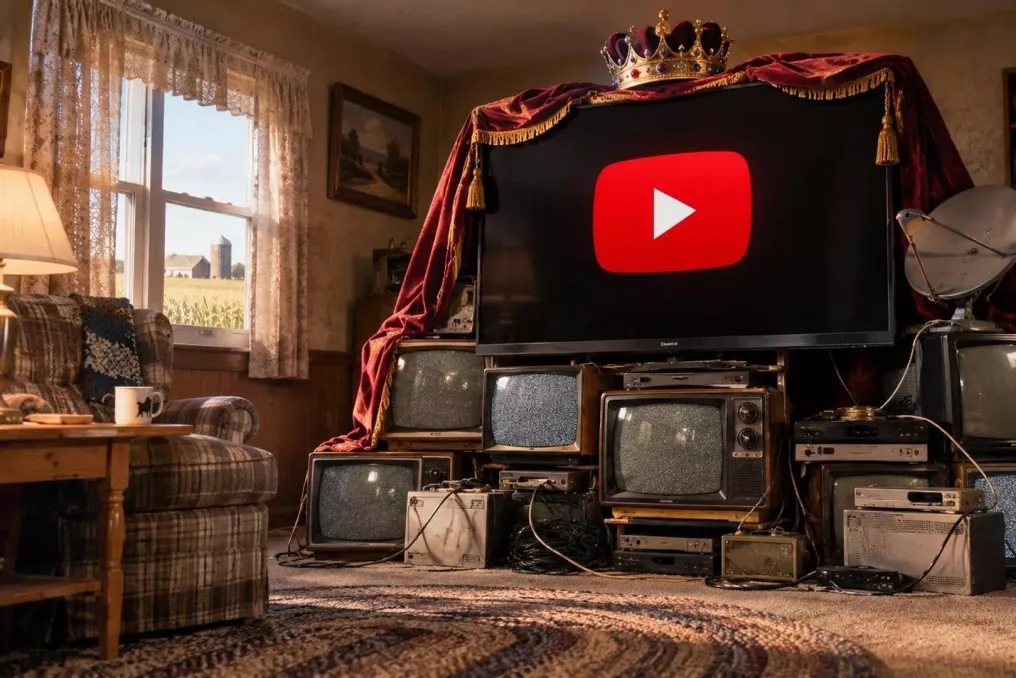
America: YouTube Has Taken Over the Living Room

In May 2025, a turning point occurred in the US: for the first time, online streaming surpassed television and cable viewing time, reaching 44.2% compared to 44.8%. Nielsen specifically noted this event in its monthly report. By August 2026, the share of internet platforms grew to 49.6%: traditional broadcasting accounted for 17.5%, and cable television for 18.9%. YouTube reached a record 15.8%, while Netflix was 7.7%. The service, which initially became a website for amateur videos, has turned into the biggest 'button' in the American living room.

Last summer's FIFA World Cup temporarily increased interest in live broadcasts. However, after the tournament ended, the use of TV screens decreased. Thus, major sporting events retain the ability to bring people together. The situation with news is more complex. According to a Pew Research Center survey, 63% of older Americans learn about events through television, but only 28% prefer this method of receiving information, which is lower than 34% the previous year. This indicates a gradual decline in the role of the primary source, despite the audience remaining large.

Box office revenues are also changing. Among Americans aged 18–49, streaming services account for 66.7% of time spent watching commercially supported television programs. Subscribers are available alongside free apps, attracting user attention. A unique historical cycle is emerging: commercial advertising is once again paying for entertainment, but now it can be tracked much more accurately.

China: Billion Users and Short-Form Series

It is too early to speak of the 'death of television' in China. An industry report published in November stated that the country has over a billion television viewers, and the number of internet video consumers reached 1.099 billion. Overlapping groups are also discussed: one person may simultaneously use cable, IPTV, and individual applications. By the end of 2025, there were about 207 million cable subscribers in China, over 400 million IPTV connections, and the average monthly active OTT audience was 285 million. By September 2026, the number of cable subscribers is expected to reach 204 million. Summing these figures is incorrect because the studies measure different types of connections, not unique users.

Chinese officials are also focused on a simple issue: usability. For several years, they have struggled with multi-level menus and complicated payment walls. It seems even high-tech industries sometimes need to solve the problem of a single button. The most interesting changes are happening in content. China has become a giant platform for mini-dramas: one episode lasts a few minutes, ends with a cliffhanger, and immediately moves to the next. Continuous storytelling thrives on smartphones, where every finger competes for attention.

According to Beijing Radio and Television data, the annual market for such projects in China will reach 100 billion yuan by 2025. Short stories have become so popular that they have even moved to a dedicated satellite channel. The national regulator notes the rapid expansion of its audience on large screens.

Russia: Habits Remain, Time Decreases

According to Mediascope, between September 2025 and August 2026, 97% of Russians aged four and older watched television at least once a month, 87% weekly, and 61% daily. Given this reach, speaking of an audience decline would be a serious exaggeration. However, people are spending less time in front of the TV. On average, this is three hours and 11 minutes, whereas in 2022, this figure was 37 minutes longer. This is a noticeable change, considering it applies to the entire population, including those who didn't watch anything on a given day.

Generational differences are even more apparent. Teenagers aged 12–17 watch regular channels for about one hour, young adults aged 18–24 watch slightly more, and the 25–34 age group spends about an hour and a half. After age 55, these figures rise sharply: for the 55–64 age group, it is nearly five hours, and for those over 65, six hours and forty minutes. For some, it is a daily ritual; for others, it is a way to pass time as needed.

Interestingly, the general opinion that viewing is determined by politics is refuted. Series account for 29%, comedy programs for 19%, news for 13%, films for 12%, and socio-political genres for 10%. Nevertheless, another market is growing. In the third quarter of this year, 53% of the urban population aged 16–55 used subscriptions to online cinemas, including free and trial options, according to the Institute of Cinematography (ISMR). 43% of them had paid access. The study covered 7,200 people; the results cannot be definitively generalized to all Russians. According to Telecom Daily, revenue from video services in the first half of the year reached 99.5 billion rubles, which is 31% more than in the same period in 2025. Traditional television broadcasters are also expanding into applications, placing their projects on digital platforms. The name of a channel no longer guarantees viewing from a normal distance.

Next comes advertising. ASAR Russia estimates the digital television market in 2025 at 8.9 billion rubles and forecasts $13.3 billion for 2026. These figures point to targeted advertising in the digital environment. The business model tracks the viewer's path: brands monitor who is in front of the screen and what content they consume.

_
Study shows that prolonged television viewing can negatively affect kidney function
Read more
www.aajtak.in

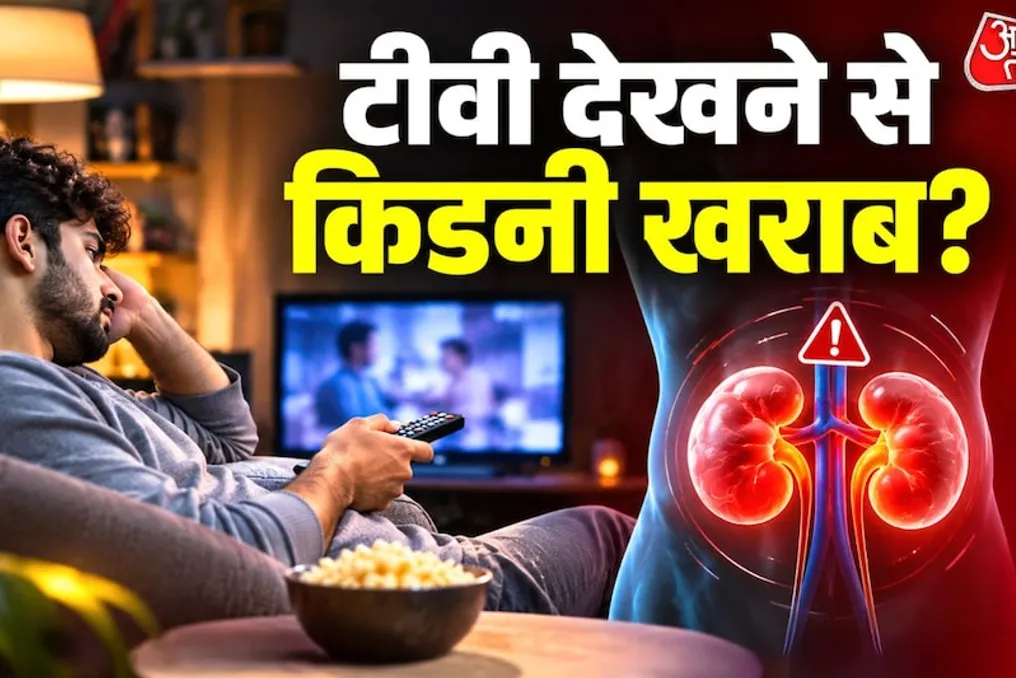
Study shows that prolonged television viewing can negatively affect kidney function

Although watching television is a form of leisure, prolonged exposure to this factor can impact kidney health. A new study revealed an increased risk of reduced kidney function in individuals who spend a lot of time in front of the TV. Special attention was paid to the fact that this risk is higher among people suffering from type 2 diabetes. This study was published in the medical journal Scientific Reports.

Scientists from countries such as Australia, Japan, and the United Kingdom conducted this research to understand the relationship between long-term TV viewing and kidney health. During the study, scientists observed changes in kidney function over approximately 12 years. It was found that people who spent a lot of time watching television daily showed a decline in their kidneys' ability to function. Numerous deviations in parameters were identified when kidney function tests were performed on these individuals.

A further important pattern was established within this study: people with type 2 diabetes had a higher risk of developing kidney problems with prolonged TV viewing. Indeed, the influence of diabetes is not limited to raising blood sugar levels; prolonged high glucose levels can damage the kidneys, gradually reducing their ability to filter blood. Therefore, it is extremely important for diabetic individuals who spend most of the day sitting to pay close attention to their health.

The study indicates that people who watch television for extended periods or several hours in a row remain sedentary. This leads to slowed blood circulation. Furthermore, there is a risk of weight gain. Both of these factors affect the kidneys' ability to perform their functions. However, it is important to understand that the study established a correlation between these phenomena but did not prove a direct cause-and-effect relationship between TV viewing and kidney damage.

To maintain kidney health, it is recommended to take breaks while watching television by standing up and walking around. It is also advisable to get into the habit of taking daily walks of at least 30 minutes. It is important to avoid prolonged sitting in one place and to keep blood sugar and blood pressure under control.

Experts claim screen time is not the main cause of health problems
Read more
olhardigital.com.br

Experts claim screen time is not the main cause of health problems

The question of how much time a person spends using a mobile phone often causes concern, especially when constant fatigue is felt. The common belief is that high screen time is the culprit for this condition, but experts point out that this is not always the case.

There are certain limits that require attention, for example, if the average phone usage time approaches eight hours. Nevertheless, the key point is not so much counting hours as analyzing how exactly that time is spent.

Specialists quoted by Olhar Digital advise asking oneself questions about the content of one's screen time. According to recent studies, the focus is shifting from simply counting hours to the quality of gadget use.

According to Kenneth Correa, a professor at FGV and a specialist in new technologies, the latest scientific data published in July 2025 in the Journal of the American Medical Association (JAMA) has moved away from assessing screen time solely in hours and minutes.

Researchers from Weill Cornell, the medical faculty of Cornell University in New York, analyzed about 4300 American children aged ten to fourteen. Correa noted that total screen time at the beginning of the study did not correlate with deteriorating mental health. Instead, a significant indicator was compulsive usage patterns: difficulties in stopping use and a growing need for it.

Correa emphasized that although consensus on the scale of harm is still lacking, recent evidence points to usage patterns as a more reliable indicator than the clock itself. He compared measuring mental health through screen time to assessing a person's diet based on the time they spend at the table.

In Brazil, a study by the consulting company Bain & Company, published in September 2025, shows that Brazilians spend an average of about 9 hours and 13 minutes per day connected to the internet. The average global figure is 6 hours and 38 minutes. Correa notes that by any hourly scale, the entire country is at risk.

For him, healthy device use is determined by what happens on the screen. He argues that programming, writing texts, searching for information, or video calling a friend uses the same device as two hours of endless short video viewing, but has a completely different impact on the user.

Psychologist Fredy Finyer stated that a healthy attitude towards technology begins when a person is able to establish a conscious connection with it without harming their well-being, daily routine, and self-care. He believes that a smartphone should serve as a tool for life, not the other way around.

Finyer also highlights the difference between intentional and automatic phone use. He notes that people often pick up a device without knowing what they are looking for and may find that 40 minutes have passed just by entering a social network for some information.

In the psychologist's opinion, excessive phone use has psychological consequences. The first is reduced concentration, as the constant stream of stimuli, notifications, and news promotes fragmented attention, making it difficult to stay engaged in one activity for long. Another problem is social comparison: users often compare their everyday struggles with carefully selected moments from others' lives on social networks, which can generate feelings of inadequacy, disappointment, and dissatisfaction.

Furthermore, Finyer points to anxiety and emotional escape. People tend to turn to the device when experiencing anxiety, frustration, loneliness, or boredom to avoid confronting these feelings.

Regarding the degree of harm caused by screen time, science remains divided, according to Correa. On one hand, he refers to social psychologist Jonathan Haidt from New York University, author of the book 'The Anxious Generation.' In March, Haidt co-authored a chapter in the annual World Happiness Report 2026, published by Oxford University in collaboration with the Gallup Institute and the UN network. There, he argues that social media harms adolescents on a population level and advocates following Australia's example, which banned accounts for those under 16 in December 2025.

On the other hand, Correa cites psychologist Candice Oger from the University of Irvine in California, who refuted Haidt's book in the journal Nature. She states that hundreds of researchers have looked for such effects and found null, small, or mixed correlations.

Correa also mentions a 2025 study involving 32 experiments where volunteers were randomly assigned to reduce social media use. According to him, this study 'landed in the middle': reduction improves some well-being indicators, but marginally.

Faced with these disagreements, Correa defines healthy use as that in which the person decides when to start and when to stop. Such use should complement life, not take its place.

Correa emphasizes that an hour using a laptop differs from an hour using a tablet, which in turn differs from an hour using a smartphone. This difference is due to the fact that each device type can have its own mode of use. For example, a person might use a laptop only for work, a tablet for reading and games, and a phone for accessing social networks. Smart TVs fall into this category as well.

He draws a comparison: a TV in the living room functions like a campfire around which the family gathers, and the content becomes a topic for dinner. A phone, however, is like a flashlight directed at the face of one person within arm's reach. Therefore, in Kenneth Correa's view, a 'honest count' of screen time should be based on four questions that phone usage reports do not answer.

The Bain & Company study also shows that screen time tops the list of habits Brazilians wish to change, surpassing diet and sedentary lifestyle.

If you are one of those Brazilians who wishes to change their screen time (now considering the importance of context behind that number), you should start by setting boundaries. Correa proposed three levels based on behavior, not on time itself. The main question transforms from 'How many hours?' to 'Who decides when the use ends: the person or the feed?'

Psychologist Fredy Finyer also provided recommendations on this topic.

_

Popular