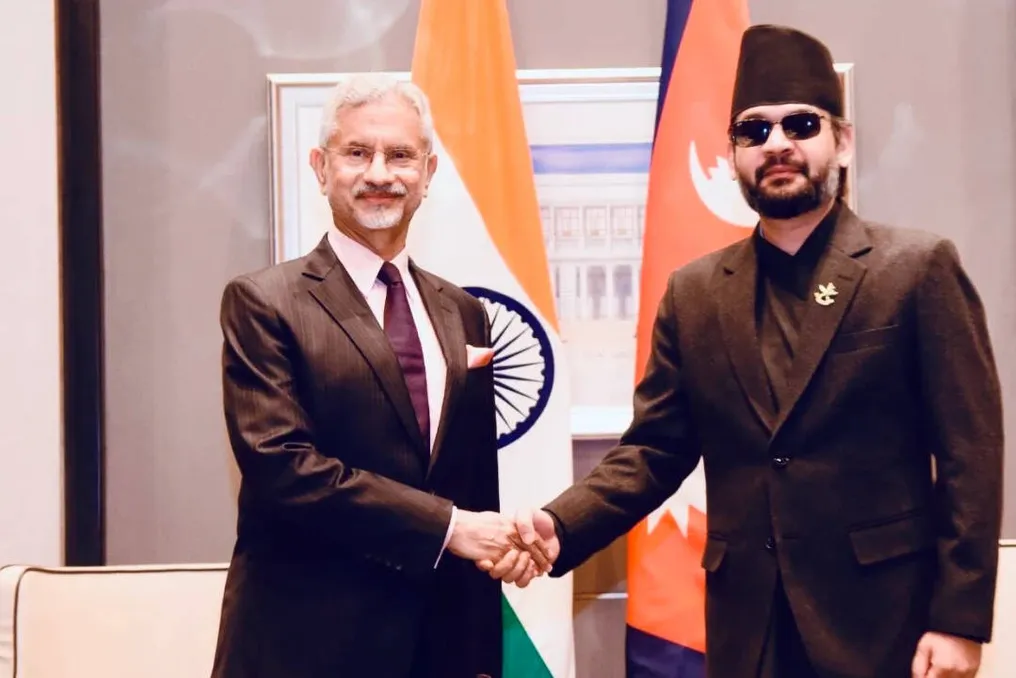
India's Foreign Minister S. Jaishankar invited Nepal's Prime Minister Bidhendra Shah, who arrived in India on Sunday as part of his first bilateral visit abroad. Prime Minister Modi will meet with Shah personally on Monday, after which an exchange of 'prospective' agreements in key areas of cooperation will take place.
These agreements will cover areas such as infrastructure, technology, transport accessibility, development partnership, energy, hydropower, railways, climate change, and disaster resilience. Jaishankar noted in an X post after the meeting that 'India values the special friendship with Nepal' and expressed anticipation for his meetings with Prime Minister Modi.
According to official data, the leaders will virtually inaugurate a number of completed projects and also participate in foundation-laying ceremonies for new initiatives. Furthermore, Shah is expected to reiterate Nepal's request for the creation of bilateral low-altitude air corridors through Indian airspace near western entry points.
Both sides have reached a common vision for bilateral relations, which is set to be unveiled after the meeting. Nepal is also seeking a $2 billion economic package from India. Although Shah may raise the border issue, it is expected not to become a stumbling block during negotiations.
India views its ties with Nepal as unique and comprehensive, based on mutual trust, open borders, shared traditions, and close people-to-people connections. Government sources emphasized that India is Nepal's largest trade, transit, and investment partner. Nepal has duty-free access to the Indian market, and India is Nepal's largest export destination, receiving about 80% of goods exported by Nepal.
The visit aims to strengthen the goodwill that India generated in Nepal through assistance to the country following devastating floods earlier this year. India provided about 140 tons of emergency supplies and offered technical assistance in rescue operations in tunnels and forensic activities after the sudden flood.
India and Nepal are exploring opportunities to develop new pipelines and terminals to further improve energy interconnection. The parties are also discussing new options, such as the Raxaul-Kathmandu railway connection, which could open new routes for cross-border passenger and freight transport.