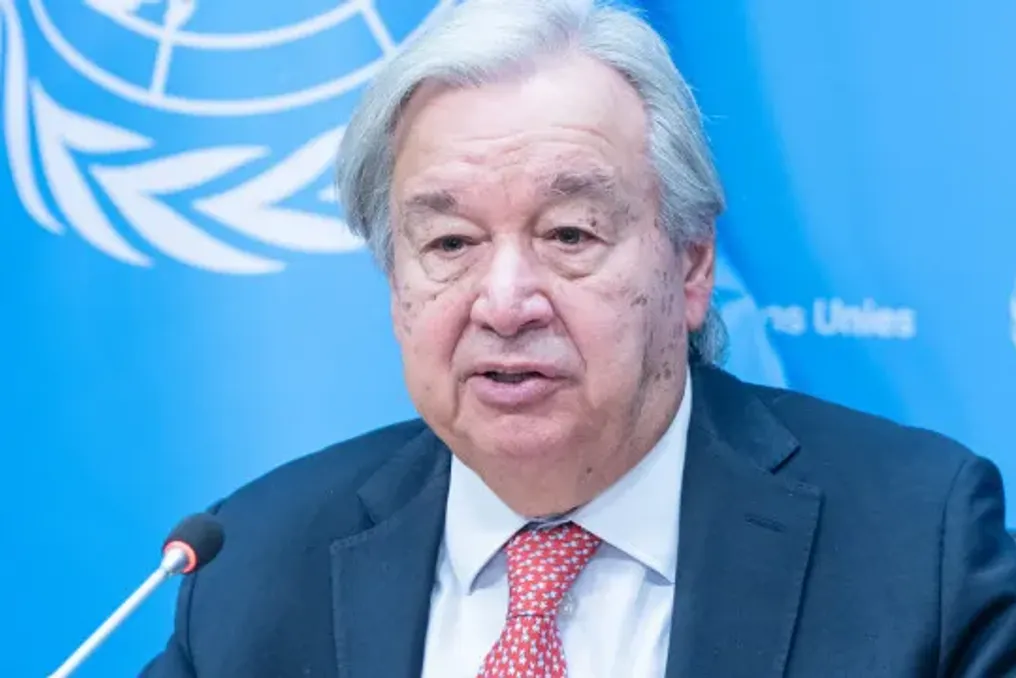
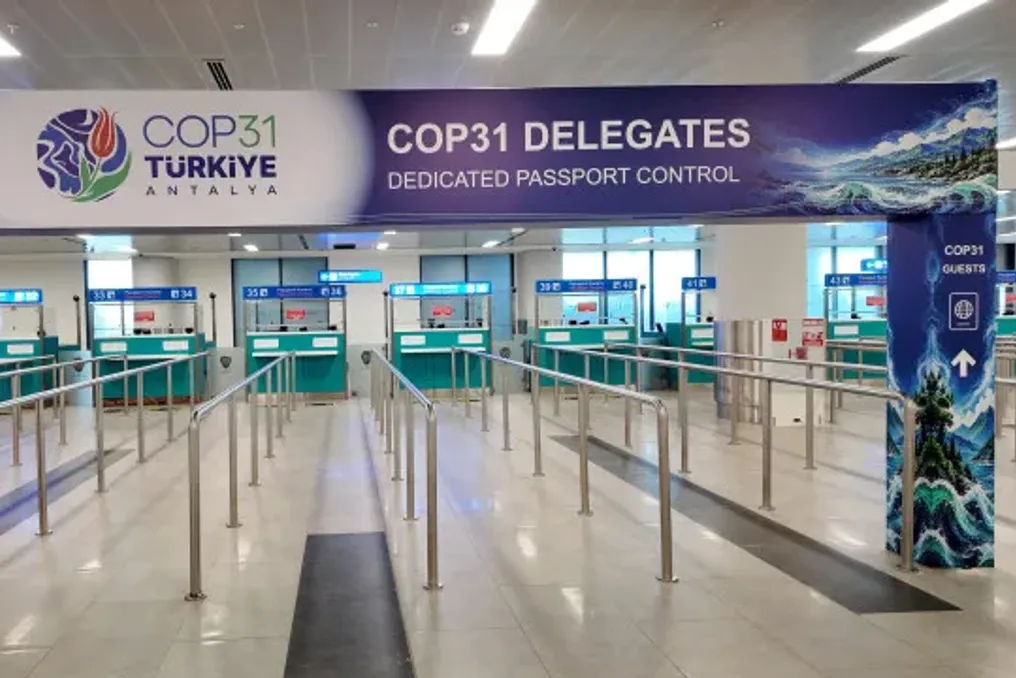
Nordic Countries Affirm Importance of Multilateral Cooperation in Combating Climate Change After COP31
Read more
Noticias ao Minuto
noticiasaominuto.com

Nordic Countries Affirm Importance of Multilateral Cooperation in Combating Climate Change After COP31

Denmark, Finland, Norway, Sweden, and Iceland once again emphasized the significance of a multilateral approach to confronting climate change. This came after the climate summit in Antillea, known as COP31, concluded without reaching a global political agreement on the issue.

Sari Multala, Finland's Minister for Climate and Environment, stated in a communiqué from the Council of Nordic Ministers that multilateralism is vital for the northern region, which consists of small countries, as climate change is a global problem requiring global action.

The Council of Nordic Ministers also added that they must promote and advance ambitious climate goals and concrete measures. This Council brings together several countries whose economic power accounts for 10% of the European Union's GDP.

The Council of Nordic Ministers noted that despite the lack of a final agreement, many states expressed willingness to support voluntary initiatives aimed at the gradual phase-out of fossil fuels.

Despite the absence of a final agreement, the German government welcomed the 'concrete progress' achieved at the conference. Germany's Environment Minister, Karsten Schneider, stressed that Antillea also sends a signal to the market favoring clean electrification. He stated in his declaration that this will create opportunities, including for Germany's strong energy sector, and that this strategy benefits both the climate and the economy.

COP31 ended on Sunday without a political agreement, reflecting current disagreements in multilateral cooperation. This occurred despite a record extension of negotiations, which lasted over 44 hours, but failed to reconcile the positions of various regional blocs.

At climate conferences, decisions must be made by consensus among nearly 200 countries, so the formal disagreement of just one country can block a decision. Although intensive negotiations continued for two weeks, COP31 managed to ratify some documents but not the main document.

Similar stories

Climate Issues Discussion at COP31 in Antalya and Their Significance for Uzbekistan's Water and Energy Security
Read more
uzdaily.uz

Climate Issues Discussion at COP31 in Antalya and Their Significance for Uzbekistan's Water and Energy Security

At the 31st Conference of the Parties to the UNFCCC (COP31), taking place in Turkey, world leaders are discussing ways to accelerate the transition to renewable energy sources, expand climate financing, and protect countries from the consequences of global warming. For Uzbekistan, these negotiations are particularly important against the backdrop of growing electricity demand, limited water resources, and the need to adapt the economy to climate change.

One of the key events on November 11 was the opening of the COP31 Leaders' Summit, where UN Secretary-General António Guterres called on states to move from stated climate commitments to their practical implementation.

According to Guterres, global greenhouse gas emissions reached record levels in 2025, and current national climate plans are insufficient to limit global warming to the 1.5°C target set by the Paris Agreement. Guterres warned that exceeding this temperature threshold is now inevitable, although the duration and scale of the exceedance will depend on government actions.

For Central Asia, where climate change intensifies pressure on water resources, agriculture, and energy infrastructure, the task is not only to reduce emissions but also to strengthen economies' ability to adapt to changing climatic conditions.

Financing climate action in developing countries remains one of the central issues at COP31. Speaking at the Leaders' Summit, António Guterres emphasized the need to turn the global goal of mobilizing $1.3 trillion by 2035 into actual financial flows. He also called on developed countries to fulfill their commitment to provide at least $300 billion annually by 2035 and to develop concrete plans to triple adaptation financing.

The UN Secretary-General drew attention to the uneven distribution of clean energy investments. According to figures provided by him, developing countries outside of China, which is home to nearly two-thirds of the world's population, receive less than one-fifth of global investments in this sector. Meanwhile, borrowing costs for many of these countries are two to three times higher.

Access to long-term financing is critically important for Uzbekistan. Modernizing power grids, expanding renewable energy, improving irrigation efficiency, and developing climate-resilient infrastructure require significant investment. However, announced international financial goals do not guarantee automatic allocation of funds to individual countries; the practical significance of the negotiations will depend on agreed financing mechanisms, the availability of loans and grants, and the ability of developing economies to effectively utilize these tools.

Another priority at COP31 is increasing the use of electricity in transport, industry, and buildings. At a joint press conference on November 10, COP31 leaders introduced the Global Electrification Pact, known as '35 by 35,' which aims to increase the share of electricity in total final energy consumption from the current 23% to 35% by 2035.

COP31 negotiation chair Chris Bowen noted that achieving this goal will require more than a fourfold acceleration of electrification rates. According to Bowen, conference participants are also discussing how relevant provisions can be reflected in the final COP31 decision.

UN Executive Secretary for Climate Change Simon Stiel highlighted the economic benefits of transitioning to clean energy. Citing data from the International Renewable Energy Agency (IRENA), he stated that 90% of large-scale renewable energy projects are now cheaper than fossil fuel alternatives.

For Uzbekistan, the global electrification agenda is especially relevant as the country increases solar and wind energy production, develops energy storage systems, and modernizes its electrical grids. Nevertheless, increasing installed capacity is only one aspect of the energy transition; equally important are the grid's ability to integrate energy from various sources, load balancing, energy efficiency improvement, and supply reliability.

The global '35 by 35' goal does not currently establish a separate national obligation for Uzbekistan, but it reflects the direction of international energy policy that may influence investment priorities and technological development in the coming decade.

Parallel to the energy transition, COP31 leaders are paying significant attention to adapting to the consequences of global warming. COP31 Chair Murat Kurum stated that adaptation, as well as loss and damage, must remain at the center of the conference's climate agenda. António Guterres, in turn, called for protecting populations from droughts, floods, and other climate-related threats, expanding early warning systems, and supporting the development of new generations of national adaptation plans.

The importance of these efforts is also underscored by new data presented by the World Meteorological Organization (WMO) in Antalya on November 9. According to preliminary estimates by the organization, the average global temperature from January to September 2026 was approximately 1.47°C above pre-industrial levels. WMO also reported that the last 12 years were the warmest on record.

For Uzbekistan, rising temperatures are directly linked to risks of worsening water shortages, increased irrigation needs, and additional strain on infrastructure. The transboundary nature of Central Asian water resources is paramount. Ensuring water supply depends not only on national water conservation measures but also on regional cooperation, the quality of hydrometeorological forecasts, and the ability of countries to jointly respond to prolonged droughts.

Under these circumstances, international climate finance could potentially support the modernization of irrigation systems, the implementation of water-saving technologies, the improvement of water resource monitoring, and the development of early warning mechanisms. However, the realization of such projects requires not only financial commitments from international partners but also the existence of specific national programs with measurable results.

The practical significance of the negotiations in Antalya for Uzbekistan can be understood through several interconnected priorities. The first is access to climate finance under terms that allow for the implementation of long-term infrastructure projects without excessively increasing the country's debt burden. The second is the creation of an energy system capable of meeting growing electricity demand while simultaneously reducing emissions and increasing resilience to external risks. The third is enhanced international support for climate change adaptation, especially in the areas of water resource management, agriculture, and protecting the population from extreme weather events.

Furthermore, climate negotiations have a regional dimension for Central Asia. Changes in temperature regimes, water availability, and energy development are closely interconnected and therefore require coordinated solutions that go beyond individual national strategies. COP31 is still ongoing, and the final outcomes of the negotiations have not yet been determined. The initiatives and statements of the conference leaders indicate the direction of the discussions, but they do not replace formally agreed decisions by participating countries. For Uzbekistan, the ultimate measure of COP31's success will not be the number of new international declarations, but the ability to transform them into accessible financing, technological cooperation, and concrete projects that strengthen the country's water and energy security.
COP31 begins in Turkey with divergences over climate finance and action targets
Read more
noticiasaominuto.com

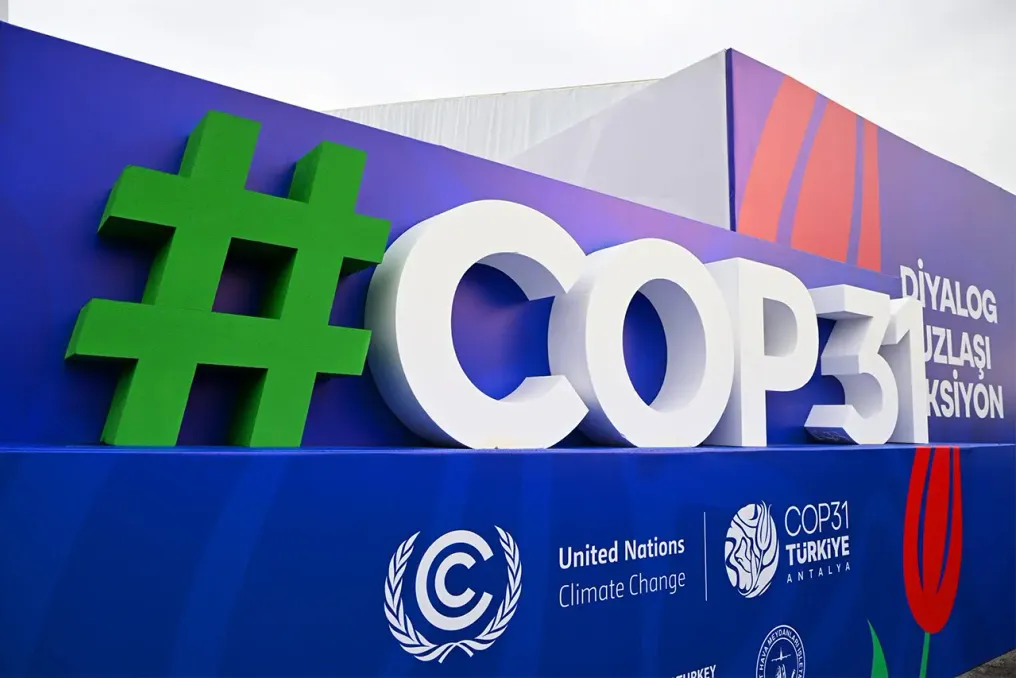
COP31 begins in Turkey with divergences over climate finance and action targets

The 31st United Nations Climate Change Conference (COP31) has begun in Turkey. The event takes place after a year marked by extreme weather events, such as floods and heatwaves, generating tensions regarding the financial resources needed for adaptation and mitigation of the climate emergency.

António Guterres, UN Secretary-General, called on leaders to 'be up to the task,' while Murat Kurum, Turkish Minister of Environment and conference president, emphasized during the opening session that 'any delay weighs particularly heavily on climate action.'

In 2026, the planet was again affected by climate change, evidenced by fatal floods in Nepal, heatwaves in Europe, and fires in Indonesia. Simultaneously, the energy crisis, driven by the Middle East conflict, has pressured costs and created significant budgetary challenges for governments, which ultimately diminishes climate ambition.

Held at the large exhibition center of the Turkish coastal city of Antalya, COP31 aims primarily to transform commitments made in previous UN meetings into practical measures. Maria da Graça Carvalho, Portugal's Minister of Environment and Energy, had previously argued that COP31 should be a conference focused on actions.

COP31, which brings together nearly 200 nations under the UN umbrella and has 68,544 accredited participants, is expected to be the forum for the 'implementation' of promises, according to Murat Kurum. Delegations spent the early hours of the start day negotiating the agenda. The main point of disagreement lies in the funding promised by developed countries—historically the largest greenhouse gas emitters—to developing countries.

A representative from the European Union had already signaled on Friday a lack of political will to increase spending. Jasper Inventor, leader of the Greenpeace delegation, described the start of COP31 as 'difficult,' warning that rich countries are refusing, especially, to include certain funding items on the agenda.

The 'Climate Finance Working Programme,' a mechanism defined at COP30 in Brazil in 2025 to discuss financial agreements, will be officially discussed. However, the tripling of funding for climate change adaptation, crucial for protecting nations most susceptible to droughts, floods, or sea-level rise, is not guaranteed.

The UN reported last week that developing countries will need $305 billion annually by 2035, an amount almost ten times higher than what they currently receive from wealthy nations. Simon Stiell, the UN's Climate Change Officer, acknowledged that 'frustration is palpable' in this context.

Another controversial issue is Turkey's intention to make electrification a central focus of COP31, suggesting that countries commit to raising the share of electricity in global energy consumption to 35% by 2035, compared to the current 20%. The European Union supports electrification with renewable sources, a position also defended by Maria da Graça Carvalho. However, several hydrocarbon-producing countries show resistance to accepting this proposal.

COP30, held in Belém, in the Brazilian Amazon, concluded without explicitly mentioning fossil fuels. In contrast, Brazil presented last week a 'roadmap' for countries to voluntarily replace oil, coal, and gas with renewable energies.

During a summit co-chaired by Turkey and Australia, Chris Bowen, Australian Minister for Climate Change, encouraged delegations to overcome divergences and prove that international cooperation can still yield results. He argued that 'we will show the world that multilateralism works,' despite the boycott by the US government, motivated by President Donald Trump's denial of climate change.

EU, Africa, Caribbean and Pacific region insist on limiting global warming
Read more
noticiasaominuto.com

EU, Africa, Caribbean and Pacific region insist on limiting global warming

The European Union and 77 countries from Africa, the Caribbean, and the Pacific region have reaffirmed their commitment to strengthening climate cooperation within the framework of the COP31 summit and emphasized the critical need to limit global warming.

In a joint statement published today, although dated Friday, partners noted the urgency of accelerating global efforts to limit temperature rise to 1.5°C, highlighting the particular vulnerability of developing countries.

In connection with the UN Climate Summit, COP31, which begins today in Turkey and will last until the 20th, as well as the subsequent period, the EU and the Organization of African, Caribbean and Pacific States (OEACP) have identified six priority areas for enhanced cooperation.

These areas include adaptation and climate resilience; access to climate finance; clean electrification and a just energy transition; exchange of data, science, technologies, and climate capacity building; creation of sustainable food, water supply, and ecosystem systems; and international ocean governance.

The EU and OEACP represent 104 countries covering about two billion people and more than half of the UN members. They believe that it is necessary to move from declarations to practical implementation so that climate actions bring tangible benefits to people, economies, and communities.

Financially, both organizations supported the goal of mobilizing at least $300 billion (approximately €262 billion) annually for climate action by 2035.

Furthermore, they advocated for easing access for the most vulnerable countries to subsidies and loans on favorable terms, as well as strengthening international mechanisms to counter losses and damages caused by climate change.

In the energy sector, signatories committed to accelerating clean electrification and energy access through investments in renewable sources, power grids, and energy storage, as part of a transition away from fossil fuels 'justly, orderly, and equitably.'

On November 15, 2023, the EU and OEACP signed the Samovar Agreement, which serves as a framework partnership basis for their relationship over the next 20 years. This agreement temporarily takes effect on January 1, 2024, and covers a wide range of topics, including sustainable development and growth, human rights, peace and security, as well as strengthened cooperation between OEACP and the EU in international forums.

Popular