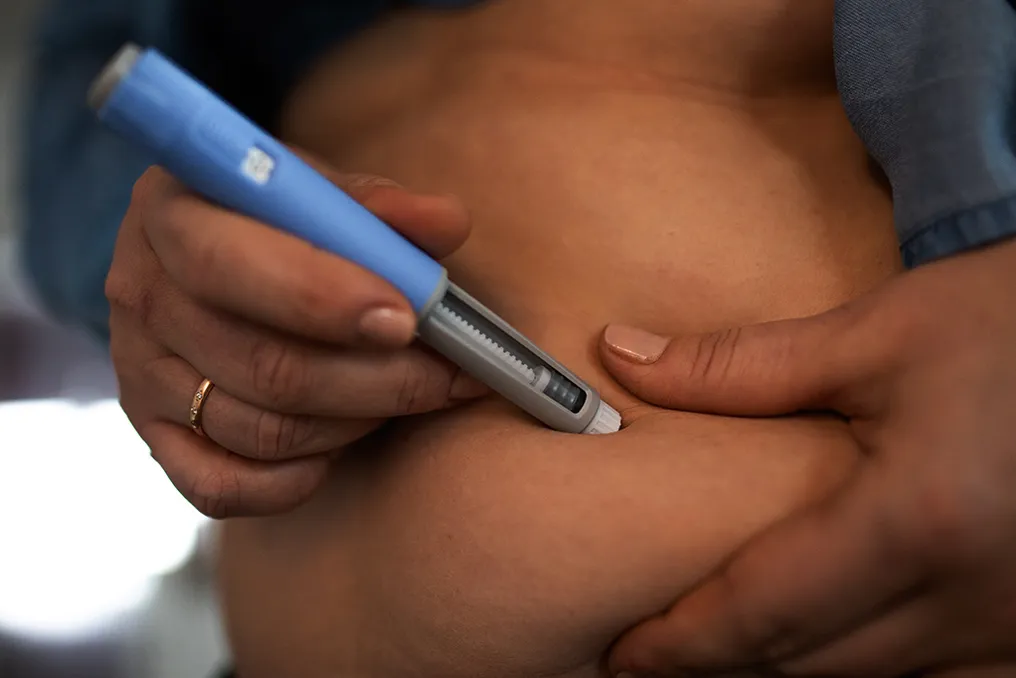
Can injectable medications help control weight after bariatric surgery?
Read more
Super Abril
super.abril.com.br

Can injectable medications help control weight after bariatric surgery?

Bariatric surgery is recognized as a highly effective method in combating obesity; however, it does not guarantee a definitive cure for the condition. It is common that years after the procedure, some patients experience weight regain or fail to achieve the expected weight loss. In these circumstances, drugs such as semaglutide and tirzepatide, popularly called weight loss pens, can serve as support to resume weight control and, in certain situations, prevent the need for another surgical intervention.

Obesity is classified as a chronic and multifactorial disease, which implies that it does not completely disappear after surgery. Although bariatric surgery generates metabolic, hormonal, and anatomical transformations in the body, the biological factors that promote weight gain persist.

It is estimated that between 20% and 30% of individuals undergoing bariatric surgery experience clinically relevant weight regain over the years. An indicator used to measure this is the return of at least 50% of the weight lost after the operation.

View on Weight Regain

Henrique Dametto, a digestive surgeon at Einstein Israelite Hospital, emphasizes that he does not automatically consider weight gain a failure of the surgery or the patient themselves, stating that obesity is a chronic and recurrent disease. He explains that even after very efficient treatment, weight gain can occur over the years. In some cases, this may be linked to anatomical changes resulting from the surgery, requiring investigation, but most often, it is a manifestation of obesity itself.

In this scenario, anti-obesity medications administered in 'pens' come into play. Semaglutide, whose active ingredient is present in drugs like Ozempic and Wegovy, mimics the action of the GLP-1 hormone. Tirzepatide, a component of Mounjaro, produced by the pharmaceutical company Eli Lilly, acts on GLP-1 and GIP receptors, which are involved in appetite and glucose modulation. The effect of these substances is to control the feeling of satiety and appetite, helping to decrease overall caloric intake and hunger.

For people who have already undergone bariatric surgery, the mechanism of action of these medications is identical to that of those who have never had the procedure. According to Dametto, since the medications are administered subcutaneously, the anatomical changes caused by the surgery do not interfere with their absorption. These drugs can be prescribed both for those who have regained weight and for patients who have not achieved satisfactory weight loss after surgery.

Dametto points out that in various observational studies, frequent reductions in the range of 8% to 15% of body weight have been recorded in operated patients after starting treatment with such medications, although the results may vary depending on the medication, dosage, and follow-up period. However, he emphasizes the need for broader and longer-term studies to evaluate these results specifically in this population.

Prior Evaluation and Additional Care

Before prescribing pens for bariatric patients, it is crucial to investigate the reason for weight gain. This evaluation must cover eating habits, behavior, metabolic status, and any anatomical changes resulting from the operation. In some situations, there may be dilation of gastric structures or the anastomosis (the surgical connection between parts of the digestive tract), which may require an endoscopy or a new surgery.

The doctor at Einstein reinforces that the goal will never be to recommend a new surgery just because the patient has regained weight; it is imperative to identify the source of the problem to offer the most appropriate treatment, which is not always surgical in nature.

Another vital consideration before starting the use of these medications is the maintenance of muscle mass. Bariatric patients can develop nutritional deficiencies, depending on the surgical technique used, particularly regarding protein, iron, vitamin B12, and calcium. Since the pens reduce appetite and consequently food intake, it is necessary to monitor nutrient intake and ensure supplementation when necessary.

Henrique Dametto advises that regular physical exercise, especially those focused on muscle strengthening, is important for preserving muscle mass during the weight loss process. Furthermore, signs such as nausea, vomiting, and dehydration must be monitored.

Finally, the treatment does not end when the patient achieves the desired goal. Stopping the medications can lead to further weight gain; therefore, the decision to discontinue must be planned and monitored. The specialist concludes that although not everyone needs to use the medication permanently, the duration of the treatment must be personalized and its withdrawal carefully planned.

Similar stories

Danger of taking painkillers: how medications can damage kidneys and what symptoms this causes
Read more
www.aajtak.in

Danger of taking painkillers: how medications can damage kidneys and what symptoms this causes

Currently, many people take pain relievers on their own without consulting a doctor. While a single use of medication is acceptable, regular intake of painkillers can cause problems for the kidneys, especially if the person already has kidney diseases. It is important to note that the effect of painkillers on the kidneys is not always immediate; sometimes it takes some time, but during this period, certain signs may appear in the body.

According to doctors, there is a significant increase in the use of common analgesics such as ibuprofen and diclofenac. These drugs are often used for knee, lower back, and back pain. However, they can reduce the kidneys' ability to filter blood, leading to a condition known as acute kidney failure. This problem may manifest several hours or even months after starting the medication.

Dr. Himanshu Tiwari from the nephrology department at Sar Gangaram Hospital in Delhi told Aajtak.in about this issue. He noted that he is approached by patients with kidney function disorders, some of whom take high doses of painkillers for many months, which is confirmed by medical data.

Dr. Tiwari emphasized that taking painkillers as prescribed by a doctor in established doses is safe. However, excessive use of these drugs without specialist consultation and without determining the true cause of the pain harms the kidneys, and the risk increases with prolonged use. In most cases, the damage caused by painkillers is also detected in the body.

Initially, there are often no obvious signs of kidney damage. Some people may experience symptoms such as decreased urine output, swelling in the legs or face, and general fatigue. Although these signs can be related to other diseases, if you are taking painkillers, you should not ignore them and should consult a nephrologist.

People suffering from chronic kidney disease, diabetes, or high blood pressure should exercise extra caution when using these medications. The risks also increase for the elderly and those suffering from dehydration due to vomiting, diarrhea, fever, or insufficient fluid intake.

It is important not to take medication on your own initiative. If pain occurs regularly, you must see a doctor to determine its root cause. If necessary, the doctor can check kidney function using creatinine and eGFR blood tests. Before taking medication with an existing kidney disease or another serious problem, specialist consultation is mandatory.

Research indicates that liposuction can complement the treatment of lymphedema and relieve pain
Read more
super.abril.com.br

Research indicates that liposuction can complement the treatment of lymphedema and relieve pain

A recent study, published in September in the scientific journal The Lancet, suggests that liposuction has the potential to alleviate discomfort in women diagnosed with lymphedema, a chronic condition characterized by disproportionate fat accumulation, mainly concentrated in the legs and occasionally in the arms.

The analysis followed 410 women with the disease over one year. The data revealed that 68% of the participants who underwent surgery reported a decrease of at least two points in pain intensity, using a scale of zero to ten. In contrast, only 8% of women who maintained exclusively conservative clinical treatment showed this reduction.

Clinical Study Conducted in Germany

The results were obtained through a clinical trial conducted in 11 centers located in Germany. Of this group of 410 participants, 278 were operated on with liposuction combined with clinical treatment, while the remaining 132 followed only with conservative management.

Despite these positive findings, specialists warn that it cannot yet be categorically stated that the surgical procedure should be integrated into the treatment protocol. Vascular surgeon Andressa Cristina Sposato Louzada, from Einstein Israelite Hospital, emphasizes that the study marks a significant advance by showing that liposuction can reduce pain and improve quality of life, but stresses that the results must be analyzed considering the risks, the lack of long-term data, and the inherent limitations of the research.

Pain Relief Mechanisms

Louzada explains that the improvement in pain may result from various processes that are not yet fully understood. She details that the affected adipose tissue exhibits structural changes related to inflammation, fibrosis, and alterations in microcirculation. Partial removal of this tissue can decrease pressure on neighboring structures and the mechanical overload of the limbs, thus facilitating movement.

Lymphedema is a chronic illness that primarily affects women and can manifest or worsen during phases of hormonal change, such as puberty, pregnancy, and menopause. In addition to the volumetric increase of the limbs, symptoms include pain, increased sensitivity to touch, a feeling of heaviness, and a propensity to form bruises. The vascular surgeon clarifies that, unlike obesity, where fat is distributed more generally, lymphedema has a specific distribution pattern, often disproportionate to the trunk.

Although some estimates suggest that lymphedema may affect about 10% of women, there is no official population data established to define the true prevalence of the disease. Diagnosis depends on the patient's clinical evaluation and physical examination. Andressa Louzada adds that, although imaging tests can help investigate other associated conditions, there is no single test capable of confirming lymphedema with complete accuracy.

Therapeutic Approaches

The initially recommended treatment is always conservative and must be adapted to each individual. It includes regular physical exercise, nutritional guidance, weight control when necessary, the use of compression stockings, and physiotherapy to optimize mobility and manage associated edema. The doctor observes that lymphatic drainage can help control swelling, but it cannot eliminate the characteristic adipose tissue of the pathology.

Liposuction is not the first therapeutic choice; it is generally considered when the patient experiences persistent pain that does not improve satisfactorily with clinical treatment, or when there are functional limitations that impair locomotion. Louzada reinforces that there is no fixed treatment period applicable to all cases, as the decision is always personalized, considering the symptoms, clinical status, and involved risks.

It is essential to understand that surgery does not constitute a cure for lymphedema. Since the disease is chronic and its mechanisms are not yet fully understood, it cannot be guaranteed that fat removal will permanently interrupt its progression or prevent the emergence of new signs.

Risks and Future Perspectives

Like any surgical intervention, the procedure carries risks. In the study, 47% of the operated patients suffered some adverse event. Possible complications include bruising, fluid accumulation, infections, changes in sensitivity, anemia, and asymmetries in body contour. Among the most serious incidents are deep vein thrombosis, pulmonary embolism, hemorrhages, and lymphatic lesions.

Additionally, the duration of benefits remains uncertain, as the follow-up lasted only 12 months. Therefore, it is necessary to obtain a deeper understanding of the long-term results, identify which patients benefit the most, and verify whether surgery effectively alters the evolution of the disease, the vascular surgeon states. It is concluded that the main advance lies in recognizing that liposuction can be an effective therapeutic alternative for carefully selected patients, and not merely an aesthetic act.

FDA issues warning about potential eye risks associated with weight loss drugs
Read more
www.aajtak.in

FDA issues warning about potential eye risks associated with weight loss drugs

The U.S. Food and Drug Administration (FDA) has issued a new warning regarding certain medications used to manage diabetes and obesity. Under this warning, the FDA has directed revisions to the safety labeling of GLP-1 drugs such as semaglutide and tirzepatide.

According to the FDA, consuming these drugs may carry a risk of developing a serious eye condition known medically as non-arteritic anterior ischemic optic neuropathy, which is also understood as an eye stroke.

An eye stroke is a condition where the optic nerve of the eye is damaged. The most concerning aspect is that patients often do not feel any pain, and sometimes upon waking up in the morning, there can be slight vision loss in one eye, causing blurred vision.

This research analyzed data from over 134,000 people across 126 clinical trials. The study found that approximately seven out of every hundred thousand individuals taking GLP-1 drugs are at risk of having an eye stroke. This research indicates that long-term use of these weight loss medications affects eye health, especially in individuals who take them without medical advice and at high doses.

A 2024 study published in JAMA Ophthalmology reported a significantly higher risk of non-arteritic anterior ischemic optic neuropathy among users of semaglutide. Based on this research, legal cases have been filed against Novo Nordisk and Eli Lilly in the United States.

Experts state that the FDA's warning does not mean that every patient will develop an eye disease from these drugs. A direct causal link between the use of these drugs and eye stroke has not yet been established. However, caution is necessary given the potential risks. Individuals taking semaglutide or tirzepatide should never stop the medication without consulting a doctor. If symptoms such as sudden decreased vision in one eye, blurred vision, or seeing darkness in front of the eyes appear, it is mandatory to consult an ophthalmologist immediately.

Popular