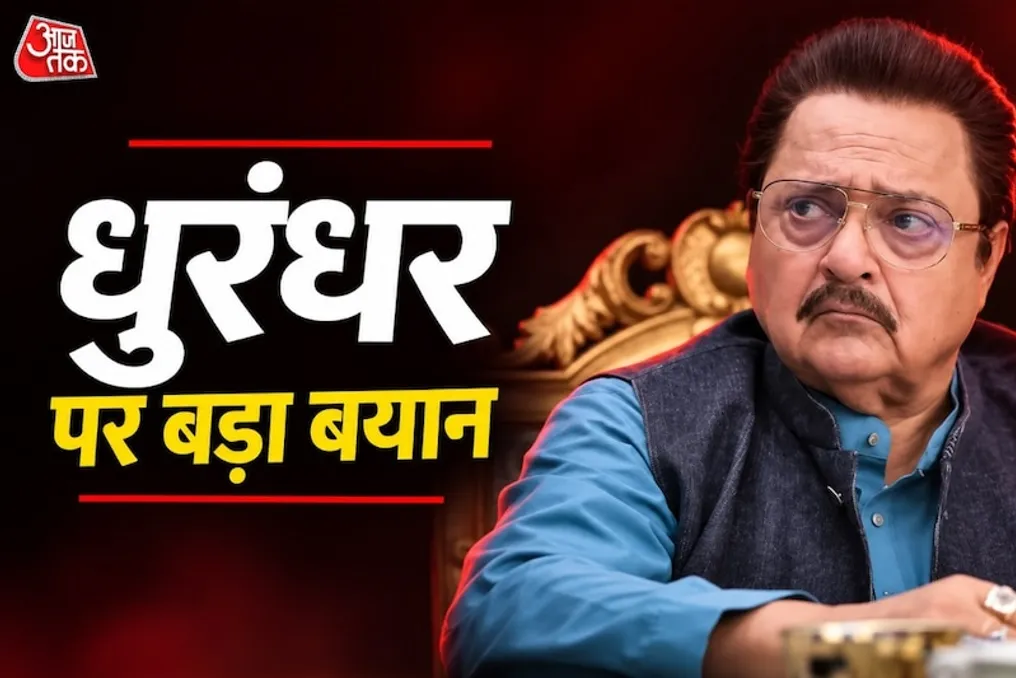
At the International Film Festival of India (IFFI) 2026 in Goa, actor Rakesh Bedi recalled his 1981 film 'Ek Duje Ke Liye' and called it more successful than 'Dhurandar'. He also mentioned that he received death threats after the success of this movie.
During a press conference held with production designer Sani S. Johari, they discussed the film 'Dhurandar', which was screened as the opening film of the 'Indian Panorama' section. Memories of the old days led Rakesh Bedi to compare the success of his 1981 film with contemporary movies.
Speaking about his career achievements, Rakesh Bedi noted that the current generation probably does not grasp the immense excitement surrounding 'Ek Duje Ke Liye' at the time. He emphasized that while he had many major successes, 'Ek Duje Ke Liye' achieved a colossal success that is hard to imagine.
He compared both films, noting that although 'Dhurandar' is popular due to social media, social media did not exist in that era. Rakesh Bedi shared an interesting detail: 'Ek Duje Ke Liye' was shown in various cities across India for 4-5 years. The film was so loved by the audience that they completely identified with the characters.
The actor recalled how his character, a 'comic villain', provoked a strong reaction from the public. His actions led to the deaths of the main characters, and some viewers became so angry that they sent him threatening letters. He remembered this situation humorously, recounting that as the villain, he caused the death of the hero and heroine, and received letters like: 'We will kill you. These people died because of you.'
He added that despite such reactions, his subsequent TV show 'Ye Jo Hai Zindagi' was also successful, but its popularity was limited due to the absence of social media. In contrast, the success of 'Dhurandar' is entirely different. Rakesh Bedi noted that in the last 10-15 years, he has never achieved as much success as with 'Dhurandar', calling it unprecedented. Some film experts now divide Indian cinema into three great eras: 'Mughal-e-Azam' (1960), 'Sholay' (1975), and 'Dhurandar'.
The film 'Ek Duje Ke Liye' was released in 1981 and directed by K. Balachander. This movie, starring Kamal Haasan and Rati Agnihotri, tells the story of Vasu and Sapna, who fall in love despite opposition from their families from different cultural backgrounds. The film was a massive commercial success, and Rakesh Bedi played the role of 'Chakrama', which created difficulties for the main couple and became an iconic image.
'Dhurandar', directed by Aditya Dhar, stars Ranveer Singh and also features actors such as Akshay Khanna, Sanjay Dutt, R. Madhavan, and Arjun Rampal. In this film, Rakesh Bedi played the role of 'Jamil Jamali'. 'Dhurandar' was released last December and was a box office sensation. Its sequel, 'Dhurandar: The Revenge', followed in March. These two parts became the first Indian franchise to cross the mark of 300 billion rupees globally.