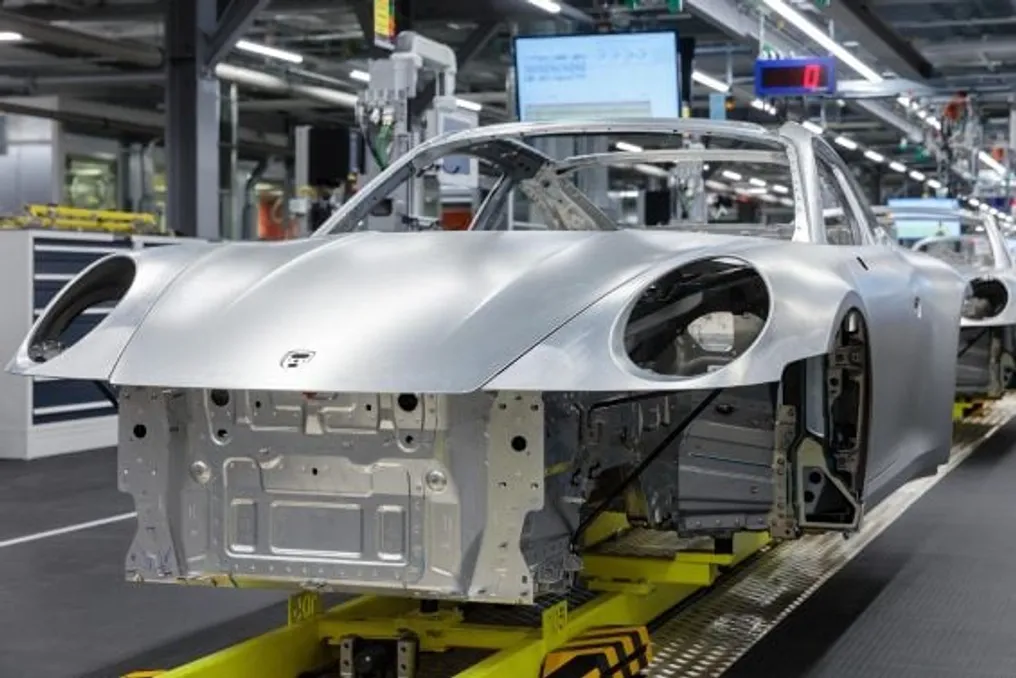
European Union may allow a higher percentage of internal combustion engine vehicles in 2035
Read more
AutoPapo
autopapo.com.br

European Union may allow a higher percentage of internal combustion engine vehicles in 2035

The European Union is considering increasing the share of internal combustion engine vehicles in sales to 12.5% by 2035, which is an increase from the previously discussed figure of 10%. This decision still requires approval from the European Parliament, and according to the Portuguese website Razão Automóvel, a new initiative is currently being discussed.

This second step back reflects lingering doubts about the pace of transition from traditional engines to fully electric models. Hybrid options across three levels (mild, full, and plug-in) remain a sensible strategy as they do not depend on a dense network of charging stations, especially in sparsely populated areas and far from urban centers. Furthermore, not all consumers, even within the European income bracket, can afford one electric car for the city and another hybrid or ICE vehicle for long journeys.

Manufacturers also lack complete consensus. Although the overall development vector is defined, the speed of this process remains questionable. It should be noted that electric vehicles with extended range often use an internal combustion engine only to power a generator. For instance, Mercedes-Benz recently adjusted its plans, moving away from focusing exclusively on electric vehicles. This was stated by Jörg Bartels, the German company's global vice president for engine development. He noted: 'Our customers worldwide have different needs and expectations. Therefore, we are committed to using the best technology to create tangible added value and inspire our customers.'

Meanwhile, Lotus will be the first company to use a four-liter super V8 engine producing over 670 horsepower and weighing only 200 kg. This engine was developed by Horse Powertrain, a joint venture between Renault, Geely, and the oil company Aramco. The English manufacturer had previously announced the production of only electric vehicles, but by 2028, this engine will be integrated into a hybrid with a total combined power exceeding 1000 horsepower.

The Japanese manufacturer opened its new automotive factory named Sorocaba 2 on the 18th. This factory is located in the state of São Paulo. Evandro Maggio, the company's CEO and President in Brazil, confirmed the production of a mid-size pickup truck based on the mid-sized Corolla Cross. The new product will arrive at dealerships in 2027, although the exact release date has not been announced, but a launch is expected in May.

This marks the first result from Toyota's product development department in the country. Until now, all models were designed abroad with support from Brazilian engineering. The Deck pickup will use the same base as the Corolla Cross SUV and will therefore be available in a hybrid flex version, positioned as a top-tier 4x4 model. The exterior, from the front pillar to the rear, is identical to the SUV's appearance. It will be sold exclusively with a two-seater cabin.

The basic configuration is expected to be equipped with a 2-L flex engine producing 175 hp (gasoline)/169 hp (gas) and a torque of 20.8 kgf·m for both fuels. Technical details of the new pickup, such as dimensions, suspension, cargo bed volume, and payload capacity, have not been disclosed. In the Corolla Cross, the rear suspension uses a torsion beam, which differs from the independent multi-link system of the Corolla sedan.

With the new model, Toyota will enter competition in the fast-growing mid-size pickup segment in Brazil, where Toro, Rampage, Niagara, and BYD's Mako are already present this year. These models are smaller than the mid-size ones like Hilux, Ranger, and S10, but larger than Strada and Saveiro. A VW Tukan is also planned for release in 2027.

According to Maggio, the new pickup will be exported to other Latin American markets where the brand operates. The executive explained that Sorocaba 2 is part of Toyota's current investment cycle in Brazil amounting to 11.5 billion reais until 2030. The start of the new production facility will create 1700 jobs, and with full capacity in 2030, this number will increase to 2000.
Similar stories

European Parliament and EU Council agree on directive to accelerate renewable energy licensing
Read more
noticiasaominuto.com

European Parliament and EU Council agree on directive to accelerate renewable energy licensing

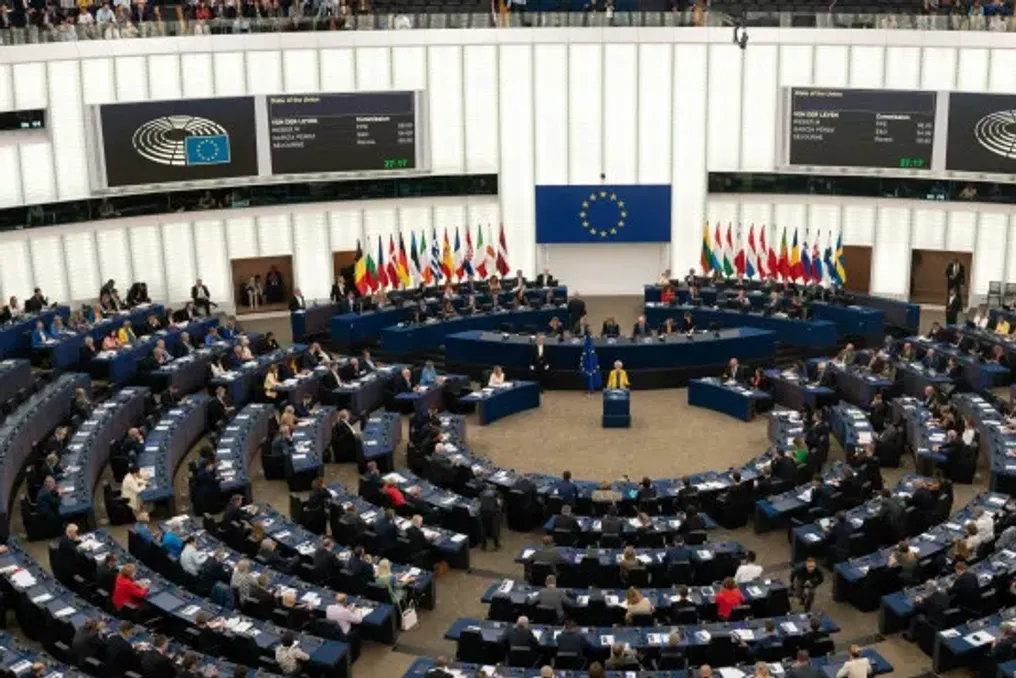
The European Parliament and the Council of the European Union (EU) have reached an agreement on a new directive aimed at accelerating and simplifying the permitting process for projects related to renewable energy sources, electricity grids, and energy storage systems.

The EU Council stated in its communiqué that this directive will help speed up Europe's electrification process and reduce the continent's dependence on fossil fuels. Dragg O'Brien, the Irish Minister for Climate, Energy and Environment, who is currently chairing the EU Council, emphasized the need to create grid infrastructure capable of providing affordable clean energy produced in Europe, thereby reducing fossil fuel imports.

For its part, the European Parliament (EP) noted that simplifying the development of renewable energy infrastructure in Europe through this directive will contribute to lowering energy prices. In fact, the new directive shortens the approval timelines for such projects.

Once the directive enters into force, licensing procedures for solar energy equipment and associated storage systems should not exceed three months. A period of six months is set for autonomous storage and charging stations, and two years for pumped-storage hydroelectric power plants.

To avoid 'administrative bottlenecks' at intermediate licensing stages, the directive provides for member states to consider the absence of a response from authorities as automatic approval.

The connection times for these projects to the grid have also been reduced: they are now three months, with a possibility of extension up to six months in justified cases. An exception is provided for 'isolated or small interconnected systems,' such as in the EU's ultra-peripheral regions, including the Azores and Madeira.

The directive strengthens the concept that renewable energy and electricity grid projects fall under 'overriding public interest,' which allows for the removal of 'numerous administrative obstacles to their implementation,' according to the EP. However, the EU Council reserves the right for member states to opt out of applying this principle if it concerns the protection of security, defense, or cultural heritage interests.

The EP also reported that during negotiations, the threshold requiring a license for small solar installations, energy storage systems (excluding hydrogen), and charging stations was raised. Previously, a license was required for installations over 100 kilowatts, but this threshold has now been increased to 200 kilowatts. Furthermore, the new rules abolish the need for administrative permits for installing charging stations with a total capacity equal to or less than one megawatt.

The new regulations also imply greater involvement of local communities by establishing principles that include the necessity of 'promoting dialogue' with citizens through the 'voluntary appointment of an independent mediator.' In this context, both institutions agreed to lower the threshold for mandatory 'benefit sharing'—that is, the redistribution of project economic benefits among the host or affected communities—from ten to seven megawatts.

The European Commission has already welcomed this agreement, noting that it 'sends a clear signal of the EU's commitment to strengthening and accelerating the expansion of clean energy infrastructure.' The directive must be approved by a plenary session of the European Parliament (EP) and the EU Council before it comes into force.

Questions about selling E30 gasoline disguised as E20: analysis of 63 samples
Read more
www.aajtak.in

Questions about selling E30 gasoline disguised as E20: analysis of 63 samples

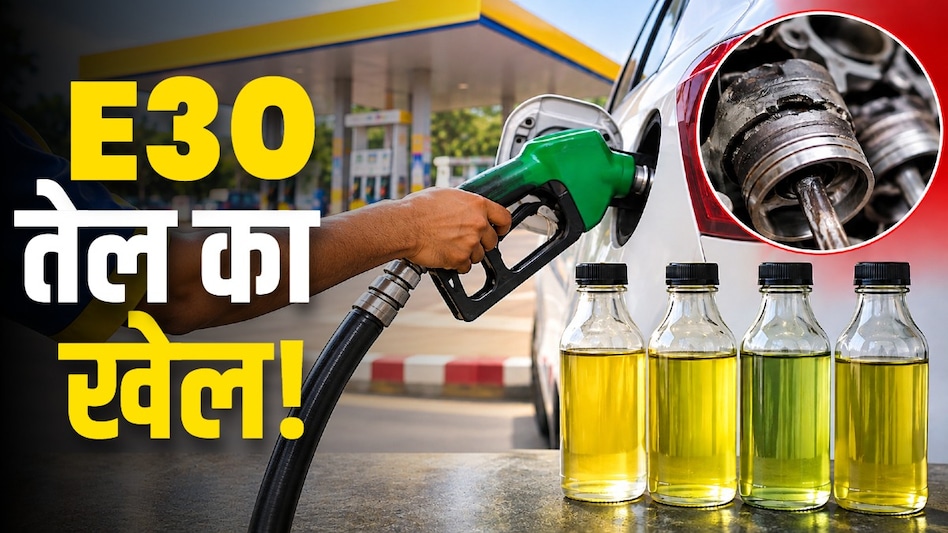
Questions have arisen regarding the sale of E30 gasoline under the E20 label. The Government of Karnataka has questioned consumer trust, stating that up to 31.2 percent ethanol was found in some gasoline samples. This situation raises concerns not only about the fuel but also about the condition of vehicle engines, as well as affecting fuel consumption and overall buyer confidence.

The Minister for Food, Civil Supplies and Consumer Affairs of Karnataka, Ridwan Arshad, stated that up to 31.2% ethanol was detected in several gasoline samples in Karnataka. He demanded that oil companies publish a report on the results of testing 63 samples. Furthermore, he appealed to the central government to grant vehicle owners the freedom to choose between E10, E20, E30, and pure gasoline depending on their car.

On Monday, Minister Ridwan Arshad confirmed that the state government is adhering to its inspections and statements. He accused the Oil Marketing Companies (OMCs) of mixing more ethanol than the stipulated 20% into the gasoline. Arshad warned that this could damage vehicle engines and increase the financial burden on the public. According to Arshad, the state government followed all established procedures when collecting and testing samples. Nevertheless, the oil marketing companies are questioning the sampling process itself and the reliability of the laboratory instead of directly responding to the test results.

The Minister explained that the state government collected gasoline samples in accordance with clause 8(3) of the Motor Spirit and High Speed Diesel Fuel Order (Prevention of Supply and Violations) of 2005. According to this rule, the presence of authorized officials and a representative from the relevant petrol pump is mandatory during sampling. A joint label is placed on the sample, and the respective parties sign it. As part of this procedure, one sample is divided into three parts: one is handed over to the petrol pump, the second is kept by the relevant department, and the third is sent to the laboratory for analysis. Arshad stated that the government possesses all documents related to the sampling, including records with signatures of government officials, representatives of oil marketing companies, and dealers. He asserted that no sample was taken outside the established procedure.

Despite the concerns of the oil marketing companies regarding potential violations at petrol pumps, the minister noted that the mixing of ethanol into gasoline occurs in an automated process at the oil marketing companies' terminals, not at various levels at the petrol pumps themselves. Arshad emphasized that this is not a case of local collusion or falsification at one or a few petrol pumps. According to him, there are six such terminals in Karnataka where oil marketing companies conduct the mixing of ethanol into gasoline. Therefore, it is inappropriate to hold the operators or dealers of the petrol pumps responsible for the alleged additional mixing.

Arshad criticized the position of the oil marketing companies, questioning why they question the results of tests conducted by a government-accredited laboratory when company employees themselves can check ethanol using a hydrometer kit directly at the petrol pump. He also mentioned the third amendment to the rules issued in August 2025. These rules describe various methods for measuring ethanol content in gasoline, including technologies such as Fourier infrared spectroscopy, water extraction, and gas chromatography.

In connection with this matter, the minister mentioned a recent statement by Minister HD Kumaraswamy. Kumaraswamy had stated that a decision had been made at the departmental level to increase ethanol blending to E30. Arshad questioned whether the oil marketing companies had mixed up to 30% ethanol into the gasoline before the official government announcement. He reminded that, according to Kumaraswamy, this decision was made three or four months ago. Thus, it is necessary to find out whether the oil marketing companies started selling E30 gasoline without any official notification.

In India, the process of blending ethanol into gasoline has been actively developing in recent years. In the Ethanol Supply Year (ESY) 2021-22, the blending level was around 10.00 percent. Then, in 2022-23, it increased to 12.06 percent. In 2023-24, it reached 14.60 percent, and as of February 28, 2025, in 2024-25, it stood at 17.98 percent. After this, during 2024-25, the country achieved the target blending rate of 19 percent and fully met the E20 goal mid-year. The government noted that India achieved the E20 target ahead of schedule.

European Union remains on track to achieve the 55% greenhouse gas emission reduction goal
Read more
noticiasaominuto.com

European Union remains on track to achieve the 55% greenhouse gas emission reduction goal

The European Union (EU) maintains its course toward achieving climate goals by 2030. According to a report published in Brussels today, equivalent greenhouse gas (GHG) emissions decreased by 1.6% in 2025.

In accordance with the 'Trends and Forecasts in Europe' report by the European Environment Agency (EEA), despite a slowdown in the rate of net GHG emissions reduction in 2025, the EU's mitigation plans and national plans remain on track to meet the target of a 55% net reduction by 2030.

Emissions covered by the EU Emissions Trading System (EU ETS) decreased by approximately 2% in 2025. Meanwhile, emissions in sectors regulated by the Effort Sharing Regulation remained globally stable, and preliminary data indicates an improvement in terrestrial carbon uptake in the EU.

In 2025, emissions were at a level 39% below 1990 levels, while the EU economy grew by 74% over the same period, according to data from Brussels.

However, the EEA warns that to achieve this emissions reduction goal, reductions in sectors regulated by the Effort Sharing Regulation must collectively match those achieved over the previous two decades within the next five years.

The Agency emphasizes the need to improve progress in the transport sector, as well as in end-use sectors such as buildings and agriculture.

The annual carbon market report also concludes that revenues from the EU ETS increased by 43.2 billion euros in 2025, representing an 11% growth compared to 2024.

Popular