The Deputy Director for Environmental Protection of the General Directorate of HSE of the Ministry of Oil announced the issuance of permits for six projects aimed at reducing associated petroleum gas emissions in the current Iranian calendar year, which began on March 21. He noted that the associated gas collection program is being implemented with the involvement of the private sector and subsidiaries of the Ministry of Oil.
In an interview with SHANA reporter Mohammad Taghi Jafarzadeh emphasized that following the President's directive, efforts have been made by the Department of Environment and the Ministry of Oil to expedite the review of these projects and reduce routine administrative red tape.
Speaking about the permits issued over the last seven or eight months, he reported that most of these projects are small, and the private sector's capacity was also utilized for their implementation.
The Deputy Director for Environmental Protection of the General Directorate of HSE of the Ministry of Oil expressed hope that the completion of these projects will allow some flares to be extinguished in the near future.
According to Jafarzadeh, projects related to Kupal and several gas processing plants are advancing; investors have entered these projects, and corresponding contracts have been signed. He stressed that besides reducing environmental impact, the implementation of associated gas collection projects contributes to its collection and use, preventing the waste of these resources.
The Deputy Director for Environmental Protection of the General Directorate of HSE of the Ministry of Oil expressed confidence that through the implementation of planned programs, the volume of associated petroleum gas and the consequences of its burning in the oil and gas industry will gradually decrease.
Explaining his responsibility for the environmental consequences of oil extraction activities, Jafarzadeh stated that the mission of the Ministry of Oil is to develop the oil and gas industry, and the deputy oversees the minimization of the negative consequences of this development.
Regarding the principles of Environmental Impact Assessment (EIA) in the oil and gas industry, he specified that these principles cover three areas: field development, linear projects such as pipelines, and stationary source projects, such as refineries and petrochemical complexes.
Emphasizing the need for public participation in environmental assessments, the Deputy Director for Environmental Protection of the General Directorate of HSE of the Ministry of Oil stated that public participation in this process is mandatory, and relevant guidelines were provided after approval by the Department of Environment. Consequently, all oil and gas industry projects must include public participation in the EIA process.
Jafarzadeh added that if environmental aspects are not fully complied with during project implementation, part of the responsibility falls on the Deputy Director for Environmental Protection of the General Directorate of HSE of the Ministry of Oil.
Increasing associated gas collection in Iran's oil and gas industry can compensate for some of the gas deficit in winter, simultaneously preventing resource loss and helping to maintain energy supply.
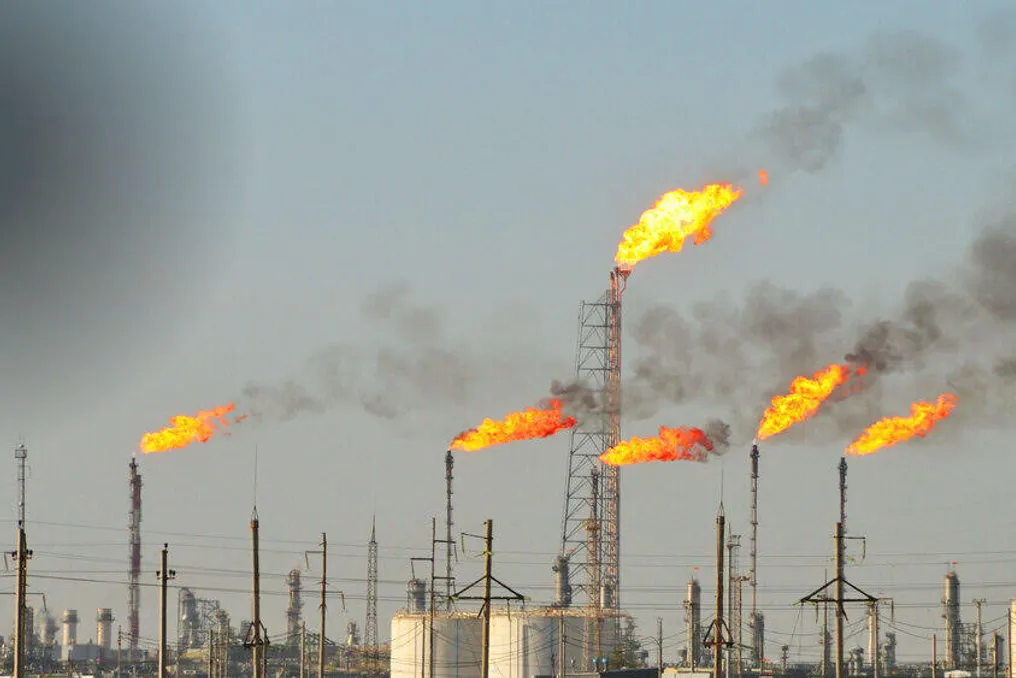
According to Mehr News Agency, flares are one of the most recognizable symbols of oil-producing regions worldwide. The flame observed for years at Iranian fields was a sign of burning associated petroleum gas—gas formed during oil extraction but inevitably burned in the absence of necessary infrastructure for collection, processing, and transportation. This process, in addition to polluting the environment, leads to the loss of a significant volume of energy resources.
In Iran, a large volume of associated petroleum gas has been burned in recent decades. This has had not only serious environmental consequences but also economic damage, as gas that could be used as raw material for petrochemicals, fuel for power plants, or even an export commodity effectively turned into smoke.
With technological advancements and the expansion of the oil and gas industry infrastructure, a new approach to managing these resources has emerged. Now, the collection and use of associated gas is on the agenda as one of the key solutions for improving energy efficiency. Energy experts consider this one of the least risky and most economical ways to reform the energy sector, as it simultaneously reduces resource waste, decreases environmental pollution, and increases the country's gas capacity.
In fact, associated gas represents a potential energy source that, when invested in the necessary infrastructure, can be returned to the consumption cycle and meet some of the country's domestic needs. From this perspective, collecting this gas is important not only from an environmental standpoint but also in gas demand and supply management.
In recent years, the Ministry of Oil has paid special attention to reducing the burning and collecting associated gas. This approach is being implemented through numerous projects, the most important of which are the development of Natural Gas Liquefaction (NGL) plants, the construction of new processing facilities, and the modernization of gas processing plants.
According to the announced plans, the macro goal of the Seventh National Development Plan is to significantly reduce associated gas flaring and increase collection rates to approximately 16 billion cubic meters per year. Achieving this goal requires creating infrastructure capable of collecting, processing, and transmitting associated petroleum gas to the consumer network.
Available statistics show that before the establishment of the 14th government, about 7 million cubic meters of associated gas were collected in the southern oil-bearing regions by the Central Iranian Oil Company and the Arvand Oil and Gas Company. However, thanks to the commissioning of new facilities and the completion of some infrastructure projects, this figure now exceeds 16 million cubic meters per day.
At the same time, according to officials of the National Iranian Oil Company, about 80 million cubic meters of associated petroleum gas are produced daily in the country. Part of this gas is directed to NGL plants and subsequent facilities, but a significant portion is still flared due to infrastructure limitations. It is estimated that the volume of associated gas in the country ranges from 40 to 50 million cubic meters per day, depending on crude oil extraction conditions.
Planning indicates that with the development of current projects, this figure can be reduced to approximately 35 million cubic meters per day. Such a reduction would free up a significant volume of gas that could be used in various sectors of the economy.
One of the most critical problems in Iran's energy sector in recent years has been the winter gas imbalance. During this season, household gas consumption sharply increases due to heating needs, and in many cases, priority supply is given to this sector. Consequently, industry, power plants, and some petrochemical enterprises face gas restrictions or outages.
Associated gas collection can play an important role as a new supply source to reduce this imbalance. If it is assumed that the volume of collected gas increased from approximately 7 million cubic meters per day to more than 16 million cubic meters per day, in practice, almost 9 million cubic meters of additional gas enter the consumption cycle daily. Annually, this volume is equivalent to more than 3 billion cubic meters of gas.
Although this volume itself cannot completely solve the gas shortage problem in the country, it can compensate for some of the supply shortages in the cold months of the year. For example, this volume of gas can provide more stable feedstock for some energy-intensive industries or help supply fuel for power plants, reducing the need for liquid fuels such as diesel and heavy fuel oil.
On the other hand, injecting recovered gas into the national gas network can also contribute to increasing the stability of feedstock supplies for petrochemicals. Many petrochemical enterprises face feedstock restrictions in winter, and their production capacity decreases. Using collected associated gas can compensate for some of this production decline and prevent economic losses caused by the shutdown or reduced activity of industrial facilities.
Overall, associated gas collection can be seen as one of the fastest and most cost-effective solutions for increasing gas supply in the country. In addition to reducing pollution and preventing resource waste, this measure can help improve the country's energy balance and reduce some of the load on the gas network in the cold months. If the current projects are fully commissioned, this hidden energy source can play a more noticeable role in managing Iran's gas imbalance in the coming years.