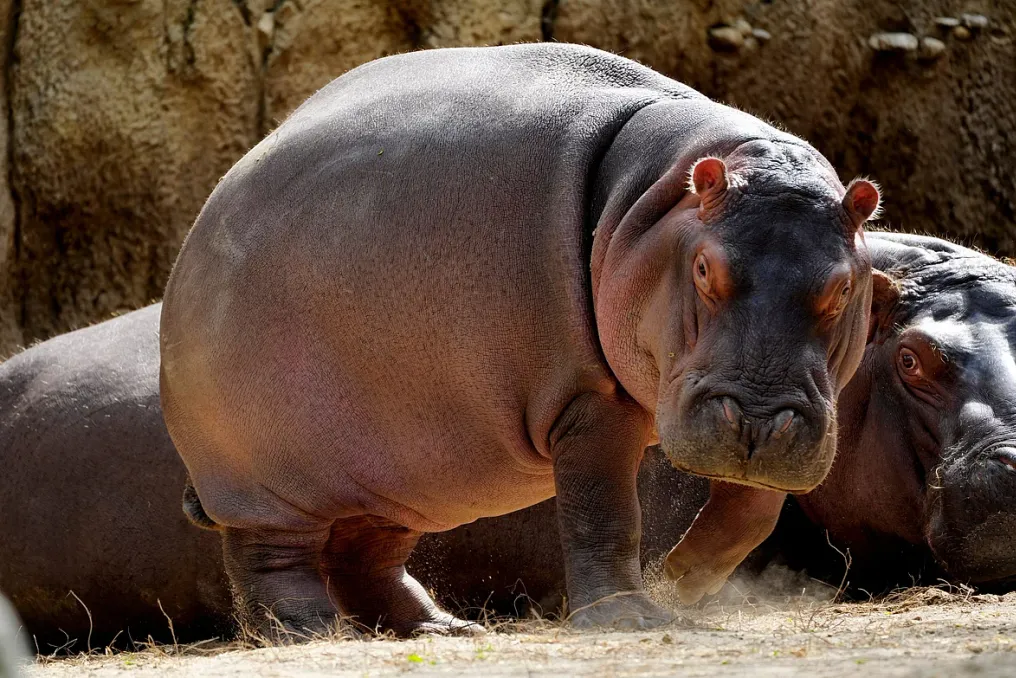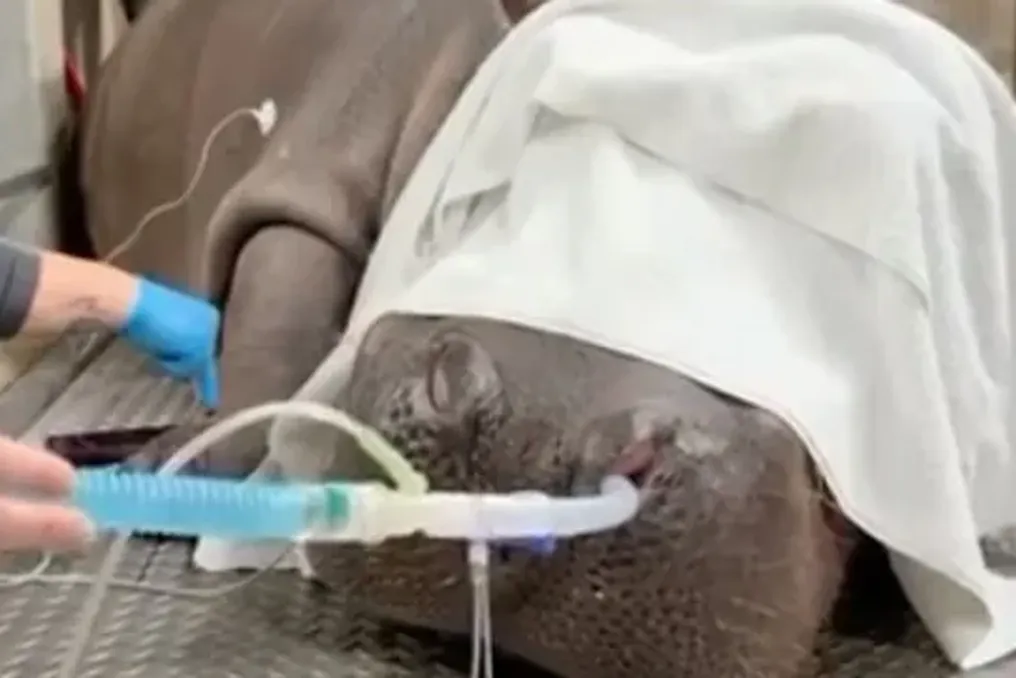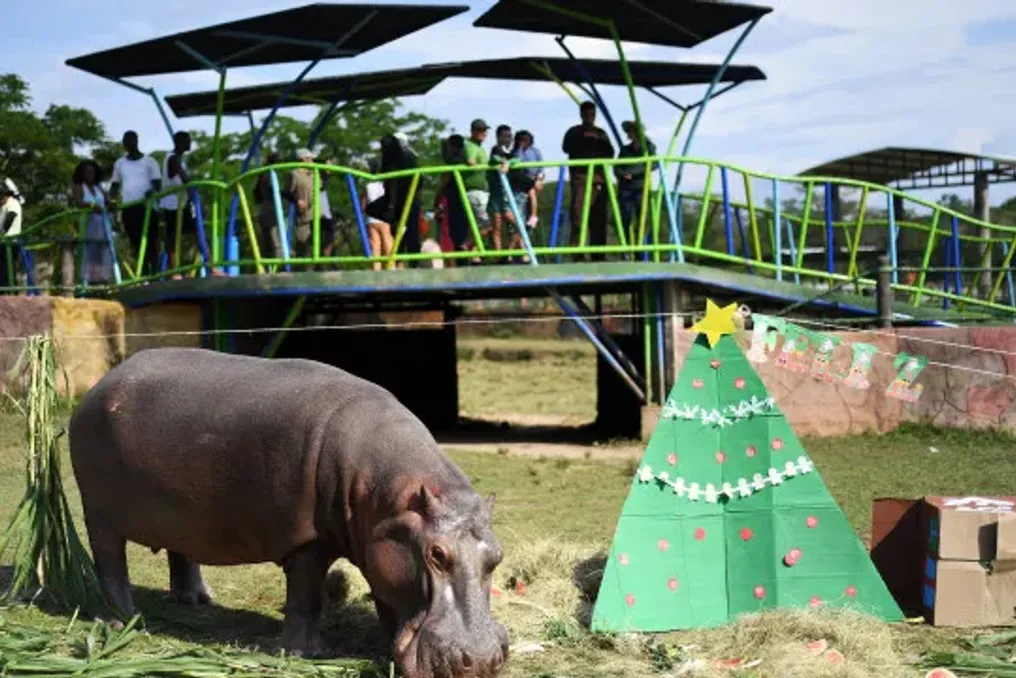
Colombia has started the euthanasia process for ten hippos located in Antioquia. This action aims to control the disorderly proliferation of the species, which is classified as exotic and invasive, and was introduced to the country more than four decades ago by drug trafficker Pablo Escobar.
Javier Valencia, director of the Autonomous Corporation of the Negro and Nare River Basins (Cornare), informed local media that the first stage of the action plan will last approximately five months. This plan foresees the culling of ten animals because they are putting the population at risk.
This measure is part of the Hippo Management Plan, established in September by the Ministry of Environment under the administration of President Abelardo de la Espriella. This initiative follows the plan of the previous government, led by leftist Gustavo Petro (2022-2026), which had proposed the euthanasia of at least 80 hippos.
The immediate objective is to euthanize ten individuals, in addition to fostering environmental awareness, promoting the relocation of some specimens, and carrying out their sterilization. Among the hippos selected for culling is one located in the municipality of Puerto Nare, in the Magdalena Medio region, which poses a danger to children from a school.
Escobar's Whim
The trajectory of the notorious 'cocaine hippos' began as an exotic desire of Pablo Escobar in the 1980s, evolving into one of the most unusual and complex cases of invasive species in modern South American ecology.
In the late 1970s and early 1980s, when his financial power was at its peak, Pablo Escobar built Hacienda Nápoles, a luxurious property in Puerto Triunfo, Antioquia, located between Medellín and Bogotá. To show off his wealth, he decided to set up a private zoo, illegally importing hundreds of exotic animals from various parts of the globe, including giraffes, elephants, rhinoceroses, kangaroos, and four common hippos (Hippopotamus amphibius), three females and one male.
After Escobar's death in December 1993, the Colombian government took possession of Hacienda Nápoles. Most of the animals were transferred to official zoos both in the country and abroad. However, the hippos remained in the property's lakes, as they were excessively large, heavy, and dangerous to transport at the time.
In the absence of natural predators, such as lions or crocodiles, and without the severe African droughts that regulate their birth rate, and with great availability of water and pasture in the Magdalena River basin, the animals adapted perfectly and began to reproduce at an accelerated rate. For years, they constituted a profitable tourist attraction for the Puerto Triunfo area, but currently, they represent a serious problem for Colombia.
In 2022, the Colombian government classified nearly 200 hippos descended from the first four specimens brought from Africa to Colombia as an 'invasive exotic species.' Since then, several control plans have been developed but never implemented. Because of this, the Petro government announced in April a hippo management plan that provided for the euthanasia of at least 80 specimens during the second half of the year, aiming to curb their reproduction.
Scientific research warns that without continuous and effective intervention, the population could exceed a thousand individuals by 2040, making control practically irreversible. It is important to note that the hippo is the third largest terrestrial mammal on the planet, behind only the elephant and the white rhinoceros, weighing between 1,300 and 3,500 kilograms. Additionally, it possesses one of the deadliest bites in the wild. They are quite territorial animals, capable of living up to 50 years, and tend to become aggressive in the presence of humans.