
The Managing Director of Kent RO Systems, Dr. Mahesh Gupta, participated in the 'How to Become a Successful Businessman' session on the Aajtak Masterclass platform. During this event, he shared his entrepreneurial history in detail and discussed how Kent RO achieved success.
Similar stories
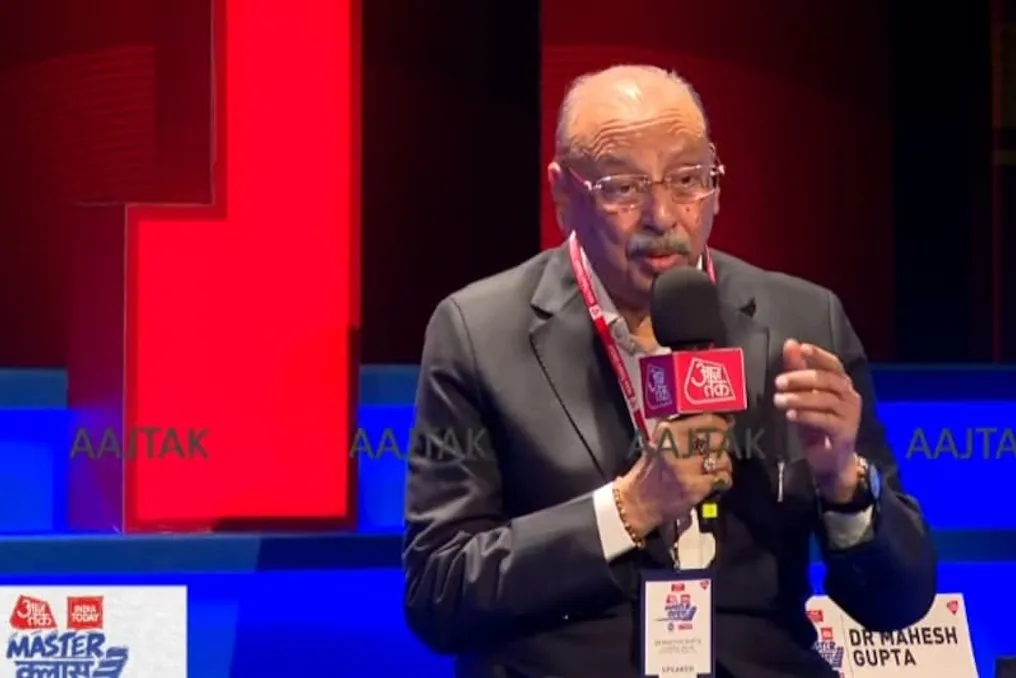
Mahesh Gupta founded Kent RO after the idea arose from his children's illness
During the 'How to Become a Successful Businessman' session within the Today's Masterclass program, Kent RO Systems Managing Director, Dr. Mahesh Gupta, shared his entrepreneurial story, detailing the transition from employed work to launching his own business and how an idea born from personal experience evolved into a major company.
Dr. Gupta explained that the foundation for creating Kent RO stemmed from personal experience. In 1990, both of his children, who were studying at IIT, were diagnosed with hepatitis. A doctor advised them to drink purified water. Visiting the water purifier market, he, being a mechanical engineer, tried to understand the existing technologies. At that time, most filters operated on UV technology, capable of destroying bacteria and viruses, but they could not remove dissolved impurities such as salt, arsenic, and fluoride.
He concluded that a water purifier was needed that could remove both chemical impurities and provide protection against microorganisms, knowing that reverse osmosis (RO) technology was suitable for this. Initially, he created such a filter for his family's needs, which required ordering some components from abroad and involved significant financial expenditure. When the water purified by this device was well-received by his family and guests, demand arose for the production of similar filters.
He first manufactured about four to five such devices. Realizing that a similar product was absent from the market and that consumers showed interest, he decided to monetize this idea, and thus the development of Kent RO began.
After completing his studies in Mechanical Engineering at IIT Kanpur in 1975, he continued his education at the Indian Institute of Petroleum in Dehradun, earning a master's degree in petrochemicals. He then started working at Indian Oil. His career at Indian Oil progressed successfully; he received promotions and held high positions. Nevertheless, a desire to contribute to the country's development by working in the field of fuel conservation was growing within him.
In 1988, he decided to leave his job at Indian Oil to start his own company. His initial goal was to reduce consumption and save energy in the country, a direction that continues to this day. The idea for the water purifier only came in 1990, and he began working in that area.
Dr. Gupta noted that no one in his family had previously been in business; his father worked in the government Ministry of Finance. He became the first member of his family to decide to start his own business. When he told his father of his intention to leave his job, his father was displeased, insisting that he remain in stable government service until retirement. His father believed that with a good job, career growth, and a guaranteed future, there was no need to take risks.
However, Gupta harbored a desire deep down to do something special for the country, as energy is one of the world's most valuable resources. He decided that he must contribute to its preservation. Although his father initially did not approve of his choice, he later accepted the decision. Gupta himself took this risk, assuming that if he failed, he could find another job, but the company began to bring success from the very beginning.
During the masterclass, one student asked how Kent RO managed to stand out among large brands such as Aquaguard, Eureka Forbes, and AO Smith, which use similar RO and UV technologies. Dr. Gupta replied that the key advantage of his company lies in the uniqueness of its technologies and patents. The company holds thirteen patents related to its products.
He explained that the standard reverse osmosis process removes necessary minerals from water. Kent developed a special technology that allows water to be purified while preserving beneficial minerals. Furthermore, the company focuses not only on purification but also on maintaining water purity over a long period by using a UV lamp in its products, which reprocesses the water every two hours.
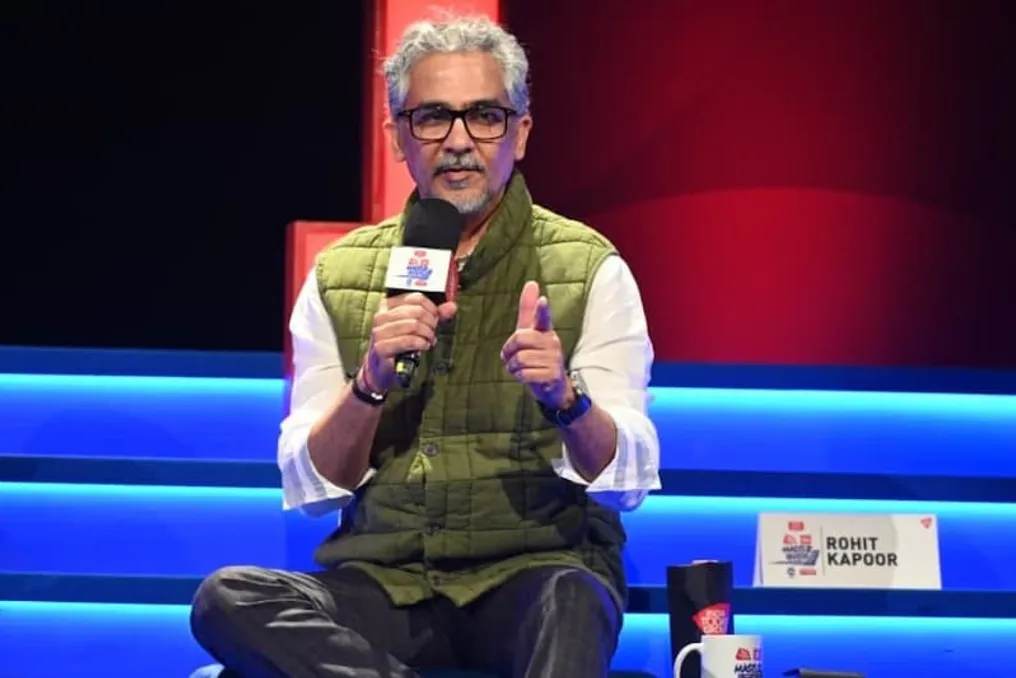
Rohit Kapur discusses his journey from student to Swiggy CEO: career and success tips
On the recent India Today Masterclass program, Rohit Kapur, CEO of Swiggy Food Marketplace, shared his experience in career growth, covering topics such as leadership, startups, artificial intelligence (AI), and changes in work culture.
Kapur explained that his career did not begin with the grand goal of becoming a CEO. He studied at a college in Calcutta, where after two years of study, students received a degree, and the third year was called honors. He enrolled in Night College, where classes started at 7:00 PM. His initial goal was to balance studies with work, earn money, and broaden his life experience; he had no plans for management positions then.
In the early stages, he worked as a medical representative and simply moved forward through hard work.
The real turning point in his career came when, around the age of 26 or 27, he joined McKinsey. However, Kapur emphasized that the transition to such a large global company was not the sole reason for the change. The people he was fortunate enough to work with at McKinsey played an important role, as they helped improve his thinking and professional skills.
He advised young people to surround themselves with those who strive for success in their field and are willing to put in serious effort. Furthermore, a good company is not just one without illegal actions, but also one with people you can learn from and whose work ethic will motivate you.
Responding to the question about career advancement, Kapur refuted the common notion of linear growth: first work, then promotion, then team leader, and so on. He compared a career to 'jungles,' explaining that life often presents situations where one has to decide to take a role below their current position. Although such a decision might seem strange or insignificant at the moment, it can open up opportunities for learning and future development.
Citing an example from his experience, he recounted how he once had the opportunity to lead a division in a large public company where initially there was only one employee. Despite what many might have considered unusual, he viewed it as a chance for self-improvement. Kapur advises youth to analyze what qualities successful employees in a company demonstrate and what they can learn themselves, instead of constantly asking about the next promotion.
Rohit Kapur also shared a method for evaluating people, which he called the 'airport filter.' In his opinion, if you enjoy spending time talking with someone sitting next to you at the airport for three hours, it may indicate positive traits of their character. Conversely, if the conversation makes you unwilling to spend time with them, that is also a signal. He noted that even with similar levels of education, skills, and experience, people with engaging personalities often create new opportunities. He added that there is no single way to become interesting—it can be achieved through games, studying, books, diverse experiences, or personal interests.
He recalled an instance while working at OYO when he met someone who had previously worked at ISRO. Talking with this person allowed him to learn a great deal about space technology for the first time, and such moments and conversations remain memorable for a long time.
Advising young entrepreneurs, Kapur insists that instead of thinking about how big the company will be in ten years, they should focus on where the first hundred customers will come from and why they will want to use your product or service. He cited the beginning of Swiggy: the company arose from solving a common problem—customers didn't know where the courier was after leaving the restaurant. A tracking system was developed specifically to solve this problem. At that time, the company did not envision its business growing to the level of quick commercial service or such scale. He concluded that for any startup, it is critically important to understand the customer's problem and offer a solution; the further path develops gradually.
Kapur also mentioned that startups can provide a unique opportunity for rapid learning in the early stages of a career.
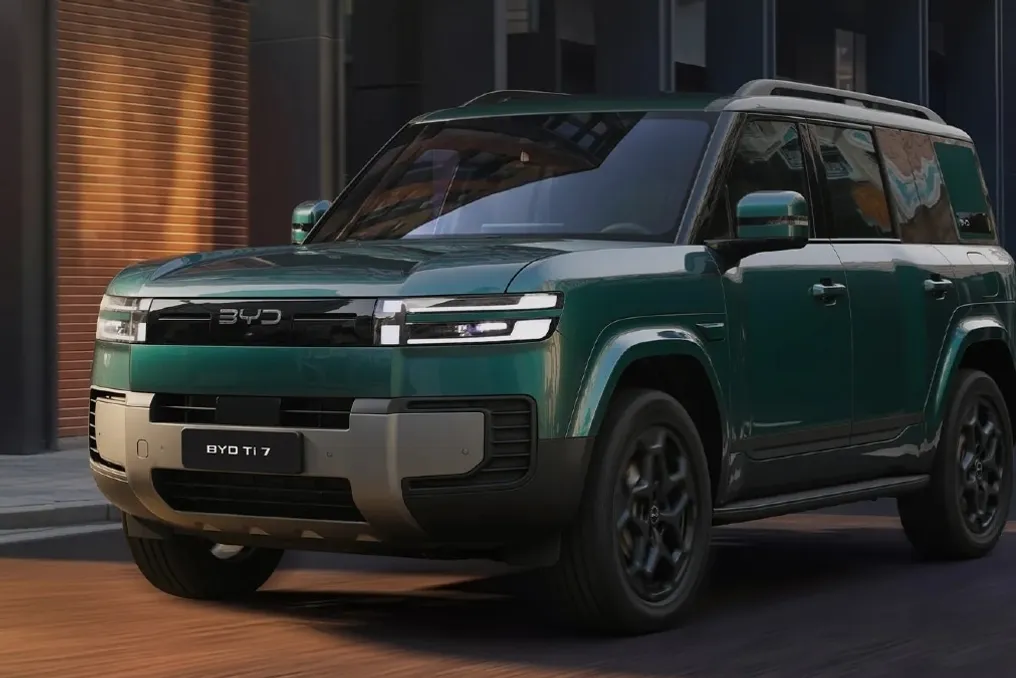
JLR accuses BYD of intellectual property infringement over design similarity between Ti 7 SUV and Defender
A major dispute regarding design copying has resurfaced in the automotive industry. The large electric vehicle manufacturer BYD is facing legal difficulties after the British luxury car maker Jaguar Land Rover (JLR) alleged an intellectual property infringement.
JLR claims that the design of the new BYD Ti 7 SUV is highly similar to the design of their well-known Defender model. The situation escalated to the point where raids were conducted at two BYD offices, resulting in the seizure of digital records.
According to The Guardian report, court-appointed officials inspected BYD offices located in Schiedam and Hoofddorp, Netherlands, in August 2026. This inspection was part of ongoing litigation with Jaguar Land Rover. During the inspection, digital data and several important company documents were confiscated.
Jaguar Land Rover suspects that BYD reverse-engineered the Defender SUV, studying its technology and design. It is presumed that this information was subsequently used to develop the Ti 7 SUV through reverse engineering. However, it has not yet been proven that BYD actually infringed upon any intellectual property rights.
The initial hearing for this case is scheduled for November 11, 2026, in The Hague, Netherlands. BYD's lawyers expressed doubts about the scope of the records seized during the raids, labeling the operation a 'fishing expedition.' Legally, this implies an attempt to gather large volumes of evidence and information without clear boundaries. At present, neither company has made public statements on this matter.
Build Your Dream (BYD) introduced the Ti 7 in China in September 2025 under the brand Fang Cheng Bao as the Bao 7, later renamed Tai 7. The design of this SUV features a angular appearance, a straight and high front design, square wheel arches, and a rear cargo area, which often leads to comparisons with the Defender.
This SUV measures 4999 mm in length, 1995 mm in width, and 1865 mm in height, with a wheelbase of 2920 mm. In the Chinese market, this model is offered in a 5-passenger configuration, whereas export versions for Europe offer 7 seats. The model available in the UK has a length of 5146 mm including the spare wheel at the rear.
Initially, BYD launched the Ti 7 in China as a Plug-in Hybrid Electric Vehicle (PHEV), equipped with a 1.5-liter turbocharged gasoline engine and an electric motor. The company offers it in both two-wheel drive and all-wheel drive variants. In April 2026, BYD also introduced a fully electric version of the Ti 7 in China. The company states that its pure electric version offers a range of up to 755 kilometers on a single charge.
The starting price for the hybrid version was 179,800 yuan (approximately 2.53 million rupees), while the most expensive version cost 219,800 yuan (approximately 3.093 million rupees). The electric version starts from 199,800 yuan (approximately 2.812 million rupees) and reaches 239,800 yuan (approximately 3.375 million rupees).
BYD is preparing to launch the Ti 7 in the European market, and the company has begun taking pre-orders for this SUV in the UK. Here, its price is set at £47,995 (approximately 6.029 million rupees). Meanwhile, the 7-seater Defender 110 costs £68,465 (approximately 8.6 million rupees), making the BYD SUV significantly more affordable. According to the company, the first units of the Ti 7 will start arriving in UK dealerships in November 2026, with customers able to receive them from January 2027.
This is not the first instance where Jaguar Land Rover has questioned the design of a Chinese automaker. Previously, in 2019, JLR won a lawsuit against Jiangling Motor Corporation. In that case, the design of their Landwind X7 SUV was deemed very similar to the Range Rover Evoque. Thus, the dispute surrounding the BYD Ti 7 has become a topic of discussion in the automotive industry.