Elon Musk announced the development of a unique Tesla vehicle without a steering wheel, brakes, or pedals
Read more
Aaj Tak
www.aajtak.in

Elon Musk announced the development of a unique Tesla vehicle without a steering wheel, brakes, or pedals

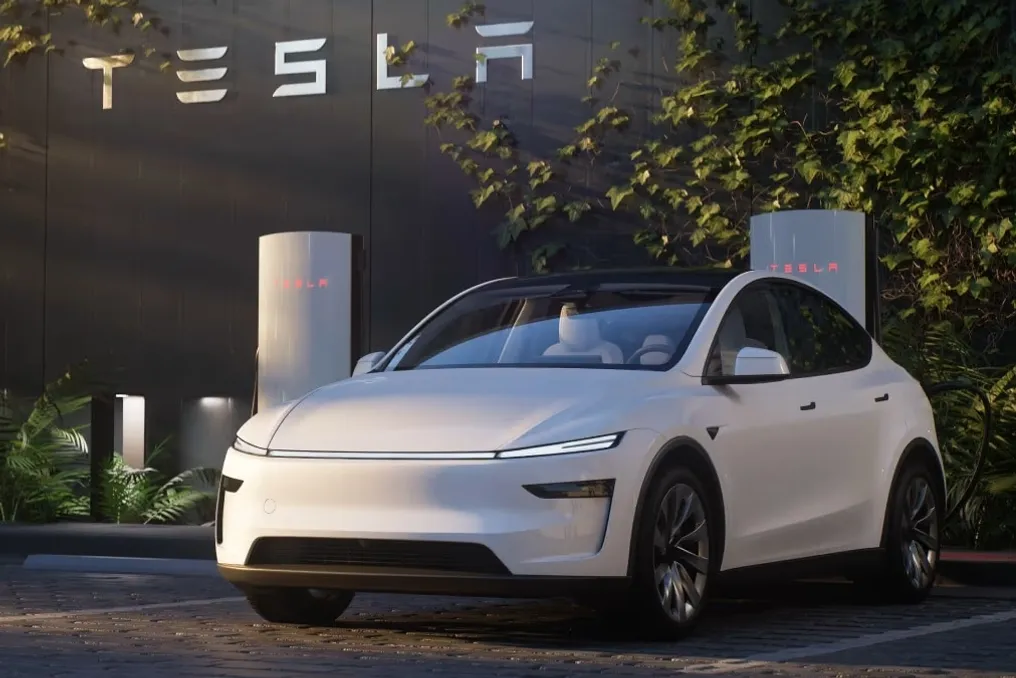
Elon Musk announced Tesla's plans to create an unusual vehicle that will be fully autonomous and will not require the driver to control the steering wheel, press the gas, or brake. This information was revealed during an interview at the annual New York Times summit.

It is anticipated that this modern technology could be integrated into the Tesla Model Y. Musk indicated that Tesla is working on versions of the Model Y and the larger Model Y L, which will be fully autonomous and could become part of the company's Robotaxi network. Furthermore, these vehicles may also be sold for private use in the future.

Musk presented this concept at the New York Times summit, but he did not provide any details regarding the launch date, cost, or production plans for this new SUV model.

The main goal of this potential project is to strengthen the Tesla Robotaxi network. Currently, the existing Model Y, equipped with a steering wheel, pedals, and Full Self Driving (FSD) system, is used in the Robotaxi service. Additionally, the two-seater Cybercab was recently added to the network.

Tesla is preparing to introduce a seven-seater version of the Model Y. The Cybercab, introduced by the company in October 2024, is a fully driverless vehicle without a steering wheel or pedals, but due to having only two seats, it was not considered practical for family use. Therefore, the wheel-and-pedal-free version of the Model Y or Model Y L represents a significant opportunity for the company.

Recently, Tesla announced that the Cybercab would also be available to private buyers, although purchasing it would require paying a costly subscription. Moreover, this vehicle can only operate within limited zones designated by the company for its Robotaxi network.

Currently, the standard Tesla Model Y accommodates five people, including the driver, while the larger Model Y L is designed for six passengers. During the interview, Musk mentioned creating a vehicle for six or seven people, suggesting the possible creation of an even larger version of the Model Y. Interestingly, after the Model Y L was introduced in China, Musk had previously stated there were no plans to bring it to the American market, but less than a year later, he changed his stance.

Bringing such a vehicle to the mass market for Tesla will not be a simple process, as the main barriers are safety issues and government regulation. There are serious challenges in the US related to wheel-and-pedal-free vehicles. Although Tesla independently certified the Cybercab in America, this drew criticism, and the country's Department of Transportation is currently conducting an investigation.

Another important question arises: whether ordinary consumers will want to buy a family car that lacks the ability for manual driving if necessary, especially considering that the vehicle can only operate within predefined geozones.

Tesla recently made significant changes to its product portfolio, announcing the discontinuation of the popular Cybertruck and the closure of models such as the Model S and Model X. As a result, the company's portfolio now consists only of the Model Y, Model Y L, and Model 3.

Previously, the company planned to develop an inexpensive vehicle for markets like India, but this project was postponed in favor of the Cybercab. On the other hand, Tesla showed a prototype of its long-awaited Roadster supercar, although its production will take at least a year.
Similar stories

How autonomous capsules in Dubai can operate non-stop and be shared
Read more
www.khaleejtimes.com

How autonomous capsules in Dubai can operate non-stop and be shared

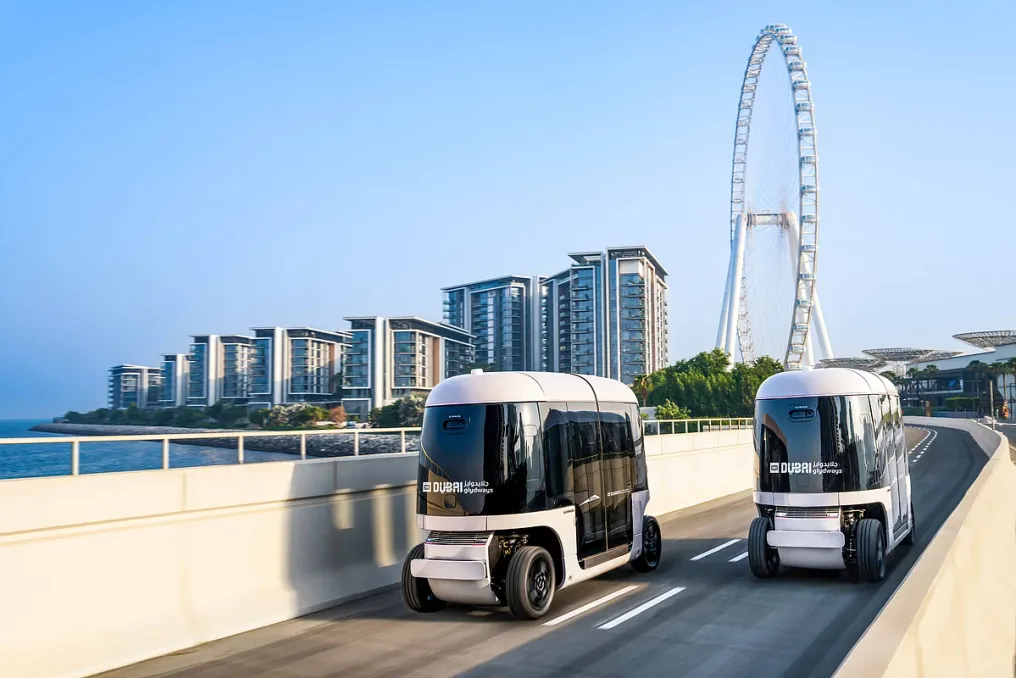
Imagine exiting the Dubai Metro and selecting your destination via a kiosk or app, then boarding a small driverless vehicle that takes you directly to your final point, without needing to share the ride with strangers or wait at intermediate stations.

This experience is being developed by Glydways for Dubai, while the Roads and Transport Authority (RTA) studies potential routes to bridge the gap between metro stations and residential buildings, offices, shops, and attractions.

The company's demonstration at Bluewaters has concluded, but the launch date for the public, fare costs, or the final route have not yet been announced.

Mark Sieger, co-founder and co-CEO of Glydways, noted that the project's goal is to eliminate the part of the public transport journey that often forces people back to using private cars.

Sieger told Khaleej Times: 'A small gap at the beginning or end of a trip can determine whether a person uses public transport at all. If the last leg of the journey involves a long walk in the heat or another lengthy wait, driving might become a more convenient option.'

Within Bluewaters, the RTA is considering a proposed connection spanning 2.8 km from the National Paints Metro Station to the island. However, the final route, station locations, and number of vehicles have not yet been confirmed.

Sieger explained that the proposed system would allow a passenger to transfer from the metro to a climate-controlled Glydcar—the company's autonomous electric vehicle—and continue to the Access Point located near their destination.

He emphasized: 'Our goal is to make this connection simple: exit the metro, get into a climate-controlled Glydcar, and go directly to the Access Point close to where you need to go.'

Unlike buses, shuttles, or metro trains, Glydways stated that its vehicles will not make intermediate stops to pick up other passengers. Each passenger, family, or group of friends will have their own vehicle for the trip.

According to Sieger, 'Passengers will travel directly from their starting Access Point to their chosen destination, without intermediate stops for picking up or dropping off other passengers. Each individual or group of travelers will have their own Glydcar.'

The system is designed to carry four to six passengers, although this depends on cabin layout and the space required for luggage, strollers, or mobility aids. The company asserts that the vehicles and stations are designed to accommodate battery-powered wheelchairs and ensure level boarding.

During the demonstration at Bluewaters, the vehicles traveled at a speed of about 24 km/h. Sieger added that the broader system is designed for speeds up to 50 km/h, though the actual travel time on any Dubai route will depend on the final routing, number of stations, and operational plan.

For the commercial network, Glydways aims for near-immediate boarding in most cases. If a vehicle is not already waiting at an Access Point, the company aims to provide a wait time of about 30–60 seconds, depending on passenger demand and network design.

Sieger concluded: 'The proposed experience is very simple: arrive at the Access Point, select a destination, board a Glydcar, and head there directly.'

Destination selection can be made via a mobile application or a kiosk, allowing users without smartphones to utilize the service. The company reported that its systems can support integration with local payment solutions, although the RTA will decide whether this includes Nol.

Glydways also hopes the service will operate around the clock and offer fares comparable to a metro or bus ticket. Sieger noted: 'Final operating hours and fares will be set by the RTA as part of the commercial plan.'

In conclusion, he reiterated: 'The service is designed to provide each group of travelers with their own Glydcar. You can travel alone, with family, or with friends, directly to your destination, without sharing with strangers.'

West Coast Customs created Project B-Zero, combining a 1955 Chevrolet Bel Air body with a Tesla Model 3 platform
Read more
autopapo.com.br

West Coast Customs created Project B-Zero, combining a 1955 Chevrolet Bel Air body with a Tesla Model 3 platform

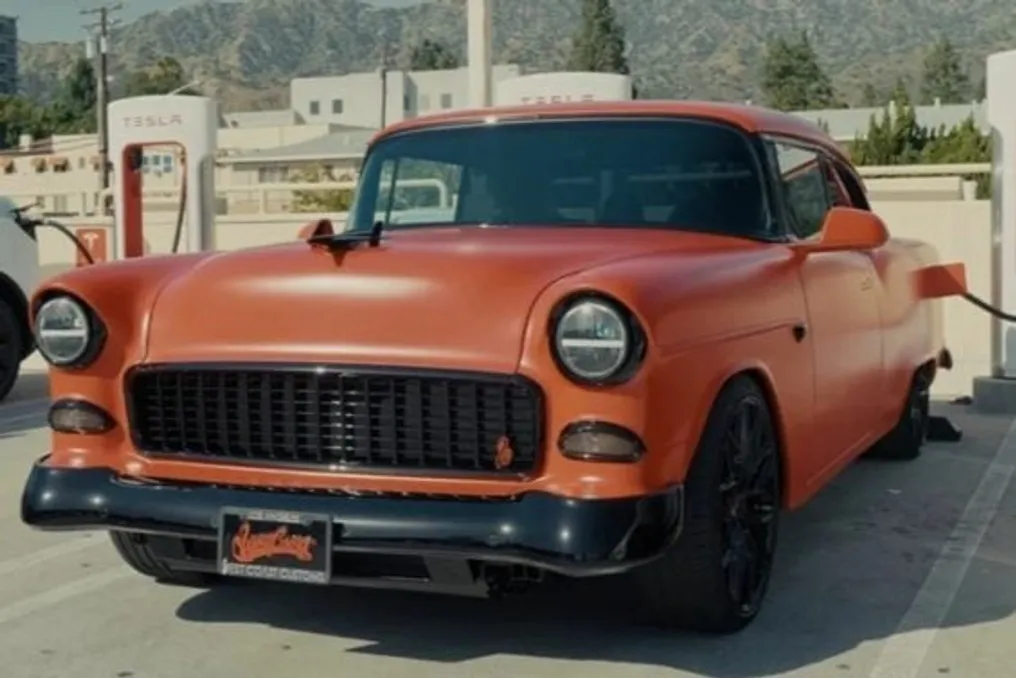
There is a vehicle known as Project B-Zero, which presents the external appearance of a 1955 Chevrolet Bel Air but internally uses the structure and mechanics of a Tesla Model 3.

This car was developed by West Coast Customs, a shop located in California, USA, that became known for participating in the MTV's Pimp My Ride program. The customizer replaced the iconic 1950s body with the electric platform, battery, and technology of the Model 3 sedan.

The request for this project came from a long-time customer of the shop, who is interested in converting his entire vehicle collection, including muscle cars, to electric models. To achieve this, the customer provided West Coast Customs with his Bel Air and a gray Model 3 that served as a donor part.

The process began with the team cutting the Model 3 body, keeping only the flat, skateboard-like structure where the mechanical components and battery are located. Then, the Chevrolet body was mounted onto this base. Due to differences in dimensions and wheelbase between the two cars, it was necessary to extend the rear wheel wells of the Bel Air.

The original Tesla suspension was replaced with a custom air suspension system, allowing the car to sit very close to the ground and hiding the 20-inch wheels inside the fenders. Inside, the classic retained elements such as the steering wheel and seats but incorporated the Model 3's central screen, and the dashboard was redesigned to accommodate the new controls.

The seats were customized with hexagonal stitching, inspired by current Lamborghini models. According to the shop, functionalities such as Autopilot (Tesla's driving assistance system) and automatic parking remain operational.

In terms of aesthetics, the original two-tone paint was replaced with a matte red tone, the chrome details were converted to black finishes, and the headlights were updated to LED technology. A subtle cover hides the charging port, allowing the Bel Air to connect to the Tesla Supercharger network.

It is worth noting that this is not the first 1955 Bel Air to undergo modifications by West Coast Customs; in 2005, an example from the same year was modified by the shop for an episode of Pimp My Ride.

Elon Musk highly praised Chinese automakers amid Tesla competition in China
Read more
technode.com

Elon Musk highly praised Chinese automakers amid Tesla competition in China

Tesla CEO Elon Musk expressed approval for the competitiveness of Chinese car manufacturers in an interview with investor Ron Baron on November 6th.

Musk noted that the Model Y is the best-selling electric vehicle in China and emphasized that achieving this position was not easy due to strong local competitors.

Furthermore, Musk recalled the period when the company conducted years of negotiations with Chinese officials before gaining full ownership of its Shanghai factory. He added that having control allowed Tesla to make decisions more promptly.

Popular