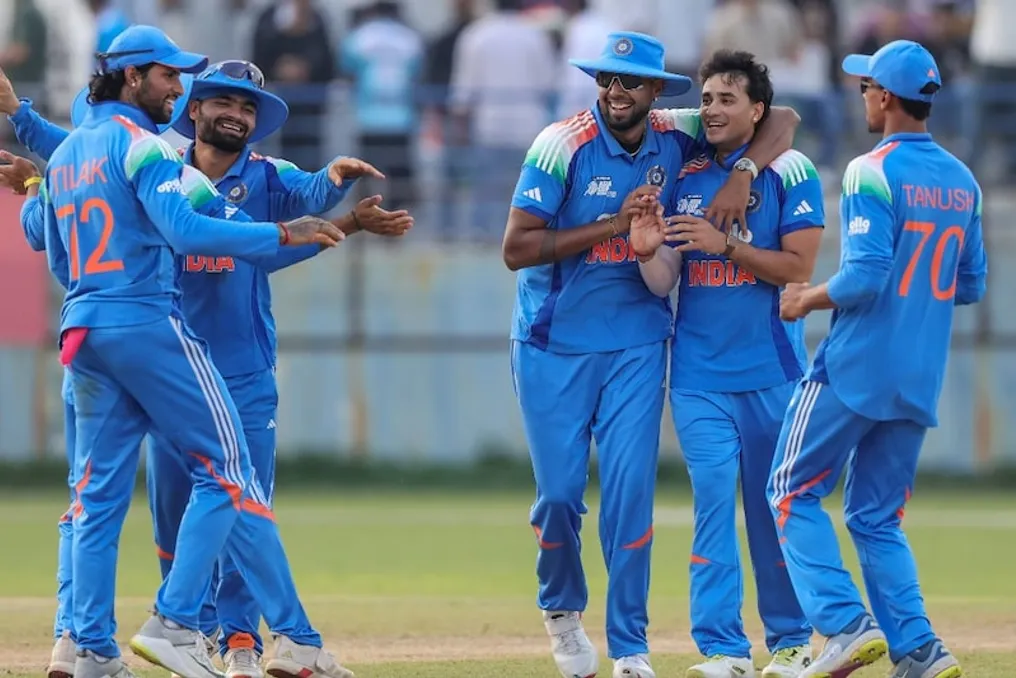
Rinku Singh changed the course of the match between India and Pakistan with brilliant fielding
Read more
Aaj Tak
www.aajtak.in

Rinku Singh changed the course of the match between India and Pakistan with brilliant fielding

The match between the India A and Pakistan A teams in the Asia Stars Cup 2026 reached a new level of tension midway through the game. Initially, the Pakistani team, where batsman Shahin was scoring quickly, seemed headed for a large score. However, Rinku Singh's accurate throws and key bowling by Suryansh Shede brought significant relief to the Indian team.

After initial difficulties in their batting, Majed Sadakat took the initiative. He scored an impressive half-century in just 47 balls, and by the 15th over, the team's score exceeded 100. As Sadakat began to show dangerous play, Suryansh Shede used a slower ball to trap him. An attempt at a powerful shot resulted in Sadakat being caught by Shahbaz Ahmed at deep midwicket.

Following this, Pakistan's score reached 142/3 by the 23rd over, and the Indian bowlers slowed down the run rate to below 6, applying pressure. Hasan Nawaz, holding one end, completed his half-century in the 26th over, partnering with captain Abdul Sameed to score 65 runs off 68 balls.

Immediately after the drinks break, in the 31st over, this pair looked even more confident, but Rinku Singh's agility changed the tide. When Hasan Nawaz deflected Abhishek Sharma's third ball towards the short-leg fielder, Abdul Sameed attempted to steal the ball from the other side. However, vice-captain Rinku Singh swiftly caught the ball and threw it accurately over the stumps. Wicketkeeper Kumar Kushagra caught the ball and broke the stumps, and 28-year-old Sameed was out, despite attempting a dive. Sameed returned to the field, scoring 28 runs off 35 balls, including one quarter and two sixes, and the team's total stood at 186/3 by the 30th over.

Even after Sameed's dismissal, Hasan Nawaz remained a problem for the Indian bowlers, and the Pakistani team hoped to cross the 320 mark. Nevertheless, in the 39th over, Suryansh Shede achieved another crucial success, sending the set batsman Hasan Nawaz to the pavilion off 79 runs. With this wicket, Pakistan's score reached 232 runs by the 39th over, and India A created a solid path back into the match.
Similar stories

Dilip Vengsarkar criticized the behavior of the Indian team players after the U-19 final against Pakistan and called on the ICC to take action
Read more
www.aajtak.in

Dilip Vengsarkar criticized the behavior of the Indian team players after the U-19 final against Pakistan and called on the ICC to take action

Following the Indian team's victory over Pakistan in the U-19 Asia Cup final, criticism from the sports community was sparked by the behavior of some players. Dilip Vengsarkar, former captain and chief selector of India, sharply criticized the players' actions, deeming such conduct contrary to the spirit of sport and negatively affecting young athletes.

During the final match against Pakistan, held on Saturday (November 14), the Indian players celebrated exuberantly after winning the title. During the celebration, one player approached the Pakistani goalkeeper very closely, shouted at him, and used insults. Furthermore, some other players made indecent gestures towards the dressing room and the Pakistani players themselves. This situation sparked discussions among fans of the Indian team.

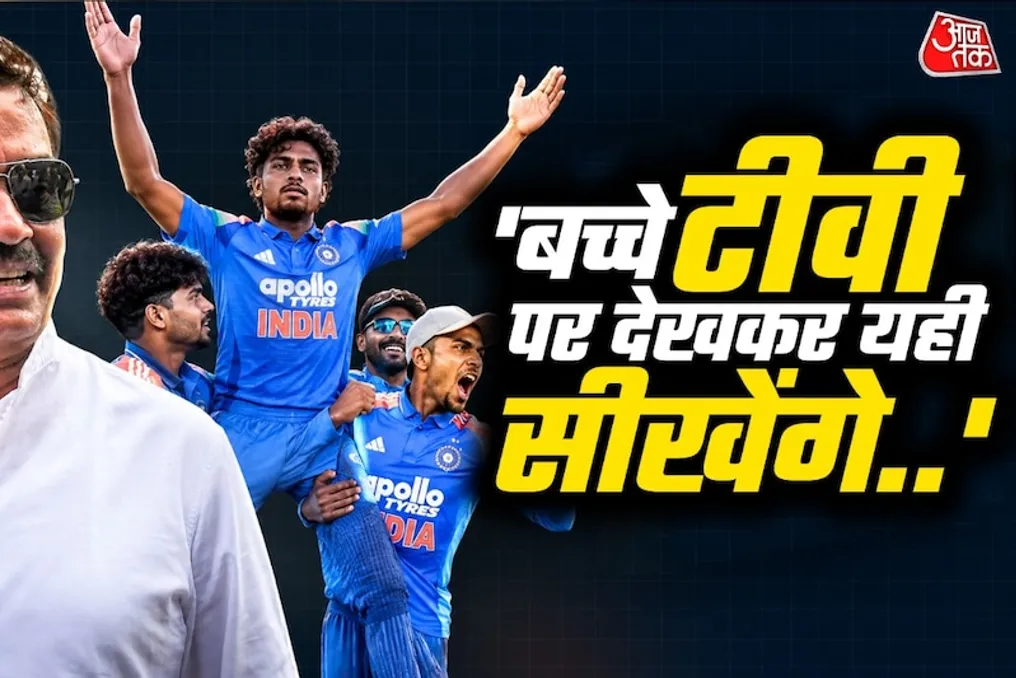
In an interview with the Times of India (TOI), Vengsarkar stated that such behavior is unacceptable in the game. He noted that young athletes watch such scenes on television and then imitate them during matches at the U-14, U-16, or U-19 level. He questioned where this development would lead and emphasized the need to teach players proper conduct both on and off the field, utilizing the National Cricket Academy (NCA/COE) or other channels.

Despite the former great batsman acknowledging that strong emotions and passion often dominate matches between India and Pakistan, he did not excuse the improper behavior. He explained: 'I understand that India-Pakistan matches are very emotional and passion reaches its peak. But that does not mean that one can behave inappropriately. It sets a wrong example for young players.'

Vengsarkar, who is actively involved in grassroots cricket development in Mumbai, reported observing similar behavior in his academies. He said: 'I see the same thing in my academies. When any team wins, players run around the field, pull out stumps, and start dancing. This didn't happen before. They see such scenes on TV and then copy them.'

Calls for strict action from ICC and ACC

Vengsarkar demanded that the International Cricket Council (ICC), the Asian Cricket Council (ACC), and umpires send a clear message regarding player conduct. He insisted that a strict Code of Conduct must exist to maintain discipline in the game. In his view, communication with players from officials should take place before every tournament. Regardless of whether the players are at the U-19, U-17, or U-23 level, they must be clearly informed about what behavior is acceptable on the field and what is not.

The 70-year-old Vengsarkar added that while controlling player celebrations after tense matches ending in a last-ball victory can be difficult for match officials, coaches must also fulfill their duties. He cited a past example, noting that he witnessed similar behavior in Bangladesh several years ago (the 2020 U-19 World Cup final). He pointed out that Pakistan acted that way, and now India has done the same, which cannot be justified. He concluded that the most important thing is to set the right example, as young cricketers constantly observe and learn from top-level players.

Mohit Ulva discusses the secret to India's victory over Pakistan in the Asia U-19 final
Read more
www.aajtak.in

Mohit Ulva discusses the secret to India's victory over Pakistan in the Asia U-19 final

Mohit Ulva, who helped India defeat Pakistan in the Asia U-19 Cup final by winning the match by one wicket on the last ball, has become a subject of discussion. Coming onto the field as batsman number 10, Mohit scored 49 runs off 26 balls, securing the team's victory over Pakistan. After the match, he shared his thoughts on what was going through his mind in the final over and the confidence with which he walked onto the field.

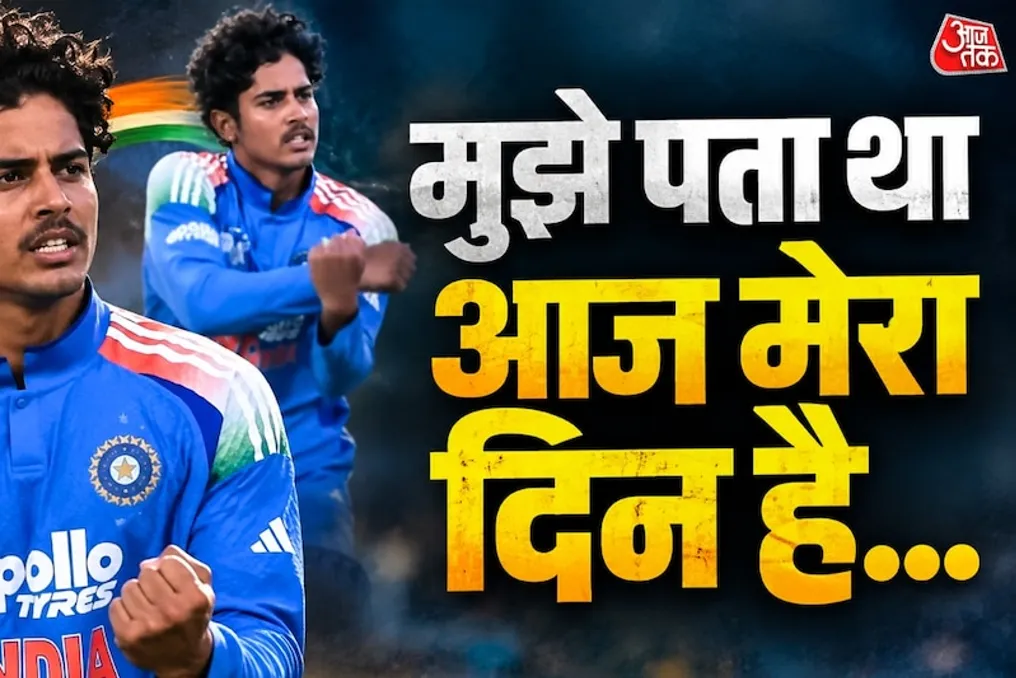
Mohit stated that he felt no pressure in the final over. He trusted himself and God completely. He said that nothing special was happening, only that he believed in himself and in God, knowing that this day belonged to him, and he would finish the match.

He also mentioned that he waited for the last ball, confident that he could end the game by hitting a boundary. He always tells himself: 'I can do it, I will do it and see it through.' According to Mohit, his performance in the tournament up to that point had not been very good. He knew he was a bowler but considered himself an all-rounder. He had not yet had enough chances to prove his potential, but his self-belief never wavered.

In his speech, Mohit highly praised the contribution of Manul Chauhan. He noted that the way Manul came onto the field before him and created a moment in the game was excellent. His job was simply to come out and fulfill his role.

He also commended Chigurupati Venkata for constantly boosting his morale. Venkat constantly told him that he could do it, so he should just go out and play. He said that both of them could finish the match on the last ball. Venkat's belief strengthened his confidence.

The coach also spoke to him personally before he went to bat. The coach told him that he could do it and that he just needed to believe in himself. After that, he went onto the field without thinking too much and continued to play his shots, watching the ball.

He added that he wasn't thinking about what was happening or what would happen next; his attention was focused solely on watching the ball and playing his shots. Mohit believes that coming in at number 10 was lucky for him, as he always considered this position lucky because most of his runs came from playing from this spot.

In the final, Pakistan batted first and scored 337 runs in 50 overs, losing 9 wickets. Usman Khan scored 107, Abdul Kadir scored 80, and Farhan Yusuf scored 60 runs. For India, Kavya Patel took 4 wickets, and Venkat took 3 wickets.

In response, the Indian team scored 339 runs in 50 overs, winning the match by one wicket. Captain Lakshya Randhani scored 80, and Aryavir Saxhaga scored 58 runs. Manul Chauhan added 47 runs, while Mohit Ulva remained scoreless with 49 runs. For Pakistan, Rizwanullah took 3 wickets.

India wins U-19 Asian Cup against Pakistan with a decisive late surge in the final
Read more
www.aajtak.in

India wins U-19 Asian Cup against Pakistan with a decisive late surge in the final

The U-19 Asian Cup final between India and Pakistan became one of the most memorable matches. The Indian team managed to secure a tense victory on the last ball, winning the title.

The situation seemed hopeless for India. After Kavya Patel was dismissed on the 41.3 over, the team's score stood at 252/8, requiring 86 runs from the remaining 51 balls. However, Manul Chauhan and Mohit Ulwa staged an incredible comeback, allowing India to defeat Pakistan.

After Kavya Patel returned to the field, Mohit Ulwa came in to bat. Kavya could not score any runs, going to the pavilion after only two balls. Pakistan noted this wicket, which increased the pressure on the Indian team. Meanwhile, Manul Chauhan remained on the field and, along with the new batsman Mohit Ulwa, began attacking the Pakistani bowlers. Both players started scoring quickly, changing the course of the match.

The crucial partnership between Manul Chauhan and Mohit Ulwa brought 57 runs to the team. Manul scored 47 runs, while Mohit, coming in at tenth, scored 49 runs without being dismissed in just 26 balls. Their play was characterized by high aggression and the ability to perform under pressure.

Although Manul Chauhan was dismissed on the 48th over, Mohit continued to fight. Chigurupati Venkata, who came in at eleventh, supported him, adding 11 invaluable runs without being out. Ultimately, Mohit dragged the match to the last ball, securing India's victory.

Prior to this, chasing a target of 338 runs, Indian captain Lakshychandani and Aryavir Sehvag demonstrated a brilliant start. They formed a partnership of 97 runs for the first wicket. Aryavir scored 58 runs off 61 balls, and Laksh scored 80 runs off 101 balls. Aryavir hit 9 fours, and Laksh hit 5 fours.

After this, the Indian team began losing wickets. Difficulties arose after Anway Dravid was dismissed on the 37th over. Nevertheless, Manul and Mohit did not give up and achieved the championship.

Earlier, Pakistan, having won the toss, batted first and scored 337 runs in 50 overs while losing 9 wickets. Usman Khan delivered a magnificent century, scoring 107 runs off 111 balls. Abdul Qadir contributed 80 runs off 54 balls, and captain Farhan Yusuf added 60 runs.

On the bowling front for India, Kavya Patel was the most successful bowler, taking 4 wickets for 68 runs. Chigurupati Venkat also took 3 wickets for 40 runs. The Indian bowlers managed to prevent Pakistan from exceeding a score of 350 runs in the final overs.

Popular