Iran plans to promote the ancient relief of the Valerian defeat in Bishapur
Read more
Tehran Times
www.tehrantimes.com

Iran plans to promote the ancient relief of the Valerian defeat in Bishapur

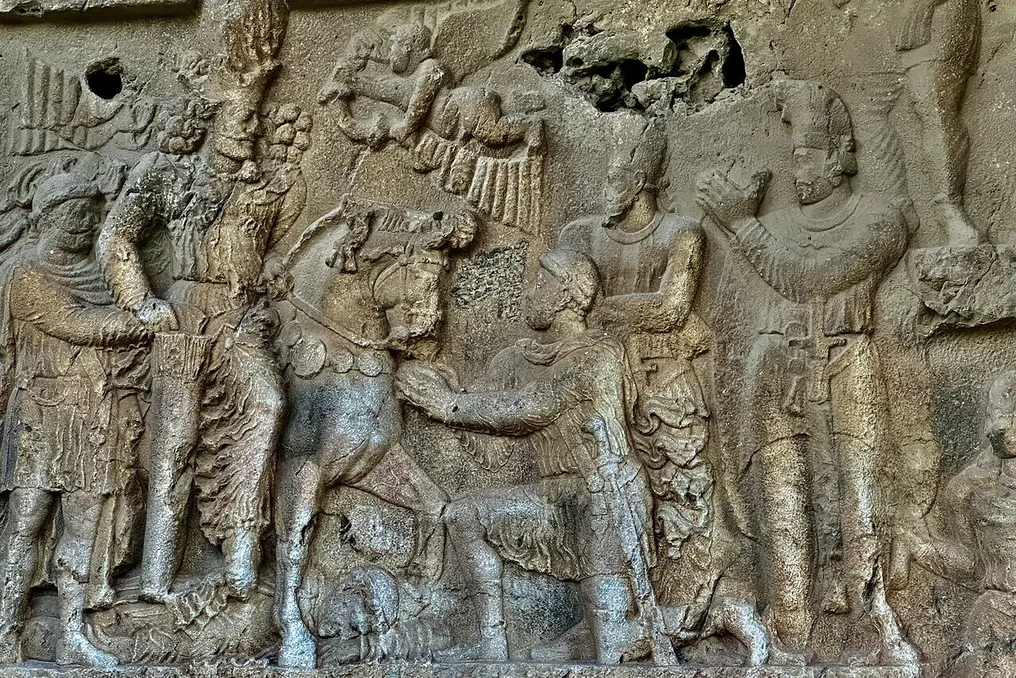
The Fars province in Iran is intensifying efforts to internationally promote the ancient archaeological site of Bishapur and the neighboring Tang-e Chogan gorge. Among the plans is increasing awareness of the historical relief depicting the capture of the Roman Emperor Valerian by the Sasanian King Shapur I.

Behzad Moridi, Director of the Provincial Department of Cultural Heritage, Tourism, and Crafts, stated that preparations have begun for the preservation of the monumental statue of Shapur I. This is the first major restoration work conducted in approximately 80 years.

Speaking to the Iranian Students' News Agency (ISNA), Moridi emphasized that the department pays close attention to Bishapur and Tang-e Chogan, located near Kazerun, and takes the promotion of the relief dedicated to Valerian seriously.

He described the planned restoration of Shapur I's statue as a large-scale undertaking, noting that the monument had not undergone restoration for eight decades. Furthermore, measures are planned to expand the presentation capabilities of Valerian's historical relief to an international audience.

There is also another bas-relief in Naksh-e Rostam, an Achaemenid necropolis near Persepolis, which is on the UNESCO list. This bas-relief depicts the victory of Shapur I over the Roman Emperors Valerian and Philip the Arab.

Valerian ruled the Roman Empire from 253 to 260 AD. He became the first Roman emperor captured by a foreign enemy during a battle when Shapur I defeated his troops at the Battle of Edessa in 260. This event is immortalized in Sasanian rock reliefs, including the monumental carving in Tang-e Chogan, which depicts Shapur's triumph over the Roman emperor.

Commenting on recent statements by the US Secretary of State regarding Iranian civilization, Moridi stated that historical discussions should not turn into confrontation between Iran and Greece. He argued that the United States should not present itself as a representative of ancient Greek civilization, insisting that the discussion of the historical and cultural significance of Iran and Greece should be left to historians, philosophers, and scholars of ancient civilizations.

Moridi acknowledged the important place of Greece in world history but noted that both civilizations should be viewed through the prism of their historical connections, rather than through the prism of East-West rivalry. He mentioned that Iranian cultural influence extended to Athens, asserting that Iran's cultural heritage should not be reduced merely to military campaigns or violence.

As an example of a more constructive approach to shared history, Moridi cited a proposal allegedly made by the city mayor north of Athens, in an area related to Xerxes' canal and the birthplace of Aristotle. According to Moridi, the mayor proposed renaming a two-kilometer-long canal built during the reign of the Achaemenid King Xerxes I to the 'Iran-Greece Friendship Canal.' Moridi also noted that the name Xerxes appears at the city entrance, which he views as evidence of how Iranian historical figures are regarded in that region.

He called on scholars and educators to focus on historical and cultural ties instead of encouraging divisions between East and West. While recognizing the deep historical and cultural significance of Greece, Moridi questioned the appropriateness of comments by US political figures about a civilization with which, in his opinion, they have no direct historical connection.

Restoration Works on Shapur I's Statue

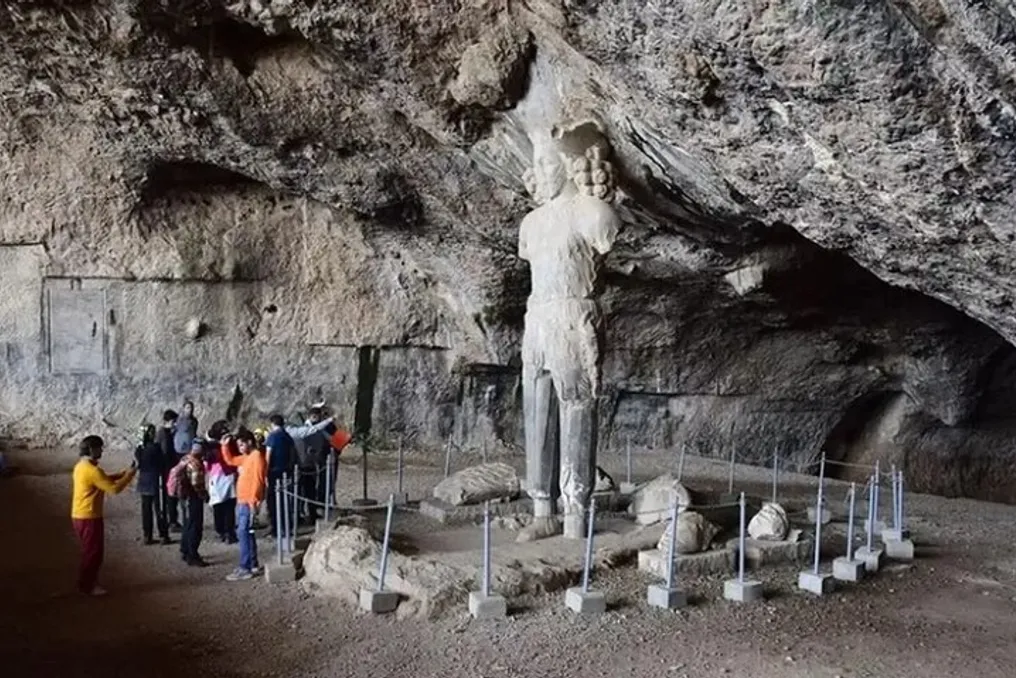
The planned preservation of Shapur I's monumental statue is part of broader efforts to strengthen the conservation and international recognition of Sasanian heritage in Fars. A separate preservation project in Shapur's cave, near Kazerun, has started with scientific documentation, preparation of protective forests, development of plans for installing a transparent barrier to prevent visitors from touching the monument, and collection and preservation of detached fragments around it.

The statue, carved from a single stalagmite, is about seven meters high, about two meters wide at the shoulders, and approximately three meters long in the arms. Bishapur, Tang-e Chogan, and Shapur's Cave are among the main archaeological attractions of the Sasanian era in southern Iran. The Sasanian archaeological landscape of Fars is listed as a UNESCO World Heritage Site.

Similar stories

Sangan Village near Tehran: History, Traditions, and Natural Beauty
Read more
www.tehrantimes.com

Sangan Village near Tehran: History, Traditions, and Natural Beauty

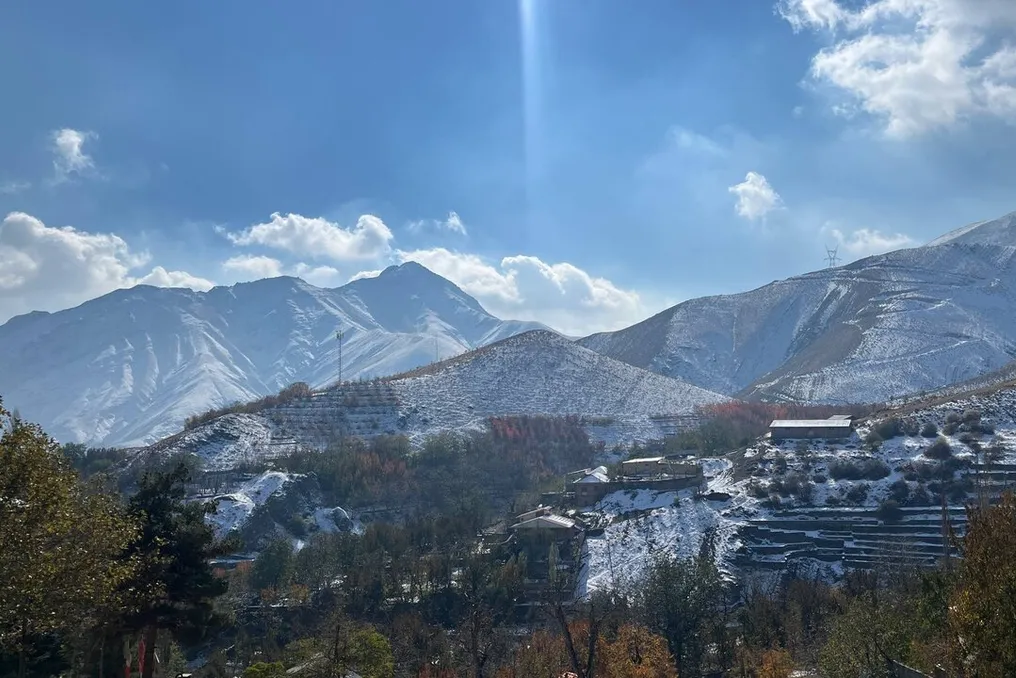
Located approximately thirty kilometers northwest of Tehran, along the road to Imamzadeh Davud and on the southern slopes of the Alborz mountains, Sangan village offers a different perspective on life outside the capital. Its historical religious structures, traditional basket weaving, fruit orchards, and mountain landscapes make it an attractive destination for visitors wishing to take a short break from the hustle and bustle of the city.

However, Sangan is more than just a day trip destination. The village preserves traces of centuries-old traditions, local craftsmanship, and agricultural practices that have shaped its unique identity. It also provides opportunities to study rural architecture, get acquainted with nomadic culture, and discover the natural attractions of the surrounding mountains.

Due to its relatively short distance from the capital, Sangan is an accessible place for Tehran residents interested in rural tourism and nature excursions.

Rural Tourism Beyond Overnight Stays

In recent years, Sangan has begun developing new forms of rural tourism, offering guests experiences that go beyond standard accommodation. Reza Mollanouri, a cultural heritage activist involved in rural tourism, told Tehran Times that villages located near Tehran allow city dwellers to experience rural life without traveling long distances.

He highlighted four types of traditional housing available at the Arg-e Sangi complex: wooden huts, mud-brick huts, stone huts, and nomadic black tents. Each of these options reflects a different architectural tradition and way of life in Iran. Wooden huts are more common in the northern regions of the country, while mud-brick buildings are characteristic of central and some mountainous areas. Stone huts demonstrate the building traditions of mountain communities, and black tents represent the traditional dwellings of nomadic groups.

According to Mollanouri, the complex allows visitors to experience all four types of housing in one place. He noted that staying in a nomadic black tent is particularly interesting for Tehran residents who would otherwise have to travel much further to experience this form of traditional housing. This experience also has a historical dimension. Contrary to the common belief that nomadic life was mainly confined to remote rural areas, parts of the Tehran region were once connected to seasonal migration routes. Mollanouri added that nomadic groups and herders moved through the areas around Varamin and the surrounding highlands as part of their seasonal movements, and Sangan was one of the places familiar with this way of life.

For this reason, he believes that staying in a black tent in Sangan can offer more than just recreated housing; it can introduce visitors to an important part of the region's social history. He also asserts that rural tourism must go beyond overnight stays. Traditional bread making, local cuisine, medicinal plants, village architecture, and evening gatherings can become part of a more meaningful experience for visitors. According to him, such activities help preserve and transmit intangible cultural heritage while creating additional opportunities for local communities.

Historical Religious Complex with Centuries of History

One of Sangan's most prominent heritage sites is the centuries-old Taqyeh in Sangan-e Pain, a traditional place for religious gatherings, distinguished by its wooden ceiling and historical features. Alireza Mashhadi, a local tourism activist, told Tehran Times that existing evidence suggests the building is about 700 years old. He added that some gravestones embedded in the walls and other sections contain inscriptions dating back to the Ilkhanid and Timurid periods. These historical remnants provide valuable insights into the past of the village, its social and religious life.

The structure has undergone changes and restorations over the centuries, especially during the Qajar period. Consequently, not all its current features necessarily date back to the earliest phase of construction. Oral accounts among local residents also point to an even older history of this site. The Taqyeh remains an important gathering place during religious holidays, during the lunar months of Muharram and Safar, and on the days of martyrdom of Fatima (AS), the daughter of Prophet Muhammad, among others. One of the ancient traditions involves the elder or experienced religious servant offering a guest a piece of bread and some water before the main reception. Young residents then prepare a communal meal, traditionally without using disposable plastic tableware. This practice reflects the close family and social ties that remain part of village life.

The Taqyeh is also linked to the history of Iranian television. According to Mashhadi, several scenes were filmed there in 1974 during the production of the historical TV series Deliran-e Tangestan, featuring Rais Ali Delvari, a national hero.

From Local Apples to Export Cherries

Agriculture and fruit cultivation have long formed the basis of Sangan's economy. Although wheat and barley were once widely cultivated, horticulture has gradually become more significant. Among the village's traditional products is the Sanguni apple, a local variety that was once famous for its popularity and characteristic oily skin. In the past, residents stored apples in sand to keep them usable for extended periods.

Cherry orchards are another distinctive feature of the village, especially in spring. When the trees bloom, the orchards are covered with white flowers, creating an attractive landscape against the backdrop of the Alborz mountains. Today, cherries are one of the village's most important agricultural products. Local sources report that they are sold on the domestic market and exported to some Gulf states, Russia, and certain European destinations. Walnuts and blackberries are also among Sangan's notable horticultural products.

Basket Weaving in Sangan: A Craft Under Threat

In addition to historical buildings, Sangan possesses a unique tradition of handmade goods production known as Sanguni basket weaving. This craft was included in Iran's National List of Intangible Cultural Heritage in 2019 under registration number 2658. Local artisans traditionally make baskets from willow branches collected in autumn. After preparing the branches, they are woven into containers of various sizes and shapes. In the past, these handmade items were used for various domestic and agricultural needs: they served as sieves, rice covers, serving baskets, and containers for collecting and transporting fruits. Larger baskets, known locally as Dastareh, were particularly useful during fruit harvesting. Baskets were once closely tied to the village economy. Farmers used large woven baskets to transport their produce, especially apples, to Tehran by pack animals. The route, it is reported, passed through the historic caravanserai Kan before reaching the Gomrok district in central Tehran. This journey illustrates the long-standing economic ties between Sangan and the capital.

However, changing lifestyles and modern packaging methods have gradually reduced the demand for traditional baskets. Today, only a small number of people practice this craft. Mashhadi believes that national recognition alone is insufficient to ensure its survival. Without active producers, a viable market, and opportunities to pass on skills to the younger generation, this tradition could eventually disappear.

Sangan Waterfall: A Mountain Attraction Year-Round

Sangan Waterfall is perhaps the village's most famous natural attraction. It is popular among hikers and nature lovers in the vicinity of Tehran. Estimated to be between 40 and 60 meters high, the waterfall changes significantly depending on the season. In spring, increased water flow and green vegetation make the surrounding landscape particularly appealing. Summer and autumn offer their own mountain scenery with changing colors and vegetation along the hiking trail. However, in winter, the waterfall takes on its most characteristic appearance. During periods of severe cold, the flowing water freezes into huge ice stalactites, sometimes reaching heights of about 20–30 meters. These frozen formations attract photographers, tourists, and climbers. The hiking trail starts near Imamzadeh Qasem in Sangan-e Bala. It passes through fruit orchards, streams, and the foothills before becoming steeper and more mountainous as it approaches the waterfall. Reaching this spot requires a mountain hike, not a short walk. The time required depends on physical fitness, weather, and trail conditions, so visitors should allocate several hours for the excursion. Another notable natural landmark is the old plane tree near Imamzadeh Qasem. Its age is estimated to be around 700 years, although the tree's registration documents indicate an age of over 400 years.

Rich Diversity of Mountain Plants

Sangan's location on the southern slopes of the Alborz range has provided it with diverse natural surroundings. Thyme, mountain tea, kakuti, rhubarb, and several medicinal plants grow in the surrounding highlands. Mashhadi also points to species such as Zarrin-ghia and Zaban-e Tala, which he considers botanically significant. Zaban-e Tala, in particular, is associated with habitats in the Alborz mountains and produces characteristic flower clusters in summer. This botanical diversity opens up possibilities for ecotourism and conservation education. However, its potential can only be sustained through responsible tourism and protection against excessive wild plant collection.

How to Get to Sangan

Sangan can be reached from the western part of Tehran via Shahran and Kusar Boulevard, and then along the Kan-Solkan road towards Imamzadeh Davud. Visitors then turn onto Sangan and continue through Sangan-e Pain into the upper parts of the village. The road becomes narrower and more winding as it ascends to the mountain settlements. Traffic can increase significantly on weekends and in good weather, making parking difficult. Visitors planning a hike to the waterfall should allocate enough time to find parking and prepare for the mountain trail. The waterfall is inaccessible by car. Sangan consists of several traditional parts, including Sangan-e Pain, Sangan-e Vasat, and Sangan-e Bala, each with its own distinct character. Sangan-e Pain is one of the oldest parts of the settlement and serves as the entrance to the village. Sangan-e Bala, in turn, is the main starting point for visitors heading to the waterfall and Pahne Hesar mountain. Imamzadeh Qasem is an important landmark in the upper part of the village. Other religious sites in this area include Imamzadeh Seyed Alaeddin and Imamzadeh Akil. The village river and surrounding valleys also contribute to its appeal. Hiking trails run alongside fruit orchards and mountain slopes, making the trip pleasant even for those who do not plan to complete the entire journey to the waterfall. Visitors should remember that many fruit orchards and agricultural plots are private property and constitute the livelihood of the residents. Entry to them or picking fruit without permission should be avoided.

Photographer Herbert Karim-Masighi explores Iran's cultural heritage beyond monuments
Read more
www.tehrantimes.com

Photographer Herbert Karim-Masighi explores Iran's cultural heritage beyond monuments

For photographer Herbert Karim-Masighi, the cultural heritage of Iran is not merely a collection of historical buildings and monuments. It is also the history of the people, cultures, and beliefs that have shaped the country over millennia.

In a recent interview with Tehran Times, Karim-Masighi noted: 'Iran is a living land that has embraced thousands of years of life, cultures, beliefs, and experiences of various peoples.' He added that everything formed on this land—from mosques, churches, and temples to palaces, villages, and the homes of ordinary people—is part of the identity of this land.

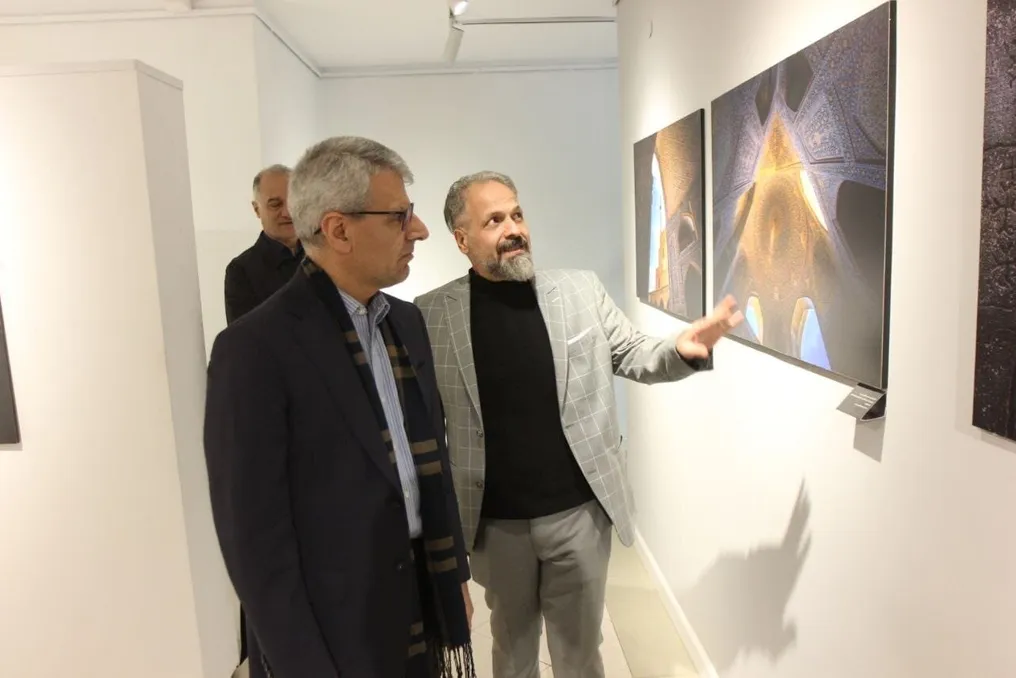
These reflections came after the presentation of his photo book, 'A Thousand Years, Iran,' last month. The book showcases various aspects of the country's historical, cultural, and architectural heritage. The official ceremony took place at the Bank Melli of Iran and was attended by the Minister of Tourism Seyed Reza Salehi-Amiri, the South Korean Ambassador to Iran Kim Joonpyo, Bank Melli CEO Mohsen Saifi Kafshgari, and the head of Bank Melli Publishing Company Amin Arefnia.

The event also gathered archaeologists, cultural heritage experts, members of parliament, and cultural officials, including Jabreal Nokandeh, head of the National Museum of Iran, Mohammad Mehdi Asgarpour, chairman of the board of directors of the Iranian House of Cinema, and Gholamareza Amirhani, head of the National Library and Archives of Iran.

Instead of focusing exclusively on famous landmarks, Karim-Masighi's photographs aim to capture the broader cultural landscape of Iran, encompassing different historical periods, religious traditions, communities, and daily life. He also prefers to leave many shots without detailed captions, allowing viewers to engage with them before encountering historical explanations or interpretations.

In a subsequent interview, he discusses the ideas behind his book, his approach to photographing Iran's diverse heritage, and the role of personal perspective in documenting the country's past and present.

When asked about the motivation for the project, he replied that he, Herbert Karim-Masighi, a photographer of this land, had traveled through Iran for many years, photographing quiet monuments and remote landscapes in search of something subtle: the continuity of life in a country that has repeatedly changed its appearance but never stopped moving forward.

From his perspective, Iran cannot be reduced to a single historical period associated solely with one ruling dynasty or defined by one religion. It is a living land carrying the accumulated experience of its people. He emphasized that the soil of Iran is sacred, and everything that has grown or been formed on it matters.

He makes no distinctions between buildings from the Achaemenid or Sasanian eras and those from the Safavid era, nor between Ilkhanid monuments and others. In his view, all of these are parts of a greater whole, which is Iran.

Regarding his approach to shooting different historical periods, Karim-Masighi strives to distance himself from ideological views and historical prejudices. For him, history is a combination of greatness and defeat, kindness and oppression. He does not wish to glorify one period due to personal convictions while ignoring another.

He believes that the inheritors are not only the Achaemenids and Sasanians but also all ethnic groups, languages, religions, cultures, and ways of life that have developed on this land throughout history. This is why he rarely feels the need to classify or label everything in his photographs, as he does not want to limit the viewer's imagination to a specific historical name or date before they see the image.

Karim-Masighi explained that he wanted the audience to first encounter the photograph itself before learning its name or background, because written explanations sometimes stand between people and what they see. He believes that the initial contact should belong to the image and the viewer.

Discussing the link between daily life and cultural heritage, he stated that history cannot be understood by looking only at magnificent buildings and archaeological remains. Sometimes history remains alive in the simplest actions of ordinary people. He recalled a visit to a village near Persepolis, where he observed a man cleaning a cattle shed, which reminded him of the continuity of traditional life.

He also recounted meeting a Japanese traveler who chose a difficult mode of transport, and remembered his response: many cultures are best understood among ordinary people. He asserts that Iran's heritage is not limited to stones and museums, but is present in the lives of people who continue traditions.

Speaking about the role of time, light, and patience, Karim-Masighi notes that photography, for him, is understanding time and discovering moments. He believes that a change in light can reveal a completely different meaning in a historical structure. He also stressed that patience and familiarity with the place are necessary, as sometimes understanding the rhythms of a place requires living there long enough.

Regarding the value of an image in an era of rapid technological development, he insists that what matters is not so much technical perfection as the photographer's vision and narrative. What remains in photography is what the author saw, why they decided to capture it, and what story lies behind the frame.

In conclusion, Karim-Masighi expressed hope that readers would see Iran again, free from prejudice and ideological constraints, with greater curiosity. He believes that Iran is the shared heritage of countless generations, and each of us is a storyteller of one of its chapters.

Discovering Iran's Little-Known Historical and Natural Treasures Beyond Persepolis
Read more
www.tehrantimes.com

Discovering Iran's Little-Known Historical and Natural Treasures Beyond Persepolis

Iran offers numerous locations that remain outside standard tourist routes, situated beyond well-known attractions such as Isfahan, Shiraz, and Persepolis. These lesser-known corners include mountain fortresses, ancient rock carvings, under-researched archaeological sites, colorful islands, and remote villages where traditional ways of life are preserved.

Iran's geography impresses with its diversity of landscapes and cultural heritage, stretching from the Caspian Sea to the Persian Gulf, and from the Zagros Mountains to the central deserts. For travelers willing to stray from beaten paths, these places reveal another facet of the country, demonstrating its deep historical significance and natural variety.

Nine Places Worth Discovering

Among these places stands the Alvand Valley, located amidst the rugged Alborz Mountains in northern Iran. This area presents a landscape of steep cliffs, green valleys, traditional villages, and medieval fortifications. The most famous site, Alamut Castle, along with other ruins, is a UNESCO World Heritage site and rises on a dramatic rocky outcrop.

Hassan-i Sabbah, the leader of the Nizari Ismaili community who founded his citadel there in the late 11th century, is closely associated with this fortress. Later, Alamut became an important political and intellectual center of the Ismaili state and is frequently mentioned in historical sources as the center of the group known in the West as the Assassins.

The castle ruins offer insight into the turbulent period of Iranian medieval history, while the surrounding valley has its own attractions. Numerous ruined forts are scattered throughout the region, highlighting the strategic importance of the mountainous terrain. For outdoor enthusiasts, Alamut is also appealing due to hiking trails through mountain villages and high-altitude landscapes, including paths connecting inner valleys with the Alborz slopes leading to the Caspian Sea. Access to the castle requires a scenic but winding drive from Qazvin, followed by a challenging ascent.

Kara Kelisa: Ancient Christian Sanctuary

In the mountainous countryside of Western Azerbaijan, near Chaldoran, lies Kara Kelisa, also known as St. Thaddeus Monastery. This site is recognized as a UNESCO World Heritage site within the Armenian Monastic Ensembles of Iran and is one of the country's most important Christian monuments.

Traditionally, the monastery is linked to St. Thaddeus, one of the apostles believed to have brought Christianity to this region in the first century. According to Armenian Christian tradition, Thaddeus was a martyr in this area, and the monastery has become a significant pilgrimage site. The architecture of the monastery reflects centuries of construction, reconstruction, and artistic development. Particularly noteworthy is the contrast between the dark stone sections and the lighter masonry, which explains its Turkish name meaning 'Black Church.'

Beyond its architectural significance, Kara Kelisa remains an important center of Armenian religious heritage. Every year, Armenian pilgrims gather here to hold ceremonies in memory of St. Thaddeus, sustaining a tradition that connects modern communities with the ancient Christian history of the region. Its remote location, surrounded by mountains and open terrain, enhances its appeal.

Shahpur Cave: Monumental Sasanian Sculpture

In the mountains near Bishapur, in Fars province, lies Shahpur Cave—one of the most outstanding archaeological attractions in southwestern Iran. Located in Tange Chogan, the cave is best known for its monumental statue of Shapur I, a Sasanian ruler who reigned from 240 to 270 CE and expanded the empire's influence in many parts of the region.

The statue, carved from a natural limestone formation at the cave entrance, reaches a height of about seven meters. His imposing figure, characteristic crown, and richly styled hair reflect the artistic traditions and royal image of the Sasanian period. Although parts of the sculpture have suffered over the centuries, it remains an exceptional example of monumental rock sculpture from ancient Iran.

The cave itself is part of a broader historical landscape that includes Bishapur—a Sasanian city founded under Shapur I—and the rock reliefs of Tange Chogan, depicting royal victories and ceremonies. Visitors can reach the cave from Bishapur by traversing the mountainous terrain. The ascent requires a certain level of physical fitness, but the opportunity to see such a monumental ancient sculpture in its pristine natural setting makes the visit unforgettable.

Kourangun: Ancient Elamite Ritual Landscape

For those interested in prehistoric and ancient civilizations, Kourangun in Fars province offers a remarkable encounter with one of Iran's least-known archaeological treasures. Located near Nurabad in the Mamasan district, the Kourangun rock relief is carved into a cliff overlooking the Fahliyan River. It is generally dated to the second millennium BCE and attributed to the Elamite civilization, which flourished in southwestern Iran long before the rise of the Achaemenid Empire.

The central scene depicts divine figures seated on a throne, accompanied by rows of worshippers. Some figures wear characteristic horned headdresses, and the composition includes symbols related to ancient religious beliefs. A particularly notable element is the depiction of flowing water, traditionally interpreted as a reference to vital divine power.

This relief provides valuable evidence of Elamite religious practices, artistic traditions, and cultural connections with neighboring Mesopotamian civilizations. Unlike more visited archaeological sites around Persepolis, Kourangun attracts relatively few tourists. Its location above the river valley and its impressive antiquity make it a particularly valuable destination for those interested in the early civilizations of the Iranian plateau.

Babak Castle: Mountain Fortress with Powerful Heritage

High above the forests and mountains near Kaleybar in Eastern Azerbaijan, Babak Castle is one of the most impressive historical fortifications in northwestern Iran. Situated on a steep mountain ridge, this fort is associated with Babak Khorramdin, a prominent leader of the Khorramdin movement who resisted Abbasid rule in the 9th century. Babak's revolt lasted over two decades and was an important episode in the history of resistance against the Abbasid Caliphate. His stronghold in the mountainous region provided a strategically advantageous defensive position, hindering enemy approach.

Although the fortress is linked to Babak, archaeological data and architectural studies suggest that its origins may date back to the Sasanian period, with subsequent settlement and modifications. Today, the castle attracts visitors not only because of its historical associations but also because of its breathtaking location. Reaching the ruins requires a challenging hike along a mountain trail, but the views of the surrounding forests and highlands justify the effort. For those interested in history and trekking, Babak Castle offers an opportunity to combine both activities in one of Iran's most picturesque northwestern regions.

Izeh: Forgotten Center of Elamite Heritage

In Huzestan province, the city of Izeh possesses an exceptional concentration of archaeological remains related to the ancient Elamite civilization. This region is often overlooked by tourists visiting southwestern Iran, yet it preserves rock reliefs, inscriptions, and archaeological sites that provide crucial information about the civilization that thrived thousands of years ago.

One of the most significant sites is Eshkaft-e Salman, also known as Tarish Sanctuary. This site contains four rock reliefs—two inside a natural cave and two outside—as well as an important Elamite cuneiform inscription. Dating to the late second millennium BCE, these images depict religious and ceremonial scenes. Among their notable features is the depiction of a queen next to a male figure, providing valuable insight into the presence of women in the royal and religious circles of Ancient Elam. The sanctuary's location, with its natural rock formations and mountainous surroundings, enhances its archaeological significance. Izeh also serves as an excellent starting point for studying other Elamite monuments in the region, making it a worthwhile destination for lovers of ancient history in southwestern Iran.

Gonbad-e Kavus: Masterpiece of Medieval Brick Architecture

In Golestan province, in northeastern Iran, the historic city of Gonbad-e Kavus houses one of the most impressive examples of early Islamic architecture in the country. Its main attraction, the Gonbad-e Qabus tower, is a UNESCO World Heritage site and ranks among the tallest historical brick towers in the world. The structure was completed in 1006 during the reign of Qabus ibn Vushmgir of the Ziyarid dynasty and rises approximately 53 meters from its base. Its cylindrical brick body is topped with a characteristic conical roof, creating an elegant silhouette visible from afar.

The tower is remarkable not only for its height but also for its complex engineering and geometric design. Built entirely of brick, it demonstrates the architectural achievements of Iranian builders in the early Islamic centuries. Although it is commonly believed to have served as a tomb, its exact original function remains a subject of historical debate. The monument also recalls the importance of the ancient city of Gorgan and its connections to trade routes linking Central Asia and the Iranian plateau. Gonbad-e Kavus allows visitors to study a prominent architectural monument away from Iran's more famous historical routes.

Hormuz Island: Geological Wonder in the Persian Gulf

In the southern part of the Iranian coast, Hormuz Island represents a unique place compared to almost all other parts of the country. Located in the Persian Gulf near Bandar Abbas, this small island is famous for its extraordinary geological formations, colorful soil, and distinctive coastal landscapes. Often called a natural geological museum, Hormuz features hills and cliffs displaying vibrant shades of red, orange, yellow, and ochre. Its mineral-rich soil has created a landscape that appears almost otherworldly, especially around salt deposits and caves.

Among the most famous sights is the Valley of Statues, where wind and erosion have shaped rocks into unusual forms resembling animals and other figures. The island also has salt caves, dramatic coastal cliffs, and beaches with characteristically colored sand. One of the most recognizable spots is Red Beach, where iron-rich soil gives the shoreline and surrounding landscape a bright red hue. Hormuz is becoming increasingly popular among independent travelers and backpackers attracted by its relaxed atmosphere, local culture, and unique nature. Nevertheless, its fragile ecosystem requires careful handling; visitors should avoid removing colored soil or disturbing the island's geological formations, which are part of its natural heritage.

In conclusion, Iran, stretching from the Caspian Sea to the Persian Gulf, showcases an incredible combination of ancient civilizations, majestic nature, and hidden cultural treasures accessible to those willing to explore it beyond the mainstream.
Popular