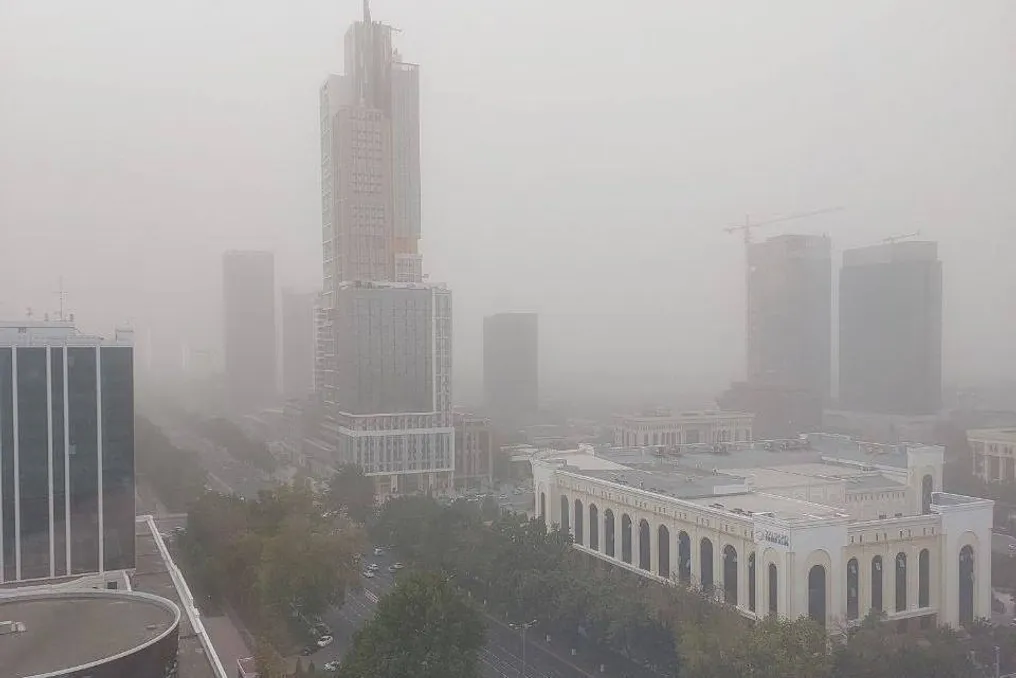
UzHydromet reported that the air quality in Tashkent is deteriorating due to lack of precipitation, weak winds, and transboundary dust flows coming from Kazakhstan.
No precipitation has been recorded in the capital for the past five days. Low wind speeds and insufficient air circulation hinder the dispersion of pollutants in the urban atmosphere.
Simultaneously, air currents are carrying dust from Kazakhstan into the Tashkent region and the city of Tashkent itself.
This situation is reflected in the data from automatic air quality monitoring stations belonging to UzHydromet. Stations located directly in the capital have not recorded a significant increase in pollutant concentrations.
Nevertheless, border stations registered elevated levels of PM2.5 and PM10 particles between November 17 and 21, 2026. The highest readings were recorded at the border stations of Sofia University and Green University. According to UzHydromet, these results indicate the penetration of dust into the country from its borders.
Furthermore, the agency pointed to local factors affecting air quality, including emissions from road transport, construction sites, and industrial enterprises.