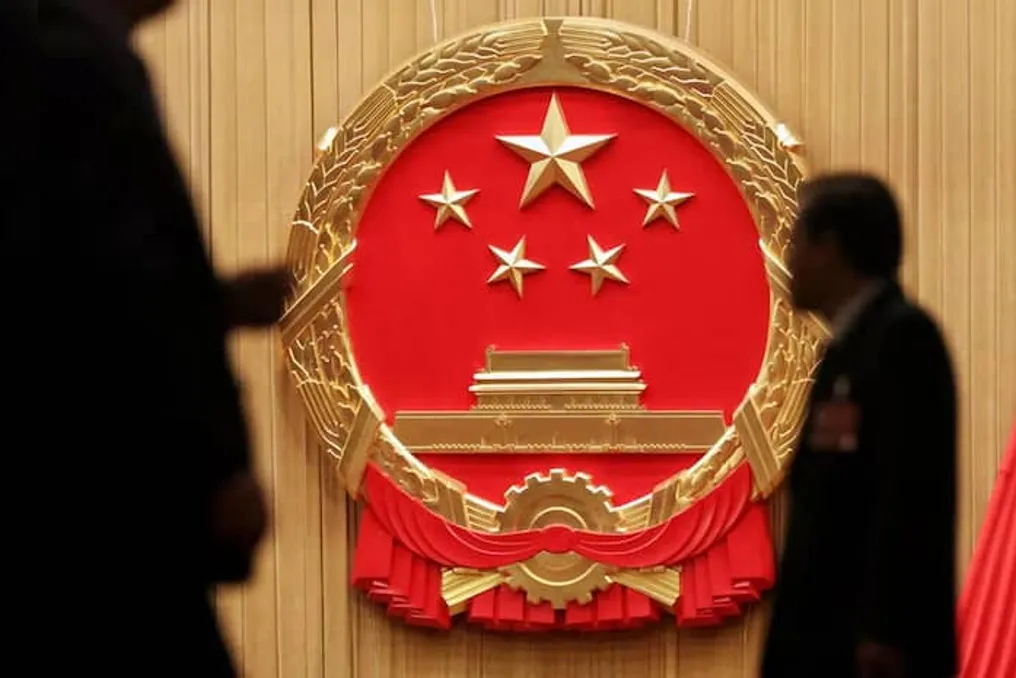
China's espionage efforts target semiconductors for AI long before the Nvidia scandal
Read more
Business Standard
business-standard.com

China's espionage efforts target semiconductors for AI long before the Nvidia scandal

According to officials, China's intelligence agency is conducting a covert campaign aimed at assisting the country's companies in acquiring advanced chips for artificial intelligence and gathering intelligence on the sector.

When China's top intelligence agency updated its priorities this year, it added an important goal: overcoming Western barriers regarding technologies that Xi Jinping considers critical for China's rise.

At the heart of this endeavor are advanced semiconductors necessary for the functioning of artificial intelligence, including chips that the US has banned American companies like Nvidia from exporting to China.

In January, Xi informed the Politburo that China must 'take extraordinary measures to accelerate the pursuit of key technologies in priority sectors,' calling for 'resolving the 'choking' problems hindering the development of future industries' as soon as possible.'

The Ministry of State Security, which functions as the intelligence agency, has long been involved in eliminating threats to the rule of the Chinese Communist Party. Now, according to statements from current and former security and intelligence officials from Asia, the US, and Europe, its objective is obtaining advanced semiconductor chips and collecting data on them.

The question of how China's intelligence agency is attempting to acquire advanced chips and information about them became central to the case of Alice Huang. According to US officials, the Chinese agency collaborated with businesswoman Alice Huang to spy on Jensen Huang, CEO of the American chip giant Nvidia. These allegations were first reported by The New York Times.

Huang did not respond to requests for comment, and China rejected the espionage accusations as 'pure fabrication.'

According to current and former officials, the Chinese intelligence agency's campaign to acquire chips, details of which have not been previously published, has been ongoing for at least two years. They agreed to speak on condition of anonymity to discuss confidential information.

Among the main components of this campaign, several foreign officials stated that Chen Yixin, head of the intelligence agency and Minister of State Security, established a working group to lead these efforts, which reports directly to him. Chen worked under Xi back when they were officials in Zhejiang province, eastern China, known as the cradle of China's tech boom.

This group was tasked with assisting China's 'counter-blockade' efforts—aimed at overcoming export controls imposed by the United States and its allies. The campaign includes facilitating the acquisition and smuggling of advanced chips into China by Chinese companies. Furthermore, the group collects information on the semiconductor sector and its supply chains, several officials familiar with the campaign reported.

In April, Chen presented a new mission in a Communist Party journal: 'To deepen the fight against blockades and comprehensively promote innovation, industrial development, and the application of artificial intelligence.' He continued: 'Focusing on solving 'bottlenecks' in critical technologies' and addressing technologies that 'cannot be obtained through requests, purchases, or pleas.'

Alex Joske, Managing Director of the security practice at Garnaut Global, which studies the Chinese security apparatus, noted that Chen is signaling to the party leadership and his ranks that his agency is elevating competition in AI with the US to a long-term, paramount priority. He calls on his officers to find more ways to wage this fight.
Similar stories

Elon Musk announced the development of a unique Tesla vehicle without a steering wheel, brakes, or pedals
Read more
www.aajtak.in

Elon Musk announced the development of a unique Tesla vehicle without a steering wheel, brakes, or pedals

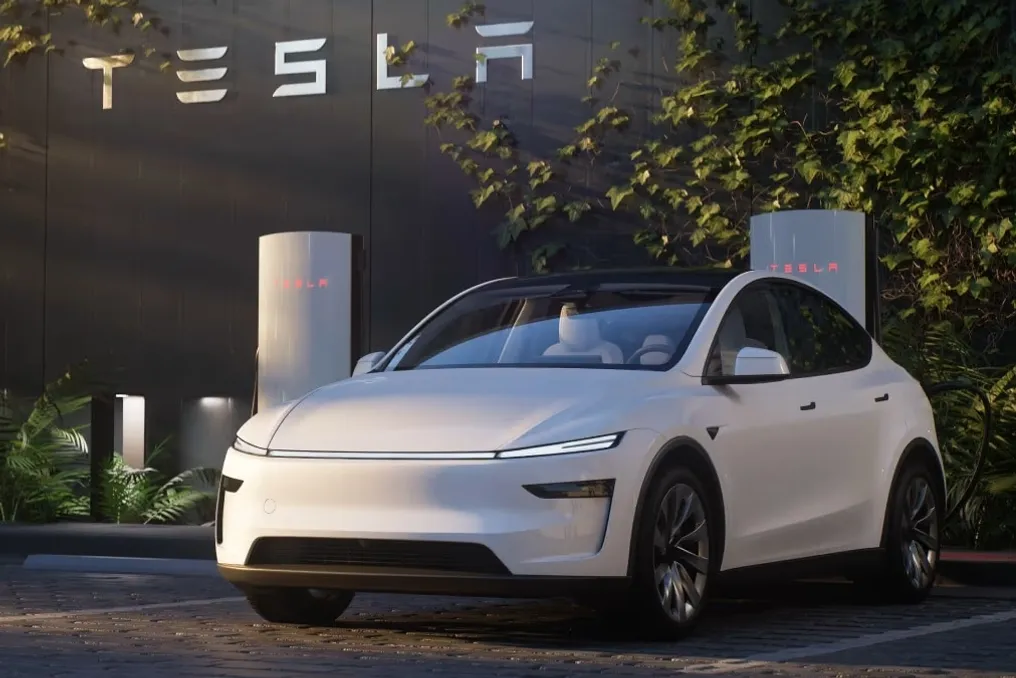
Elon Musk announced Tesla's plans to create an unusual vehicle that will be fully autonomous and will not require the driver to control the steering wheel, press the gas, or brake. This information was revealed during an interview at the annual New York Times summit.

It is anticipated that this modern technology could be integrated into the Tesla Model Y. Musk indicated that Tesla is working on versions of the Model Y and the larger Model Y L, which will be fully autonomous and could become part of the company's Robotaxi network. Furthermore, these vehicles may also be sold for private use in the future.

Musk presented this concept at the New York Times summit, but he did not provide any details regarding the launch date, cost, or production plans for this new SUV model.

The main goal of this potential project is to strengthen the Tesla Robotaxi network. Currently, the existing Model Y, equipped with a steering wheel, pedals, and Full Self Driving (FSD) system, is used in the Robotaxi service. Additionally, the two-seater Cybercab was recently added to the network.

Tesla is preparing to introduce a seven-seater version of the Model Y. The Cybercab, introduced by the company in October 2024, is a fully driverless vehicle without a steering wheel or pedals, but due to having only two seats, it was not considered practical for family use. Therefore, the wheel-and-pedal-free version of the Model Y or Model Y L represents a significant opportunity for the company.

Recently, Tesla announced that the Cybercab would also be available to private buyers, although purchasing it would require paying a costly subscription. Moreover, this vehicle can only operate within limited zones designated by the company for its Robotaxi network.

Currently, the standard Tesla Model Y accommodates five people, including the driver, while the larger Model Y L is designed for six passengers. During the interview, Musk mentioned creating a vehicle for six or seven people, suggesting the possible creation of an even larger version of the Model Y. Interestingly, after the Model Y L was introduced in China, Musk had previously stated there were no plans to bring it to the American market, but less than a year later, he changed his stance.

Bringing such a vehicle to the mass market for Tesla will not be a simple process, as the main barriers are safety issues and government regulation. There are serious challenges in the US related to wheel-and-pedal-free vehicles. Although Tesla independently certified the Cybercab in America, this drew criticism, and the country's Department of Transportation is currently conducting an investigation.

Another important question arises: whether ordinary consumers will want to buy a family car that lacks the ability for manual driving if necessary, especially considering that the vehicle can only operate within predefined geozones.

Tesla recently made significant changes to its product portfolio, announcing the discontinuation of the popular Cybertruck and the closure of models such as the Model S and Model X. As a result, the company's portfolio now consists only of the Model Y, Model Y L, and Model 3.

Previously, the company planned to develop an inexpensive vehicle for markets like India, but this project was postponed in favor of the Cybercab. On the other hand, Tesla showed a prototype of its long-awaited Roadster supercar, although its production will take at least a year.

Iranian researchers develop ultrasonic technology for fuel oil desulfurization
Read more
www.tehrantimes.com

Iranian researchers develop ultrasonic technology for fuel oil desulfurization

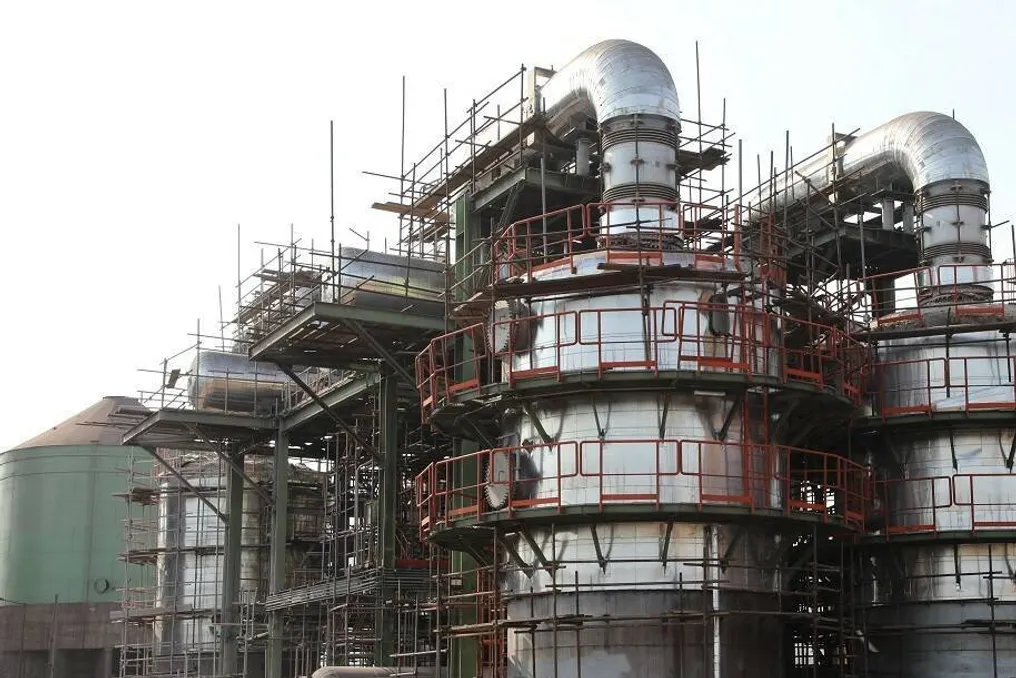
Researchers from Iran have created a new technology to remove sulfur from heavy fuel oil using an ultrasonic reactor and a process known as AQP. This breakthrough is viewed as part of the country's efforts to transition from technology localization to independent creation and export of its own industrial products.

The technology was developed under the leadership of Reza Mokhtar, who is a researcher, inventor, and senior energy expert. It aims to solve two serious problems in Iran's oil refining industry: the high sulfur content in fuel and the country's dependence on foreign technologies in advanced refining processes.

For a long time, Iran's oil and gas industry focused on adapting and reverse-engineering foreign technologies. While this approach helped local enterprises reduce dependence on imported equipment and expertise, it did not allow them to become developers of original technologies.

According to the developers, the AQP process marks a shift in this approach. They claim that the technology was developed entirely domestically—from initial laboratory research and reactor design stages to the creation of a semi-industrial pilot unit to demonstrate commercial potential.

Solving Two Major Refining Problems

One of the main challenges facing the refining and power generation sectors in Iran is the sulfur content in heavy fuel, known as mazut. Burning high-sulfur fuel releases pollutants that cause serious environmental problems, making desulfurization increasingly important amid tightening environmental regulations.

Traditional hydrodesulfurization methods used to treat heavy oil streams typically require significant energy consumption, high temperatures, and pressures, as well as a large hydrogen consumption. These requirements can make the application of such methods economically challenging, especially at facilities where large-scale investment is not feasible.

The second problem is technological dependence. The market for advanced desulfurization processes has historically been controlled by a small number of international technology suppliers, forcing countries like Iran to rely heavily on purchasing foreign equipment.

The AQP process is designed to offer an alternative. Instead of using large reactors operating under extreme temperatures and pressure, this technology utilizes ultrasonic waves to form microscopic bubbles inside the reactor. Their rapid and violent collapse, called acoustic cavitation, creates localized conditions conducive to oxidation reactions at near room temperature.

Thanks to this process, sulfur compounds are converted into substances that can then be separated from the fuel oil in a subsequent processing stage. The resulting material can be used as a recyclable byproduct. Developers state that this method allows for the production of cleaner fuel while simultaneously reducing capital costs and energy consumption compared to conventional methods, and helps refineries comply with growing environmental demands.

From Laboratory Research to Industrial Application

The development of this technology went through several stages, starting with experiments on a laboratory scale and ending with the design, construction, and optimization of ultrasonic reactors by Iranian scientists. The project reached the stage of a semi-industrial pilot unit, which the developers consider proof that the process has moved beyond theoretical and laboratory investigations and possesses potential for industrial implementation.

They emphasize that the technology was created without copying existing foreign designs, obtaining licenses, or receiving technology transfer from an international company. Furthermore, the developers report that the process has undergone technical evaluation and official registration through recognized bodies, which, they assert, confirms the scientific and technical merits of the technology and distinguishes this achievement from announcements based solely on scientific reports.

From Technology Localization to Export

This project represents an example of a broader shift in Iran's approach to industrial development: moving from adapting and localizing foreign technologies to creating its own patented processes with the potential for international commercialization. If the AQP process is successfully commercialized and adopted by industrial consumers, it will provide Iran with an opportunity to enter the global market not only as an oil and petroleum product producer but also as a supplier of specialized refining technologies.

Developers believe that this experience can serve as a model for other sectors of Iran's oil and gas industry, demonstrating how domestic scientific and engineering capabilities can be transformed into commercially viable industrial solutions. Thus, this achievement is seen not merely as the creation of a new desulfurization process, but as an effort to change Iran's position in the global value chain of technology—from a country that predominantly buys and adapts advanced technologies to one striving to develop, commercialize, and export its own technological expertise.

Popular