Researchers from Iran have created a new technology to remove sulfur from heavy fuel oil using an ultrasonic reactor and a process known as AQP. This breakthrough is viewed as part of the country's efforts to transition from technology localization to independent creation and export of its own industrial products.
The technology was developed under the leadership of Reza Mokhtar, who is a researcher, inventor, and senior energy expert. It aims to solve two serious problems in Iran's oil refining industry: the high sulfur content in fuel and the country's dependence on foreign technologies in advanced refining processes.
For a long time, Iran's oil and gas industry focused on adapting and reverse-engineering foreign technologies. While this approach helped local enterprises reduce dependence on imported equipment and expertise, it did not allow them to become developers of original technologies.
According to the developers, the AQP process marks a shift in this approach. They claim that the technology was developed entirely domestically—from initial laboratory research and reactor design stages to the creation of a semi-industrial pilot unit to demonstrate commercial potential.
Solving Two Major Refining Problems
One of the main challenges facing the refining and power generation sectors in Iran is the sulfur content in heavy fuel, known as mazut. Burning high-sulfur fuel releases pollutants that cause serious environmental problems, making desulfurization increasingly important amid tightening environmental regulations.
Traditional hydrodesulfurization methods used to treat heavy oil streams typically require significant energy consumption, high temperatures, and pressures, as well as a large hydrogen consumption. These requirements can make the application of such methods economically challenging, especially at facilities where large-scale investment is not feasible.
The second problem is technological dependence. The market for advanced desulfurization processes has historically been controlled by a small number of international technology suppliers, forcing countries like Iran to rely heavily on purchasing foreign equipment.
The AQP process is designed to offer an alternative. Instead of using large reactors operating under extreme temperatures and pressure, this technology utilizes ultrasonic waves to form microscopic bubbles inside the reactor. Their rapid and violent collapse, called acoustic cavitation, creates localized conditions conducive to oxidation reactions at near room temperature.
Thanks to this process, sulfur compounds are converted into substances that can then be separated from the fuel oil in a subsequent processing stage. The resulting material can be used as a recyclable byproduct. Developers state that this method allows for the production of cleaner fuel while simultaneously reducing capital costs and energy consumption compared to conventional methods, and helps refineries comply with growing environmental demands.
From Laboratory Research to Industrial Application
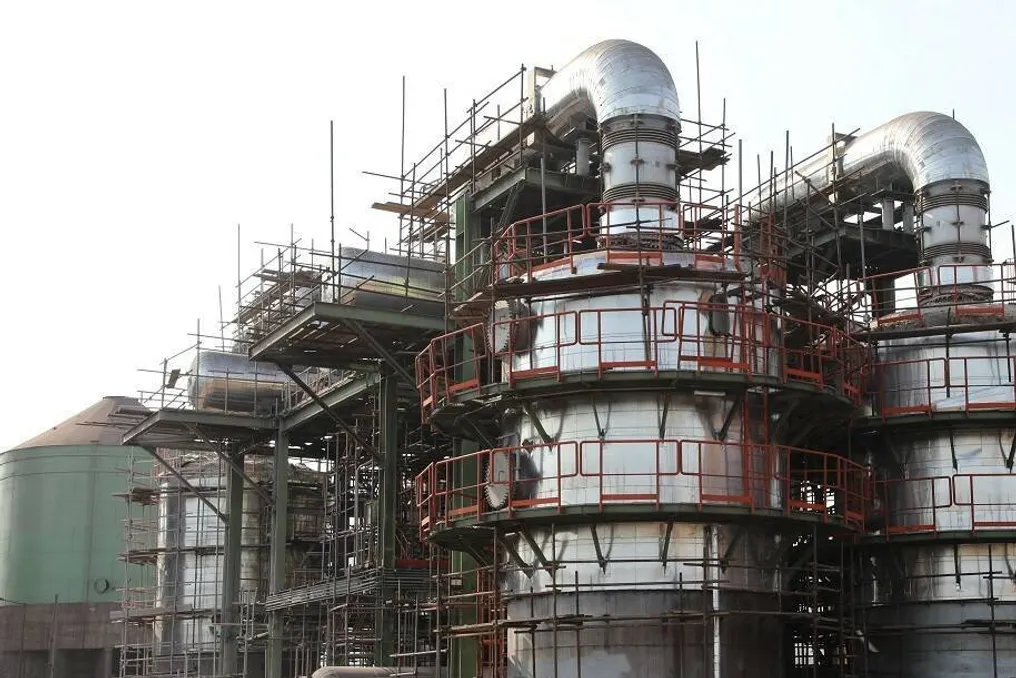
The development of this technology went through several stages, starting with experiments on a laboratory scale and ending with the design, construction, and optimization of ultrasonic reactors by Iranian scientists. The project reached the stage of a semi-industrial pilot unit, which the developers consider proof that the process has moved beyond theoretical and laboratory investigations and possesses potential for industrial implementation.
They emphasize that the technology was created without copying existing foreign designs, obtaining licenses, or receiving technology transfer from an international company. Furthermore, the developers report that the process has undergone technical evaluation and official registration through recognized bodies, which, they assert, confirms the scientific and technical merits of the technology and distinguishes this achievement from announcements based solely on scientific reports.
From Technology Localization to Export
This project represents an example of a broader shift in Iran's approach to industrial development: moving from adapting and localizing foreign technologies to creating its own patented processes with the potential for international commercialization. If the AQP process is successfully commercialized and adopted by industrial consumers, it will provide Iran with an opportunity to enter the global market not only as an oil and petroleum product producer but also as a supplier of specialized refining technologies.
Developers believe that this experience can serve as a model for other sectors of Iran's oil and gas industry, demonstrating how domestic scientific and engineering capabilities can be transformed into commercially viable industrial solutions. Thus, this achievement is seen not merely as the creation of a new desulfurization process, but as an effort to change Iran's position in the global value chain of technology—from a country that predominantly buys and adapts advanced technologies to one striving to develop, commercialize, and export its own technological expertise.