AI discovery of Mayan site sparks debate on the need for scientific data review
Read more
Olhar Digital
olhardigital.com.br

AI discovery of Mayan site sparks debate on the need for scientific data review

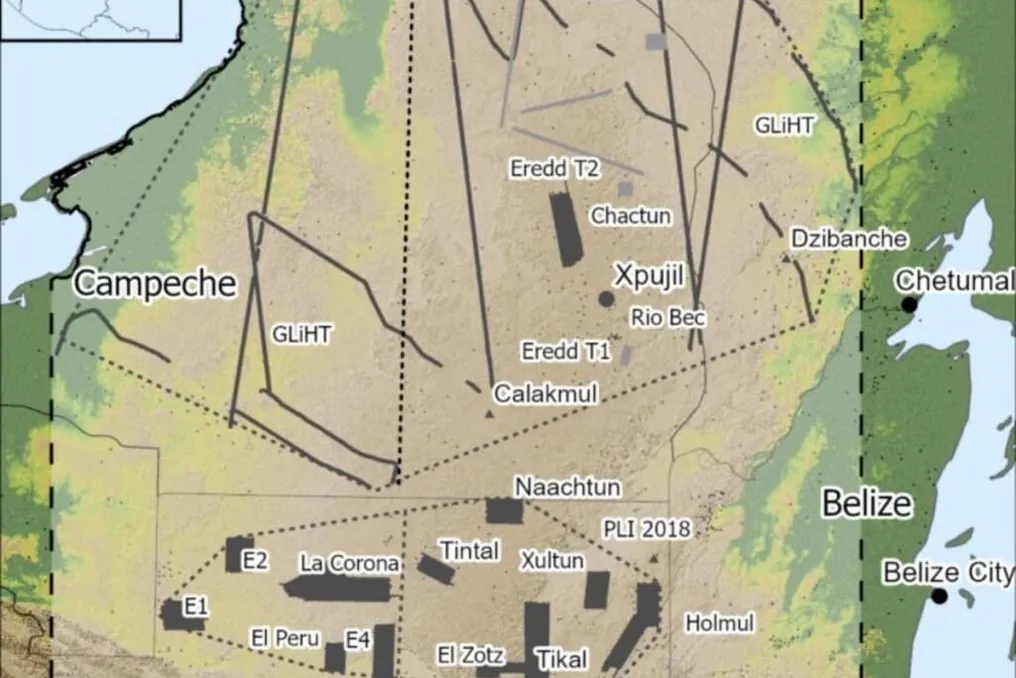
A Google researcher, Pietro Miotti, announced on November 10th that he had located an unmapped Mayan archaeological site in Mexico using 48 artificial intelligence agents. The idea arose during a trip to Peru, when Miotti began to speculate on what past explorers would do with modern technologies. Without an archaeology background, he created a personal project to analyze public LiDAR data, a three-dimensional laser mapping technique provided by NASA.

Due to the limitation of public data coverage in Peru, the researcher focused the algorithms on the Mayan region. The AI agents identified several interesting points, including what appeared to be a large village without official registration. Miotti used the tools himself to translate the communication into Spanish and consulted the National Institute of Anthropology and History of Mexico (INAH), which confirmed having no registered records at those coordinates.

Excited by the response in less than 72 hours, Miotti publicized the achievement on his blog, declaring that humanity was on the verge of a scientific revolution and advocating for global LiDAR mapping to reveal hidden history. He also posted about it on his X account. Despite mentioning that the finding would require fieldwork for confirmation, one specialist would quickly notice a problem: the site was already known to the scientific community and had been published in an academic journal over a year ago.

The archaeological community quickly pointed out the flaw on social media. Sarah Parcak, an archaeology professor at the University of Alabama in Birmingham, emphasized the importance of peer review and comparing new data with existing scientific literature. She criticized the project for spreading misinformation and diminishing researchers who have been using advanced digital tools for decades, arguing that the absence of a record in the official Mexican database does not imply ignorance.

Elizabeth Graham, a Mesoamerican archaeology professor at University College London, also contested the idea of 'discovery,' reminding that local populations often already know these vestiges. For her, the main obstacle in archaeology today is not finding new sites, as there are many foot-identified sites awaiting study, but rather the lack of funding for excavation and preservation of what has already been discovered.

In response to the criticism, Miotti admitted his mistake to The Verge, explaining that because he is not an archaeologist, he did not know that the lack of government registration did not mean the site was unprecedented. He justified that his agents failed to cross-reference the information because, for security reasons, scientific articles do not disclose exact coordinates, requiring visual comparison of maps and figures, something models still struggle to do. After being warned, the researcher updated his publications to give credit to the original work led by Francisco Estrada-Belli of Tulane University, while maintaining the belief that the workflow can help specialists filter large volumes of data.

This incident reveals a growing conflict in modern science: the enthusiasm of technology users and professionals who, armed with powerful tools, enter highly specialized areas without mastering the academic context. As seen in other fields, such as mathematics, AI systems can produce remarkable results but often fail to dialogue with the prior knowledge that underpinned their 'discoveries,' claiming advancements that are already established and shifting the exhaustive work of verifying true scientific value onto specialists.

Ivan Šprajc, an archaeology professor at the Slovenian Academy of Sciences and Arts and co-author of the original study documenting the Mayan site, stated he was not impressed by the feat. He recalled that archaeologists have been using LiDAR and remote sensing for years, and that merely pointing out an anomaly on the ground does not generate knowledge without proper historical interpretation. Šprajc also warned that the mass submission of supposed 'discoveries' made by amateurs threatens to overwhelm researchers, reporting having already received similar emails from other AI users.

Beyond the academic noise, the premature disclosure of archaeological findings carries serious practical risks. By publicly exposing the location of ancient ruins and settlements without adequate institutional support or preservation plans, enthusiasts end up providing a direct map for heritage plunderers, turning a tool supporting science into a real threat to the conservation of vulnerable sites.

Similar stories

After many years, the Ava tribe from the Amazon has appeared on the surface; they live in isolation
Read more
www.aajtak.in

After many years, the Ava tribe from the Amazon has appeared on the surface; they live in isolation

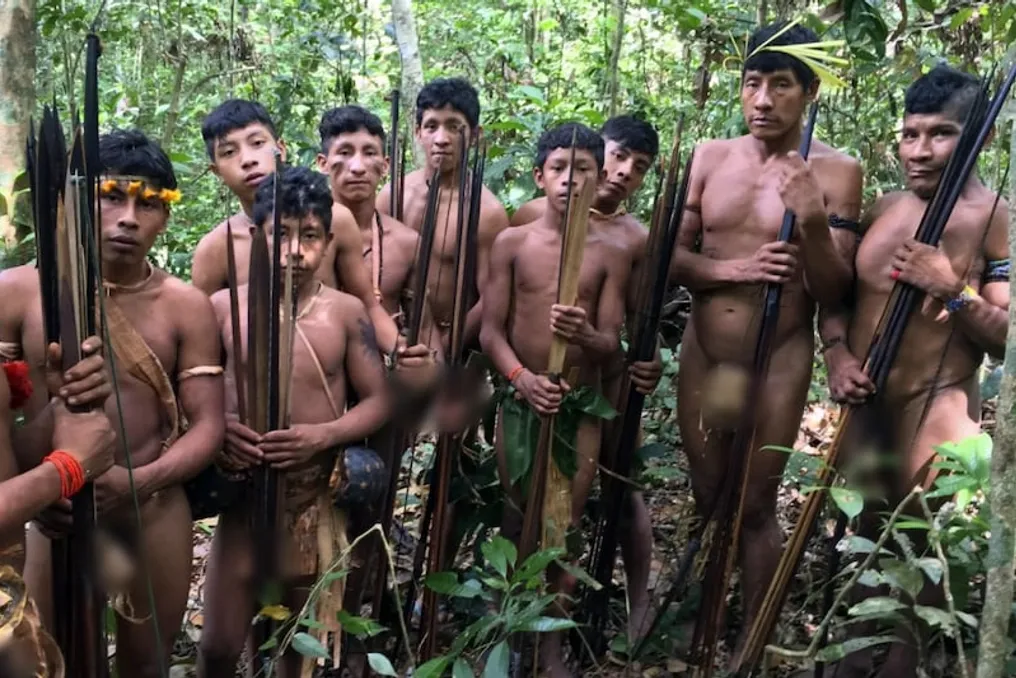
Approximately 20 members of the Ava community, which lives almost isolated from the outside world in the tropical forests of Brazil, suddenly emerged from the jungle on November 16. They headed to a government post and requested food. Photographs and videos of this Ava group, appearing after decades, caused a wide resonance.

These shots, taken in the Amazonian forests of Brazil, attracted worldwide attention. The photographs and videos show men, women, and children from the Ava community who have come out of the forest. Some men were seen with bows and long arrows. It is reported that the group of about 20 people reached the observation post and the village of Tavari within the Arariboia indigenous territory in the state of Maranhão, Brazil.

Some groups of the Ava community, who have appeared in public for the first time after decades, remain cut off from external society, meaning they have no regular contact with the outside world. They sustain their lives through hunting, fishing, and products gathered in the forest.

According to Survival International, this time the Ava group approached the government team and requested food. After receiving food, they returned to the forest. The organization called this contact an extremely rare event for the Ava people in recent decades.

One of the most interesting social features of Ava society is their marriage system. According to anthropological records, men and women in Ava/Guaja society can marry more than once in their lives. There is no mandatory or preferred system where one marriage must last a lifetime.

Furthermore, some anthropological studies have recorded cases where one woman had multiple husbands. This is called polyandry. This system does not apply to every member of the Ava community or every family. This is why the marriage customs of the Ava are considered very different and curious compared to other societies.

Another unique cultural belief documented regarding Ava society is related to the concept of multiple male contribution to child development. According to some studies, their traditional beliefs include the idea of multiple fatherhood. It is important to note that this does not mean the child has multiple biological fathers scientifically, but rather reflects their traditional cultural perception and social structure.

The Ava community also demonstrates an unusual connection with the forest animals. If a female monkey dies during a hunt, and her infant survives, the Ava family sometimes takes this infant in. Such a monkey infant is raised as a family member. Anthropological descriptions mention that Ava women care for monkey infants and even feed them breast milk. Thus, an orphaned animal infant found in the forest can become part of the family.

Ava people are also skilled at navigating the forest environment and recognizing animals by sound. Their traditional knowledge of hunting includes imitating animal calls. Hunters use various sounds to determine which animals are nearby. This knowledge is passed down from generation to generation. For them, the forest is not just a habitat; it is their food, path, home, and culture.

The main question of this situation is why they left the forest. Usually, the Ava avoid contact with outsiders. However, in recent years, there has been growing concern about the invasion of illegal loggers, hunters, and cattle ranchers into their forests. Human rights organizations believe that external pressure has affected their traditional territory, and perhaps this is why this group was forced to come out in search of food.

Nevertheless, authorities currently lack sufficient information to definitively establish the true reason for their departure. Some local residents have also expressed concern about the health condition of children and the elderly in the group.

Contact with the outside world is dangerous for isolated communities like the Ava. The risk of disease is very serious. The population of such communities previously had low contact with common infectious diseases from the outside world, so infection could lead to severe consequences.

Brazil to develop platform for integrating data centers and distributing artificial intelligence
Read more
olhardigital.com.br

Brazil to develop platform for integrating data centers and distributing artificial intelligence

Brazil plans to create a platform that will unite large and small data centers. The project, named Prisma, will use artificial intelligence (AI) to manage data processing tasks, directing them to the data center with the best energy efficiency at the time.

The Center for Telecommunications Research and Development (CPQD), located in Campinas (São Paulo state), received funding of 46.3 million Brazilian reais from the federal government to create this platform. The development will take three years and will rely on funds from the telecommunications technology fund allocated by the Financing Organization for Research and Projects (Finep).

During a conversation with Gustavo Correia Lima, CPQD's Director of Technology and Innovation, the essence of the Prisma project was discussed. Its main goal is to create a system capable of managing the use of computing power in both large and regional, as well as edge computing data centers.

Edge computing involves placing a server or gateway very close to the user or industrial use case. Currently, all these elements—from large corporate centers to small nodes in the northern or northeastern regions, as well as devices near cell towers or in mining operations—form a hybrid cloud combining hyperscaler infrastructure and proprietary local infrastructure (on-premises).

The Prisma project introduces the possibility of intelligently managing this extended infrastructure, ensuring sustainability. The system will be able to predict periods of high energy availability, such as solar, and optimally distribute and move computing power while adhering to expected service levels.

Prisma focuses on decentralizing data processing. When working with AI, two processes are distinguished: inference (the actual AI service operation, such as responding to a natural language query) and training (intensive use of data center capacity to improve AI models). Training requires large computational resources, which work best in large complexes. Inference, conversely, can be performed on a smaller specialized agent, allowing tasks to be correctly distributed to the most suitable computing elements.

Automatic determination of task needs and its distribution to the optimal computing element allows for optimization at various levels. For example, if an industrial agent in the Southern region operates on a server in the Northeastern region, a latency problem arises due to data transmission and processing time. This is critical for industrial processes, such as worker protection systems.

Furthermore, Prisma allows for optimizing energy consumption. If one location has a high cost of energy from a thermal power plant, while another, for instance in Paraná, has access to solar energy, the system can redirect algorithm execution there while maintaining the required service level, thereby increasing environmental efficiency.

It is important to note that Prisma deals specifically with integration, not the construction of mini data centers. It creates a logical multi-domain orchestration layer that considers energy availability, service level criteria, and uses AI for correct placement of processing. The project also studies energy management through large battery banks and includes cybersecurity issues to ensure the reliability of the entire network.

For the end user, the project guarantees that residents of regions outside major urban centers will have the same access to computing tools and AI capabilities as residents of megacities. This is analogous to how internet providers brought broadband access to remote areas, equalizing service quality.

The project is scheduled for 36 months. The first year is dedicated to research and studying best practices. The second year is for building and providing system components, including AI agents. The third year is for active work on conceptual proofs in collaboration with physical infrastructure operators. The start of the first year is planned for November 2026.

It is emphasized that the project is supported by the state, which is linked to issues of national sovereignty and the country's ability to handle complex technologies, as well as ensuring the security of data for Brazilian citizens and companies.

Popular