Scientific symposium on preclinical studies of multiple sclerosis to be held in December
Read more
Tehran Times
www.tehrantimes.com

Scientific symposium on preclinical studies of multiple sclerosis to be held in December

A scientific symposium dedicated to the preclinical studies of multiple sclerosis (MS) is scheduled to take place in Tehran. The event is jointly organized by the Royan Institute and the Multiple Sclerosis Research Center of Sina Hospital, which is affiliated with the Tehran University of Medical Sciences. The symposium will be held on December 31st in Tehran under the title 'Preclinical Studies of Multiple Sclerosis.'

It will gather physicians and researchers to discuss new experimental models, methodological advancements, and translational research strategies aimed at improving the understanding and treatment of this disease.

The event will be held at the Multiple Sclerosis Research Center of Sina Hospital to commemorate the anniversary of the death of Dr. Said Kazemi Ashtiani, the founder of the Royan Institute. Furthermore, it aims to honor his scientific legacy by strengthening cooperation and academic exchange between scientists and clinicians.

Scientific Supervisors and Organizers

The scientific supervisors of the symposium will be Dr. Mohammad Javan from the Royan Institute and Tarbiat Modares University, and Dr. Sajad Sahabnegah from the Multiple Sclerosis Research Center of Sina Hospital. Dr. Alireza Alizadeh Moghadam Masoleh will serve as the course director and executive secretary from the Royan Institute.

Preclinical studies are a critically important stage in the development of therapeutic interventions and drugs. They are conducted before clinical trials in humans and help assess the safety and efficacy of potential treatments, as well as the reproducibility of the results obtained. Rigorous preclinical studies contribute to improving the quality of subsequent clinical investigations, reducing risks, and optimizing the use of financial and human resources.

Given the complex nature of MS and the need for a deeper understanding of its onset and progression mechanisms, reliable preclinical approaches are of particular importance. These methods increasingly incorporate interdisciplinary approaches and the integration of computational, cellular, and animal models to study the pathogenesis of the disease and evaluate possible therapeutic methods.

Scientific Scope and Main Topics

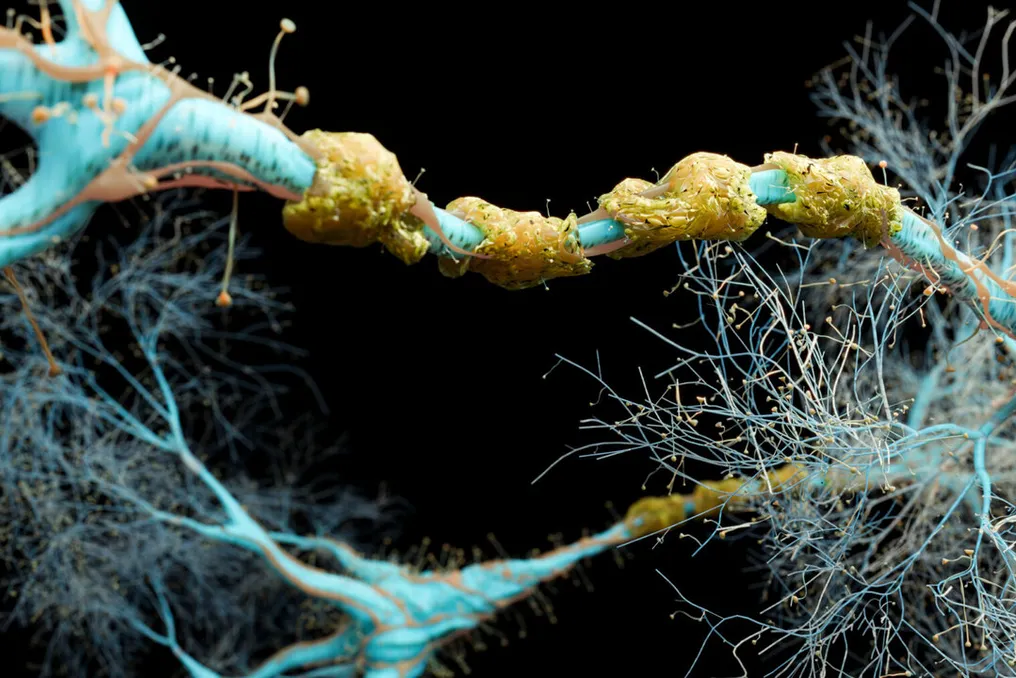
The symposium will cover various scientific and methodological issues, including the relationship between preclinical and clinical MS studies, future research directions, the etiology of the disease, myelin repair and remyelination, basic principles of preclinical drug design, and medical chemistry.

Special attention will be paid to computational models and in vitro experimental methods that can reduce dependence on laboratory animals. The spectrum of strengths and weaknesses of various animal models, such as mice, rats, and zebrafish, as well as statistical aspects in planning and analyzing preclinical work, will also be studied.

New Research Opportunity

One of the key highlights will be the presentation of a multiple sclerosis model based on zebrafish, developed in the Royan Institute's zebrafish Laboratory. This model may open up additional opportunities to study disease-related mechanisms and evaluate potential therapeutic approaches.

The presentation will also showcase the results of joint research between the Royan Institute and the Multiple Sclerosis Research Center of Sina Hospital, focusing on developing approaches to studying MS using zebrafish. This initiative was conducted under the scientific guidance of Dr. Mohammad Ali Sahrayan and Dr. Hossein Baharvandan.

In addition to the symposium, a three-day practical workshop titled 'Introduction to Zebrafish and Its Application in Human Disease Modeling' will be held from January 6 to 8, 2027, at the Royan Institute's Central Zebrafish Laboratory in Tehran, with a special focus on multiple sclerosis. The workshop will provide participants with hands-on experience in zebrafish research methods and their application in human disease modeling.
Similar stories

Tehran to Host International Transport and Logistics Exhibition Focusing on Chabahar Port and Eastern Corridor
Read more
www.tehrantimes.com

Tehran to Host International Transport and Logistics Exhibition Focusing on Chabahar Port and Eastern Corridor

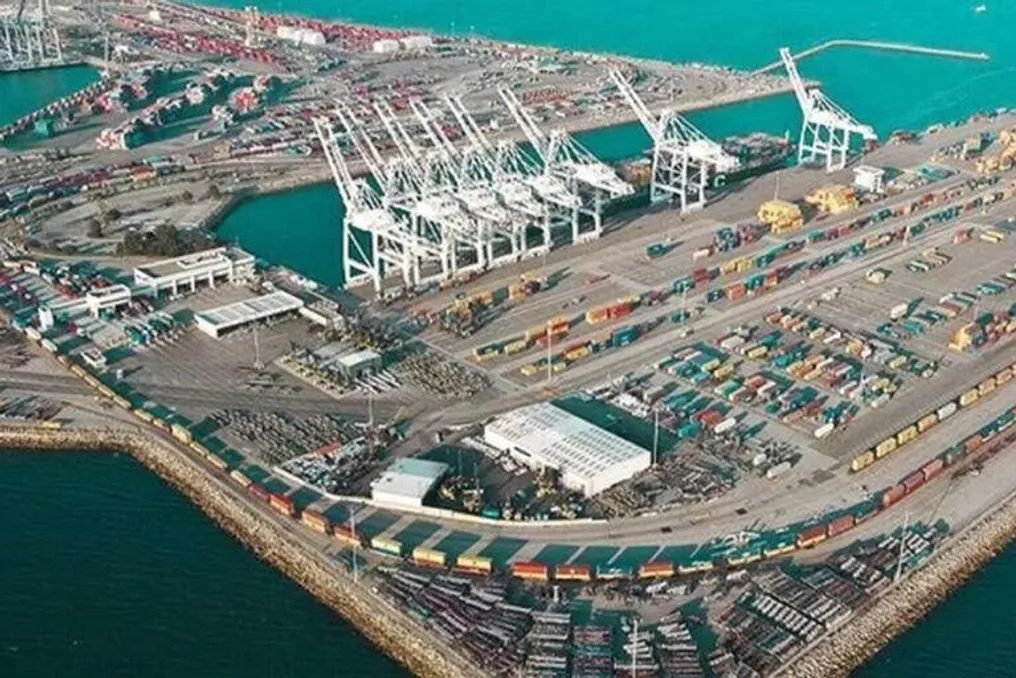
The seventh International Exhibition of Transport, Logistics, and Related Industries will take place in Tehran in December 2026. The event will run from December 17 to 20 at the permanent site of Tehran International Exhibitions, with support from the Ministry of Transport and Urban Development.

The exhibition will provide an opportunity to demonstrate the potential of the country's transport industry, explore investment opportunities, and strengthen cooperation between various industry sectors.

The seventh International Exhibition of Transport, Logistics, and Related Industries will serve as a platform for analyzing the potential of the Chabahar Port and the country's eastern corridor, seeking investment prospects, and strengthening interaction among participants from the port, railway, road, and logistics sectors.

According to a report published by the IRNA agency on Saturday by the Ministry of Transport and Urban Development, the development of the Chabahar Port and the completion of transport networks in the eastern part of Iran present a strategic opportunity. This opportunity allows Iran to strengthen its position in regional transit, expand trade exchange with Central Asian states, and connect open waters with regional markets.

The development of port, railway, and road infrastructure, as well as the improvement of logistics services, can transform this capability into one of the key directions of the country's international trade and transport.

Study reveals challenges and opportunities in Iranian scientific diplomacy
Read more
www.tehrantimes.com

Study reveals challenges and opportunities in Iranian scientific diplomacy

A study conducted by the Scientific Information Database (SID) of the Academic Center for Education, Culture, and Research, known as Jihad Daneshgahi, examined the state of scientific diplomacy in Iran and globally. The analysis established that restrictions on international cooperation are one of the main problems hindering the improvement of the quality and authority of the country's scientific results.

The study identified three key obstacles to the development of scientific diplomacy: concerns over research security, scientific sanctions, and geopolitical tension. Although quantitative indicators of Iranian scientific publications continue to grow, accompanied by an increase in joint research and group authorship, international scientific cooperation remains limited compared to the country's domestic achievements.

Among Iran's leading scientific centers are Tehran University and Tehran University of Medical Sciences. Tarbiat Modares University and the Research Department of Islamic Azad University also play a significant role in national networks of scientific interaction.

In 2020, Iran ranked 15th in the global ranking by the total number of scientific publications, accounting for 2.02% of the world's volume. In fundamental sciences, the country was ranked 15th, in social sciences—29th, and in humanities and arts—37th.

The study showed that international scientific cooperation correlates with higher citation rates and improved article quality. The main international partners of Iran in research were identified as the United States of America, the United Kingdom, Canada, Germany, and Australia.

Furthermore, significant potential is highlighted for expanding scientific interaction with neighboring and regional states, especially in fields such as medicine, nanotechnology, and stem cell research. Nevertheless, serious barriers to expanding research partnerships include economic difficulties and challenges in accessing global scientific networks.

Limitations in scientific cooperation are also caused by concerns about scientific espionage, the transfer of confidential technologies, and foreign interference. Sanctions have restricted scientific interaction with certain countries, including Iran and Russia. Additionally, the crisis in Ukraine, which began in 2022, has disrupted some forms of international cooperation in polar research.

The study warns that scientific isolation can lead to restricted access to major international infrastructure and research projects, an increased gap between scientific publications and the transformation of knowledge into economic and technological value, accelerated brain drain, and weakened ability of countries to solve transnational problems such as climate change, biosecurity, water resources, and public health, which require cross-border cooperation.

Four main strategies are proposed to strengthen Iranian scientific diplomacy: enhancing diplomacy and expanding cooperation with neighboring and Islamic countries; reforming academic evaluation and incentive systems to encourage both domestic and international co-authorship; shifting from an exclusive focus on publication quantity to a greater emphasis on citation, research quality, and solving social problems; and increasing the presence of researchers, especially in the humanities, in academic social networks and online platforms to increase the visibility and international reach of their work.

Tehran to Host 16 Countries at International Metallurgy Exhibition
Read more
www.tehrantimes.com

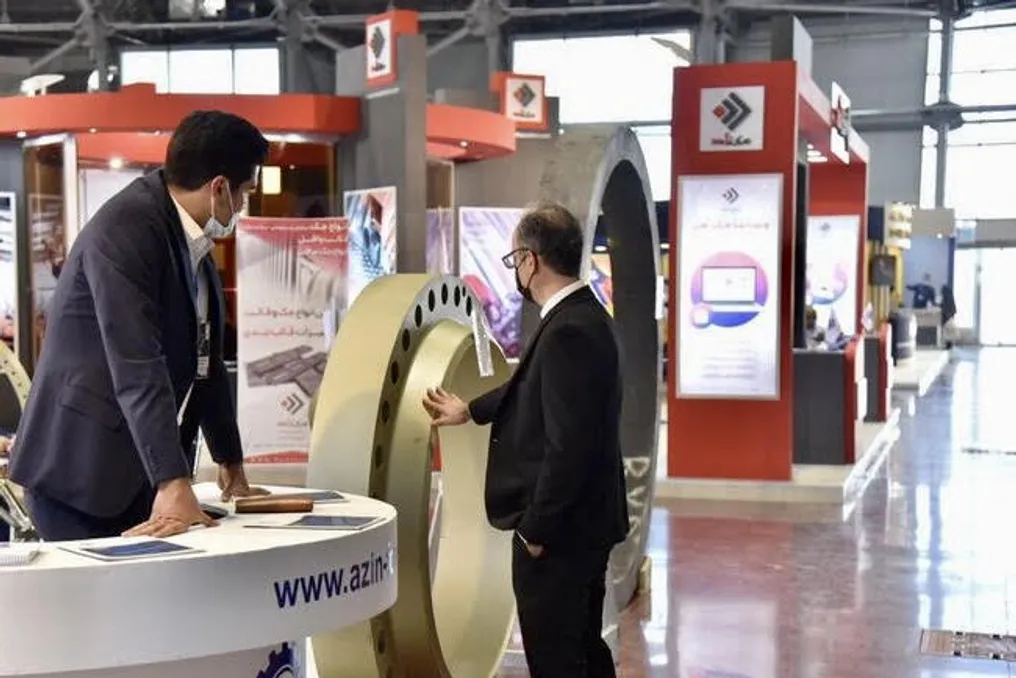
Tehran to Host 16 Countries at International Metallurgy Exhibition

The 23rd International Exhibition of Steel Industry, Metallurgy, Casting, Forging, Mining Industry, Mechanical Engineering, and related industries in Iran (IRAN METAFO 2026) will take place in Tehran. The event will be held at the Tehran International Permanent Exhibition Complex from November 17 to 20.

According to a report by IRNA from the Tehran International Exhibition Center, about 450 companies will participate in the exhibition—both Iranian and foreign from 16 countries worldwide, including a large number of knowledge-based companies.

IRAN METAFO 23 is one of the largest specialized venues in the field of steel and metallurgy in West Asia. It serves as a platform for demonstrating production, industrial, and technological capabilities, exchanging experience and knowledge, and developing trade cooperation among industry participants.

In this edition, about 450 companies will be presented, of which approximately 420 are local and 25 are foreign representatives and brands. Foreign companies will present products from Sweden, Italy, France, Finland, Spain, China, Turkey, Switzerland, Germany, Denmark, Brazil, the United Kingdom, Russia, the Czech Republic, India, and Turkmenistan, showcasing their latest achievements, technologies, and services.

Abdulkareem Jalali, head of the Metallurgical Exhibition Organizing Committee, noted that the exhibition covers a wide range of activities related to the metal production and processing chain. These include iron and steel production, mining, non-ferrous metals such as copper, aluminum, and zinc, as well as casting, forming, machining, forging, heat treatment, raw materials, refractory materials, and equipment.

He added that the goal of holding the 23rd International Metallurgy Exhibition is to maximize the potential of knowledge-based companies and create a suitable platform for presenting new technologies, products, and achievements of this industry.

The CEO of Namanegar explained the composition of participants, emphasizing that groups involved in iron and steel production are included in the main sections of the exhibition and will be widely represented, as in previous years. He also mentioned that important participants include producers of non-ferrous metals, especially aluminum, raw material suppliers, refractory material providers, and the casting industry.

The head of the Organizing Committee of the 23rd IRAN METAFO reported that despite difficult conditions in the country, interest in this international event this year was significant. The exhibition pavilion space was filled months before the start, and due to limited space, some applicants could not secure booths.

Jalali emphasized that parallel to the exhibition, numerous conferences, specialized panel discussions, and training seminars will take place, aimed at knowledge exchange, experience transfer, and discussing current problems and challenges in the metallurgical industry.

Popular