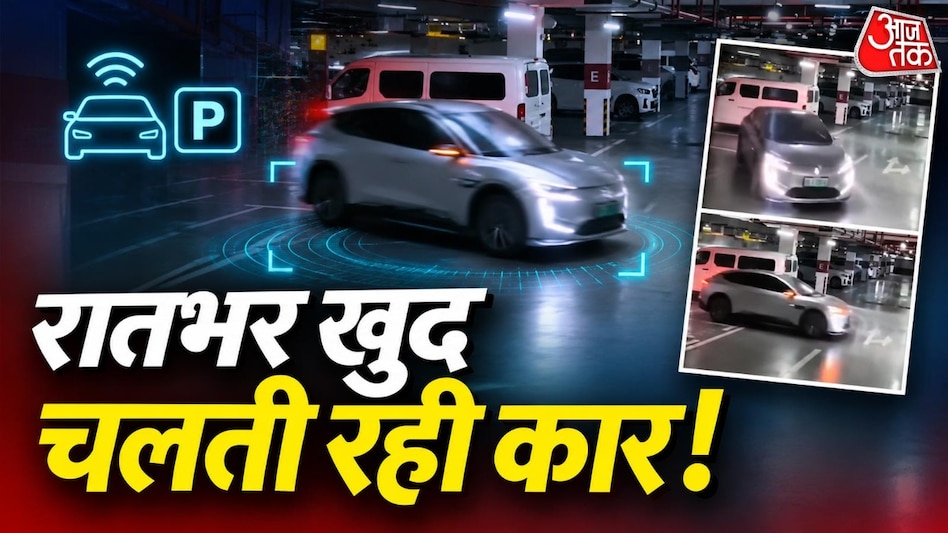
Electric car moved autonomously in parking lot at night; viral video with repetitions
Read more
Aaj Tak
www.aajtak.in

Electric car moved autonomously in parking lot at night; viral video with repetitions

A striking video has emerged from China showing an electric vehicle moving around a parking area all night without a driver. The car periodically moved forward and then reversed, attempting to take a parking spot. Notably, the car attempted to park 868 times during the night. The owner was shocked by what they saw in the morning, and the clip quickly spread across social media. This incident occurred in Anhui province, China.

According to available information, the electric car, parked in the underground garage of a residential building, suddenly began moving on its own around three in the morning. Surveillance footage showed that no one was inside the car, yet it continued to move back and forth. The car repeatedly tried to enter a parking space, after which it would reverse to correct its position and start moving forward again. This situation caused concern for the parking attendant, who approached upon hearing the noise of movement and discovered that although the car was still moving, there was no one inside.

When the owner learned about the situation the next morning, they checked the car's system logs. These revealed that the automatic parking function had been activated 868 times overnight. After prolonged maneuvering, the car eventually stopped next to another parked vehicle. The video of this event surprised people regarding how long the car could operate without a driver.

The exact cause of this incident has not yet been determined, but several hypotheses are being put forward. The first version suggests a possible software malfunction in the car, causing the automatic parking system to repeat the same operation multiple times. Another possibility is that the owner used the remote parking function via a mobile application. With this feature, the owner could control the car's movement in the parking lot without being inside it.

Furthermore, Huawei was conducting a driving technology competition in China. Points were awarded within this competition for using driving assistance and automatic parking functions. Therefore, it is speculated that some owners might have frequently used this function to improve their rating. Nevertheless, the reason for this specific nighttime incident has not yet been confirmed.

This case is not isolated. Other videos have appeared on social media showing cars like the Avatr 06 and Avatr 12 moving back and forth in a parking lot simultaneously. These cars are reported to be equipped with Huawei's Qiankun intelligent driving technology. Viewers of these videos leave humorous comments; one user suggested the car developed OCD, while others called it a ghost car. One user jokingly noted that perhaps the car's software is repeating the same command. However, it is important to understand that the automatic parking function does not mean the car can drive completely without a driver; it is a driving assistance technology that requires attention and control from the driver when necessary.
Similar stories

Evolution of the Chinese automotive industry: from copies to electrification leaders before the release of GTA 6
Read more
autopapo.com.br

Evolution of the Chinese automotive industry: from copies to electrification leaders before the release of GTA 6

In 2026, vehicles manufactured in China consolidated themselves as an essential part of the global automotive market. In Brazil, these cars represented 22.65% of accumulated sales in 2026, with BYD being the fourth best-selling brand. This scenario contrasts significantly with the landscape of 2013, the year GTA 5 was released.

The Chinese industry has shown a remarkable transformation over the last thirteen years. Between the release of GTA 5 and GTA 6, the Asian country surpassed the phase of producing low-quality vehicles or mere copies of established models, assuming a leading position in electrification.

Brazil began receiving Chinese automobiles in 2007 with the introduction of the Effa M100. At that time, the selling appeal lay in the affordable cost combined with a more complete set of equipment, but the inferior quality generated apprehension in many consumers.

Although China maintains the strategy of offering more economical and well-equipped vehicles compared to Western competition, its current quality standards are equivalent or even superior. Furthermore, there is strong investment in hybrid and electric technologies. To illustrate this progression, changes in five distinct brands were analyzed.

BYD

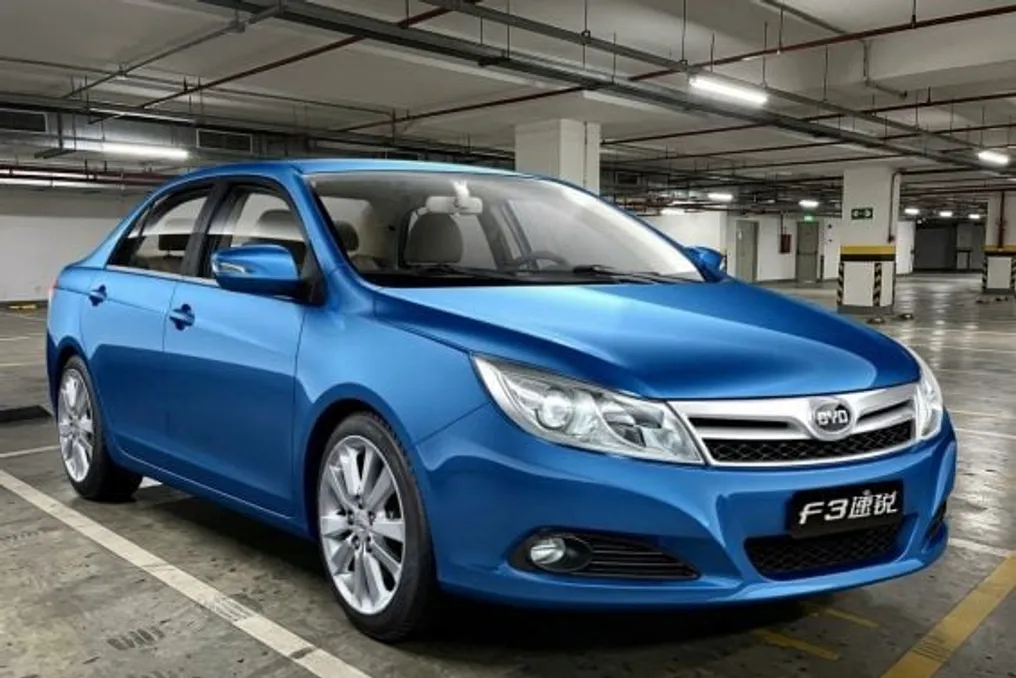
BYD started its operations as a battery manufacturer before expanding into automobile production. One of its first models was the medium sedan F3, which was a replica of the ninth-generation Toyota Corolla and was known in Brazil as "Brad Pitt".

In 2013, the second generation of the BYD F3, now with the Plus suffix, was still a copy of the Corolla, this time the tenth generation, featuring larger modifications to the front and rear. Its engine was a 1.5 naturally aspirated unit. Later, the F3 was replaced by the Qin, whose second generation shares a platform with the King sold in Brazil. The current model has no direct link to the Toyota Corolla, only sharing market segmentation, and operates exclusively with plug-in hybrid mechanics.

GWM

When GTA 5 was released, GWM still used its full name, "Great Wall Motors". Initially, the company produced a pickup truck that imitated the Toyota Hilux before diversifying its product line. The first Haval H6 was launched in 2011 and gained great acceptance, directing the brand's focus to pickups and SUVs. In 2013, the year GTA 5 was released, Haval established itself as an independent brand.

At that time, GWM was already signaling its current trajectory, and the Haval H6 was praised for its high level of comfort, good equipment, and high quality standard. It became the best-selling SUV in China for 103 consecutive months. Currently, Brazil receives the third generation of the Haval H6, which is always electrified and features flex engines. This model is already a sales success in the country and ranks among the top ten best-sellers.

Chery

Chery entered the Brazilian market during the first wave of Chinese cars, presenting the subcompact QQ. In 2013, the brand offered a more varied line in Brazil, including the Tiggo SUV, the Cielo mid-hatch, and the Face compact.

To illustrate this evolution, the focus was on the Tiggo, which had larger dimensions and was comparable in price to the Ford EcoSport. The first version of the SUV was an obvious copy of the Toyota RAV4, with a front design reminiscent of the Honda CR-V. Its direct successor, the Tiggo 5X, is manufactured in Brazil by Grupo Caoa. The contemporary SUV features high build quality, refined interior finishing, ADAS package, and competitive prices. A hybrid variant is expected to arrive in 2027.

Changan

Changan previously had a presence in Brazil under the name Chana, which eventually became a joke. Its initial operation focused on small utilities, aiming to attract customers from the old Volkswagen Kombi and Fiat Fiorino. In China, the brand also had a passenger car line. A model launched in 2013 was the CS35, a compact SUV with a length of 4.20 meters. This vehicle was designed at Changan's design center in Turin, Italy, without inspiration from other automobiles.

The CS35 was also the first car to adopt the current nomenclature used by the brand in its popular SUVs. Equipped with a 1.5 turbo engine from Mitsubishi or a 1.6 naturally aspirated engine, it served as a base. Currently, Changan is represented in Brazil by Grupo Caoa, marketing the Uni-T, CS55, and CS75 SUVs, all equipped with flex engines and a wide technological package.

Geely

When GTA 5 was released, Geely already owned Volvo but only marketed its own projects. Its entry-level model was the LC, an urban hatchback that competed with the Chery QQ. Its design was inspired by the Panda bear, featuring headlights resembling paw prints. The LC was briefly sold in Brazil during Geely's operation, represented by Grupo Gandini.

Currently, in the era of GTA 6, the successor to the LC is the Geely EX2. This compact electric hatchback was launched in China in 2024, generating a long waiting list, and has become the best-selling car in the country. In Brazil, its launch occurred in 2025, also with long queues. It offers low prices, good autonomy, and interior space superior to many SUVs. By the end of 2026, the EX2 will begin production in Brazil.

Over 300 thousand electric vehicles sold in India: Demand growth and company leadership
Read more
www.aajtak.in

Over 300 thousand electric vehicles sold in India: Demand growth and company leadership

The demand for electric vehicles in the Indian market is showing steady growth, reflected on the roads where significantly more electric cars can now be seen, especially in major cities. Sales have reached record levels.

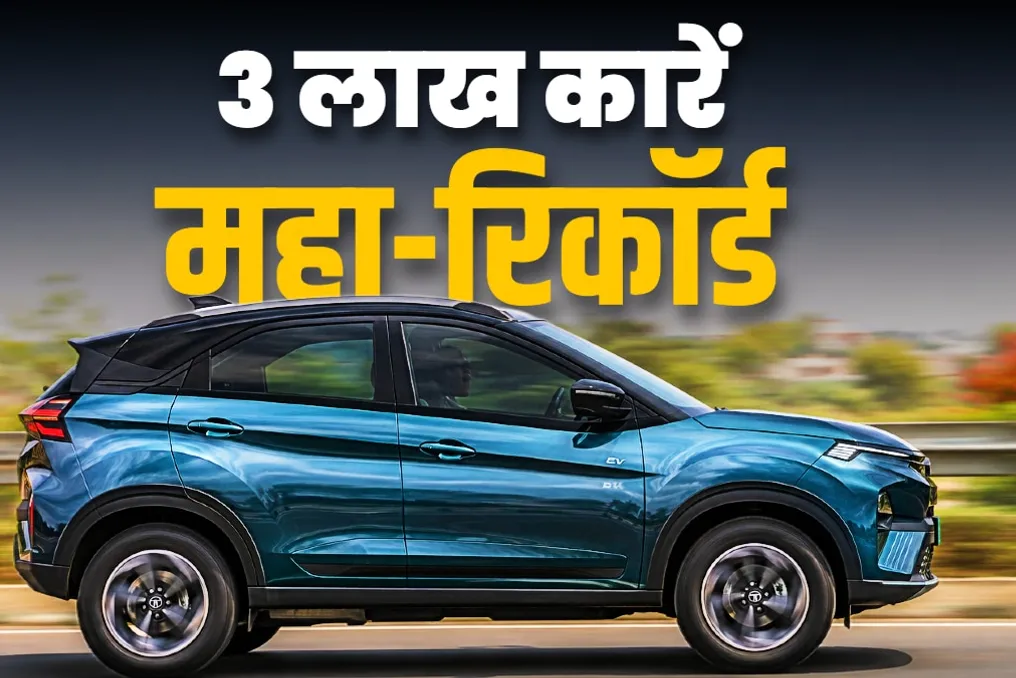
In 2026, sales of electric passenger vehicles exceeded the 300,000 unit mark for the first time. Notably, this figure was achieved just one and a half months before the end of the year, surpassing the results of the entire previous year. Tata Motors maintained its lead in this race, while Mahindra secured second place, overtaking MG Motor.

According to VAHAN data, from January 1 to November 9, 2026, a total of 304,701 electric vehicles, including SUVs and MPVs, were sold in the country. This volume exceeds the figures for the same period last year by 66%. In 2025, 195,571 electric passenger cars were sold for the full calendar year, meaning that as of now in 2026, 109,130 more units have been sold, representing an increase of about 56%.

The growth in demand for electric vehicles this year accelerated starting in June, when monthly sales first exceeded 30,000 units, and this trend continued for the following five months. Sales set a new record in September.

The growing demand for electric passenger vehicles is influencing the entire electric vehicle market in India. To date in 2026, 29.7 million electric vehicles have been sold in the country, of which 304,701 are electric cars, SUVs, and MPVs. Consequently, the share of passenger vehicles in the total electric vehicle sales volume has increased to 10%, up from 8% last year.

Nevertheless, two-wheeled models lead the electric vehicle market, with 18.5 million units sold, accounting for 62% of the market. Next are three-wheeled electric vehicles, with 785,965 units sold, making up 26% of the market. Commercial electric vehicle sales amounted to 28,865 units, corresponding to approximately 1% of the market.

In the electric passenger vehicle segment, Tata Motors remains the largest company. From January 1 to November 9, 2026, the company sold 120,895 electric cars, which is 58% more than the 76,644 units sold in 2025. Tata Motors' share in the total volume of electric passenger vehicles sold this year is about 40%.

Tata Motors has the largest portfolio of electric vehicles. Among the company's six models, the Nexon EV is the best seller. Additionally, there is increased interest in the updated Tiago EV and Punch EV models.

The most significant change this year occurred in the battle for second place. Mahindra & Mahindra managed to secure the second position, surpassing MG Motor. The company sold 69,660 electric SUVs in 2026, which allowed it to increase its market share to 23%.

MG sold 56,988 electric cars so far. Its market share is 19%, placing it in third place. Last year, the company sold 57,239 electric cars for the full calendar year, holding a market share of 29%. The most popular MG model became the Windsor EV.

Vinfast, a Vietnamese electric vehicle manufacturer that entered the Indian market about a year and a half ago, has also made progress. To date, the company has sold 15,867 electric cars, ranking fourth with a 5% market share.

Popular