Dubai Official States Trade Maintained Through Quick Response and Consideration of Business Interests Amid Regional Conflict
Read more
Khaleej Times
www.khaleejtimes.com

Dubai Official States Trade Maintained Through Quick Response and Consideration of Business Interests Amid Regional Conflict

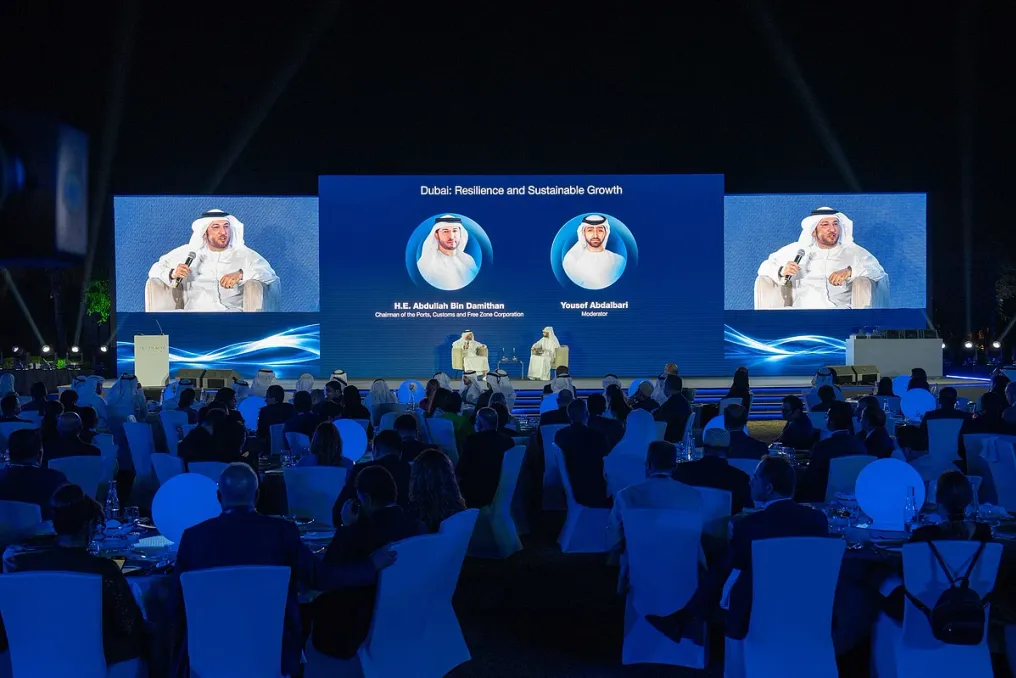
Dubai managed to sustain trade operations throughout the year, which proved to be a test for global commerce, as ports, customs, and free zones functioned as an integrated system covering sea, air, and land transport, despite the ongoing regional military conflict. This was reported by Abdullah Bin Damitan, Chairman of the Ports, Customs, and Free Zones Corporation.

Speaking at the fourth-quarter meeting of the Dubai Chamber of Commerce's Business Groups and Business Councils in 2026, Bin Damitan emphasized that authorities acted promptly and listened to the private sector, noting that many of the best solutions came directly from the companies themselves.

He stated: «This year tested world trade. Dubai maintained trade movement because the ports, customs, and free zones operated as a single system covering sea, air, and land. We acted quickly and listened to business.»

During an open dialogue organized by the Dubai Chamber of Commerce, which gathered 384 participants, Marwan Ahmed Bin Galita, CEO of the Dubai Municipality, was present. Bin Damitan highlighted the resilience of the Dubai economy, its ability to adapt to changing circumstances, and its competitiveness in meeting the growing needs of the business community.

He added that «many of the best solutions came from the companies themselves, and the Business Groups and Business Councils are our partners in their search. Dubai's commitment to the business community remains unwavering. We will continue to invest, listen, and act so that companies here have every reason to grow with confidence.»

Following the start of the regional conflict on February 28, 2026, various sectors of the regional economy were affected. Dubai switched to alternative trade routes to maintain trade turnover. Meanwhile, UAE ports in Fujairah and Khorfakkan demonstrated significant growth in trade activity after the closure of the Strait of Hormuz.

Mohammed Ali Rashed Luta, President and CEO of the Dubai Chamber of Commerce, noted that effective public-private partnership played a key role in strengthening Dubai's economic competitiveness and achieving the goals of the Dubai Economic Agenda (D33).

Luta stressed that «Business Groups and Business Councils play a vital role in forecasting the needs of economic sectors, identifying opportunities for growth and expansion, and providing practical solutions in response to changes in the global economy.» He also added that «close cooperation between the private sector and government structures is necessary to create a flexible, investment-friendly business environment and develop more effective mechanisms to meet the priorities of the business community.»

In the first nine months of 2026, the Dubai Chamber of Commerce, together with the Business Groups, reviewed 60 laws and draft laws, with 70 percent of private sector recommendations being adopted. In the same period in 2025, the chamber reviewed 42 laws and draft laws with an adoption rate of 64 percent.

During this period, the chamber also launched the Dubai Builders Business Group, the Dubai Construction Technology Business Group, and the Holiday Homes Business Group. The Kenyan Business Council and the Uzbekistan Business Council were established, and 226 meetings were held with the Business Groups and Business Councils.

The Dubai Chamber of Commerce also initiated specialized Agentic AI training programs aimed at equipping 14,000 companies from the Dubai Chamber of Commerce's Business Groups and Business Councils with the knowledge and practical skills to implement this technology in their operations. Participants also learned about the Business in Dubai platform—a digital gateway connecting companies wishing to establish or expand their presence in the emirate with accredited partners and exclusive offers. Services cover finance, technology, logistics, marketing, business growth support, as well as product testing, inspection, and certification.
Similar stories

UAE's foreign trade reaches nearly 3 trillion dirhams thanks to infrastructure and policy
Read more
www.khaleejtimes.com

UAE's foreign trade reaches nearly 3 trillion dirhams thanks to infrastructure and policy

Despite a turbulent year in the region, the United Arab Emirates (UAE) managed to overcome difficulties and recorded foreign trade at a level approaching 3 trillion dirhams. This success was made possible by developed port infrastructure and implemented economic policies.

According to Sheikh Mohammed bin Rashid Al Maktoum, Vice President and Prime Minister of the UAE, UAE's foreign trade activity reached 2.945 trillion dirhams in the first nine months of 2026, representing a 10 percent increase compared to the same period last year. Sheikh Mohammed announced these results via the X platform, noting that exports to the ten largest trading partners increased by 31 percent compared to last year, which is a historic achievement.

Analysts believe that the UAE's strong foundations in decision-making, resource allocation, and governance allowed the country to succeed in countering economic shocks. The significant growth in foreign trade demonstrates both the resilience of the UAE's economic ecosystem and sets an unprecedented global standard for overcoming economic crises.

Economist Faris Ali, formerly with the Abu Dhabi Development Fund and the Abu Dhabi Economic Development Council, emphasized that the UAE leads a robust and proactive management system that ensures the effective implementation of expansionary measures, combined with a highly dynamic and responsive market managed by state-owned enterprises (SOEs) and private regional market leaders.

Ali, who is a consultant for the World Bank Group, added that the country's ports, along with the state company Adnoc, played a vital role in activating emergency action plans. He also noted that the establishment of businesses by international family businesses and private wealth firms contributed to combating 'exogenous economic challenges.'

According to the International Monetary Fund (IMF), while global inflation rates are slowly rising to slightly above pre-2020 levels, fluctuating between 4.1–4.7 percent on average, the UAE shows figures ranging from 1.3 to 4.5 percent in 2026–2027. The economist believes this indicates 'real growth' that is 'not predominantly driven by global inflation.'

The IMF forecasts that the UAE economy will grow by 7.7 percent in 2027, but will first contract by 3.9 percent this year. Even with disruptions to global trade routes in the Strait of Hormuz and the Red Sea, the UAE quickly bypassed restrictions and rapidly developed alternative trade routes on the eastern coast.

Dr. Raymond Khouri, Senior Partner and Head of Innovation Practice at Arthur D. Little Middle East, called this economic transformation a 'genuine competitive advantage.' He explained that the 31 percent export growth indicates the UAE's diversified connections, not just dependence on a single trade route. Following the start of the war, disruptions in the Strait of Hormuz, through which 34 percent of global oil trade passed before the war, caused oil shocks in global markets. In turn, the UAE used existing seaports to circumvent the restrictions in the Gulf.

Khouri stated that the next task is to transform this momentum into higher value-added within the country by supporting industry, technology, and intelligent logistics services, as well as facilitating access for small and medium-sized enterprises to foreign markets. Continued high performance also gives the country more opportunities to strengthen the Comprehensive Economic Partnership Agreements (CEPA) recently signed by the UAE with Canada, develop its ports and free zones, and attract high-value investments that benefit from growing trade flows.

Meanwhile, the Arthur D. Little partner noted that monitoring risks of weakening global demand and rising shipping costs is a key factor in maintaining growth, while ensuring that businesses benefit from upcoming opportunities. According to him, this way, overall growth becomes the foundation for more sustainable and diversified prosperity, strengthening the country's resilience to recurring external shocks.

Popular