Unitree Robot Defeats EngineAI Robot in Boxing Match in Xianggan
Read more
Pandaily
pandaily.com

Unitree Robot Defeats EngineAI Robot in Boxing Match in Xianggan

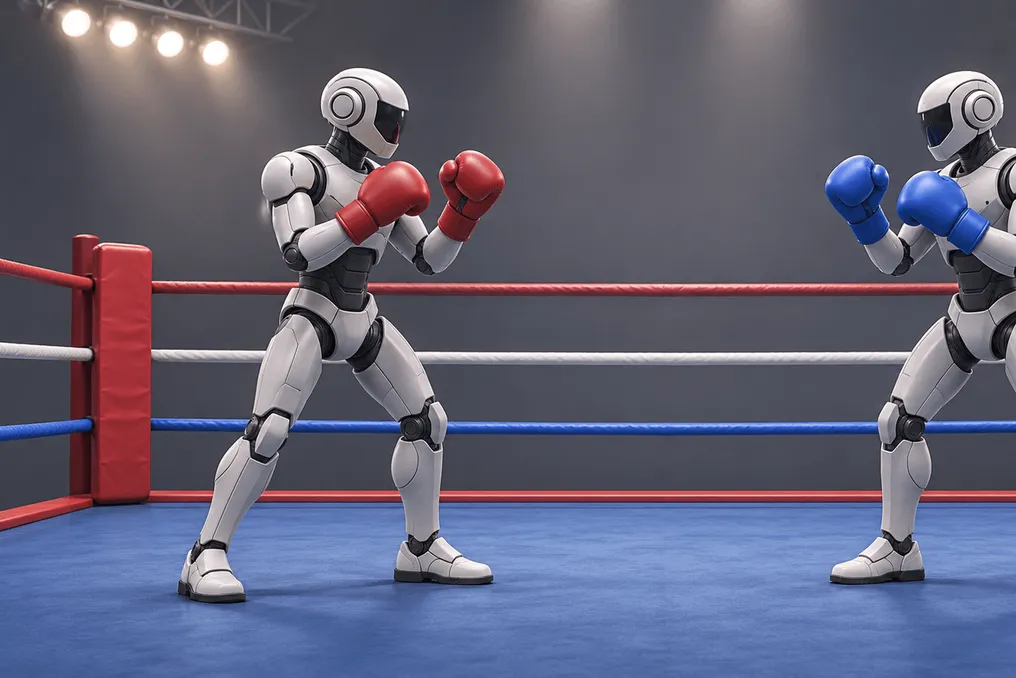
According to a report by People's Daily, republished by Science and Technology Daily, the humanoid robot Unitree defeated the EngineAI robot in a competition for the boxing belt at the Xianggan Sports Center on November 21. This bout was part of the Asian Boxing Championship in China 2026 event.

The report describes rounds of exchanges, including hooks and straight punches, after which the Unitree robot was declared the winner. The contest is named the world's first championship for humanoid robots for the gold belt. However, this description is based on coverage of the event, not an independent investigation of all previous robot competitions.

The event was organized by the sports administration of Hebei Province. People's Daily indicates that the overall boxing event is officially certified by the World Boxing Council (WBC). Nevertheless, the provided report lacks a separate robot sanctioning certificate or detailed technical regulations for the robots, so the claim of certification should be attributed to the source.

The program also included heavyweight Asian competitions involving humans and a separate segment for robot participation. It is important not to mix these categories: the robot's belt is not a championship title among human heavyweights, and the report does not confirm that robots competed against professional human boxers.

It is critically important to note that the coverage does not name the model of either robot nor disclose whether the machines were remotely controlled, functioned autonomously, or used a combination of control methods. Consequently, the visible punches and the declared sporting result are not proof of a fully autonomous combat product.

Furthermore, the report does not present standardized data on perception accuracy, reaction latency, power consumption, impact resistance, or reliability in repeated matches. The tournament result records the outcome within the conditions of this specific event and cannot substitute for a controlled comparison of general-purpose robotics capabilities.

This report concerns the match in Xianggan, not a separate EngineAI city tour in URKL. Models or control schemes mentioned in other robotics bouts cannot be automatically applied to the participants of Xianggan.

The essence of the news is that two Chinese robot developers participated in a third-party sporting program, and the participant from Unitree won the aforementioned belt. Unresolved technical details represent limitations, not gaps to be filled by inventing a model name or autonomous operating mode.
Similar stories

Chinese Students Hold Robotics Competition in Shenzhen
Read more
cgtn.com

Chinese Students Hold Robotics Competition in Shenzhen

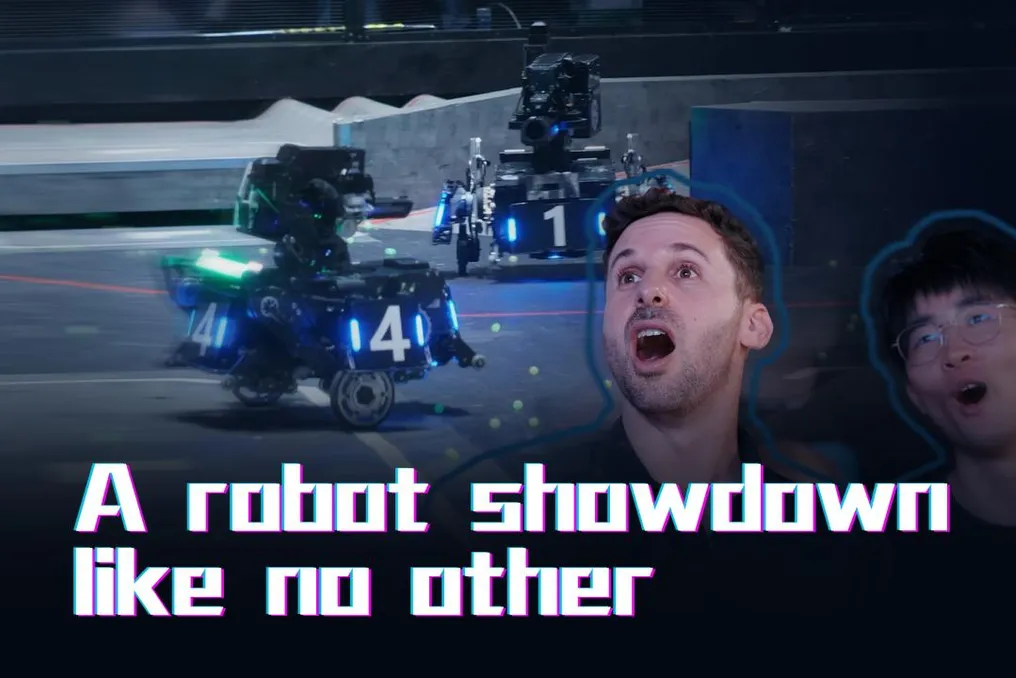
The robotics competition attracted the attention of the author of the book 'Young China', Zack Dichtwald. Instead of choosing a character in a video game, university students independently design robots and compete them against each other.

After a whole year of preparation, teams from various universities across China gathered in the city of Shenzhen to hold an exciting tournament. This event represented the city's pursuit of innovation and the new generation of engineering specialists.

Unitree opens subsidiary in Tianjin for prototyping inspection and logistics robots
Read more
pandaily.com

Unitree opens subsidiary in Tianjin for prototyping inspection and logistics robots

A subsidiary of Unitree Robotics began its operations on November 7th in the Economic and Technological Development Zone of Tianjin. This was reported by the official account Tianjin Release, with information relayed to Chinese media on November 9th. The official English name of this subsidiary has not been confirmed, so it is currently referred to as a fully owned Unitree division in Tianjin.

The facility is located in a science and technology industrial park, occupying an area of about 4,000 square meters in a four-story building. It is situated within 8 kilometers of the Binhai high-speed railway station and the Jinbin expressway entrance. According to available data, work commenced less than three months after business registration.

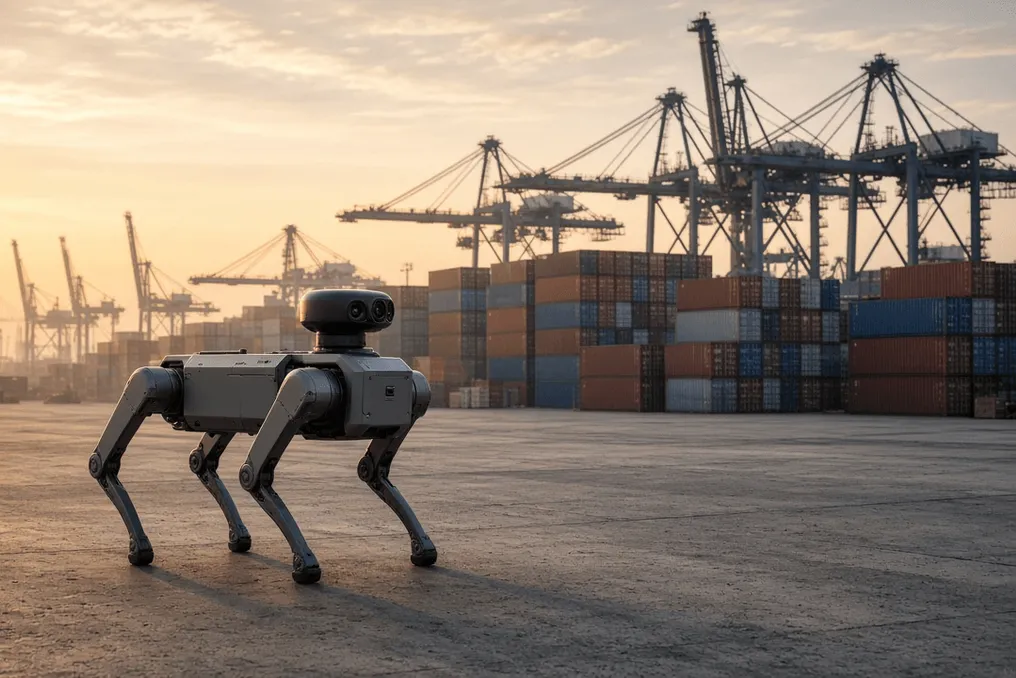
The initial tasks of this division include developing prototypes and debugging robots for inspecting energy systems, as well as robots for sorting goods in logistics. Furthermore, this division will conduct joint research and commercialization with major state-owned enterprises, such as the national pipeline operator and the Port of Tianjin, in areas including container control, intelligent patrolling, and security monitoring. The reports do not specify robot models, whether they are based on existing Unitree quadruped or humanoid models, nor do they provide a prototype creation timeline.

Chen Li, a co-founder of Unitree, told local media that Tianjin was chosen due to its port, which facilitates exports, and its wide range of industrial applications. These reports describe this move as Unitree's first presence in Tianjin and the company's eighth city in China.

Chinese media tracking company registrations note that Unitree has established approximately eight subsidiaries in two years. This process began in late 2024 with divisions in Shanghai and Beijing, followed by Shenzhen, Ningbo, and Chongqing. In the current year, divisions have been opened in Hangzhou, Shanghai, and Tianjin, with the most recent being in Chengdu. It should be noted that this is an incomplete count based on business registration data. Media outlets assign various functions to these locations: in Beijing and Shanghai—a liaison with policy and advanced research; in Ningbo—a planned manufacturing base, which is the hometown of founder Wang Xinsing; in Chongqing—a western operations center; and in Chengdu—a planned pilot production base, a hub for film, robotics, and education, as well as a scene innovation and data collection center. These roles are based on media reports and hiring announcements, not official company statements.

Canine robots compete in climbing on Mount Taishan, China, overcoming over 3 thousand steps
Read more
olhardigital.com.br

Canine robots compete in climbing on Mount Taishan, China, overcoming over 3 thousand steps

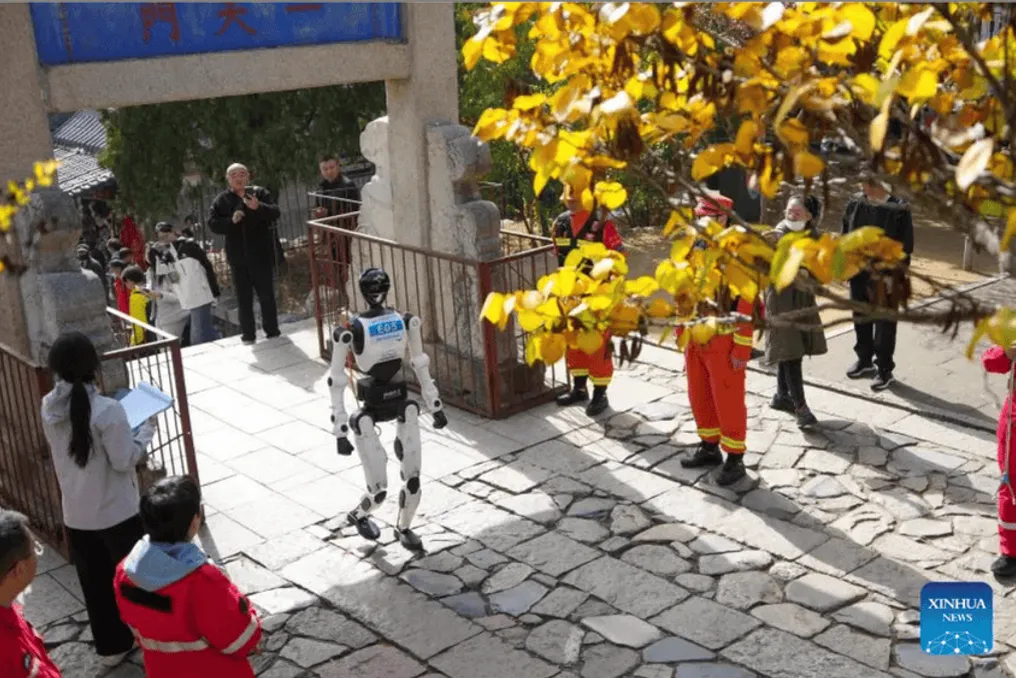
Humanoid robots and dog-robots participated in the first robotic climbing competition held on Mount Taishan in China. The established course spanned 3.9 kilometers, with an approximate elevation of 600 meters and over 3,100 stone steps. This challenge aimed to assess the machines' ability to adapt to uneven surfaces, as well as their navigation and balance systems.

The competition included other events, such as cargo transport, exoskeleton use, and terrain recognition. Approximately 90 teams attended the steps of Mount Taishan to test their respective technologies.

The robots, especially the canine models, were subjected to various operational tests, such as recalculating routes, transporting items while ascending the steps, and making sudden changes in direction. The purpose of these exercises was to measure the agility, decision-making capability, and operational fluidity of the machines.

The quadruped equipment from Beijing Lingyi Technology was declared the winner of the main event, completing the course of over 3 thousand steps in 43 minutes and 41 seconds. In previous tests, a model from competitor UNIUBI AI had finished the route in 35 minutes and 47 seconds, although it failed to replicate this time in the official competition.

The winner, from Beijing Lingyi Technology, has ties to Unitree. It is worth noting that the same route, when undertaken by humans, takes an average of an hour and a half.

Chen Lin, engineer responsible for the UNIUBI AI team's robot, told the Global Times that the biggest obstacle was adapting to the specific conditions of Mount Taishan. He detailed that the steps were built centuries ago and exhibit significant variations, including high and low, wide and narrow steps, in addition to sections paved with cobblestones.

Xiang Ligang, president of the Beijing Intelligent Era Industry Institute, considered the event a significant milestone for both technological advancement and refinement. According to Ligang, when multiple robots compete in the same scenario, their vulnerabilities are quickly revealed, allowing effective approaches to be observed, evaluated, and incorporated from competitors. Thus, the competition acts as a practical testing ground that accelerates product improvement.

The Mount Taishan International Mountaineering Championship, also known as Mount Tai, is an ancient tradition. Since 1987, thousands of mountaineers have traversed a route even longer than the one used by the robots, totaling 7 thousand steps over about 8 kilometers. The 40th edition of this championship took place in September and attracted more than 13 thousand participants from various parts of the world.

Popular