AgiBot implements G2 robots on Lens Technology smartphone testing production lines
Read more
Pandaily
pandaily.com

AgiBot implements G2 robots on Lens Technology smartphone testing production lines

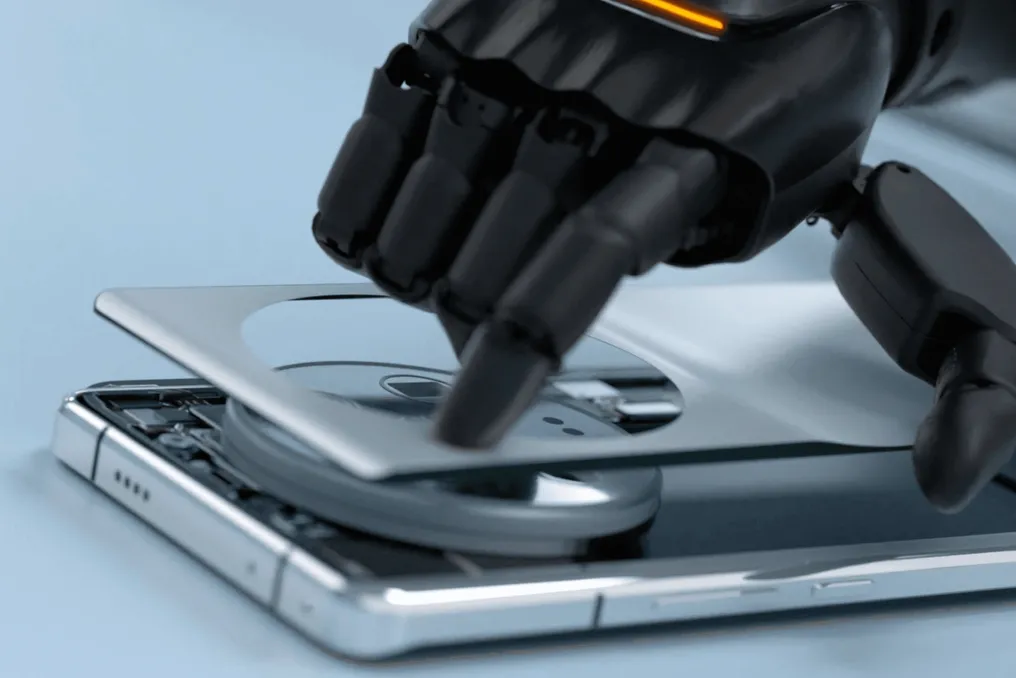
According to Chinese reports published on November 20 and 21, AgiBot and Lens Technology have signed a cooperation agreement under which dozens of G2 model robots have been deployed on smartphone testing lines.

These machines perform tasks related to loading and unloading test stations, as well as interacting with testing equipment, expanding the scope of robot application beyond retail demonstrations and warehouses.

Application Areas and Functionality

It is reported that the implementation is focused on MMI, ANT, CAM, and CAMCV testing stages. These operations are repetitive and characteristic of a production line, requiring adaptation as phone models change. It is important to note that this involves handling devices and working near testing equipment, not that the robots independently design phones or manufacture all components.

AgiBot claims that the G2 model is capable of moving phones, sorting tasks, and performing loading and unloading functions. Thanks to a universal body designed for operation on multiple production lines, as well as software and process adaptation, the need for reconfiguring specialized automation for each specific task is reduced. However, the reduction in conversion costs remains a company claim that has not been independently verified.

The partners described the transition process from adapting the production process to joint launch and delivery of the lines. Completing this chain could potentially provide a reusable method of implementation and delivery for similar smartphone testing projects. However, the reports present this potential reproducibility as an objective possibility, rather than proof of deployment across the contract manufacturing sector.

The reports only state the number of robots as 'dozens.' No independent data on throughput, intervention level, uptime, or return on investment for this installation has been provided. Claims regarding platform continuous operation should not be interpreted as confirmation that every installed unit has operated without interruption.

The G2 model is not a new product in this announcement. Chinese sources recall its earlier industrial release and separate deployment for tablet inspection at another manufacturer. Performance percentages from a previous installation cannot be directly applied to Lens lines without appropriate evaluation.

The Lens project also differs from previously reported G2 work in stores or G2 Max warehouse processing. Differences in tools, objects, station interfaces, and acceptance requirements mean that success in one application does not automatically guarantee success in another.

A specific achievement is the stated placement of numerous robots in the phone testing workflow at a particular manufacturer. Broader claims about scalable and flexible manufacturing will depend on documented results of deliveries and sustained operation, not just the announcement of cooperation.
Similar stories

Japanese Engineers Created TwinX Robotic System for Cargo Transport
Read more
nplus1.ru

Japanese Engineers Created TwinX Robotic System for Cargo Transport

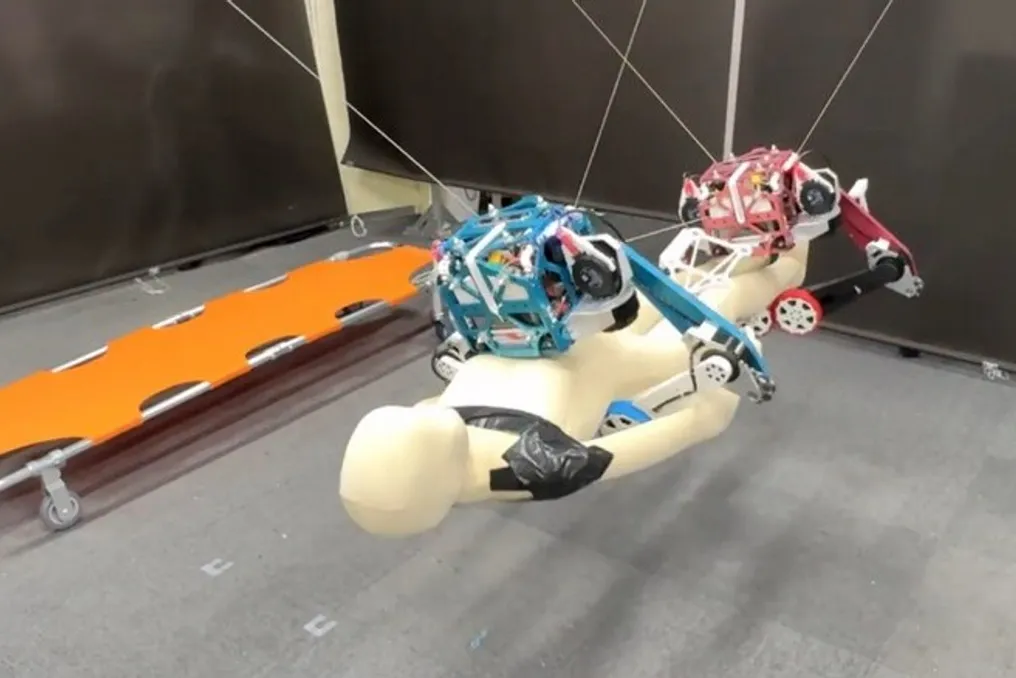
Engineers from Japan have developed a cable parallel robot called TwinX. This system is based on the use of two identical bipedal robots equipped with wheels.

The robots are attached to surrounding supports via cables, and they are connected by an additional cable. This design allows them to move synchronously in the air and jointly transport various objects, using their legs as mechanical grippers.

During tests, TwinX successfully lifted a human mannequin from the floor surface and then transported it onto a stretcher. The results of this development were presented in the scientific publication IEEE Robotics and Automation Letters.

AgiBot releases LIFE — a framework for embodied AI learning based on RoboBeats models
Read more
pandaily.com

AgiBot releases LIFE — a framework for embodied AI learning based on RoboBeats models

AgiBot has introduced LIFE (Learning to Live: A Step Toward Lifelong Embodied Intelligence), a framework designed to allow robots to retain perception and memory across different tasks instead of resetting their state after every operation. The article about this was posted on arXiv on October 30th. The code is available on GitHub under the Apache-2.0 license, and inference codes and weights for RoboBeats models with parameters 0.8B, 2B, and 4B were published on November 3rd. Data for the SSS-Bench evaluation are distributed under the non-commercial CC BY-NC 4.0 license. The models are built on checkpoints from Qwen3.5 of similar size and are hosted on Hugging Face via an individual account linked to the AgiBot repository.

The LIFE framework consists of three components that work together with an agent managed by a multimodal large model. RoboBeats is a lightweight decision-making model that tracks conditions described in natural language regarding what the robot sees. Instead of generating text for every frame, it reads true/false evaluations, where many conditions use the same visual input and cached computations. AgiBot calls this continuous perception 'heartbeat'. Plastic Memory stores raw frames along with structured records in JSON format, allowing for later re-analysis of originals when new questions arise, rather than relying solely on summaries created at the time of the event. The EDM (Explore-Distill-Mount) method transforms working problem-solving methods into verified, reusable tools without needing to update model weights.

The team presented the following results in their scientific paper:

  • RoboBeats-2B processes approximately 75 milliseconds per new frame on a single RTX 5090 GPU, and about 77 milliseconds when tracking 16 conditions.
  • In the proactive inference task on StreamingBench, RoboBeats-4B increased accuracy from 21.2% to 64.0%.
  • On SSS-Bench (171 videos, 618 questions), the accuracy of answering questions using textual memory increased from 40.9% to 60.5%.
  • When using EDM tools on 597 test queries in FindingDory, success increased from 37.5% to 65.8%.

As part of a 24-hour study, the AgiBot A3 Ultra robot was used to form daily memory. With six questions asked three times each, using the same answer model, LIFE achieved a score of 29.5 out of 30 with an average response time of 80.6 seconds. This was compared to a result of 28.5 and an average time of 554.7 seconds for the baseline Codex-based model using the same memory.

The team notes that the next step is multi-day online deployment and emphasizes that the results obtained have not yet been independently reproduced. It is also pointed out that the gain on SSS-Bench reflects question-answering accuracy, not memory accuracy.

Canine robots compete in climbing on Mount Taishan, China, overcoming over 3 thousand steps
Read more
olhardigital.com.br

Canine robots compete in climbing on Mount Taishan, China, overcoming over 3 thousand steps

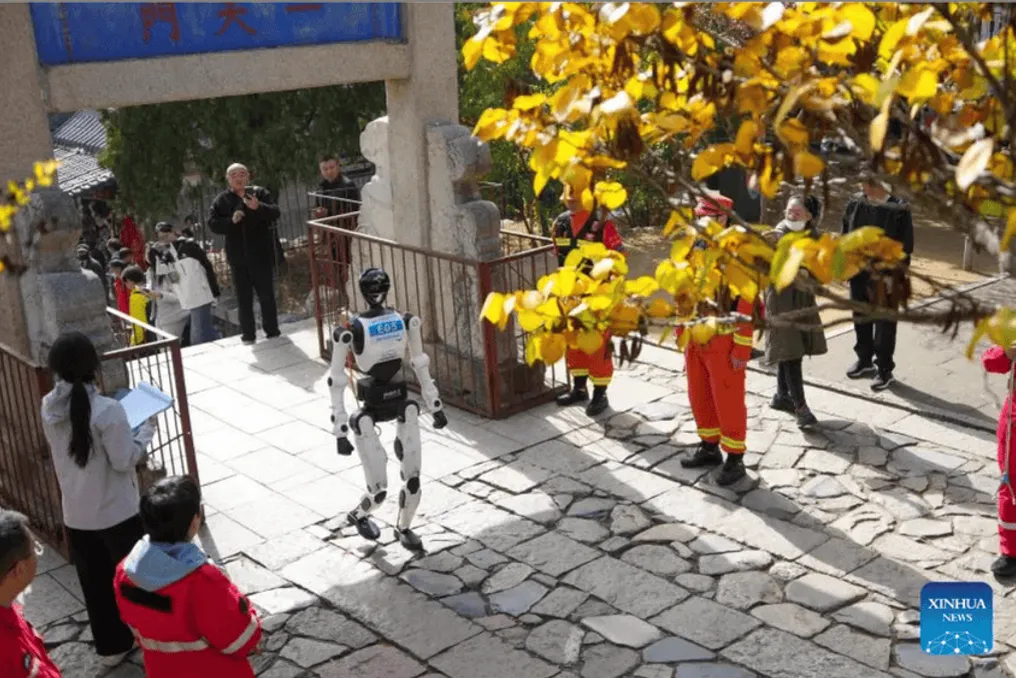
Humanoid robots and dog-robots participated in the first robotic climbing competition held on Mount Taishan in China. The established course spanned 3.9 kilometers, with an approximate elevation of 600 meters and over 3,100 stone steps. This challenge aimed to assess the machines' ability to adapt to uneven surfaces, as well as their navigation and balance systems.

The competition included other events, such as cargo transport, exoskeleton use, and terrain recognition. Approximately 90 teams attended the steps of Mount Taishan to test their respective technologies.

The robots, especially the canine models, were subjected to various operational tests, such as recalculating routes, transporting items while ascending the steps, and making sudden changes in direction. The purpose of these exercises was to measure the agility, decision-making capability, and operational fluidity of the machines.

The quadruped equipment from Beijing Lingyi Technology was declared the winner of the main event, completing the course of over 3 thousand steps in 43 minutes and 41 seconds. In previous tests, a model from competitor UNIUBI AI had finished the route in 35 minutes and 47 seconds, although it failed to replicate this time in the official competition.

The winner, from Beijing Lingyi Technology, has ties to Unitree. It is worth noting that the same route, when undertaken by humans, takes an average of an hour and a half.

Chen Lin, engineer responsible for the UNIUBI AI team's robot, told the Global Times that the biggest obstacle was adapting to the specific conditions of Mount Taishan. He detailed that the steps were built centuries ago and exhibit significant variations, including high and low, wide and narrow steps, in addition to sections paved with cobblestones.

Xiang Ligang, president of the Beijing Intelligent Era Industry Institute, considered the event a significant milestone for both technological advancement and refinement. According to Ligang, when multiple robots compete in the same scenario, their vulnerabilities are quickly revealed, allowing effective approaches to be observed, evaluated, and incorporated from competitors. Thus, the competition acts as a practical testing ground that accelerates product improvement.

The Mount Taishan International Mountaineering Championship, also known as Mount Tai, is an ancient tradition. Since 1987, thousands of mountaineers have traversed a route even longer than the one used by the robots, totaling 7 thousand steps over about 8 kilometers. The 40th edition of this championship took place in September and attracted more than 13 thousand participants from various parts of the world.

Popular