Latin America possesses a significant advantage over many other regions globally—the presence of a predominantly clean energy system. Clean energy sources provide 66% of the region's electricity, with most coming from hydropower, and wind and solar energy contributing just over 10% each.
However, a more detailed analysis of these figures reveals a more complex picture. Electricity covers only about 20% of total energy consumption in Latin America, as significant sectors like transport and industry still primarily run on fossil fuels.
This gap is the focus of the UN climate summit COP31, taking place in Antalya, Turkey. The COP presidency is promoting the voluntary '35 by 35' commitment—a goal to electrify 35% of global final energy consumption by 2035. Currently, according to the International Energy Agency, this figure stands at around 23%.
As of the time of writing, at least 30 countries support this commitment, according to the statement by the appointed president of COP31, Murat Kurum. Among them is Brazil, whose Minister of Environment, João Paulo Capobianco, expressed support in Antalya last week. The list of participants is expected to grow as the second and final week of the summit concludes.
Achieving such goals in Latin America involves several difficulties. Existing insufficient transmission line capacity creates bottlenecks. Experts also note that electrification must be price-competitive compared to fossil fuels. According to the Latin American and Caribbean Energy Association (OLACDE), the use of the latter continues to rise in the region.
Wilmar Suarez, a senior analyst for Latin America at the energy analytical center Ember, told Dialogue Earth: 'Electricity must be cheaper than the fuel it replaces if we want electrification to happen.' Francisco Jose Boshell, an energy expert from the World Resources Institute (WRI), believes the region is not lagging in terms of electrification, but he emphasizes that Latin America's transport and industrial sectors have long been dominated by fossil fuel-based technologies.
More broadly, the drive to reach 35% comes with an undeniable condition: the environmental benefit of electrification depends on how all this new electricity is generated. This implies the use of renewable energy sources; electrifying buses and blast furnaces will only partially solve the problem for Latin America. As WRI wrote in August, 'electrification is a tool, not an end in itself.'
The '35 by 35' commitment aligns with the International Energy Agency's scenario for achieving net-zero emissions by 2050, where the average global temperature increase stabilizes at no more than 1.5°C by 2100. Compared to the current situation, which the non-profit NewClimate Institute in Germany estimates would likely lead to a 28% share of electrification by 2035, this commitment represents an acceleration.
Rosana Santos, Executive Director of the Energy Transition Institute E+ (IE+) in Rio de Janeiro, told Dialogue Earth: 'This is one of the most important paths for decarbonizing the economy. It must go hand-in-hand with increasing the share of renewable energy and improving energy efficiency.'
Experts agree that technologies are generally available. However, the limiting factor is implementation: financing, grids, and infrastructure.
In Brazil, according to data published in September by the non-profit coalition We Mean Business Coalition, 89% of electricity comes from clean sources. Nevertheless, this study indicates that 93 GW of new power supply is still awaiting grid connection—equivalent to approximately 40% of Brazil's installed centralized capacity. Part of this is due to a lack of investment in transmission infrastructure, as well as shortages in storage systems and general connection delays.
This issue is observed across the region. Diana Barba, coordinator for energy diplomacy at the Transforma climate action analysis center, told Dialogue Earth that renewable energy is 'being lost.'
Furthermore, there is a financial barrier. OLACDE calculated that in the scenario where Latin America and the Caribbean achieve carbon neutrality by 2050, electricity consumption will increase by 156%. Building approximately 1000 GW of additional generation capacity is estimated to require $1.5 trillion USD.
Meanwhile, according to a February report by the Inter-American Development Bank (IDB), tasks such as electrifying the region's bus fleet will cost 33% more initially than simply upgrading existing internal combustion engine fleets. This creates a dilemma for policymakers.
Countries of the Global South face funding deficits in achieving these goals. Boshell estimates that, considering the additional risks associated with investing in Latin America and the region's regulatory instability, roughly twice as much investment will be required as in developed countries.
Transport and industry currently account for two-thirds of energy consumption in Latin America and the Caribbean. These two sectors are moving towards electrification at very different speeds.
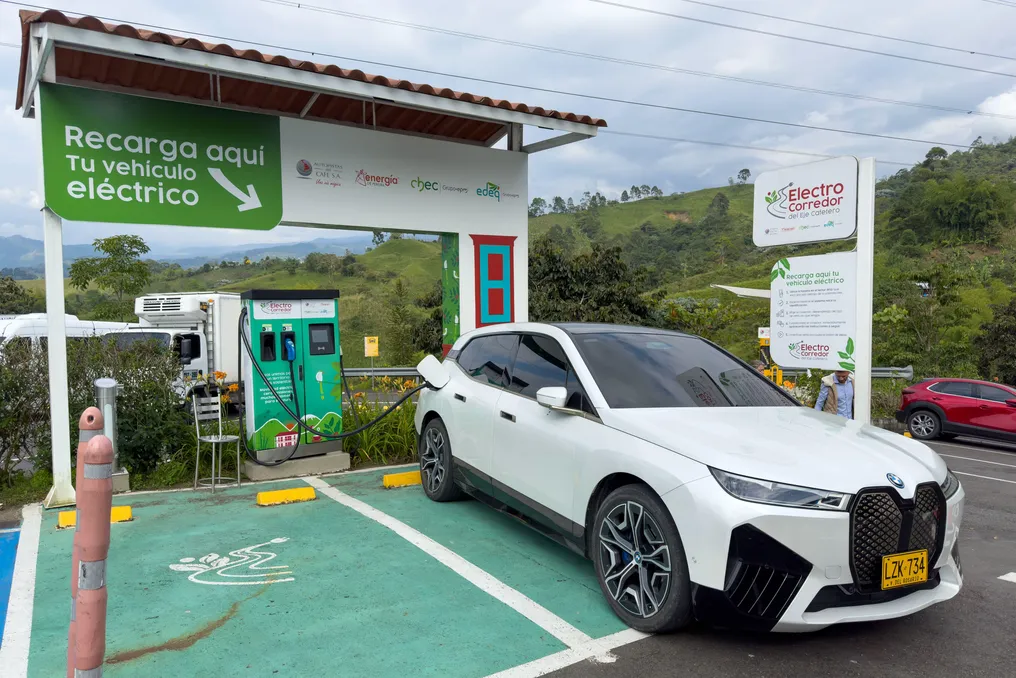
The number of electric passenger cars in the region has increased almost tenfold between 2022 and 2025. Boshell clarifies: 'We are starting almost from scratch, so it still looks very insignificant. But if we continue at this pace, in three or four years we will start seeing greater significance.' Together with plug-in hybrids, the IDB forecasts that electric passenger cars could account for 27–50% of the passenger fleet by 2050.
Industry, which accounts for 28% of the region's energy consumption, is mainly used for heat production and presents a different challenge. The ability to provide heat with electricity largely depends on the required temperature. While heat pumps and electric boilers can provide hot water and steam needed for food drying and pasteurization, processes like steelmaking are less straightforward.
The IDB points to food and beverage production—the largest industrial emitter related to energy consumption in Brazil, Argentina, and Colombia—as an area for initial focus. Boshell believes that 12–15% of all energy consumed in the region can already be electrified in light industries such as food processing, textiles, glass, and paper, which require lower temperatures.
Regarding steel, arc furnaces capable of melting scrap metal at very high temperatures are an established technology. However, they cannot yet replace primary steel production from iron ore; hydrogen processes are currently being tested.
Cement faces the most serious challenge. Kilns that convert raw materials into cement base (clinker) operate at extremely high temperatures, and this is where a significant portion of the sector's emissions occur. Full electrification remains in its early stages.
Only a small number of countries in the region—such as Chile and Brazil—have implemented policies explicitly promoting the electrification of industrial sectors. Cecilia Springer, a researcher at the Boston University Center for Global Policy Development in the USA, notes: 'I think this requires top-down pressure. Industry itself will not transition to electrification on a market basis right now.'
Although Latin America's clean grid offers an advantage, experts warn Dialogue Earth that poorly managed electrification could exacerbate the problem in the short term.
Santos warns that increasing electricity demand without a phased plan to phase out fossil fuels will lead either to new emissions or costly stranded assets: 'Electrification can become a trap if we build new fossil fuel power plants to meet new demand.'
Barba also insists on the need to address electricity tariffs to make electrification affordable. Without proper policy measures and tariff adjustments, she believes the burden of the transition will fall mainly on those least able to bear it.
Barba adds that this transition must also be equitable. About 17 million people in Latin America and the Caribbean still lack basic access to electricity, which limits their livelihoods and development. She explains that the transition is simple in urban areas and in new buildings, but 'in rural areas, especially where there is no electricity connection at all, there is still a long way to go.'
Nevertheless, if this process is managed properly and supported by political will and regulation, electrification has the potential for transformation, as Suarez asserts: 'It stimulates development, increases the competitiveness of national and local industries, and allows them to sell their products at more competitive prices abroad.'