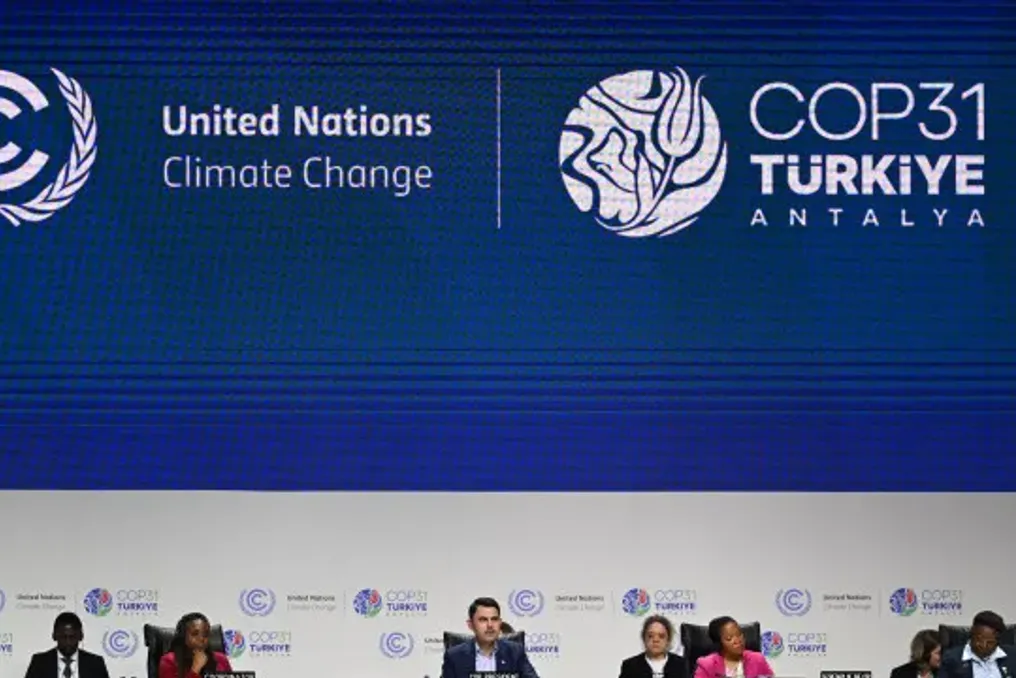
COP31 Draft Resolution Highlights Importance of UN Scientific Reports, Including IPCC Work
Read more
Noticias ao Minuto
noticiasaominuto.com

COP31 Draft Resolution Highlights Importance of UN Scientific Reports, Including IPCC Work

The draft final agreement of the Antalya Climate Summit (COP31) explicitly supports the scientific authority of the Intergovernmental Panel on Climate Change (IPCC) and calls for it to clarify the schedule for the Seventh Assessment Report.

Amid political tensions regarding the pace of future UN scientific reports, this draft agreement will be presented for discussion and approval at the plenary session scheduled for 09:00 local time (06:00 GMT). It emphasizes the 'fundamental' role of 'best available science' and acknowledges that IPCC work provides the 'most reliable and comprehensive assessment of climate science.'

The document also stresses the 'importance' of such assessments for measuring collective progress in climate action and thanks scientists preparing the Seventh Assessment Report (AR7). The timeline for this report is a subject of intense debate to ensure its findings are ready before the second global stocktake of the Paris Agreement, which is due in 2028 during COP33.

The new draft final resolution of COP31 on climate restores the obligation of developed countries to provide financial resources, but the goal of tripling adaptation finance by 2035 remains without a specific target.

The text, put forward by the presidencies of Turkey and Australia, seeks to balance the financial section between the demands of the developing countries bloc—which insisted on firm guarantees from state funds—and the reluctance of industrialized economies to accept new quantitative commitments.

To gain support from the group of developing nations, the proposed agreement again refers to Article 9, paragraph 1, of the Paris Agreement, emphasizing that developed countries 'should provide financial resources' for mitigation and adaptation assistance as a continuation of existing obligations, while noting that other nations may contribute voluntarily.

Nevertheless, the document maintains the goal of tripling adaptation finance by 2035, but without setting a minimum value. This followed the removal of mention of achieving 'at least $120 billion' annually in the second preliminary version on Thursday, which was present in the first version on Monday.

The new draft final resolution continues not to directly mention fossil fuels but includes a call for electrification and urges accelerating the use of carbon capture, utilization, and storage (CCUS) technologies promoted by oil and gas companies, which is controversial for some countries.

The document lacks an explicit call to abandon coal, oil, or gas, whose use is the primary driver of climate change. It is limited to referencing the outcomes of COP28 in Dubai in 2023, where for the first time world nations were called upon to transition away from these energy sources.

Producer countries, led by Saudi Arabia, oppose any new mentions in the final text in Antalya. However, Pacific, European, or Latin American countries demand explicit mention of these energy sources.

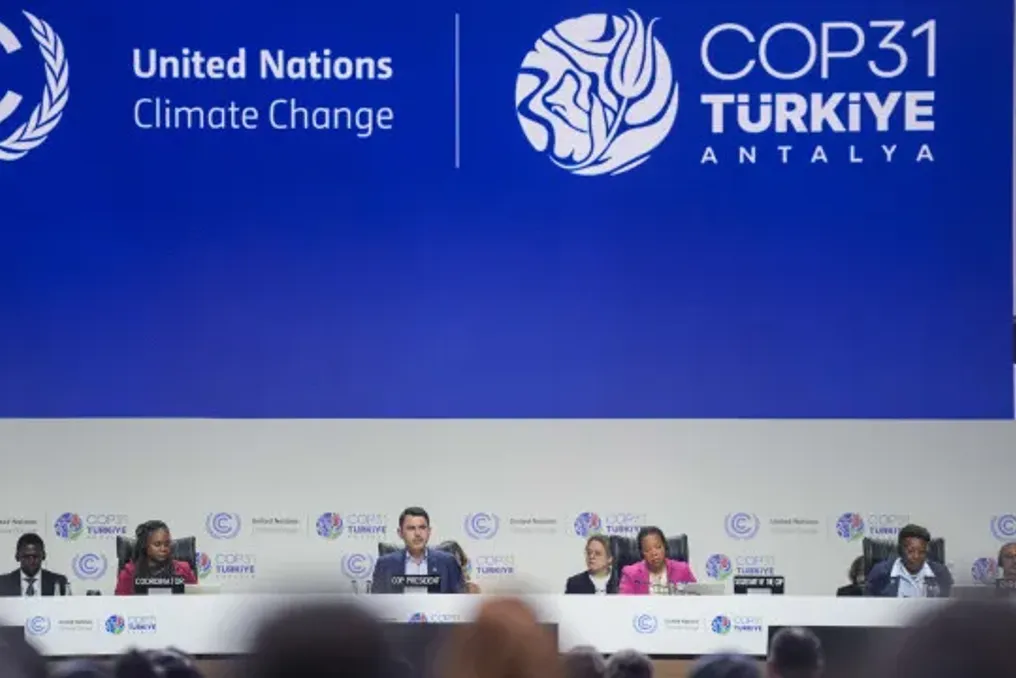
The President of Turkey at COP31, Murat Kurum, called on countries to act 'responsibly' and seek 'consensus' on Saturday. The conference, which gathered nearly 200 countries in Antalya, is the most important global meeting on climate issues.
Similar stories

New COP31 resolution draft in Antalia does not mention fossil fuels but calls for electrification
Read more
noticiasaominuto.com

New COP31 resolution draft in Antalia does not mention fossil fuels but calls for electrification

The new draft final resolution of COP31 on climate, published on the night from Saturday to Sunday in Antalia, southwestern Turkey, continues to avoid direct mention of fossil fuels, but includes a call for electrification.

This document, prepared by the Turkish and Australian presidencies of the UN conference, also insists on accelerating the use of Carbon Capture, Utilization, and Storage (CCUS) technologies, which are promoted by oil and gas sector companies, causing controversy among some countries.

The text lacks any explicit requirement to abandon coal, oil, or natural gas, whose use is the main cause of climate change. It only refers to the results of COP28 in Dubai, which in 2023 first called on the world's countries to transition with the aim of abandoning these types of energy.

Producer countries, led by Saudi Arabia, oppose any new references in the final text in Antalia. Nevertheless, countries from the Pacific region, Europe, and Latin America demand an explicit mention of these energy sources.

Instead, the resolution draft contains a call, put forward by Turkey, to increase the share of electricity in total final energy consumption to 35% globally by 2035, which is linked to efforts to increase the use of 'clean energy.'

Furthermore, the controversial issue of the publication schedule for the next IPCC reports—the group of scientists working under the auspices of the UN—is discussed. The text emphasizes the 'importance' of these reports for the next 'global assessment' of countries' efforts to limit greenhouse gas emissions, scheduled for 2028. India and Saudi Arabia prefer to postpone the publication of these reports until 2029.

The Turkish COP31 President, Murat Kurum, called on countries to act 'responsibly' and seek an 'agreement' on Saturday. The conference, which gathered nearly 200 countries in Antalia, is a crucial global meeting on climate issues.

This morning, a plenary session is scheduled to attempt to approve a compromise at the major climate conference in Antalia, which has already significantly exceeded its planned completion time of Friday evening. Some ministers have already returned to their countries, and the conference venue is beginning to be dismantled.

COP31 begins in Turkey with divergences over climate finance and action targets
Read more
noticiasaominuto.com

COP31 begins in Turkey with divergences over climate finance and action targets

The 31st United Nations Climate Change Conference (COP31) has begun in Turkey. The event takes place after a year marked by extreme weather events, such as floods and heatwaves, generating tensions regarding the financial resources needed for adaptation and mitigation of the climate emergency.

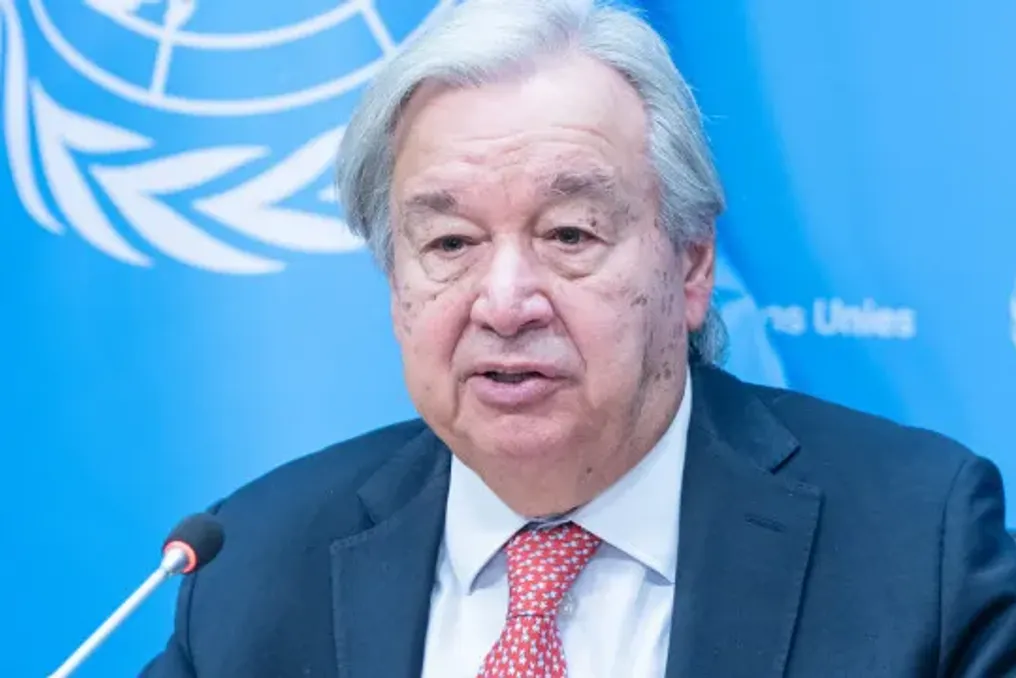
António Guterres, UN Secretary-General, called on leaders to 'be up to the task,' while Murat Kurum, Turkish Minister of Environment and conference president, emphasized during the opening session that 'any delay weighs particularly heavily on climate action.'

In 2026, the planet was again affected by climate change, evidenced by fatal floods in Nepal, heatwaves in Europe, and fires in Indonesia. Simultaneously, the energy crisis, driven by the Middle East conflict, has pressured costs and created significant budgetary challenges for governments, which ultimately diminishes climate ambition.

Held at the large exhibition center of the Turkish coastal city of Antalya, COP31 aims primarily to transform commitments made in previous UN meetings into practical measures. Maria da Graça Carvalho, Portugal's Minister of Environment and Energy, had previously argued that COP31 should be a conference focused on actions.

COP31, which brings together nearly 200 nations under the UN umbrella and has 68,544 accredited participants, is expected to be the forum for the 'implementation' of promises, according to Murat Kurum. Delegations spent the early hours of the start day negotiating the agenda. The main point of disagreement lies in the funding promised by developed countries—historically the largest greenhouse gas emitters—to developing countries.

A representative from the European Union had already signaled on Friday a lack of political will to increase spending. Jasper Inventor, leader of the Greenpeace delegation, described the start of COP31 as 'difficult,' warning that rich countries are refusing, especially, to include certain funding items on the agenda.

The 'Climate Finance Working Programme,' a mechanism defined at COP30 in Brazil in 2025 to discuss financial agreements, will be officially discussed. However, the tripling of funding for climate change adaptation, crucial for protecting nations most susceptible to droughts, floods, or sea-level rise, is not guaranteed.

The UN reported last week that developing countries will need $305 billion annually by 2035, an amount almost ten times higher than what they currently receive from wealthy nations. Simon Stiell, the UN's Climate Change Officer, acknowledged that 'frustration is palpable' in this context.

Another controversial issue is Turkey's intention to make electrification a central focus of COP31, suggesting that countries commit to raising the share of electricity in global energy consumption to 35% by 2035, compared to the current 20%. The European Union supports electrification with renewable sources, a position also defended by Maria da Graça Carvalho. However, several hydrocarbon-producing countries show resistance to accepting this proposal.

COP30, held in Belém, in the Brazilian Amazon, concluded without explicitly mentioning fossil fuels. In contrast, Brazil presented last week a 'roadmap' for countries to voluntarily replace oil, coal, and gas with renewable energies.

During a summit co-chaired by Turkey and Australia, Chris Bowen, Australian Minister for Climate Change, encouraged delegations to overcome divergences and prove that international cooperation can still yield results. He argued that 'we will show the world that multilateralism works,' despite the boycott by the US government, motivated by President Donald Trump's denial of climate change.

Popular