South Africa is bracing for a potentially challenging summer due to the onset of El Niño. Warming of the Pacific Ocean surface influences global weather patterns, triggering extreme events such as droughts, floods, and heatwaves. The World Meteorological Organization forecasts an intensification of this event to a very strong level by the end of 2026, with consequences potentially felt until early 2027.
This super El Niño increases the risks of drought, heatwaves, water scarcity, reduction in livestock grazing land, decreased grain yields, and forest fires. Researchers focused on pasture and crop production are interested in finding methods to improve animal feed during dry periods.
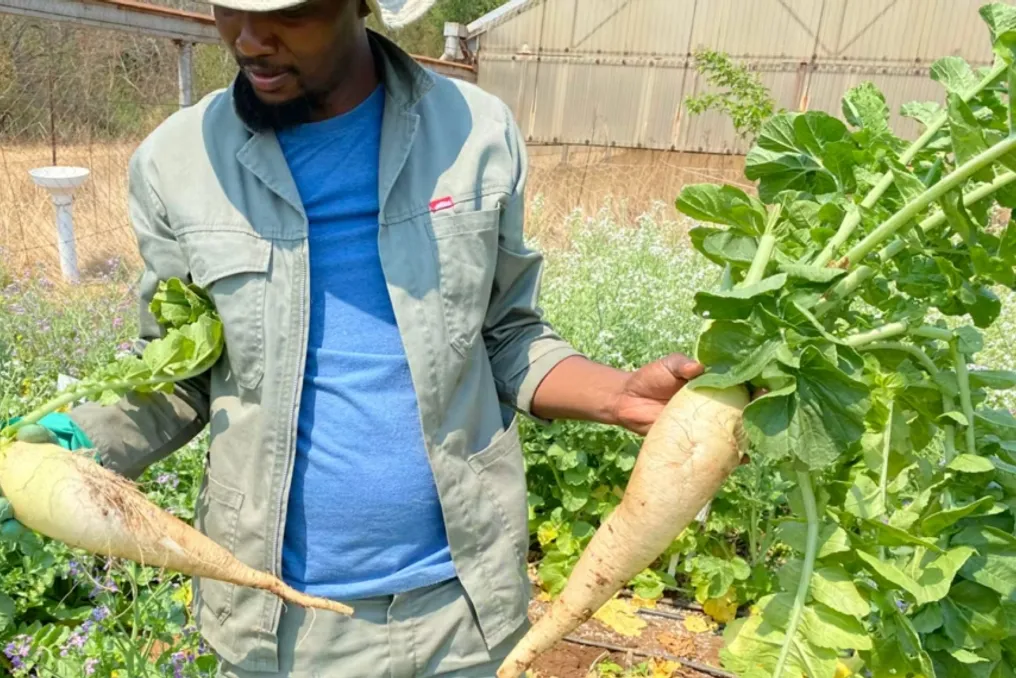
A recent study demonstrated when to plant forage radish and which varieties to choose so that it grows well and provides abundant nutritious feed even without irrigation. Forage radish (Raphanus sativus L.) is a fast-growing plant with green leaves and root vegetables. It serves as nutritional food for livestock (cattle, sheep, and goats) during winter when grass dies off or during droughts. It is used in both small and large-scale agriculture, especially where pastures are limited.
However, since these forage radish varieties were recently developed, their ideal planting date has never been tested under rainfall-dependent conditions and without the use of fertilizers. The study was conducted in Kedara, in the KwaZulu-Natal Midlands region, an agricultural zone in eastern South Africa with deep red clay soils, where summers are warm and humid. Over four months, the radish was planted relying solely on rainfall and without using fertilizers, simulating the conditions of smallholder farms with limited access to irrigation and fertilizers.
The results obtained were clear: planting times mattered. Generally, the earlier the sowing date (December and January), the better the results. This is critically important for livestock farmers, as assessing planting times in a changing climate is necessary to ensure food security and help farmers adapt to unpredictable weather without the need to purchase expensive equipment. High yields of fodder crops ensure that livestock have sufficient food.
The higher the nutritional value of the feed, the larger, healthier, and stronger the animals grow. Farmers who cannot grow enough quality feed risk losing income if their animals run out of food. Farmers should plan the planting of forage radish based on whether they want to harvest more leaves and stems or more root vegetables, while considering local climatic conditions.
The study showed that in this region, radish planted in December yielded significantly more root vegetables. However, planting in January resulted in the highest amount of leaf fodder and protein. It was also found that the earlier the planting occurred, the higher the concentration of minerals such as phosphorus, potassium, and zinc in the leaves. These nutrients can promote the growth, development, and overall health of livestock, especially when the quality and quantity of natural grass decline.
This means that even without irrigation, timely planting can provide more nutritious feed for livestock solely through rainfall. This conclusion is particularly relevant against the backdrop of intensifying El Niño, which increases the likelihood of drier weather, drought, and abnormally high temperatures in South Africa. This makes research on managing rainfed crops extremely important, and it also provides useful information for farmers facing climate change and reduced rainfall predictability. Planting too early or too late can expose young plants to the risk of drought or flooding.
The findings are significant for farmers because the reduction and unpredictability of rainfall worsen the condition of natural pastures, making it difficult to grow fodder crops. If farmers have to buy supplements for their livestock, it can be very costly, especially for households dependent on livestock for survival and income.
The conclusions suggest that farmers should view planting as a window of opportunity rather than a fixed date. Planting can be adjusted throughout the season to match periods of early and late rainfall.
Although planting forage radish in specific months will not solve all problems caused by super El Niño droughts, the study demonstrates that relatively simple management decisions can help farmers utilize available rainfall more effectively. Furthermore, the results highlight the need to communicate climate information to farmers before they make planting decisions. Agricultural consultants, meteorological services, and researchers must begin working together to translate seasonal forecasts into practical recommendations for farmers regarding planting times. If farmers had access to rainfall forecasts, soil moisture information, pasture conditions, and water availability on their land, they could make more informed decisions about when and how much fodder to plant.
It should be noted that the experiment was conducted only on a small area in the KwaZulu-Natal Midlands over two planting seasons. Therefore, the same results may not apply in other parts of South Africa with different soil types, climates, and rainfall patterns. Further trials are required in different locations, using various crop varieties, planting times, and rainfall conditions.
The main takeaway from the study is simple: in a water-scarce country like South Africa, planting windows are a crucial way to maximize the benefit of falling rains.