Former US Tech Specialist Turns Father's Amla Surplus into Over 25 Products for 4000 Customers
Read more
The Better India
thebetterindia.com

Former US Tech Specialist Turns Father's Amla Surplus into Over 25 Products for 4000 Customers

When amla ripened on her father's farm in Iduvai, Tamil Nadu, the quantity of fruits exceeded the family's capacity to consume or sell fresh produce. About 25 trees bore heavily, and the harvest could not wait for buyers.

For Kalaiselvi, who previously worked in software and spent nearly a decade in the United States, this surplus raised a question: is it possible to preserve and sell the fruits long after the season? This question led to the creation of Aruvi Eco Organics, which now produces over 25 types of products, including amla-jaggery candies, dried fruits, herbal teas, and leaf powders. According to Kalaiselvi, processing helps the farm utilize about 60 percent of the suitable surplus, depending on the season. The enterprise also supports a team of six people.

Kalaiselvi told The Better India that her father laid the foundation for this enterprise through his commitment to organic farming. Her contribution was developing this legacy by studying methods of product processing, reducing preventable losses, and ensuring the availability of natural food products for a larger number of people.

Returning to Her Father's Farm

Kalaiselvi grew up in an agricultural family in Iduvai. In 1999, her father, Subramaniam, began developing the ancestral land, which the family named Aruvi Farm, growing amla, sapota, mango, and guava without using chemical pesticides. She recalls planting seeds during childhood summer vacations at her aunt's place. Her parents encouraged their daughters to study while maintaining a connection to the land, but her own aspirations led her to computers.

After studying computer science and engineering at Kongu Engineering College, she worked in Chennai, and then in 2006, moved to the USA to join her husband. Her IT career included working at AT&T, Frontier Communications, Verizon, and Highmark in Pittsburgh, where she developed applications. In March 2015, the couple returned to India with two young children. Her mother-in-law faced serious health issues, and they wanted to live closer to their parents and raise the children there.

They settled in Chennai, where Kalaiselvi helped the children adapt, and later worked in recruitment and scientific publishing. She also launched Kana Bags—an initiative to produce cloth bags as an alternative to plastic. When the pandemic disrupted this activity in 2020, due to the shift of children's activities to online formats, the family started spending more time on the farm in Iduvai. Kalaiselvi personally witnessed the labor behind her father's harvest and the problem associated with it.
Similar stories

Young Farmer Turns Mother's Home Garden into Tomato Growing Business
Read more
foodformzansi.co.za

Young Farmer Turns Mother's Home Garden into Tomato Growing Business

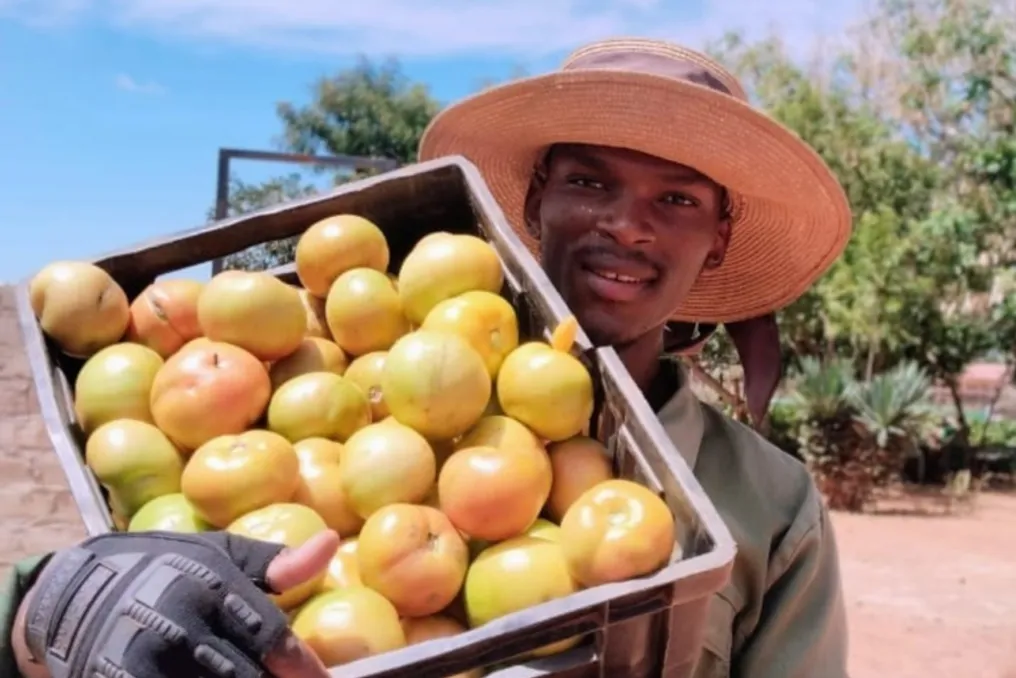
In 2023, Musa Sibanyoni turned to agriculture while trying to distract himself from the pressure of graduation year. A year later, he developed his home garden, registering it as a business called Musa Nhlapo’s Garden, making farming an integral part of his future.

He started growing tomatoes in the backyard in Kwandebele, Kwaaggafontein, Mpumalanga, relying on his family's experience, which previously sold tomatoes. He noticed market demand for this crop, prompting him to take his garden seriously.

Initially, he started with 100 tomato plants on public land of less than one hectare in Kwandebele, but since then has increased the harvest to 700 plants.

Although Sibanyoni was born in Gauteng, he spent most of his childhood in Mpumalanga. He shared that his mother, Jabili Sibanyoni, was the sole provider for the family, and meeting the household's needs was not always easy. In those years, neighbors showed kindness by giving him clothes when his family could not afford them.

His interest in growing tomatoes arose from observing how his mother cared for their home garden. After finishing school, Sibanyoni realized he could turn the knowledge gained from his mother into a commercial venture.

He noted: 'Tomatoes wouldn't last two days at home after harvesting. When I chose a crop to grow, it was easy because I saw how quickly neighbors used up them from my mom's garden.' He added: 'Even if improvement requires money, my mom is always ready to help with what she has.'

Sibanyoni built a customer base in his community by supplying products to local spaza shops and informal street vendors. Additionally, he advertises his products on social media. He emphasizes that good customer relations and maintaining tomato quality are crucial for retaining a stable customer base, and word-of-mouth helps attract more buyers and increase sales.

Sibanyoni told Food For Mzansi that choosing the right tomato variety is critical, as varieties differ in their characteristics. Farmers need to determine which variety best suits the growing conditions and production goals. Sibanyoni uses the hybrid Star 9009 F1, which, according to him, performs well in winter. He also notes that this variety is resistant to Mpumalanga's heat and offers some protection against diseases such as bacterial wilt, which is a problem for tomato farmers.

This variety yields a high harvest, with individual fruits weighing between 140 and 170 grams. Sibanyoni added that 'tomatoes can be stored on the shelf for about seven to fourteen days.'

Despite the successes, he explains that issues with pest and disease infestation remain relevant. Earlier this year, a separate project with 500 tomato plants failed due to phytophthora. However, Sibanyoni continues to learn from other tomato farmers who share their experiences on social media. Furthermore, last year he attended a training program organized by the Mpumalanga Department of Agriculture, which gave him useful knowledge about crop production.

He points out that growing tomatoes in winter can be difficult without a greenhouse. Sibanyoni strongly recommends that farmers follow a regular spraying program to minimize crop damage and protect product quality. He warns: 'When it comes to pests, you need to be vigilant because customers do not like damaged tomatoes.' He also advises: 'You should have a clear spraying program, even for fungal infections, because this is the main problem during the rainy season.'

Although he is already engaged in farming, Sibanyoni hopes to take a course related to farm management. His immediate goal is to increase production from 700 to 1500 tomato plants to provide customers for a longer period. In the coming years, he plans to supply formal retail outlets and explore ways to process surplus tomatoes into other products.

Sibanyoni also aims to enter the Tshwane market, where he dreams of seeing his products on shelves. Water scarcity in his area remains a problem. Although he installed a drip irrigation system, expanding the business will require more land and investment in infrastructure, including fencing, irrigation, and reliable water supply. Despite all the difficulties, he never gives up and works tirelessly to achieve his goals. With the necessary financial support, he expects to increase production and reach new markets.

Krishna Yadav turned a modest pickle business into a multi-million rupee enterprise
Read more
www.aajtak.in

Krishna Yadav turned a modest pickle business into a multi-million rupee enterprise

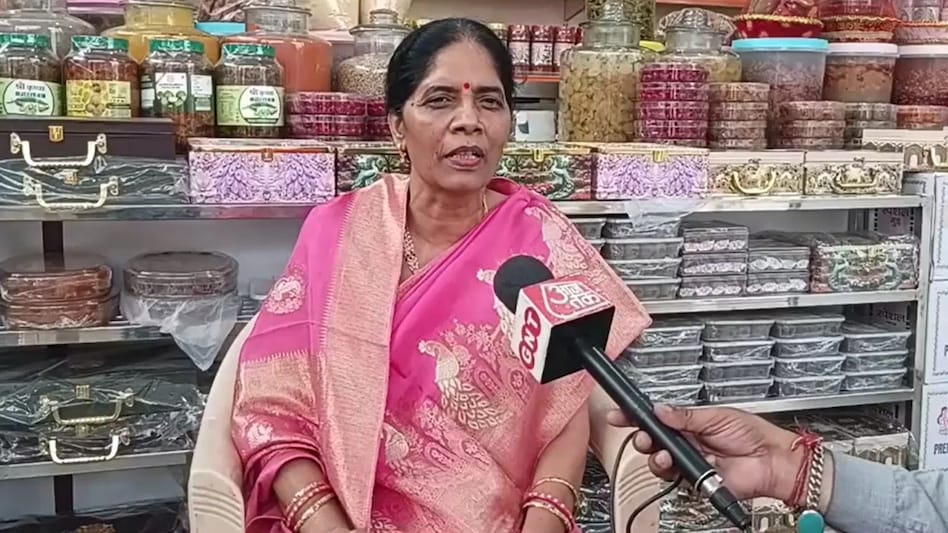
Krishna Yadav, residing in Najafgarh, Delhi, has become an inspiration for women who dream of achieving something significant despite difficult life circumstances. Initially earning a living by selling vegetables by the roadside due to financial hardship, Krishna Yadav started her journey by producing and selling pickles with just 500 rupees. Thanks to her perseverance and hard work, this small business has transformed into an enterprise worth millions of rupees.

When Krishna Yadav arrived in Delhi with her family from a small village in Uttar Pradesh, she faced serious economic problems. The situation was so severe that the family had to survive on meager means. During this period, she decided to use her traditional skills as a basis for earning a livelihood. Pickles were already being prepared at home, and Krishna Yadav underwent training at an agricultural science center, gaining knowledge about processing fruits and vegetables and adding value to them.

In 2002, she began selling pickles, setting up a small roadside stall with an initial capital of 500 rupees. Her start was with carunda pickles. To attract customers, she offered them samples of the pickles and provided drinking water by the roadside. Gradually, the taste of her pickles gained popularity, and the business began to grow.

Afterward, she started making various types of pickles, including pickled peaches, lemons, and chilies, and named her business 'Shri Krishna Pickles'. Today, under this brand, not only pickles but also various food products such as chutneys, jams, and syrups are produced. According to Krishna Yadav, the product range exceeds 250 items, and the annual turnover has reached millions of rupees.

Krishna Yadav's special contribution is that she managed to involve other women in her business, helping them achieve self-sufficiency. She is currently actively working to make women more independent. Her struggle and entrepreneurial spirit have received national recognition; she has been awarded the Women's Power Award, the Uttar Pradesh Ratna Award, and various awards from Indian agricultural departments and ministries, as well as honored by the President of the country.

Krishna Yadav's story proves that huge capital is not required to achieve success; what is needed is skill, diligence, and firm determination. Her journey, which started with 500 rupees, is today a shining example of women's empowerment and self-reliance.

Popular