The new draft final decision from COP31 on climate issues has been released, reaffirming the responsibility of developed countries to provide financial resources. However, the goal of tripling funding for adaptation by 2035 remains without a concrete established value.
This text was presented by the co-presidency of Turkey and Australia to be submitted to the plenary session, which will resume at 09:00 local time (06:00 GMT). The document seeks to reconcile the demands of developing countries, which requested robust guarantees of public funds, with the resistance of industrialized economies to accept new quantified commitments.
To gain the support of the bloc of developing nations, the proposal directly refers to Article 9, paragraph 1, of the Paris Agreement, emphasizing that developed countries have a duty to provide financial resources to assist in mitigation and adaptation, continuing existing obligations, while also recognizing the possibility of voluntary contributions from other nations.
However, the document maintains the goal of doubling adaptation funding by 2035 without specifying a minimum amount. This comes after the removal of the reference to achieving 'at least $120 billion' annually, which was present in the first version released on Monday.
In its place, the text designates the Standing Committee on Finance to prepare a technical report containing options to determine the reference base for this calculation, postponing the definition of an implementation plan until the next climate summit, COP32, scheduled for November 2027.
Additionally, under the leadership of the presidencies of COP31 and COP32, the 'Antalya to Addis Ababa Roadmap on Adaptation and Resilience Financing' is launched. This roadmap aims to identify innovative and predictable public sources, as well as improve access mechanisms before the end of 2027.
The diagnosis of the economic deficit size was maintained, indicating that the needs raised in the national climate plans of developing countries range between $5.1 and $6.8 billion by 2030 (equivalent to $455 billion to $584 billion annually), adding to another $305 billion annually allocated for adaptation by 2035.
The presidency decided to omit crucial data from previous versions regarding the insufficient liquidity of the Loss and Damage Fund. This data showed that requests totaled $2.8 billion against only $342 million attributed, and that only half of the $822 million promised had been released. In its stead, a diplomatic appeal was inserted for resources to continue being increased.
Finally, the text reinforces the need to reform the multilateral financial structure to eliminate obstacles such as high capital costs and the limited budgetary margin of developing countries. It also records a 21% increase in climate financing from multilateral development banks last year, aiming for the goal of contributing $120 billion annually and mobilizing $65 billion from the private sector by 2030.
The new draft final decision does not explicitly mention fossil fuels, but includes a call for electrification and encourages acceleration in the use of carbon capture, utilization, and storage (CCUS) technologies, promoted by oil and gas sector companies, which generated controversy in some nations.
The document does not directly call for abandoning coal, oil, or fossil gas, despite their use being the main cause of climate change. It merely alludes to the outcome of COP28 in Dubai, held in 2023, which for the first time urged world countries towards a transition away from these energies.
Producing countries, led by Saudi Arabia, oppose any new reference in the final Antalya text. In contrast, nations from Latin America, Europe, and the Pacific demand that these energy sources be cited explicitly.
Lastly, the text addresses the controversial issue of the publication schedule for the next IPCC reports, the UN-affiliated scientific body. It highlights the 'importance' of these reports for the next 'global stocktake' of national efforts to limit greenhouse gas emissions, scheduled for 2028. India and Saudi Arabia, meanwhile, prefer to wait until 2029 for the release of these reports.
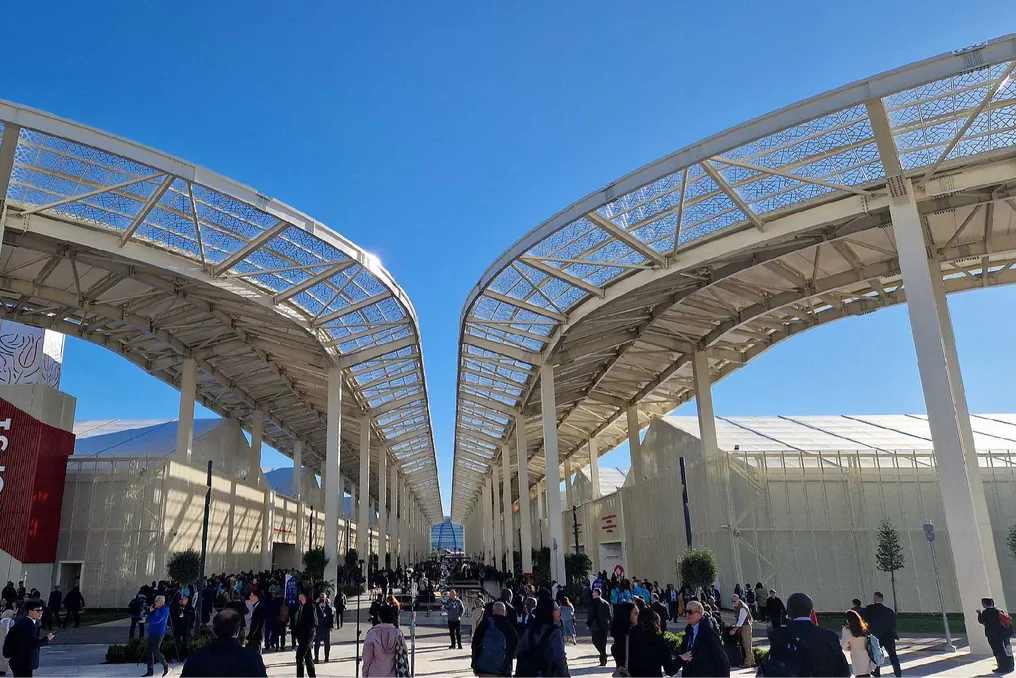
Murat Kurum, Turkish president of COP31, asked countries on Saturday to act 'responsibly' and seek an 'agreement'. The conference, which brings together almost 200 countries in Antalya, represents the most relevant global meeting on the climate issue.