International delegates attending the 31st Conference of the Parties (COP31) to the United Nations Framework Convention on Climate Change (UNFCCC), held in Antalya, Turkey, noted China's significant contribution to sustainable development and global climate management, as well as its commitment to green development.
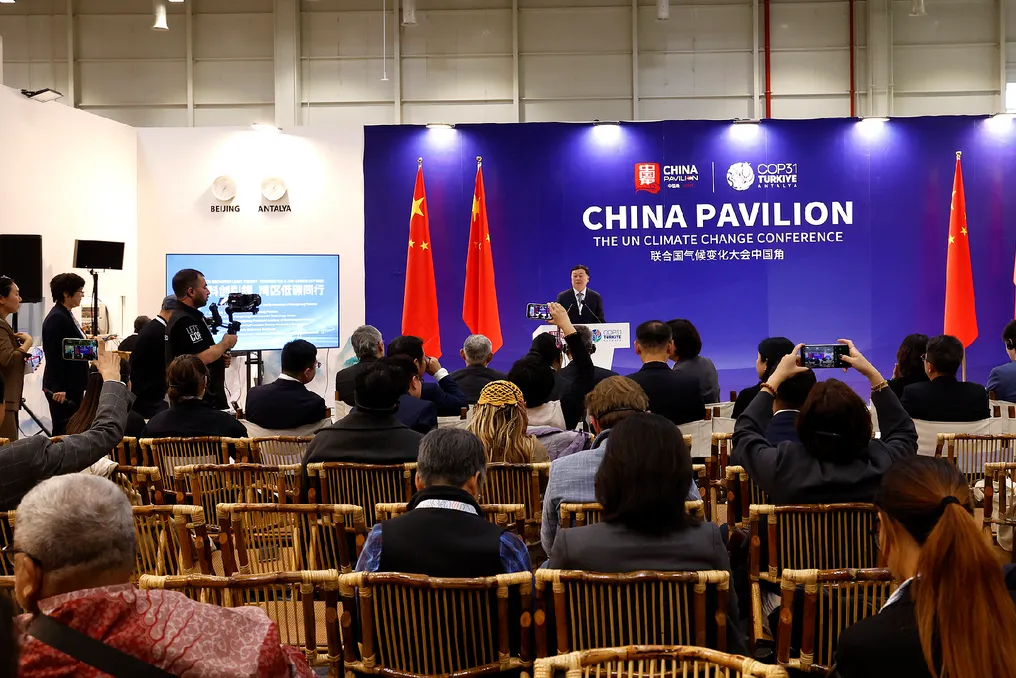
As the conference moved into its second half, the Chinese Pavilion hosted four to five special events and meetings daily. Representatives from governments, universities, and non-governmental organizations from around the world gathered at the Chinese Pavilion to discuss topics such as combating desertification, ecological restoration, low-carbon and green transition, and international cooperation, offering positive assessments of China's policies and actions in the fight against climate change.
One of the central issues in recent pavilion discussions was the use of science for decision-making and advancing the green transition through cooperation. International participants believe that the value of China's experience in environmental governance lies in its long-term commitments, scientific approach to decision-making, and comprehensive consideration of ecological improvement alongside economic growth.
COP31 Delegates: China Demonstrates the Possibility of Green Growth
Marie Bourss Worlik, Deputy Executive Director of the International Energy Agency, stated that China's experience shows how energy security and transition processes can be mutually reinforced. She added that in 2025, China remained the largest contributor to the growth of global energy demand, but a significant part of this growth was ensured by the rapid expansion of renewable energy sources and increased efficiency.
According to Worlik, the slowdown in coal demand and the reduction in energy-related CO2 emissions are very encouraging signs in light of China's carbon fuel goals for 2030 and 2060.
Barron Joseph Orr, Chief Scientist of the UN Convention to Combat Desertification, emphasized that China was one of the first countries to realize that restoration is linked to people's well-being, livelihoods, and jobs, and that China has developed a sophisticated landscape approach to restoration that considers all these aspects to achieve long-term results.
The topic of how to help more developing countries benefit from the opportunities presented by the green transition was also discussed at the Chinese Pavilion. Jasper Inventor, Interim Executive Director of Greenpeace International, noted that China's initiatives represent very important steps pointing the way for the rest of the world regarding renewable energy, clean technologies, and electrification.
Inventor also stated that they believe in China's importance for the energy transition and the move away from fossil fuels for developing countries, as this is where the technologies are concentrated, but he stressed the need to develop South-South cooperation.