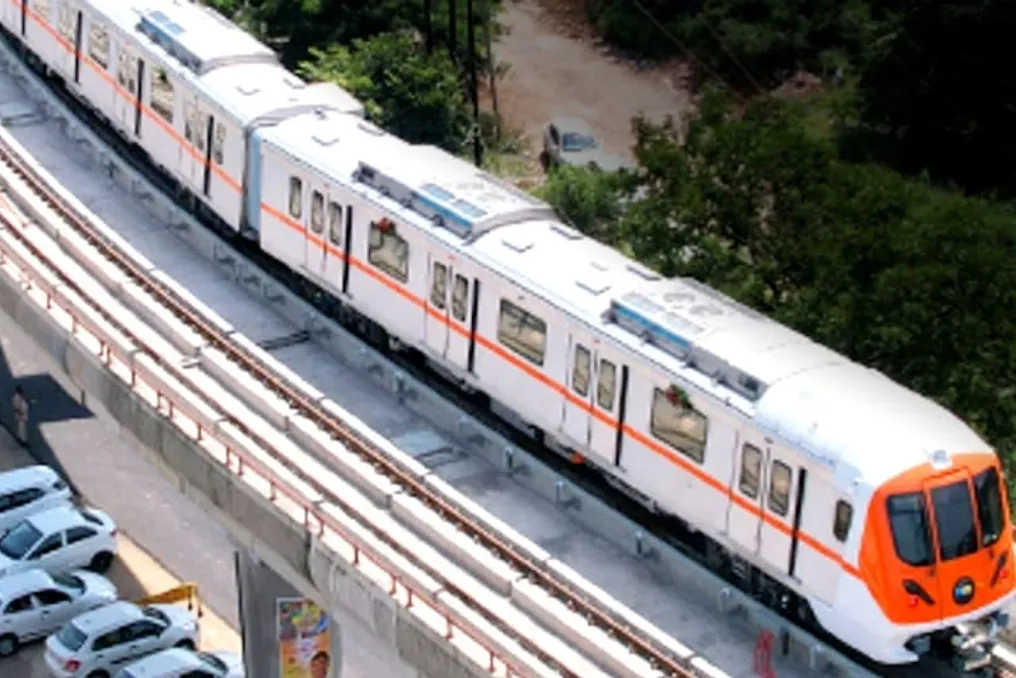
The Chinese railway signaling group CRSC announced that its low-level technology division has developed a Cell-Free type mobile base station operating at 4.9 GHz, which has received a license to access the telecommunications network from China's Ministry of Industry and Information Technology.
According to Chinese reports published on November 21, this approval is viewed as a step toward the commercial deployment of this equipment. CRSC claims this is the first licensed Cell-Free type mobile base station at 4.9 GHz in China, although this statement is based on the company's self-presentation rather than an independent comparison of all records in the equipment approval registry. It is important to note that this stage pertains to a specific product, not the launch of a nationwide sixth-generation mobile service.
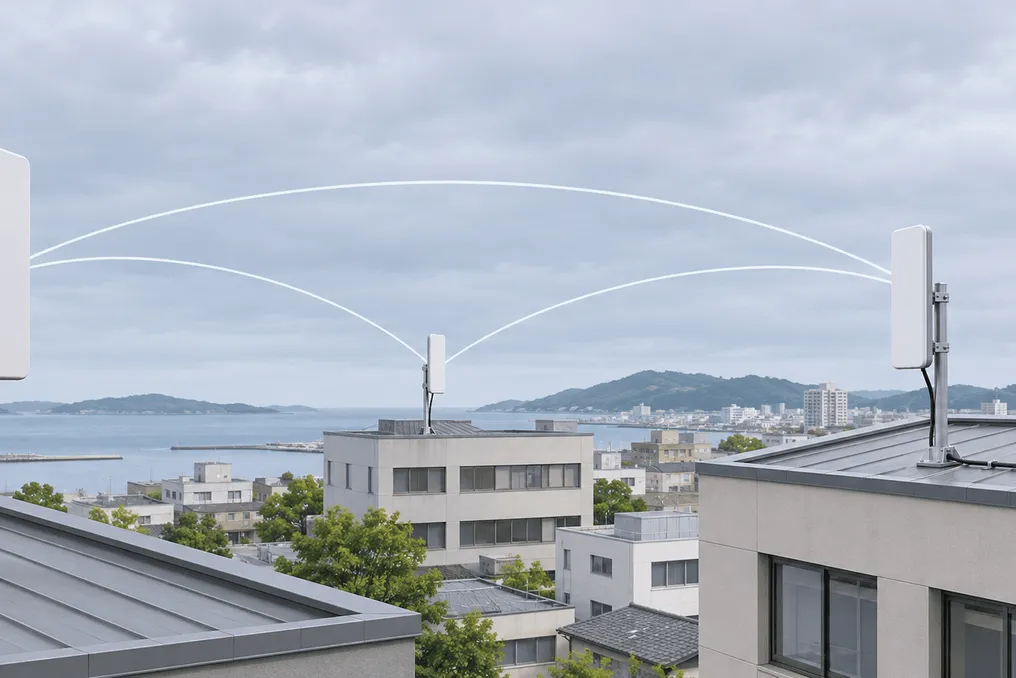
The proposed architecture coordinates multiple access points through high-speed channels and joint signal processing. Instead of relying solely on one serving cell, a moving terminal can be served by a group of nearby access points, with radio resources coordinated around the user.
According to CRSC, this approach can improve continuity at coverage boundaries, distribute simultaneous connection requests, and reduce the number of signaling messages and interruptions associated with frequent cell handovers. The reports describe expected engineering advantages, not independent measurements proving uniform performance under any terrain or mobility conditions.
The company cited an application example in the flight and infrastructure management project in Qingdao, where the equipment was installed on the Qingdao Tele-tower. It described use cases including low-altitude logistics, inspections near protected metros, island logistics, and coastal patrols. CRSC states that the system helps solve weak public network signal problems in airspace above 120 meters, but this does not imply universal air coverage.
For emergency communications, the company describes the ability to rapidly form a private network for transmitting command traffic, video, and coordination between response teams. One mentioned example is fire fighting training in a reservoir, which is not proof of uninterrupted operation during a real disaster or under any combination of power and backbone failures.
CRSC presents the Cell-Free design as an evolutionary direction towards 6G. The network access license for the base station is not a certification of a standardized commercial 6G network, nor is it proof of widespread operator deployment. Coverage, compatible terminals, integration, and resilience still depend on the deployment process.
The specific news is the claimed equipment approval and the examples of its application provided by the company. The reports lack independently measured throughput metrics, nationwide coverage data, or availability schedules for end-users.