How Indian Startup Illumine Entered the US SaaS Market Using AI and Growth Strategy
Read more
YourStory [india, en]
yourstory.com

How Indian Startup Illumine Entered the US SaaS Market Using AI and Growth Strategy

Illumine, an Indian SaaS startup, faced disappointing results after three months of advertising on Meta while trying to establish itself in the competitive software market for childcare facilities in the US. The founders were ready to abandon this channel until they decided to conduct one final experiment. Instead of prompting potential customers to register immediately, they redirected their campaigns toward raising awareness.

This shift in customer acquisition approach led to significant growth: the number of leads increased from about 20 per month to 400–500, with Meta ultimately providing 60–70% of these leads. As Navneet Rastogi, co-founder of Illumine, notes, 'The core issue was the lack of awareness.'

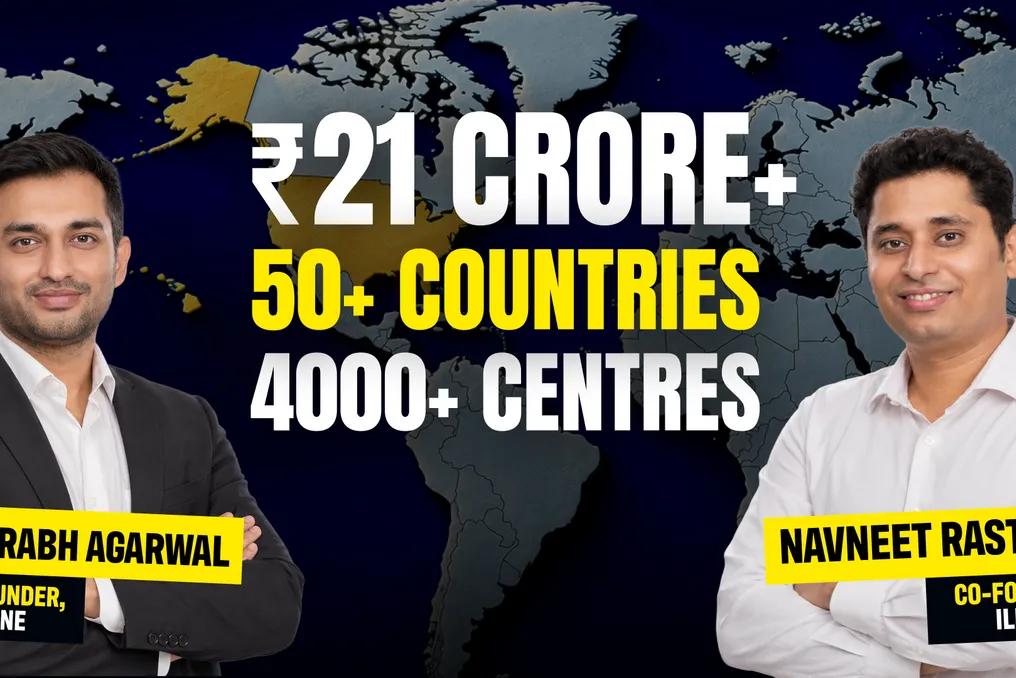
This experience became one of many lessons that helped Illumine transform from a small, bootstrapped Indian startup into a vertical SaaS platform serving preschools and childcare centers in over 50 countries. Today, India accounts for less than 15% of the company's revenue, while the US has become the primary focus of the business.

In a conversation with Gaurav Ranjan, Senior Partner at Prime Venture Partners, Rastogi and Saurabh Agarwal discussed the company's international expansion, their market entry strategy experiments, and the importance of understanding customer needs over having complex technology.

Initially, Illumine arose from Rastogi's personal problem as a parent who wanted to better see his son's daily experience in preschool. Later, the founders discovered that even large childcare chains were using outdated software designed for traditional schools, not for the operational complexities of early education.

The first client, a large premium preschool chain in India, provided enough revenue for the startup. For nearly six months, the team worked with teachers, administrators, and finance departments to understand workflows before developing the product.

However, the COVID-19 pandemic disrupted all plans. Before the closure of childcare centers, Illumine had about 200 clients. Unlike traditional education, childcare services could not simply move online. The crisis forced the founders to seek international markets where centers remained operational. Initial opportunities emerged from organic demand in the Middle East and Southeast Asia, with Dubai eventually becoming an important market for the company.

This experience also prepared Illumine for the US market. According to Rastogi, about 90% of childcare workflows are similar across different regions, and the remaining differences are addressed through product customization.

Entering the US market presented a different challenge. Established competitors like Procare possessed decades of experience, strong customer relationships, and a significant market presence. Instead of following the common advice to start in California, Illumine evaluated states based on three criteria: market size, competition intensity, and customer purchasing power. Consequently, the initial focus was on Texas, Florida, and New York.

The founders also realized that desk research could not replace on-site customer understanding. During one trip, Rastogi and two colleagues walked about 30,000 steps across Manhattan, visiting childcare centers as prospective parents to study their intake and operational processes.

The experience during a small event in Florida proved particularly illustrative. One attendee asked why clients should trust an unfamiliar Indian company instead of Procare, which had been operating for over two decades. Rastogi responded by asking if existing providers listened to customer requests for improvements. This conversation revealed a simple but unmet need—the ability to communicate with speaking families.

Illumine developed this feature, which helped it gain traction in Florida. Rastogi recalls, 'Online tells you about a trend, but it doesn't reflect the reality there.'

Illumine's early marketing in the US attracted inquiries, but many came from small private kindergartens rather than established childcare institutions looking to replace their existing systems. The founders realized that while their advanced features attracted attention, they didn't necessarily convince clients to switch.

The team began mapping childcare centers in US states, studying their size, fees, existing software, and purchasing power. This also changed the product positioning, balancing its AI capabilities with the core operational requirements expected of a childcare management platform.

These studies influenced the company's paid customer acquisition experiments. Google Ads was already generating leads from actively searching customers, but Meta showed low results. After three unsuccessful months, the team switched from lead generation campaigns to awareness campaigns. The monthly lead volume subsequently increased from about 20 to 400–500.

It is worth noting that Rastogi also stated that the company began attracting higher-value customers through this channel. The lesson was not just about optimizing advertising; Illumine first needed to earn trust as a serious alternative to established software providers.

Illumine's expansion into the US did not depend on creating a large American sales department. According to Rastogi, about 90% of the company's US revenue is generated by employees working from India. However, meeting American sales expectations required changes in how the team conducted conversations. Unlike Indian calls, which often quickly move to business discussions, American clients expected relationship building, video interaction, and a more consultative approach.

The company also hired individuals with direct experience in the childcare sector, including former center directors who could discuss clients' operational problems rather than just demonstrating software features. This approach helped Illumine build trust in a market where clients were naturally cautious about adopting a relatively unknown international platform.

The founders also realized that implementation capabilities needed to grow in parallel with sales. A surge in new client onboarding around September required moving experienced staff to customer support to handle new deployments.

For Illumine, the adoption of AI is driven by operational challenges, not the technology itself. For example, kindergarten teachers spend a lot of time documenting activities and sharing updates with parents, often reviewing hundreds of photos after a full day of childcare. Agarwal describes how a center can generate 1000 photos daily, requiring teachers to identify children, organize activities, and prepare individual updates for parents. Now, Illumine's AI helps automate this process, allowing teachers to review and approve the results.

Agarwal notes, 'Thus, 3 hours of work turned into 10 minutes.' The company extends this approach to financial reconciliation, parent communication, and front desk operations. According to Rastogi, the AI functionality can be sold with almost double the markup of the base software price, creating an additional monetization opportunity.

Nevertheless, the founders remain cautious about where automation should be applied. Illumine declined requests to use AI-enabled cameras to analyze children's emotions, preferring to leave observation and decisions regarding children to the educators.

Rastogi believes that as AI makes software development increasingly accessible, the technology itself becomes a weaker competitive advantage. What remains difficult to replicate is the accumulated understanding of complex customer workflows, from billing and payroll to occupancy management and regulatory compliance.

For Illumine, this knowledge was gained through years of direct work with kindergarten operators, including clients whose demanding requests forced the company to improve its product.

Venture capital also changed the founders' ambitions. After many years prioritizing immediate returns, they were able to focus on long-term opportunities and accelerate international expansion. As the business grows by about threefold annually, the founders say Illumine is now exploring adjacent revenue streams in payments, insurance, and compliance. Only payments could potentially become several times larger than the revenue from the core software in the future.

For a company that nearly lost its entire client base during COVID, ambitions have fundamentally changed. Illumine is no longer just trying to create better preschool software; it aims to become one of the largest technology platforms serving the global childcare industry. As Rastogi says, 'I see a bigger opportunity for building.'


Similar stories

Indian stock market recovers: Sensex surpasses 83000, Nifty hits 25500 driven by IT sector stocks
Read more
www.aajtak.in

Indian stock market recovers: Sensex surpasses 83000, Nifty hits 25500 driven by IT sector stocks

Despite a weak start to trading on November 20, the stock market demonstrated a significant recovery. Thanks to active buying in the IT sector, the Sensex and Nifty indices managed to return to positive territory after hitting daily lows. The Sensex rose by approximately 250 points from its low, while the Nifty once again reached the critical level of 25,500.

Buying activity was observed in the domestic market, contrary to the substantial decline in global markets. By 11:02 AM, the Sensex was trading at 83,152.87, showing a rise of 131.12 points or 0.16%. Simultaneously, the Nifty increased by 30 points (0.12%) to reach the mark of 25,544.30. During this period, 1,318 stocks were rising, while 2,291 stocks showed a decline, and 195 remained unchanged.

Purchases of stocks in the IT sector played a key role in the market's recovery. The Nifty IT index rose by approximately 2.3%. Stocks of companies such as Tech Mahindra, Infosys, HCL Tech, and TCS showed growth ranging from 1% to 1.7% and entered the list of top rising Nifty stocks. This growth occurred against a backdrop of heavy selling in many major global markets. For instance, Japan's Nikkei fell by 4.1%, and South Korea's Kospi dropped by 4.7%. Furthermore, the American market experienced a collapse in the previous trading session, led by technology stocks; both the Nasdaq Composite and the Dow Jones Industrial Average closed down by more than 2%.

Sales in stocks related to artificial intelligence (AI) are reflected in global markets. Even the launch of Anthropic's shares could not restore investor confidence. Increased demand for safe investments led to the strengthening of the US dollar. In the US, the Nasdaq Composite fell by 2.25% in the previous session. Shares of chip manufacturer Nvidia fell by almost 4%, while Micron Technology shares declined by more than 2%. Declines were also recorded in Microsoft (approximately 9%) and Meta Platforms (more than 20%). The Cboe Volatility Index (VIX), which signals market fear, also reached one of its highest levels since March, approaching 29.

According to V.K. Vijaykumar, Chief Investment Strategist at Geojit Investments, the Nifty emerged as the leader among the best-performing markets this month, demonstrating a growth of 10.7% in just 13 trading days.

The inflow of funds from foreign investors is also helping the market. On November 19, Foreign Institutional Investors (FIIs) made purchases for the eighth consecutive trading session in the Indian stock market, acquiring shares worth a net of 7,411 crore rupees. On the other hand, Domestic Institutional Investors (DIIs) sold shares for the second consecutive session, divesting 1,356 crore rupees. According to V.K. Vijaykumar, although profit booking is occurring in the market, the steady and strong buying by FIIs supports the upward trend. He noted that large investments by foreign investors are directed towards financial services, especially large banking stocks. Growth in purchases of telecommunication stocks is also observed. Additionally, investments have increased in automotive and consumer goods stocks following the drop in metal prices.

To understand the future direction of the stock market, it is important to monitor key Nifty levels. Analysts indicate that a fall below 25,350 could signal market weakening. The level between 25,200 and 25,250 is considered an immediate support zone for the Nifty. At the same time, resistance may be observed between 25,500 and 25,600. After recent gains, profit booking and limited fluctuations within a narrow range (consolidation) may occur. If the Nifty maintains support in the 25,200–25,250 zone, it could create opportunities for buying on dips. However, if this level is decisively broken, it could lead to further market weakness.

Currently, key factors for the market remain the purchases by foreign investors, the dynamics of IT stocks, and the situation in global markets. Maintaining Nifty above the 25,500 mark will also be a positive signal. Moreover, if the support zone of 25,200–25,250 is breached, selling volume may increase. Therefore, investors' attention will be focused on these important levels and the flow of funds from foreign funds.

Indian developers play a key role in the creation of GTA 6, surpassing the US in the number of participants
Read more
www.aajtak.in

Indian developers play a key role in the creation of GTA 6, surpassing the US in the number of participants

GTA 6 is generating immense global interest, drawing attention with its impressive graphics, vast game world, and long anticipation. The game has also set revenue records, earning $1.5 billion before its official launch. Meanwhile, information requiring special attention from Indians has emerged.

The game's popularity is so high that even the Prime Minister made a publication on the topic. According to available data, the largest number of developers in the team creating this major game comes from India. Reportedly, about 1615 developers from India participated in the work on GTA 6, exceeding the figure for the US, which recorded 1441 participating developers.

Thus, thousands of developers from India are contributing to the creation of a globally popular game. Bangalore has become the most significant center of this process. The story of one gaming company in this city began with just one computer, and today it is linked to one of the planet's most discussed gaming projects.

In total, about 6000 developers from around the world participated in the development of GTA 6. Among them, Indian specialists constitute the majority with 1615 participants. The US ranks second with 1441 developers. Following them are 1398 developers from Scotland, 1208 from England, and 267 from Canada.

Tejasvi Surya, a Member of Parliament from South Bangalore, announced on social media on November 18 that over 1600 developers at Rockstar India studio in Bangalore contributed to the creation of GTA 6. He called this a significant achievement for Indian gaming talent.

To understand India's role in GTA 6, one must go back approximately three decades. In 1995, Rajesh Rao started his activities in Bangalore using a computer and a Dial-up modem. Initially, his company focused on developing multimedia software and training. In 1997, the company decided to move into game creation and founded Dhruva Interactive.

At that time, the video game market in India was underdeveloped, and opportunities for large projects and game companies were limited. Despite this, Dhruva Interactive began collaborating with foreign firms. Gradually, its team started participating in the creation of elements such as cars, racetracks, characters, and environments for the major Microsoft Forza Motorsport series.

This demonstrates that the work of Indian developers was not limited to creating small mobile games; they were preparing important components for large console projects. Dhruva Interactive reached a new stage in 2019 when Rockstar Games acquired Dhruva Interactive from the Swedish company Starbridge. This deal was valued at approximately $7.9 million.

After the acquisition, the Dhruva team became part of Rockstar's operations in Bangalore. According to founder Rajesh Rao, about 300 people were integrated into Rockstar Games during this takeover. This was not just a sale of a company but also opened a new path for Indian game developers to work with leading global gaming corporations. Thanks to this, the team in Bangalore gained the opportunity to become part of this global network, which once again drew attention to their involvement in GTA 6.

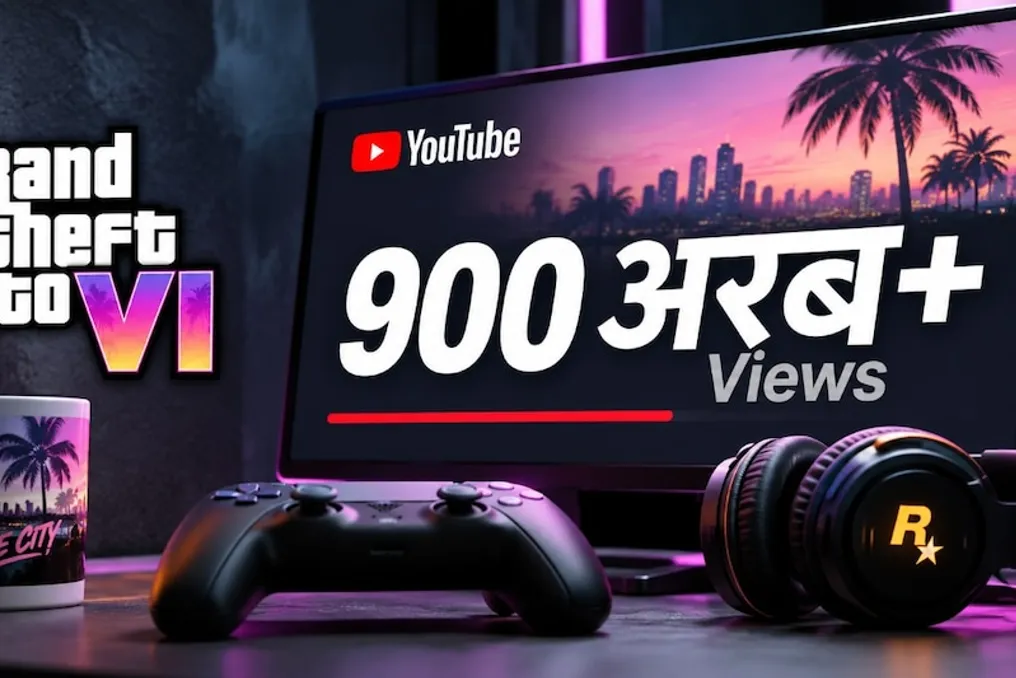
GTA Franchise Has Become a Major Entertainment Platform, Garnering Over 900 Billion YouTube Views
Read more
www.aajtak.in

GTA Franchise Has Become a Major Entertainment Platform, Garnering Over 900 Billion YouTube Views

To consider Grand Theft Auto (GTA) merely a video game likely underestimates its popularity. In the world of this game, users not only complete missions but also create stories, role-play, engage in comedy, and spend hours watching others' actions. According to a new YouTube report, GTA franchise videos have accumulated over 900 billion views on the platform.

Interestingly, videos related to GTA 6 garnered over 40 billion views even before the game's official release. This indicates that the popularity of GTA 6 is not limited to those planning to purchase the game on November 19th. Millions of people are watching trailers, discussing the game, viewing creator content, and revisiting old GTA stories.

The game's world has transformed into a unique form of entertainment on YouTube. In India, this is well illustrated by GTA Roleplay communities such as Soulcity from S8UL, where content creators develop their own characters and plots within the game.

According to the YouTube Culture and Trends team's report, the GTA series has amassed over 900 billion views. Furthermore, preliminary videos concerning GTA 6 alone exceeded the 40 billion view mark, and this occurred prior to the game's launch.

Many content creators anticipate that once the game is released, they will begin producing clips featuring GTA 6 gameplay across social media. People have waited years for this game, and it is evident that in India, only a few will be able to play it since most do not own a PlayStation. As this game will only be available on Xbox and PS, interest in watching the gameplay will be high, and the videos are expected to go viral.

Content creators can earn significant sums by publishing such clips. However, before doing so, they must ensure that the clip source does not trigger a copyright strike, otherwise, YouTube and social media accounts could be banned. Nevertheless, most creators make the clips themselves to ensure they also go viral, thereby avoiding copyright issues.

The popularity of GTA V also plays a major role. Since its release in 2013, GTA V has been ranked among the top 10 most viewed games on YouTube annually. Thus, after 13 years, the discussion and content based on this game have not waned.

The YouTube report includes another interesting metric. In an NRG survey conducted among 496 internet users aged 14 to 29 in the US, 82 percent identified GTA as one of the widely recognized entertainment brands. In the same study, this figure stood at 79 percent for Hollywood celebrities and 83 percent for the Super Bowl. It is important to note that this poll was conducted only among online users of a specific age group in the US, but it shows that GTA has transcended gaming.

A significant part of GTA's popularity is driven by the Roleplay (RP) format. In this format, content creators do not just play the game; they create characters for themselves and live in the game world according to these personas. For instance, one creator might become a police officer, another run a business, a third play the role of a gangster, and a fourth live the life of an ordinary citizen. Other players join this world with their own characters. Stories arise among them related to communication, disputes, friendship, business, and sometimes crime.

A characteristic of this format is that the scenarios for these stories are not pre-written. The plot develops through the dialogues and decisions of the players themselves. One day, a police officer might encounter a criminal, and the next day, the same characters might participate in a new mission or a funny incident.

According to YouTube data, GTA Roleplay videos have accumulated over 8 billion views. In 2025, the number of uploaded such videos reached a record 1.7 million.

In India, there is a prominent example of GTA Roleplay—Soulcity from S8UL. This is a Roleplay server based on GTA V, where various content creators live and create stories in a shared virtual city as different characters. According to Animish Agrawal, CEO and co-founder of S8UL, Soulcity demonstrated how one game can become an independent entertainment platform. Viewers here follow not only the gameplay but also the lives of the characters, their relationships, and the events that happen to them.

Popular