The criterion for transitioning from the prehistoric period to history is determined by the appearance of writing
Read more
Super Abril
super.abril.com.br

The criterion for transitioning from the prehistoric period to history is determined by the appearance of writing

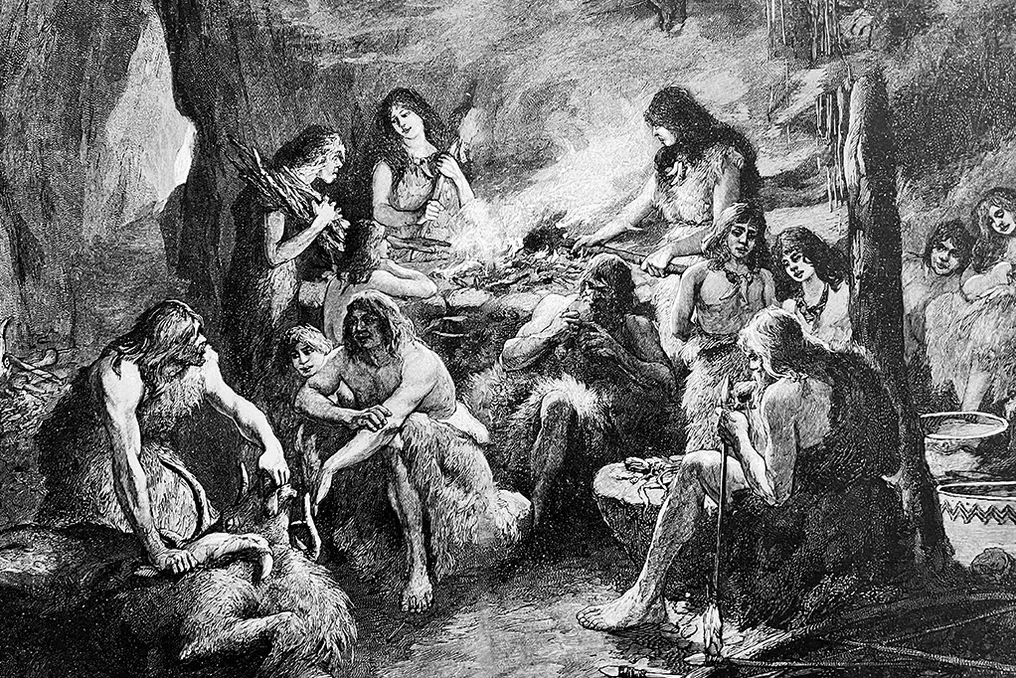
The division between the prehistoric period and history is not established by any exact calendar date, but is determined by the emergence of one of humanity's greatest creations—writing.

Archaeologist Marisa Afonso from the University of São Paulo (USP) explained to the publication Mundo Estranho in 2011 that history studies societies that possessed or had writing, whereas prehistorians collect information about groups of people who could not write.

Nevertheless, this boundary is not a rigid or universal line. Since writing developed in different regions and at different times, each civilization entered history at its unique moments. For example, in Ancient Egypt, historical records began about 5 thousand years ago, and in Greece—about 3 thousand years ago.

This benchmark, created in the 19th century, primarily serves to structure and guide academic research. In the book 'Pré-História do Brasil,' historians and archaeologists Pedro Paulo Funari and Francisco da Silva Noelli emphasize that this division demonstrates the youth of writing against the backdrop of the human trajectory.

Researchers note that the prehistoric period covers the last 100–200 thousand years when Homo sapiens sapiens existed, as well as millions of years before that when hominids preceding our species existed. This accounts for 99.9% of the past; consequently, only 0.1% of the time of humans and their ancestors in the evolutionary chain falls within the period of having writing.

Similar stories

Why is the idea of living without a predetermined plan gaining popularity among Generation Z?
Read more
www.aajtak.in

Why is the idea of living without a predetermined plan gaining popularity among Generation Z?

It was once considered necessary to create a detailed plan for any major life decision: when to finish studying, when to start working, when to buy a house, and what to do next. However, today there is a shift in this worldview among Generation Z. Many young people prefer to let events unfold rather than follow a rigid plan. This concept is also known as 'going with the flow.'

This does not mean that Generation Z is not concerned about its future. On the contrary, many young people want to remain open to new opportunities instead of fixing all aspects in advance. For them, achieving all goals, such as having a job by age 25, getting married by 30, and buying a house within set deadlines, is not mandatory. They strive to make decisions based on their needs and preferences.

To understand this trend, it is important to consider how modern young people view life. Although they may outwardly appear to be moving without a clear direction, there is a certain philosophy behind it. They prefer to live freely, gain new experiences, and change their decisions depending on circumstances.

Many members of Generation Z want to move toward their goals gradually, rather than planning the entire path in advance. It is not necessary for every step to be predetermined; they are ready to embrace new opportunities that arise along the way. This is why they might decide to change careers, move to a new place, or start a new project.

Another reason may be the growing uncertainty in life. It is becoming increasingly difficult to get answers to questions about whether one will find a job after graduation, how far their career will advance, and what changes will occur in the future. Under such conditions, some young people prefer to focus on the present instead of taking on the pressure of everything.

Nevertheless, life without a plan does not mean irresponsibility. Many young people take their careers, finances, and future seriously, but they do not want to tie their entire lives to a strict schedule. They are also willing to adjust their plans if necessary.

Analysis of the 1960 mathematical prediction on population growth and the date of November 13, 2026
Read more
olhardigital.com.br

Analysis of the 1960 mathematical prediction on population growth and the date of November 13, 2026

The date of November 13, 2026, associated with an apocalypse prediction, originated from a mathematical equation published in 1960. However, the original study did not aim to predict the destruction of Earth, but rather to warn about the rapid increase in population.

November 13, 2026, which recently gained prominence on social media, derives from a scientific study conducted 66 years ago. It is essential to clarify that this projection never indicated the end of the planet or the disappearance of humanity on that date.

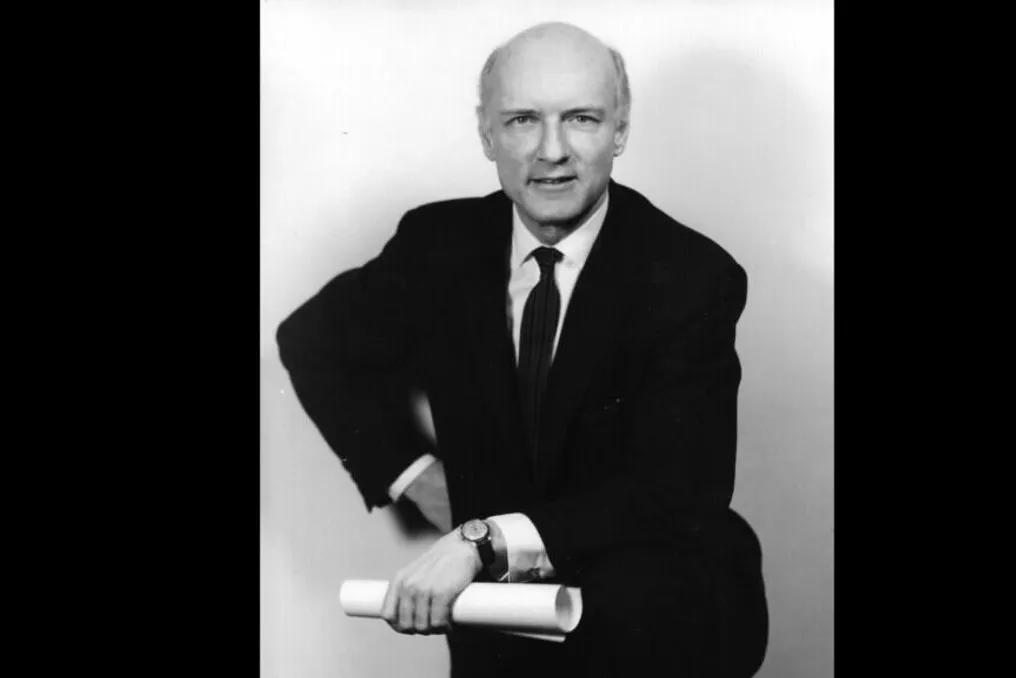
The article, titled Doomsday: Friday, 13 November, A.D. 2026, was prepared in 1960 by physicist Heinz von Foerster, along with researchers Patricia M. Mora and Lawrence W. Amiot. The authors used a mathematical projection of population growth to reach a singularity point, where the projected population would tend toward infinity.

Although the catchy title turned the work into a lasting scientific curiosity, the crucial caveat was often ignored: it was a mathematical extrapolation, not a literal prophecy about the future of humanity. The basis of the equation was the maintenance of a historically observed trend of population growth.

However, the scenario has changed drastically with the evolution of societies and demographic patterns. In recent decades, the decrease in birth rates in various global regions has significantly altered this landscape. Although the population continues to grow, the pace has slowed down, moving away from the curve established by scientists in 1960.

Current data from the United Nations (UN) illustrates this divergence. In 2024, the world population was estimated at about 8.2 billion inhabitants. UN projections indicate that growth should continue until reaching a peak near 10.3 billion in the mid-2080s, followed by a gradual decline.

The UN also reports that the global fertility rate dropped from 3.3 children per woman in 1990 to approximately 2.3 in 2024. More than half of countries and territories already register rates below the level necessary to maintain long-term population stability, excluding migration.

This information demonstrates the deviation of demographic behavior from the trend predicted by last century's researchers, meaning there is no evidence that humanity is heading toward the infinite population suggested by the mathematical model. The case of von Foerster serves as an example of how scientific findings can acquire new meanings when decontextualized.

The study maintains its historical importance, serving as a reference for debating the limits of mathematical projections and the dangers of assuming that past trends will repeat indefinitely. Additionally, the date of November 13 coincided with von Foerster's birthday, which contributed to the provocative tone of the title.

In summary, the world has not ended; there was never a reliable scientific prediction that this would happen on that day. What expired was merely the deadline of a mathematical projection that, since its creation, should have been seen as a warning about population growth, not as a countdown to the end.

Disappearance and Rediscovery of the 'I Have a Dream' Speech Manuscript by Martin Luther King
Read more
super.abril.com.br

Disappearance and Rediscovery of the 'I Have a Dream' Speech Manuscript by Martin Luther King

The manuscript of the famous 'I Have a Dream' speech, delivered by Martin Luther King, was a mystery for decades until it was recently rediscovered.

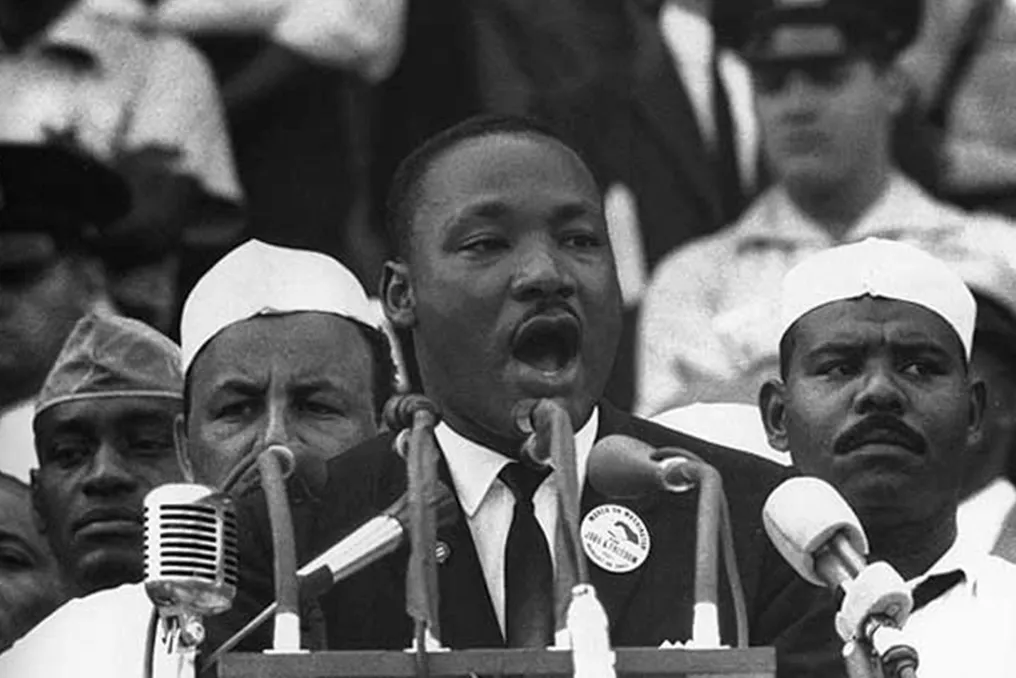
On August 28, 1963, Martin Luther King participated in a civil rights march in Washington, United States, gathering approximately 250,000 people. At the Lincoln Memorial, he gave a speech about the historical struggle of the African American population against racial inequality and segregation.

Initially, the speech was planned to be short, and King handwrote the text in a formal tone, finishing around 4 a.m. on the day of the event. The draft contained seven pages and was later typed so that he had copies for the event and the press.

During his oratory, gospel singer Mahalia Jackson encouraged him to speak about the dream. This led King to improvise, adding a section not planned in the script, in which he expressed his wishes for the United States: racial equality, justice, and freedom.

An iconic excerpt from the speech stated: 'I have a dream that my four little children one day will live in a nation where they will not be judged by the color of their skin but by the content of their character. I have a dream today.' This statement gained global recognition and is considered one of the most important speeches of the 20th century.

After the presentation, the typed copy that King used was given to George Raveling, a former college basketball player and future coach who served as a volunteer security guard. Raveling requested and received King's document.

However, the original manuscript, written by King that early morning, went missing. After six decades without any researcher being able to locate it, in 2024, Xernona Clayton, a civil rights activist, was organizing the office of her late husband, Edward Clayton, who died in 1966. Edward Clayton was King's communications advisor and helped draft the speech.

The document was found in a desk drawer, likely having remained there all these years, kept in an envelope labeled 'speech.' Although Xernona Clayton had already found papers in the late 1990s, she did not know it was the final version of the text. Now, after investigations and expert opinions, she has confirmed possessing the only known final handwritten version of the speech.

Xernona Clayton decided to auction the manuscript, with the proceeds being donated to charities related to King and herself. The auction is scheduled for January 22, 2027. Before that, the document will be publicly displayed in the cities of Atlanta, Chicago, and New York.

The value of the document is high because it allows observers to see the modifications made by King to the text, evidenced by various scribbles and rewritten parts. It is expected that the winning bid will exceed US$10 million.

Popular